On Desperate Ground
- 432 pages
- 16 hours of reading
"A chronicle of the extraordinary feats of heroism by Marines called on to do the impossible during the greatest battle of the Korean War."...Provided by publisher







"A chronicle of the extraordinary feats of heroism by Marines called on to do the impossible during the greatest battle of the Korean War."...Provided by publisher
The Astonishing Story of One of Wartime's Greatest Escapes
On January 28, 1945, 121 hand-selected U.S. troops slipped behind enemy lines in the Philippines. Their mission: March thirty rugged miles to rescue 513 POWs languishing in a hellish camp, among them the last survivors of the infamous Bataan Death March. A recent prison massacre by Japanese soldiers elsewhere in the Philippines made the stakes impossibly high and left little time to plan the complex operation. In Ghost Soldiers Hampton Sides vividly re-creates this daring raid, offering a minute-by-minute narration that unfolds alongside intimate portraits of the prisoners and their lives in the camp. Sides shows how the POWs banded together to survive, defying the Japanese authorities even as they endured starvation, tropical diseases, and torture. Harrowing, poignant, and inspiring, Ghost Soldiers is the mesmerizing story of a remarkable mission. It is also a testament to the human spirit, an account of enormous bravery and self-sacrifice amid the most trying conditions.
From New York Times bestselling author Hampton Sides comes an epic account of Captain James Cook's final voyage, culminating in his tragic death. On July 12, 1776, Cook embarked on his third journey aboard HMS Resolution, which would lead to his demise on a Hawaiian beach, where he was killed in a conflict with the indigenous people. Known for his humane leadership and respect for new cultures, Cook had previously mapped vast areas of the Pacific and made first contacts with various native populations. His mission was to return a Tahitian man, Mai, to his homeland, but he also carried secret orders to explore the fabled Northwest Passage and claim new territories for Britain. This voyage marked a shift in Cook's character, revealing a more complex figure than the celebrated explorer he was known to be. Deeply researched and vividly narrated, this account is both a fast-paced adventure and a thoughtful exploration of the consequences of the Age of Exploration. Critics have praised Sides for his riveting storytelling and meticulous research, describing the work as a gripping nonfiction thriller that reads like an epic adventure.
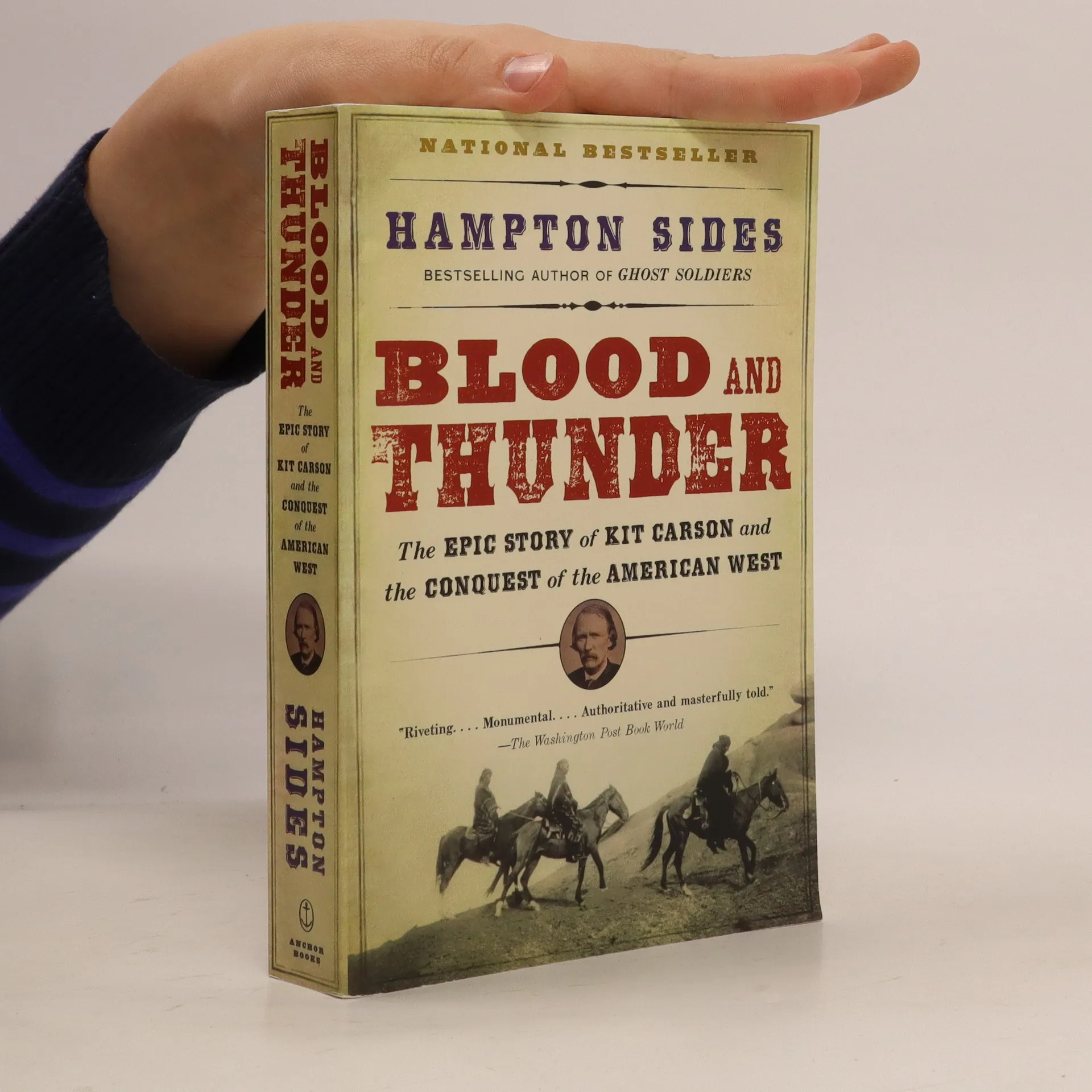
NATIONAL BESTSELLER • From the author of Ghost Soldiers comes an eye-opening history of the American conquest of the West—"a story full of authority and color, truth and prophecy" (The New York Times Book Review). In the summer of 1846, the Army of the West marched through Santa Fe, en route to invade and occupy the Western territories claimed by Mexico. Fueled by the new ideology of “Manifest Destiny,” this land grab would lead to a decades-long battle between the United States and the Navajos, the fiercely resistant rulers of a huge swath of mountainous desert wilderness. At the center of this sweeping tale is Kit Carson, the trapper, scout, and soldier whose adventures made him a legend. Sides shows us how this illiterate mountain man understood and respected the Western tribes better than any other American, yet willingly followed orders that would ultimately devastate the Navajo nation. Rich in detail and spanning more than three decades, this is an essential addition to our understanding of how the West was really won.
The classic bestselling history "The New York Times" has called original, remarkable, and finally heartbreaking is available in a special 30th-anniversary edition. 56 illustrations.
In the late nineteenth century, the North Pole captivated public imagination, shrouded in mystery and speculation. The prominent cartographer August Petermann theorized that warm currents supported a lush island at the world's summit, igniting nationalistic fervor among nations eager to claim it. James Gordon Bennett, the wealthy owner of The New York Herald, sought to replicate his previous success of sending Stanley to find Dr. Livingstone by funding a U.S. naval expedition to the Pole. He appointed George Washington De Long, a young officer known for a rescue operation in Greenland, as captain. On July 8, 1879, the USS Jeannette departed San Francisco, greeted by enthusiastic crowds caught up in "Arctic Fever." However, the ship soon became trapped in pack ice. After two years, the hull was breached, forcing the crew to abandon ship. Within an hour, the Jeannette sank, leaving the men stranded a thousand miles north of Siberia with minimal supplies. Thus began their arduous trek across the unforgiving ice, confronting snow blindness, polar bears, fierce storms, and the psychological toll of isolation, all while fighting for survival in one of the world's most desolate regions.
Am 12. Juli 1776 stach James Cook, in seiner Heimat bereits als der größte »Entdecker« der britischen Geschichte gefeiert, mit der HMS Resolution zu seiner dritten großen Reise in See. Zweieinhalb Jahre später wurde er an einem Strand von Hawaii in einem Konflikt mit Einheimischen getötet. Bisher war Cook durch einen für seine Zeit bemerkenswerten Respekt gegenüber indigenen Völkern aufgefallen. Doch auf dieser letzten Fahrt zeigte er sich von einer ganz anderen Seite. Wie dies mit dem geheimen Befehl zusammenhängen könnte, die Nordwestpassage zu erschließen, beleuchtet Hampton Sides in seinem neuen Buch. Cooks letzte Reise liest sich wie eine rasante Abenteuergeschichte auf hoher See und ist zugleich eine kluge Reflexion über das Zeitalter der sogenannten Entdeckungen.
