Jonathan Lethem is an American novelist, essayist, and short story writer known for his innovative approach to genre literature. His works often weave together elements of science fiction and detective fiction, creating unique and provocative narratives. Lethem distinguishes himself through a deep exploration of themes of identity, alienation, and the nature of reality, frequently employing unexpected twists and brilliant prose. His ability to blend high and low culture marks him as a significant voice in contemporary American letters.
Celebrating a milestone, this hardcover omnibus edition brings together two acclaimed novels by a highly inventive American author. It showcases a unique narrative style and rich character development, inviting readers into a world that blends mystery and wit. The collection honors the legacy of Motherless Brooklyn, emphasizing the author's distinctive voice and storytelling prowess. This edition is a must-have for fans and newcomers alike, highlighting the enduring impact of the author's work over the past 25 years.
An unexpected visitor in a man's apartment pens a peculiar confession intended for the host who is not present. This intriguing scenario unfolds into a deeper exploration of secrets and personal revelations, as the guest's thoughts reveal insights into both his own character and the absent host's life. The narrative invites readers to ponder themes of identity, connection, and the impact of uninvited intrusions on one's private world.
Lionel Essrog, a.k.a. the Human Freakshow, is a victim of Tourette's syndrome (an uncontrollable urge to shout out nonsense, touch every surface in reach, rearrange objects). Local tough guy Frank Minna hires the adolescent Lionel and three other orphans from St Vincent's Home for Boys and grooms them to become the Minna Men, a fly-by-night detective-agency-cum-limoservice. Then one terrible day Frank is murdered, and Lionel must become a real detective. With crackling dialogue, a dazzling evocation of place, and a plot which mimics Tourette's itself in its freshness and capacity to shock, Motherless Brooklyn is a bravura performance: funny, tense, touching, and extravagant.
A New York Times Book Review EDITORS' CHOICE. From the National Book Critics Circle Award-winning author of Motherless Brooklyn, comes the vividly told story of Dylan Ebdus growing up white and motherless in downtown Brooklyn in the 1970s. In a neighborhood where the entertainments include muggings along with games of stoopball, Dylan has one friend, a black teenager, also motherless, named Mingus Rude. Through the knitting and unraveling of the boys' friendship, Lethem creates an overwhelmingly rich and emotionally gripping canvas of race and class, superheros, gentrification, funk, hip-hop, graffiti tagging, loyalty, and memory. "A tour de force.... Belongs to a venerable New York literary tradition that stretches back through Go Tell It on the Mountain, A Walker in the City, and Call it Sleep." --The New York Times Magazine "One of the richest, messiest, most ambitious, most interesting novels of the year.... Lethem grabs and captures 1970s New York City, and he brings it to a story worth telling." --Time
Exploring a diverse range of subjects, the book delves into themes such as sex in cinema, drugs, and cyberculture, while reflecting on significant events like 9/11. The author challenges conventional wisdom and shares deep insights into the multifaceted nature of artistic vision. Personal experiences serve as a catalyst for creative expression, making the narrative both provocative and introspective.
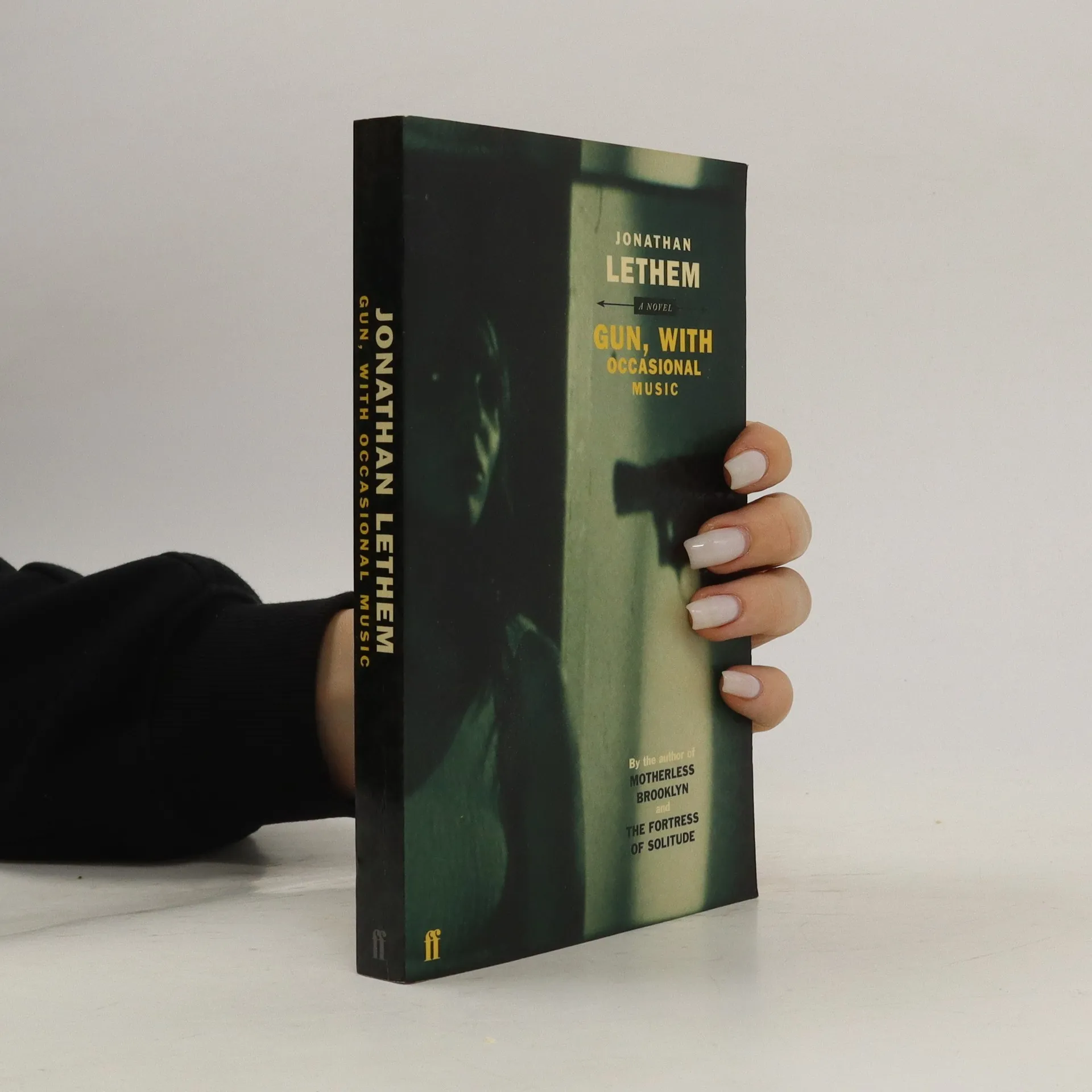
The first novel by Jonathan Lethem (author of the award-winning Motherless Brooklyn) is a science-fiction mystery, a dark and funny post-modern romp serving further evidence that Lethem is the distinctive voice of a new generation. Conrad Metcalf has problems. He has a monkey on his back, a rabbit in his waiting room, and a trigger-happy kangaroo on his tail. (Maybe evolution therapy is not such a good idea). He's been shadowing Celeste, the wife of an Oakland urologist. Maybe falling in love with her a little at the same time. When the doctor turns up dead, Metcalf finds himself caught in a crossfire between the boys from the Inquisitor's Office and gangsters who operate out of the back room of the Fickle Muse.
Jonathan Lethem again displays his brilliance in this collection of seven short stories, blurring the boundaries of sci-fi, mystery, and thriller. Tales include 'Light and the Sufferer', in which a crack addict is dogged by an invulnerable alien; 'The Hardened Criminals', wherein convicts are used as building blocks for new prisons; and 'The Happy Man', whose hapless protagonist is raised from the dead to support his family, only to suffer periodic out-of-body sojourns in Hell. Each tale features Lethem's characteristic deadpan wit and unflinchingly macabre vision of life.
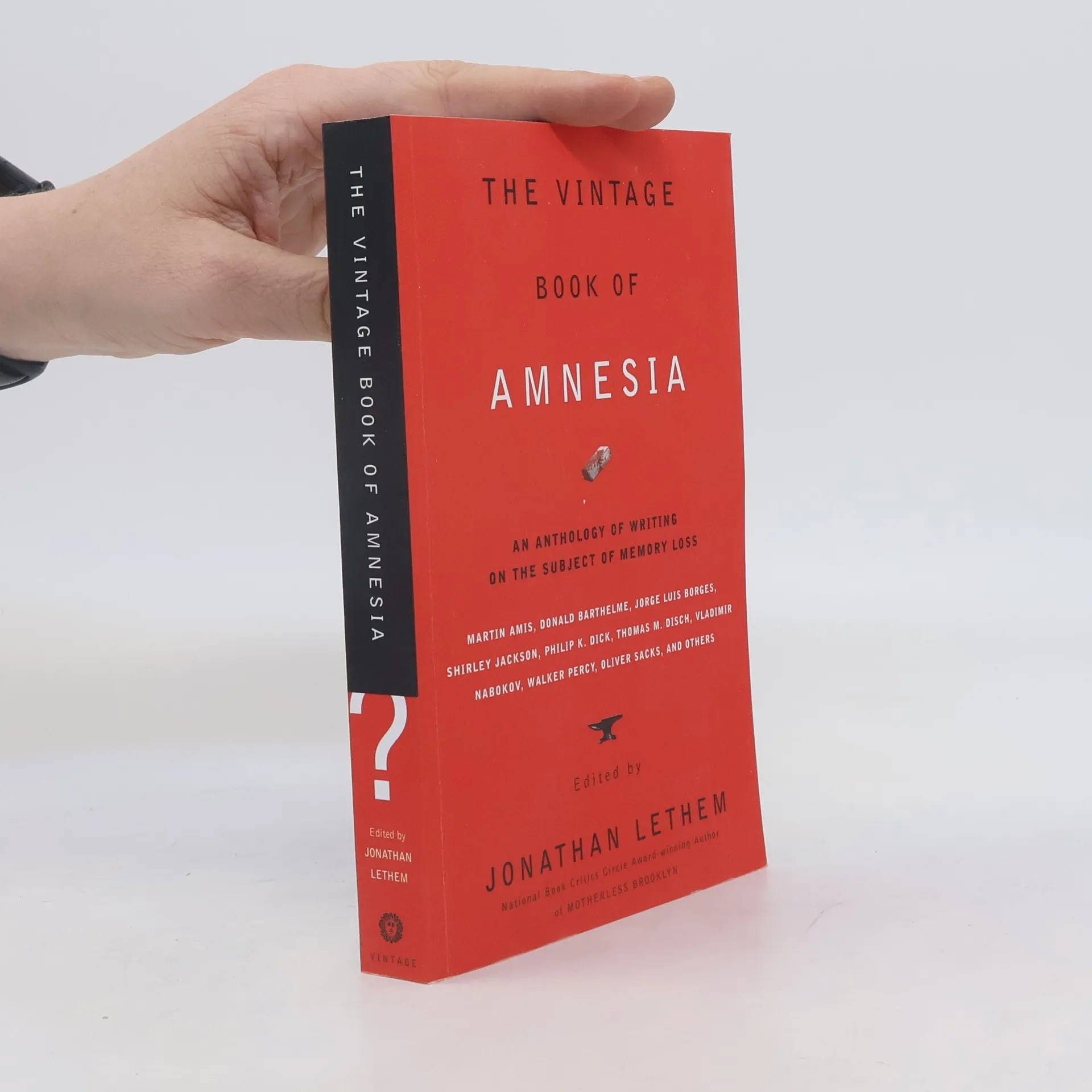
Jonathan Lethem is perhaps our most active literary voice mining the genre margins of our culture. In this unique collection he creates an anthology that no one else could. He draws on the work of such unforgettables as Julio Cortazar, who presents a man caught between the ancient and modern worlds unable to say which is real; Philip K. Dick, who tells the story of a man trapped on a spaceship of the somnolent, unable to sleep and slowly losing his mind; Shirley Jackson, who takes us on a nightmarish trip across town with a young secretary; and Oliver Sacks, who presents us with an aging hippie who possesses no memory of anything that has taken place since the early seventies. What Lethem has done is nothing less than define a new genre of literature-the amnesia story-and in the process he invites us to sit down, pick up the book, and begin to forget. Also including: John Franklin Bardin, Donald Barthelme, Thomas M. Disch, Karn Joy Fowler, David Grand, Anna Kavan, Haruki Murakami, Flann O'Brien, Edmund White, and many others.
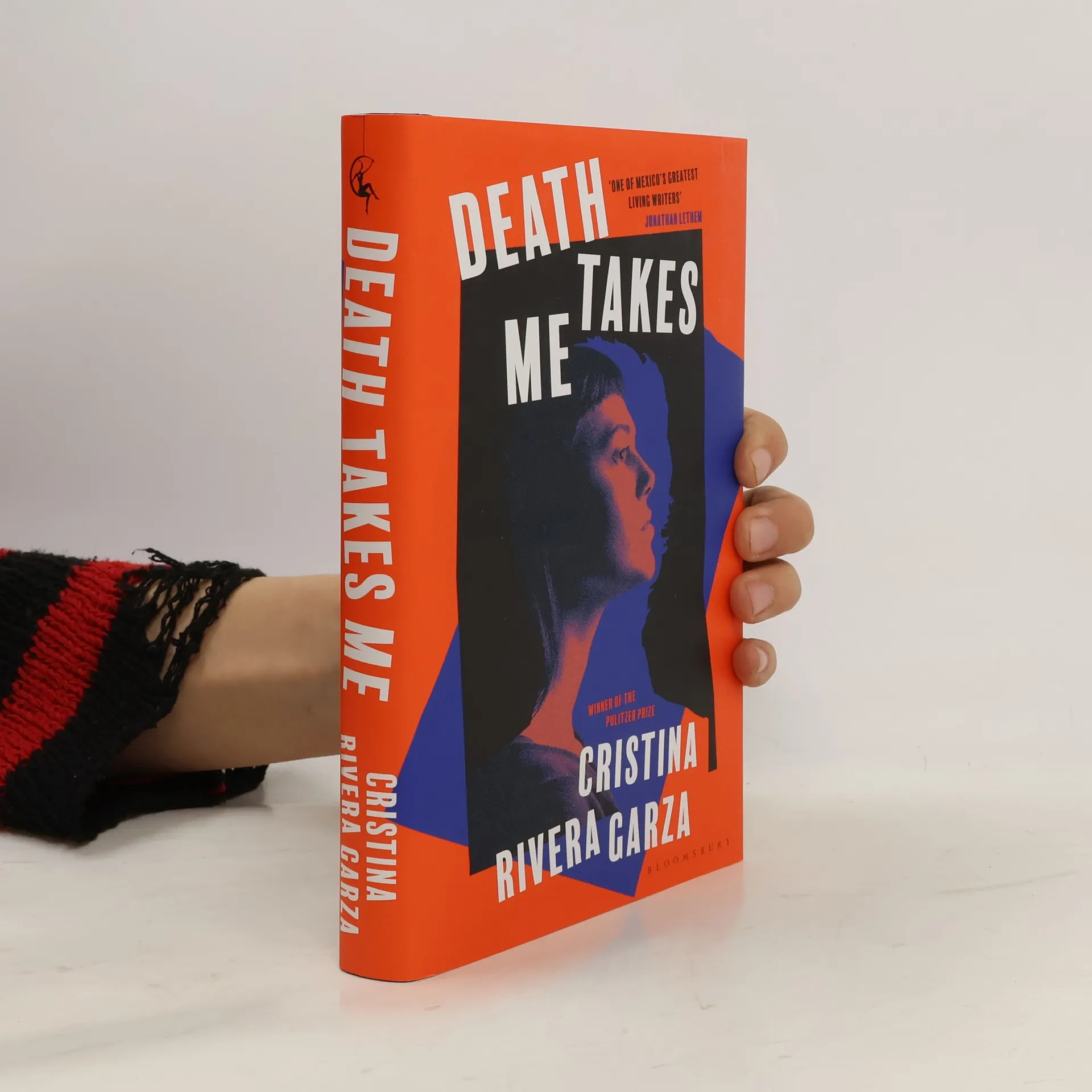
Translated by Sarah Booker and Robin Myers A city is always a cemetery. When a professor named Cristina Rivera Garza stumbles upon the corpse of a man in a dark alley, she finds a stark warning on the brick wall beside the body, scrawled in coral nail polish: 'Beware of me, my love / beware of the silent woman in the desert.' After reporting the crime to the police, the professor becomes the lead informant of the case, led by a detective with a newfound obsession with poetry and a long list of failures on her back. But what has the professor really seen? While more bodies of men are found across the city, the detective tries to decipher the meaning of the poems, and the darker stream of violence spreading throughout the city. From one of Mexico's greatest living writers, Death Takes Me is a dark and dazzling literary thriller that flips the traditional crime narrative on its head, in a world where death is rampant and violence is gendered. Unfolding with the charged logic of a dream in sentences as sharp as the cuts on the bodies of the victims - a word which, in Spanish, is always feminine - it explores with masterful imagination the unstable terrains of desire and sexuality.
Philip is in love with Alice. As the novel opens, he is beginning to lose her. Not to another man, as he fears, but to, literally, nothing. Alice is a physicist, and a team at the University where both she and Philip work has created a hole, a vacuum, a doorway of nothingness inside the laboratory. They call it "Lack." Alice becomes obsessed with Lack, as Philip is obsessed by Alice. The novel is at the same time an astute and wise portrait of unrequited love (albeit of a very unusual kind) a hilarious academic parody, a novel of ideas and a social satire. It is utterly original, but in the school of Thomas Pynchon, Don DeLillo, Katherine Dunn, and David Foster Wallace. Passion, humor, yearning and knowledge, blended together in a suspenseful love story that could be characterized as "American Magical Realism."
Lethem's latest genre-bending exploration of science, landscape and the metaphysics of love and loss. A coming of age story about a teenage girl on the frontiers of space. Pella's father, Clement, has just been swept out of elective office in New York and has set his sights on the next political frontier: joining the first human settlers on the Planet of the Archbuilders. Once the domain of a super-evolved alien species who used "viruses" to alter their ecosystem before abandoning it, the planet is now a hothouse landscape of ruined towers and refuse inhabited only by skittery, mouselike "household deer" and a few remaining Archbuilders. Clement's mission, to forge a community that embraces the Archbuilders, puts him on a collision course with Ephram Nugent, a xenophobic homesteader.
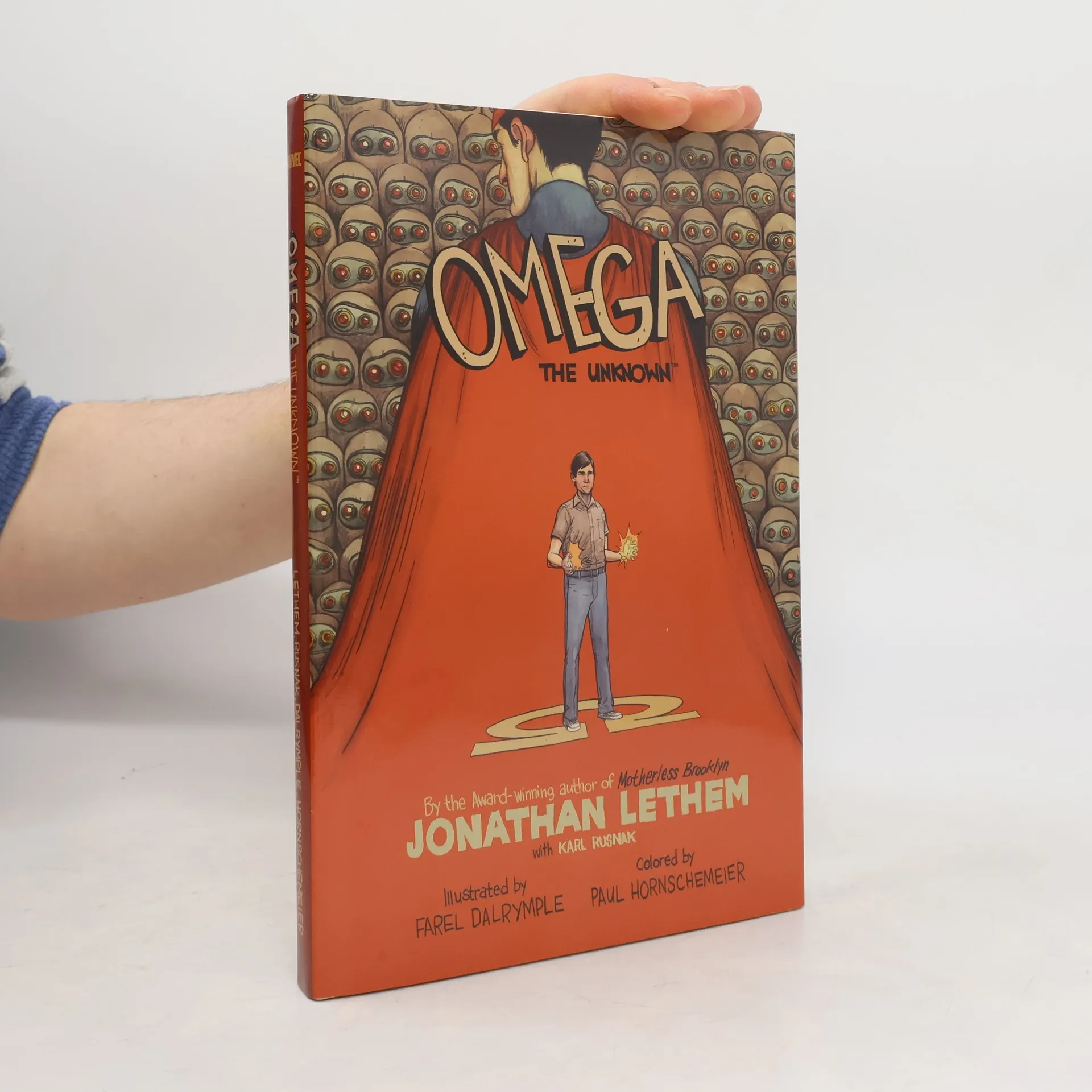
Omega, a mute, reluctant super hero from another planet, shares a strange destiny with a teenager, and they both face danger when a legion of robots and nanoviruses are sent from afar to hunt the two of them down.
Chase Insteadman is a handsome, inoffensive former child-star, living a vague routine of dinner parties and glamorous engagements on Manhattan's Upper East Side. Meanwhile, his astronaut fianc�e, trapped on the International Space Station, sends him rapturous love letters. Like Janice, Chase is adrift. Into Chase's life enters Perkus Tooth, a wall-eyed free-range pop-critic, whose soaring conspiratorial riffs are fueled by high-grade marijuana, mammoth cheeseburgers and a desperate ache for meaning. Together, Chase and Perkus attempt to unearth the Truth - that rarest of artifacts on an island where everything can be bought. At once beautiful and tawdry, poignant and funny, Lethem's new novel is as always, utterly unique.
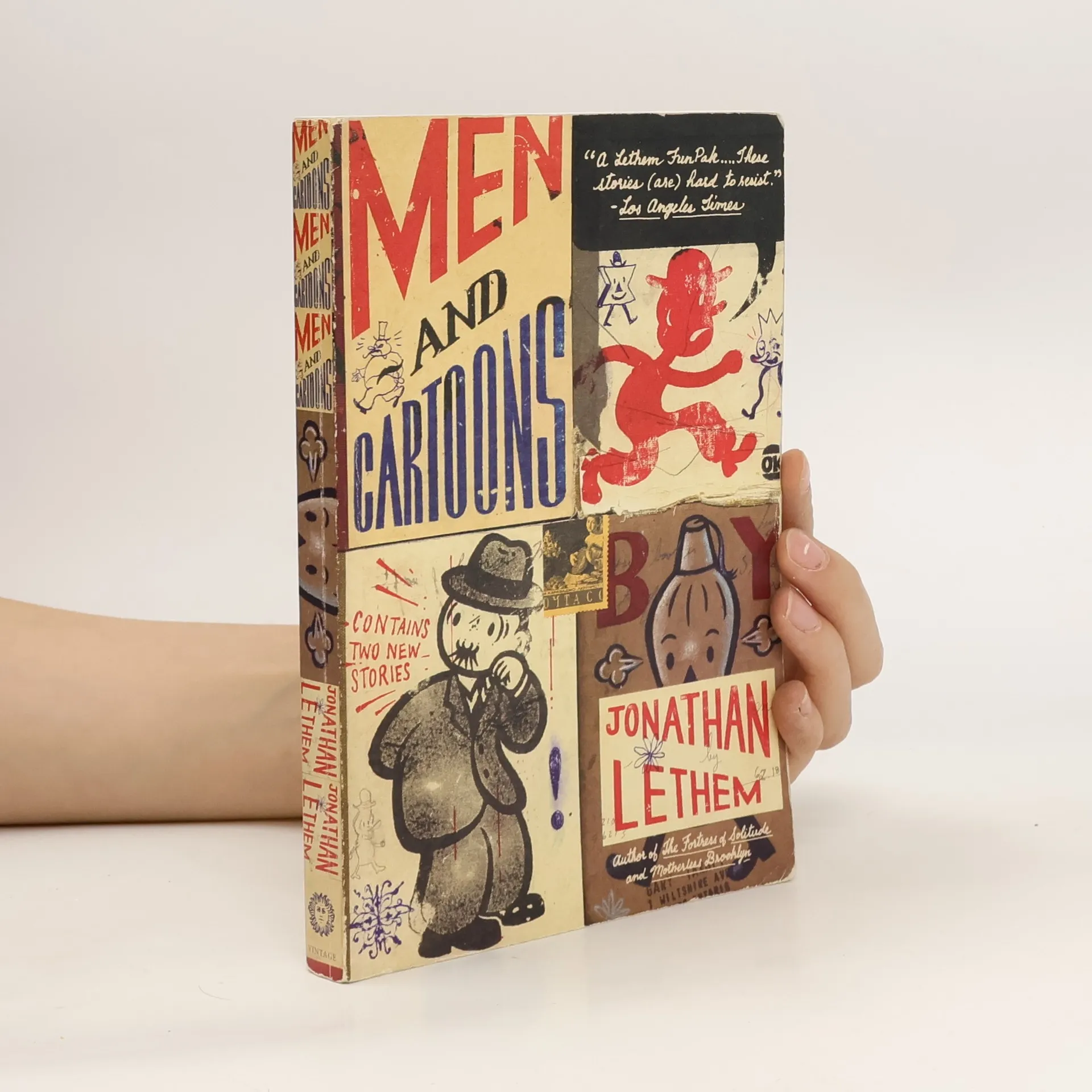
A boozy ex-military captain trapped in a mysterious vessel searches for his runaway son, an aging superhero settles into academia, and a professional "dystopianist" receives a visit from a suicidal sheep. Men and Cartoons contains eleven fantastical, amusing, and moving stories written in a dizzying array of styles that shows the remarkable range and power of Lethem's vision. Sometimes firmly grounded in reality, and other times spinning off into utterly original imaginary worlds, this book brings together marvelous characters with incisive social commentary and thought provoking allegories. A visionary and creative collection that only Jonathan Lethem could have produced, the Vintage edition features two stories not published in the hardcover edition, "The Shape We're In" and "Interview with the Crab."
Jonathan Lethem, acclaimed author of The Fortress of Solitude and Motherless
Brooklyn, here takes the reader on a road trip through a post-apocalyptic USA.
Since the war came and the bombs fell, Hatfork, Wyoming, has been a broken-
down, mutant-ridden town.
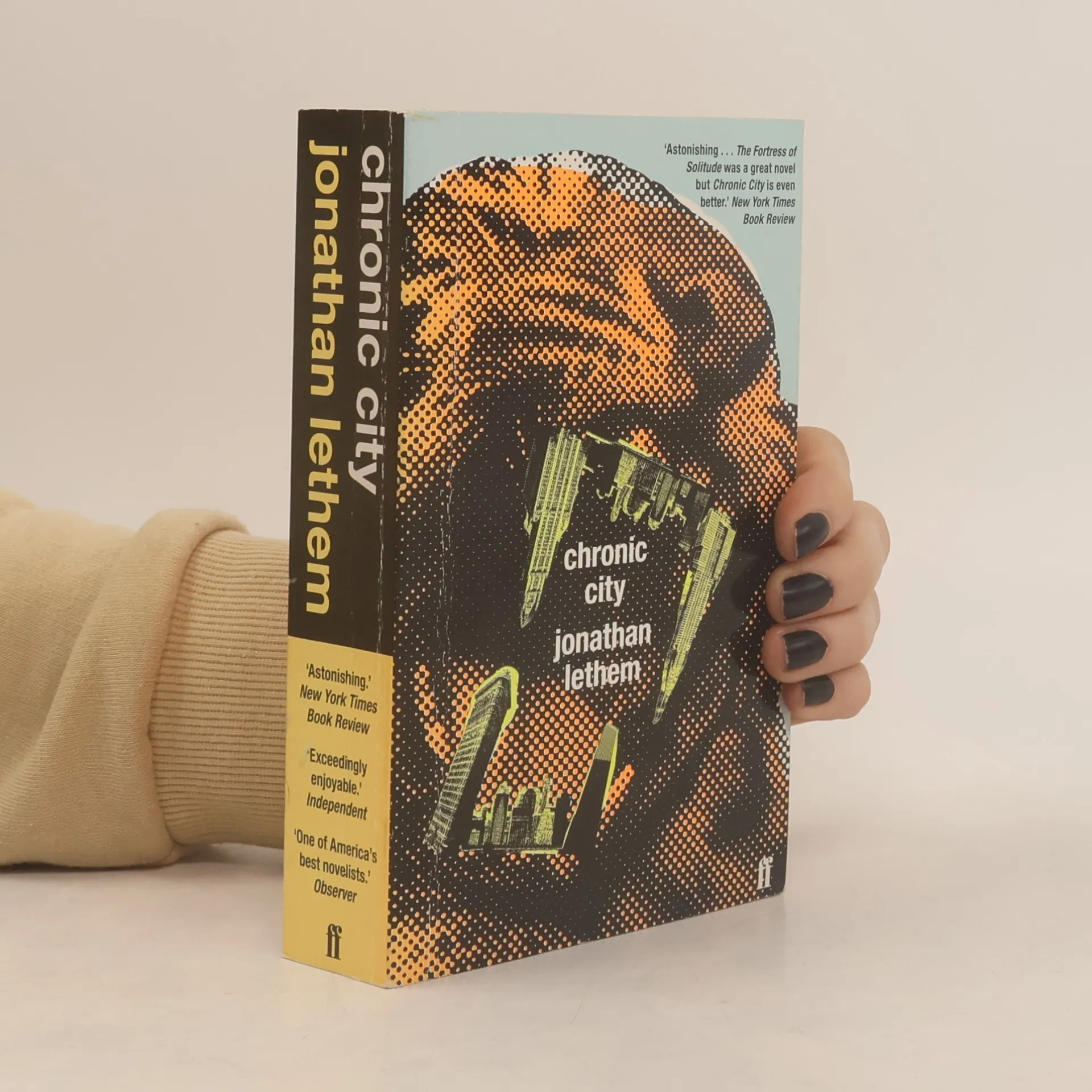
From the bestselling and award-winning author of The Fortress of Solitude and Motherless Brooklyn comes a sweeping and prismatic story of community, crime, and gentrification, tracing over fifty years of life in one Brooklyn neighbourhood[Bokinfo].
It's the summer of 1979. A fifteen-year-old boy listens to WNEW on the radio in his bedroom in Brooklyn. A monotone voice (it's the singer's) announces into dead air in between songs "The Talking Heads have a new album, it's called Fear of Music"; - and everything spins outward from that one moment. Jonathan Lethem treats Fear of Music; (the third album by the Talking Heads, and the first produced by Brian Eno) as a masterpiece - edgy, paranoid, funky, addictive, rhythmic, repetitive, spooky and fun. He scratches obsessively at the album's songs, guitars, rhythms, lyrics, packaging, downtown origins, and legacy, showing how Fear of Music hints at the directions (positive and negative) the band would take in the future. Lethem transports us again to the New York City of another time - tackling one of his great adolescent obsessions and illuminating the ways in which we fall in and out of love with works of art.
Lethem, author of the bestselling Motherless Brooklyn , returns in concentrated form - packing twice the adventure into one-eighth the pages. This book could be some kind of allegory book, but it might not be an allegory book at all. It involves people and drinking and people looking for a giant eye. It is among the best things Mr. Lethem has written.
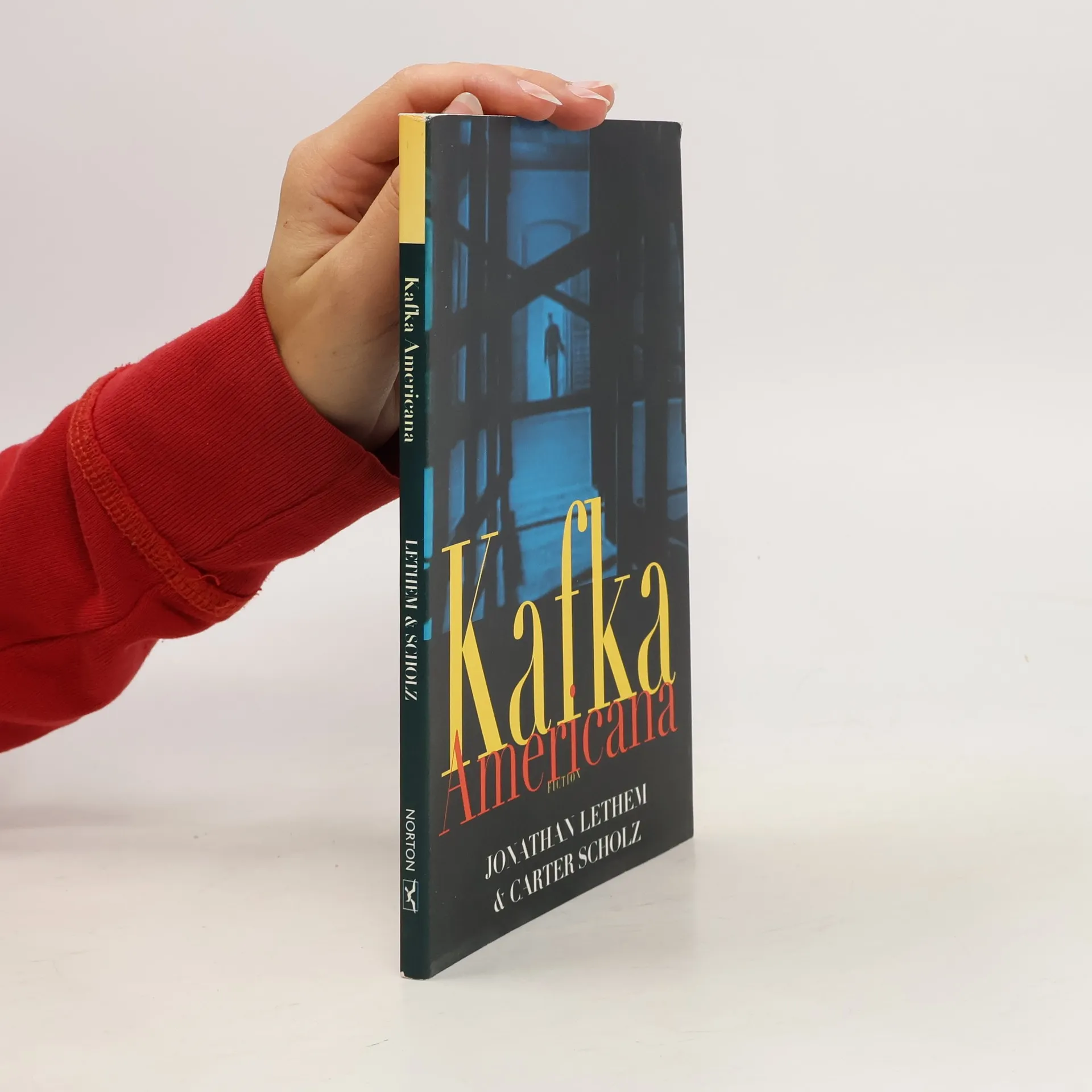
"Inspired by affection.... Extremely witty and intelligent."― Publishers Weekly Previously published only in a signed, limited edition, Kafka Americana has achieved cult status. Norton now brings this reimagination of our labyrinthine world to a wider audience. In an act of literary appropriation, Lethem and Scholz seize a helpless Kafka by the lapels and thrust him into the cultural wreckage of twentieth-century America. In the collaboratively written "Receding Horizon," Hollywood welcomes Kafka as scriptwriter for Frank Capra's It's a Wonderful Life , with appropriately morbid results. Scholz's "The Amount to Carry" transports "the legal secretary of the Workman's Accident Insurance Institute" to a conference with fellow insurance executives Wallace Stevens and Charles Ives, to muse on what can and can't be insured. And Lethem's "K for Fake" brings together Orson Welles, Jerry Lewis, and Rod Serling in a kangaroo trial in which Kafka faces fraudulent charges. Taking modernism's presiding genius for a joyride, the authors portray an absurd, ominous world that Kafka might have invented but could never have survived.
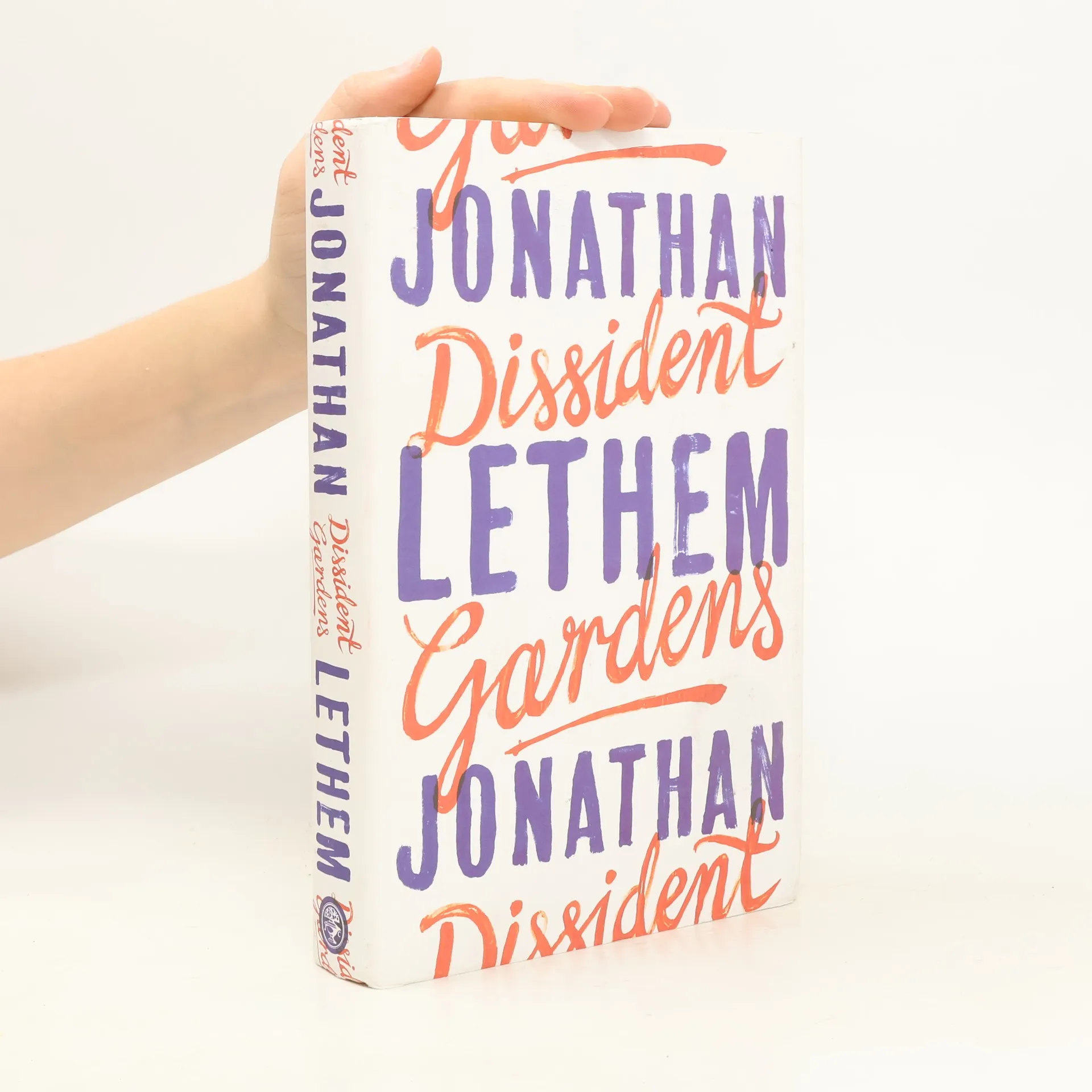
Longlisted for the 2015 Folio Prize Longlisted for the 2015 IMPAC Dublin Literary Award In 1955, Rose Zimmer got screwed. It wasnâe(tm)t the first time, and it wasnâe(tm)t the last. In fact, Rose âe" like all American Communists âe" got screwed by the entire twentieth century. She doesnâe(tm)t take it lying down. For over forty years she pounds the streets of Sunnyside Gardens, Queens, terrorising the neighbourhood, and her family, with the implacability of her beliefs, the sheer force of her grudge. And the generations that follow Rose will not easily escape her influence, her ire, her radicalism. Foremost among these is Miriam, Rose's charismatic and passionate want-away hippie daughter, who heads for the Greenwich Village of the Sixties; her black stepson Cicero, an angry debunking machine; and her bewildered grandson Sergius, who finds himself an orphan in the capitalist now. A radical family epic, and an alternative view of the American twentieth century, Dissident Gardens is the story of a group of individuals who fought and lost, but might one day win. It is a blast of pure style and literary dazzle from one of the great and most innovative writers of the age.
**A New York Times top 100 Notable Book of the Year** Alexander Bruno is a man with expensive problems. Sporting a tuxedo and trotting the globe, he has spent his adult life as a professional gambler. His particular line of work- backgammon, at which he extracts large sums of money from men who think they can challenge his peerless acumen. In Singapore, his luck turned. Maybe it had something to do with the Blot - a black spot which has emerged to distort Bruno's vision. It's not showing any signs of going away. As Bruno extends his losing streak in Berlin, it becomes clinically clear that the Blot is the symptom of something terrible. There's a surgeon who can help, but surgery is going to involve a lot of money, and worse- returning home to the garish, hash-smoke streets of Berkeley, California. Here, the unseemly Keith Stolarsky - a childhood friend in possession of an empire of themed burger bars and thrift stores - is king. And he's willing to help Bruno out. But there was always going to be a price.
From the award-winning author of The Feral Detective and Motherless Brooklyn comes an utterly original postapocalyptic yarn about two siblings, the man that came between them, and a nuclear-powered super car.
Brimming with satire and sex, this affectionate send-up of the alternative band scene, the city of Los Angeles, and the entire genre of romantic comedy remains unmistakably the work of the inimitable Lethem.
A major American novel, and arguably the finest work of literature ever to emerge from a US prison, On the Yard is a book of penetrating psychological realism in which Malcolm Braly paints an unforgettable picture of the complex and frightening world of the penitentiary. At its center are the violently intertwined stories of Chilly Willy, in trouble with the law from his earliest years and now the head of the prison's flourishing black market in drugs and sex, and of Paul, wracked with guilt for the murder of his wife and desperate for some kind of redemption. At once brutal and tender, clear-eyed and rueful, On the Yard presents the penitentiary not as an exotic location, an exception to everyday reality, but as an ordinary place, one every reader will recognize, American to the core.
Walter Tevis is the acclaimed author of The Hustler, The Man Who Fell to Earth and The Queen's Gambit.'A moral tale that has elements of Aldous Huxley's Brave New World, Superman and Star Wars' LA TIMES
»Dieses Buch bietet alle Freuden eines Lethem-Romans, die Klugheit, die tollen Dialoge und den trockenen Humor.« New York Times Der Stillstand kam plötzlich. Autos, Waffen, Computer und Flugzeuge funktionierten nicht mehr und schon war die Gesellschaft im Eimer. Seitdem lebt Journeyman zurückgezogen mit seiner Schwester Maddy auf einem Bio-Bauernhof in Maine. Was ziemlich okay ist, bis sein alter Bekannter Todbaume mit einem irren Atom-Gefährt auftaucht. Plötzlich ist die schöne Idylle in Gefahr, und es liegt an Journeyman, Todbaume aufzuhalten. Hochamüsant und äußerst gegenwärtig – ein kluger Roman über die Happy Few und die Geschichten, die sie sich über die Welt erzählen, um ihren kleinen Frieden zu schützen. Nach dem Stillstand lebt Journeyman ein zufriedenes, kleines Leben: Er hilft dem Metzger von East Tindwerwick in Maine und liefert die Lebensmittel aus, die seine Schwester Maddy auf ihrer Bio-Farm anbaut. Doch dann taucht sein alter Freund Todbaume wieder auf, mit einem Fahrzeug namens Blue Streak: einem atombetriebenen Tunnelbagger. Todbaume ist einer der mächtigsten Männer in Hollywood, seine Motive sind unklar, aber seine Art ist so unangenehm wie eh und je. Als eine alte Geschichte zwischen Todbaume und Maddy wieder hochkocht, und die Idylle ihrer kleinen Post-Stillstands-Welt zerstört zu werden droht, muss Journeyman aktiv werden, um das zu schützen, was er liebt.
Die Dean Street in Brooklyn ist mehr als eine Straße. Hier werden Träume wie harte Währung gehandelt, treffen reiche Kids auf Jungs aus der Hood und große Verbrechen auf kleine Gaunereien. Mit meisterhafter literarischer Finesse erzählt Jonathan Lethem die wechselvolle Geschichte von einer der hippsten Straßen New Yorks. Ein Blick hinter die Kulissen einer Stadt und einer Zeit, in der vieles immer stärker zur bloßen Fassade gerät.Die Dean Street gleicht einer Bühne. Täglich wird hier ein Tanz aus Macht, Geld und Gewalt aufgeführt. Wem gehört das Pflaster? Wer zahlt den Preis fürs Überleben? Einmal wird ein Kind am Eisstand Zeuge einer Schießerei, ein anderes Mal wird ein paar Blocks weiter ein anderes Kind dabei erwischt, wie es im Kiosk ein Erwachsenenmagazin mitgehen lässt. Rivalisierende Gangs streiten sich über das Recht, wer in der Straße Hockey spielen darf, um die Ecke wirft jemand versehentlich einen Baseball in die Windschutzscheibe eines Autos. Doch hinter all diesen Ereignissen lauern immer andere Strippenzieher: Eltern, Polizisten, Vermieter und diejenigen, die in der Stadt die Schlagzeilen und Gesetze schreiben. Sie alle prägen dieses Viertel, seine Geschichte und seine Gegenwart.Jonathan Lethem, einer der großen Erzähler Amerikas und selbst ein Kind Brooklyns, hat diesem Viertel eine grenzenlose Liebeserklärung geschrieben: witzig, vielschichtig und unfassbar berührend.
»Lethem ist ein König der Sätze. Sein Talent ist riesig und sein Blick so scharf wie eh und je.« New York Times »Alan, der Glückspilz« ist ein wilder Ritt ins Land der glücklosen Außenseiter. Mit gewohnt scharfem Blick und überbordendem Erfindungsreichtum schickt Jonathan Lethem seine Figuren ins Herz Manhattans und an die Steilklippen der Weltmeere. In neun betörenden, manchmal absurden und immer herzzerreißend komischen Geschichten wagt sich Jonathan Lethem vor auf das wahnwitzige Terrain bedrohter Existenzen. Familienväter in der Sinnkrise müssen sich dem drohenden Kontrollverlust genauso stellen wie berühmte Theaterregisseure in Manhattan und vergessene Comicfiguren auf einer verlassenen Insel. Wie in seinen gefeierten Romanen lauert bei Lethem das Unheimliche im Banalen, der schleichende Verlust des Selbst tröpfelt durch die hehren Zielsetzungen seiner Figuren, bis man sie auswringen kann wie einen nassen Schwamm. Dabei kostet der Autor in vertrauter Fabulierlust die Klaviatur des Erfindungsreichtums bis zur letzten Note aus.