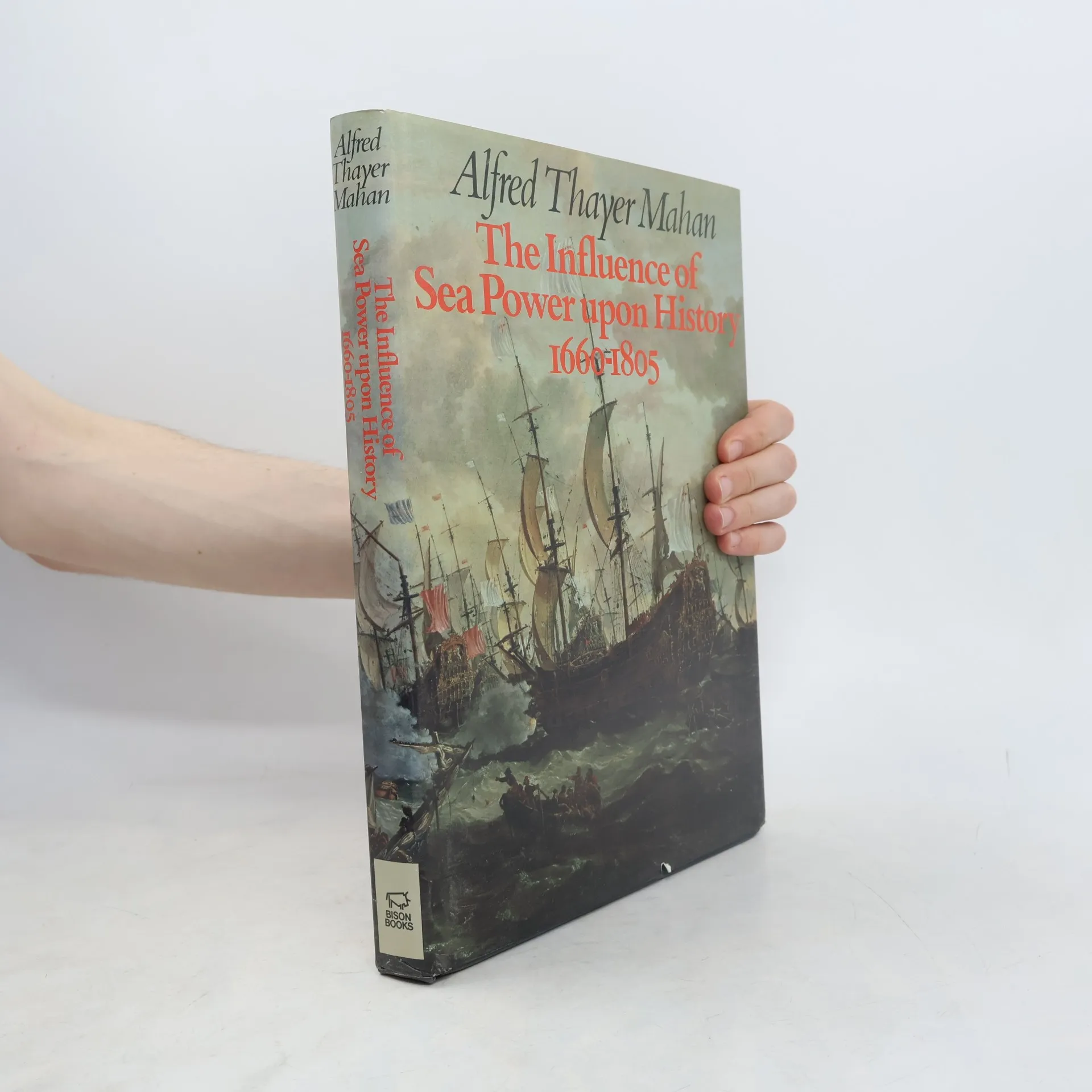
Alfred Thayer Mahan was a pivotal geostrategist and historian whose influential concept of "sea power" posited that naval dominance translates to global impact. His seminal work analyzed the intricate relationship between maritime strength and international influence, profoundly shaping strategic thought for navies worldwide. Mahan's theories spurred naval arms races and continue to permeate modern military doctrine, particularly within the U.S. Navy. His keen insights into military history and geopolitics solidify his legacy as a cornerstone of strategic thinking.
The definite object in this work is an examination of the general history of Europe and America with particular reference to the effect of sea power upon the course of that history. Preface
Focusing on naval strategy and historical analysis, Alfred Thayer Mahan explores the critical role of sea power in shaping global politics and conflicts from the seventeenth to the eighteenth centuries. Drawing from his extensive experience, Mahan argues that control of the oceans is a key indicator of national strength, influencing events like the English Revolution and the Seven Years' War. His work not only justified imperial expansion but also significantly impacted the naval arms race leading up to World War I, marking it as a pivotal text in military history.
Focusing on the critical role of naval power in shaping global history, this influential work analyzes the rise of British naval supremacy from 1660 to 1783. Mahan, while serving as President of the US Naval War College, details various European and American conflicts, illustrating how sea power dictated outcomes and influenced imperial dominance. His insights not only impacted naval strategies of his time but also laid the groundwork for the naval arms race leading into World War I. This edition is printed on high-quality acid-free paper.