

Explore the latest books of this year!
Bookbot

Alexandra Lange

    Alexandra Lange is a respected journalist and architectural historian whose work delves deeply into architecture, design, and urbanism. Through her articles for prominent publications, she explores the intersections of space, society, and culture. Her analytical approach and emphasis on critical thinking illuminate the complexities of the built environment and design practices, offering readers a more profound understanding of the world around them.

    Acquittée. Je l'ai tué pour ne pas mourir
    Writing About Architecture
    Meet Me by the Fountain: An Inside History of the Mall
    The Design of Childhood
    • The Design of Childhood

      • 416 pages
      • 15 hours of reading
      3.9(263)Add rating

      An eye-opening exploration of how children's playthings and surroundings impact their development reveals that parents often focus on playdates and education while overlooking the significance of toys, classrooms, and neighborhoods. These elements reflect evolving ideas about child-rearing. Choices between wooden, plastic, or digital toys raise questions about what children sacrifice when safety takes precedence over play. How can the built environment foster self-reliance? Parents, educators, and children find themselves navigating these debates. Prominent design critic Alexandra Lange uncovers the surprising histories of the human-made aspects of children's lives, illustrating how these seemingly innocuous items influence behavior, values, and health in subtle ways. Her investigation highlights how decisions by toymakers, architects, and urban planners have shaped American children’s paths toward independence. Through Lange's perspective, everything from sandboxes to streets is imbued with deeper meaning. This book is essential for parents, educators, and design enthusiasts, offering a transformative view of the world by revealing it through the eyes of children.

      The Design of Childhood
    • Few places have been as nostalgized, or as maligned, as malls. Since their birth in the 1950s, they have loomed large as temples of commerce, the agora of the suburbs. In their prime, they proved a powerful draw for creative thinkers such as Joan Didion, Ray Bradbury, and George Romero, who understood the mall's appeal as both critics and consumers. Yet today, amid the aftershocks of financial crises and a global pandemic, as well as the rise of online retail, the dystopian husk of an abandoned shopping center has become one of our era's defining images. Conventional wisdom holds that the mall is dead. But what was the mall, really? And have rumors of its demise been greatly exaggerated?In her acclaimed The Design of Childhood, Alexandra Lange uncovered the histories of toys, classrooms, and playgrounds. She now turns her sharp eye to another subject we only think we know. She chronicles postwar architects' and merchants' invention of the mall, revealing how the design of these marketplaces played an integral role in their cultural ascent. In Lange's perceptive account, the mall becomes newly strange and rich with contradiction: Malls are environments of both freedom and exclusion--of consumerism, but also of community. Meet Me by the Fountain is a highly entertaining and evocative promenade through the mall's story of rise, fall, and ongoing reinvention, for readers of any generation.

      Meet Me by the Fountain: An Inside History of the Mall
    • Writing About Architecture

      • 192 pages
      • 7 hours of reading

      Extraordinary architecture addresses so much more than mere practical considerations. It inspires and provokes while creating a seamless experience of the physical world for its users. It is the rare writer that can frame the discussion of a building in a way that allows the reader to see it with new eyes. Writing About Architecture is a handbook on writing effectively and critically about buildings and cities. Each chapter opens with a reprint of a significant essay written by a renowned architecture critic, followed by a close reading and discussion of the writer's strategies. Lange offers her own analysis using contemporary examples as well as a checklist of questions at the end of each chapter to help guide the writer. This important addition to the Architecture Briefs series is based on the author's design writing courses at New York University and the School of Visual Arts. Lange also writes a popular online column for Design Observer and has written for Dwell, Metropolis, New York magazine, and The New York Times. Writing About Architecture includes analysis of critical writings by Ada Louise Huxtable, Lewis Mumford, Herbert Muschamp, Michael Sorkin, Charles Moore, Frederick Law Olmsted, and Jane Jacobs. Architects covered include Marcel Breuer, Diller Scofidio + Renfro, Field Operations, Norman Foster, Frank Gehry, Frederick Law Olmsted, SOM, Louis Sullivan, and Frank Lloyd Wright.

      Writing About Architecture
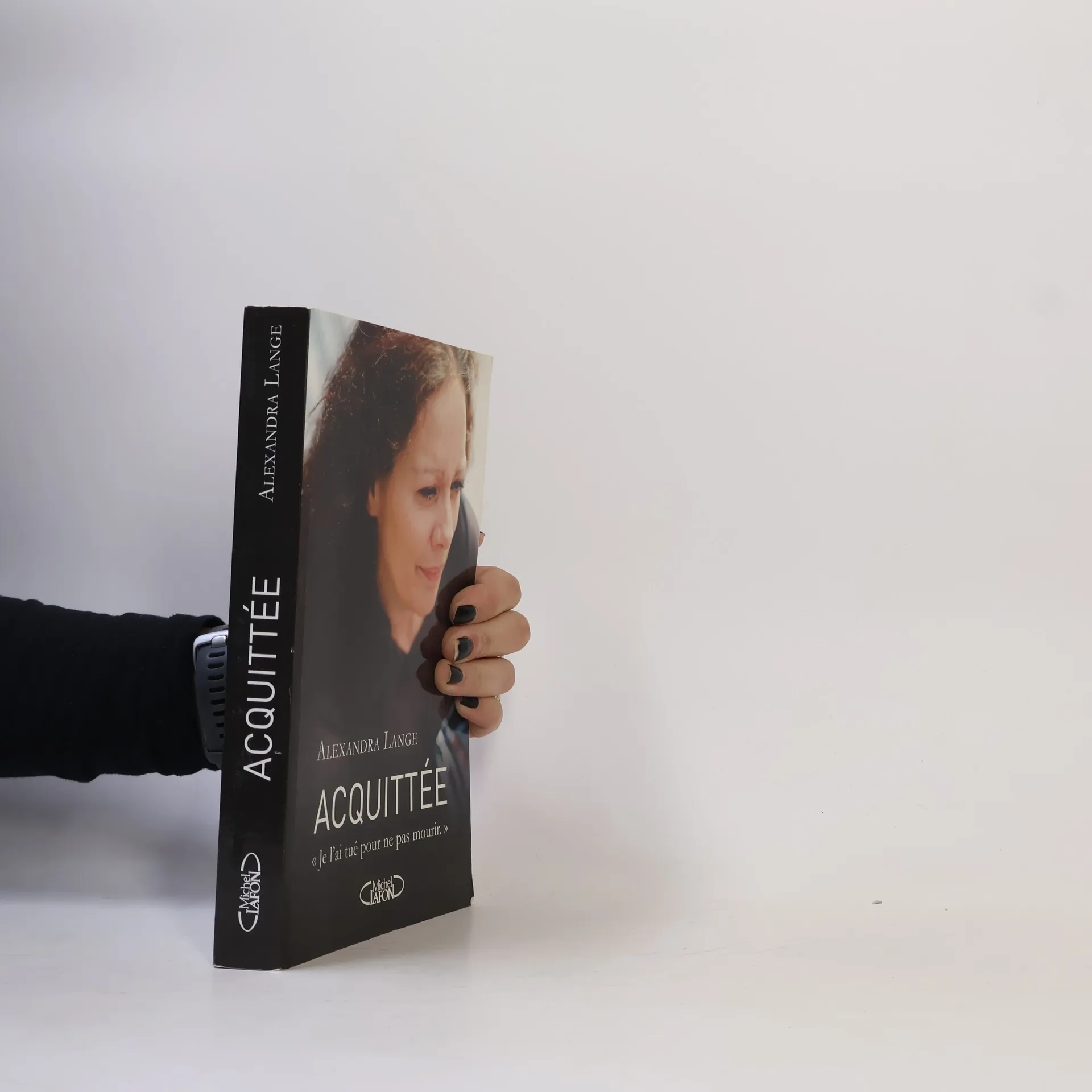
    • "J'ai voulu montrer le calvaire que vivent des femmes comme moi. Dénoncer le silence de ceux qui savent mais se taisent. Et répondre à ceux qui se demandent pourquoi une femme battue a tant de mal à quitter son tortionnaire. " Sans doute Alexandra est-elle au début restée par amour. Il y a eu les promesses, également : "Je ne recommencerai plus". Puis les coups à nouveau, les insultes, les humiliations, les viols, les strangulations, la peur. C'est la peur qui empêche de partir. Peur de se retrouver à la rue avec ses quatre enfants, peur des représailles sur ses proches si elle se réfugiait chez eux. Peur des menaces directes de son mari : "Si tu fais ça, je te tuerai." Le soir du drame, Alexandra lui a dit qu'elle allait s'en aller. La fureur de son dernier étranglement l'a terrifiée au point de provoquer son geste fatal. En reconnaissant, dans son cas, la légitime défense, la justice française a braqué les projecteurs sur les victimes des violences conjugales. Et le témoignage digne et bouleversant d'Alexandra Lange, adressé à nous tous, est aussi un appel à l'aide pour ces femmes en danger.

      Acquittée. Je l'ai tué pour ne pas mourir