Marketing Sovereign Promises
- 232 pages
- 9 hours of reading
This book offers a new theory of state growth, based on the creation of credible and prudent state budgets.


Gary Cox is a British philosopher and biographer, known for his insightful works on Jean-Paul Sartre, existentialism, and broader philosophical topics. His writing delves into fundamental questions of human existence, freedom, and ethics. Cox critically examines the challenges of finding meaning in contemporary life. He offers a clear and analytical approach to complex philosophical ideas.



This book offers a new theory of state growth, based on the creation of credible and prudent state budgets.
The Supreme Court's reapportionment decisions, beginning with Baker v. Carr in 1962, had far more than jurisprudential consequences. They sparked a massive wave of extraordinary redistricting in the mid-1960s. Both state legislative and congressional districts were redrawn more comprehensively--by far--than at any previous time in our nation's history. Moreover, they changed what would legally happen should a state government fail to enact a new districting plan when one was legally required. This book provides the first detailed analysis of how judicial partisanship affected redistricting outcomes in the 1960s, arguing that the reapportionment revolution led indirectly to three fundamental changes in the nature of congressional elections: the abrupt eradication of a 6% pro-Republican bias in the translation of congressional votes into seats outside the south; the abrupt increase in the apparent advantage of incumbents; and the abrupt alteration of the two parties' success in congressional recruitment and elections.
The 10th anniversary edition of a witty classic about the philosophy of existentialism. It is also a genuine self-help book offering clear advice on how to live according to the principles of existentialism formulated by Nietzsche, Sartre, Camus, and the other great existentialist philosophers. An attack on contemporary excuse culture, the book urges us to face the hard existential truths of the human condition. By revealing that we are all inescapably free and responsible - 'condemned to be free,' as Sartre says - the book aims to empower the reader with a sharp sense that we are each the master of our own destiny. Cox makes fun of the reputation existentialism has for being gloomy and pessimistic, exposing it for what it really is - an honest, uplifting, and potentially life changing philosophy! This striking 10th anniversary edition with a substantial new preface includes more pointers on how to be a true existentialist, including how to be an existentialist at a time when environmental issues are becoming ever more pressing and our 'post-truth' world increasingly subjects us to the politically polarising power of simplistic social media.
Exploring Sartre's maxim 'Hell is other people!', Gary Cox delves into existential themes surrounding the human condition and the self. He examines how our understanding of selfhood influences interpersonal dynamics, shedding light on the complexities of relationships and the inherent struggles they entail. Through this analysis, Cox offers a profound reflection on the interplay between individuality and social interaction.
»Gott ist tot«, »Der Mensch ist das Maß aller Dinge« oder »Ich denke, also bin ich« - all dies sind Zitate großer Philosophen, die im täglichen Sprachgebrauch häufig fallen. Doch was sie eigentlich bedeuten, ist nur den wenigsten bekannt. In einem ebenso unterhaltsamen wie aufschlussreichen Streifzug durch die Philosophiegeschichte geht Gary Cox in seinem neuen Band dieser Frage auf den Grund. Anhand 42 der wichtigsten, provokantesten, falsch zitierten und falsch verstandenen Gedanken gibt er einen kompakten Überblick über die Lehren der größten Denker und erläutert in leicht verständlicher und anregender Sprache, was mit den Zitaten ursprünglich gemeint war. Von Douglas Adams bis Wittgenstein, von Platon bis Hegel - Cary Cox nimmt seine Leserinnen und Leser mit auf eine einzigartige Reise durch die Geschichte der Philosophie. Und er zeigt, warum es nicht nur eine Antwort auf das Leben, das Universum und den ganzen Rest geben kann.
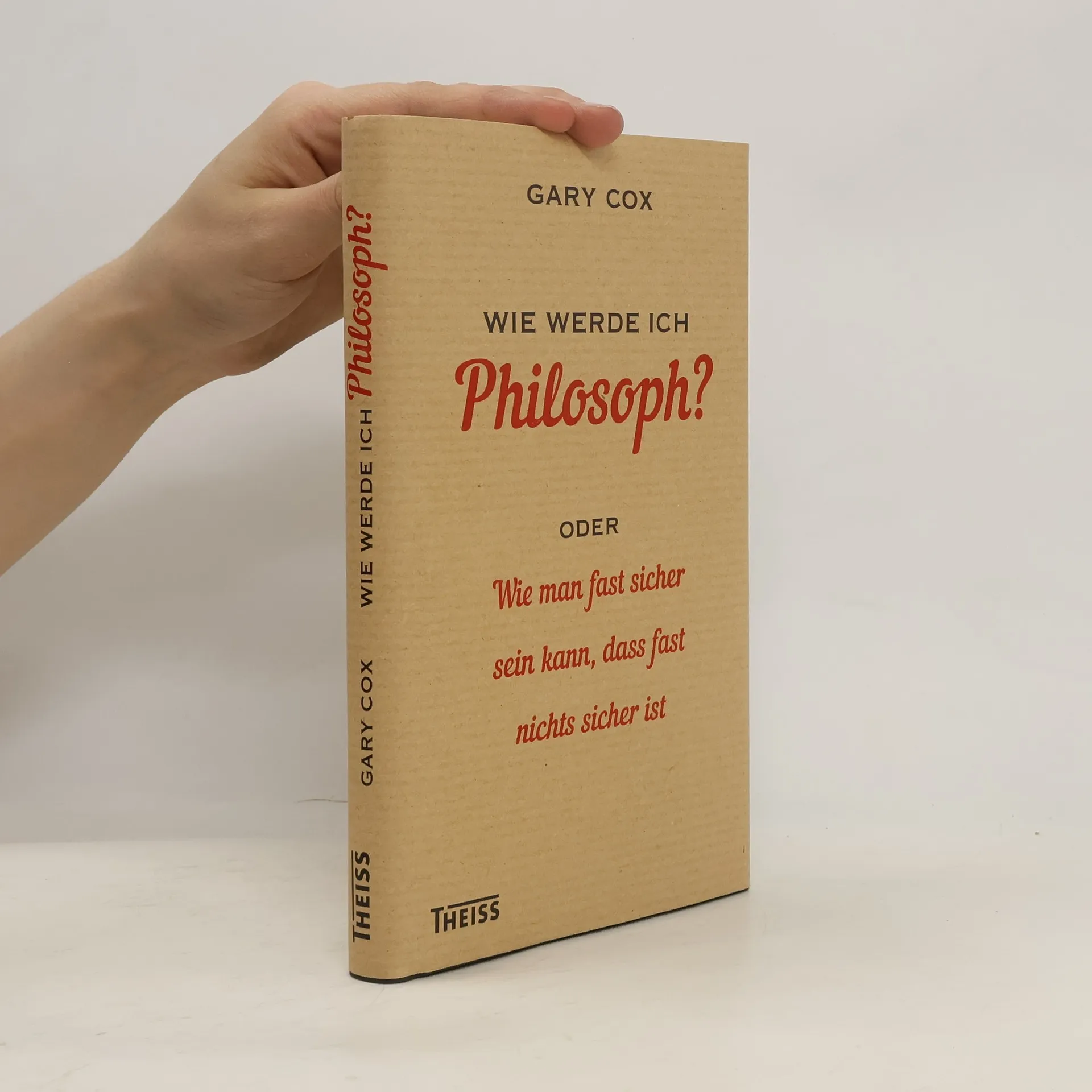
Sind Sie mit den großen Fragen des Lebens auch oft überfordert? Seien Sie beruhigt: Dieses Buch hilft Ihnen. Es liefert Antworten, zeigt aber auch, dass manche Fragen überhaupt nicht gelöst werden können. Informativ und gleichzeitig humorvoll gibt diese Gebrauchsanweisung zum Philosophieren Auskunft über die großen Themen, mit denen sich die Philosophen seit Jahrhunderten beschäftigen. Zahlreiche Beispiele aus der Popkultur wie ›Family Guy‹ und ›Monty Python's Flying Circus‹ illustrieren die philosophischen Ideen. Gleichzeitig können Sie so einiges lernen: - Wie man jede Debatte gewinnt, indem man die Menschen in eine philosophische Diskussion verwickelt - Wie man das letzte Wort behält bei der Frage, ob ein fallender Baum ein Geräusch macht, wenn keiner ihn hört - Zu denken, zu sprechen und zu argumentieren wie ein großer Philosoph.