Simone Weil was a French philosopher, Christian mystic, and social activist. With both insight and breadth, she wrote extensively about the political movements she participated in and later about spiritual mysticism. Her uncompromising pursuit of truth and moral genius left an indelible mark on ethics and philosophy.
Ideal for newcomers and seasoned scholars alike, this book serves as a comprehensive introduction to Simone Weil's philosophical ideas. It offers insights into her unique perspectives, making it an essential resource for understanding her profound contributions to philosophy.
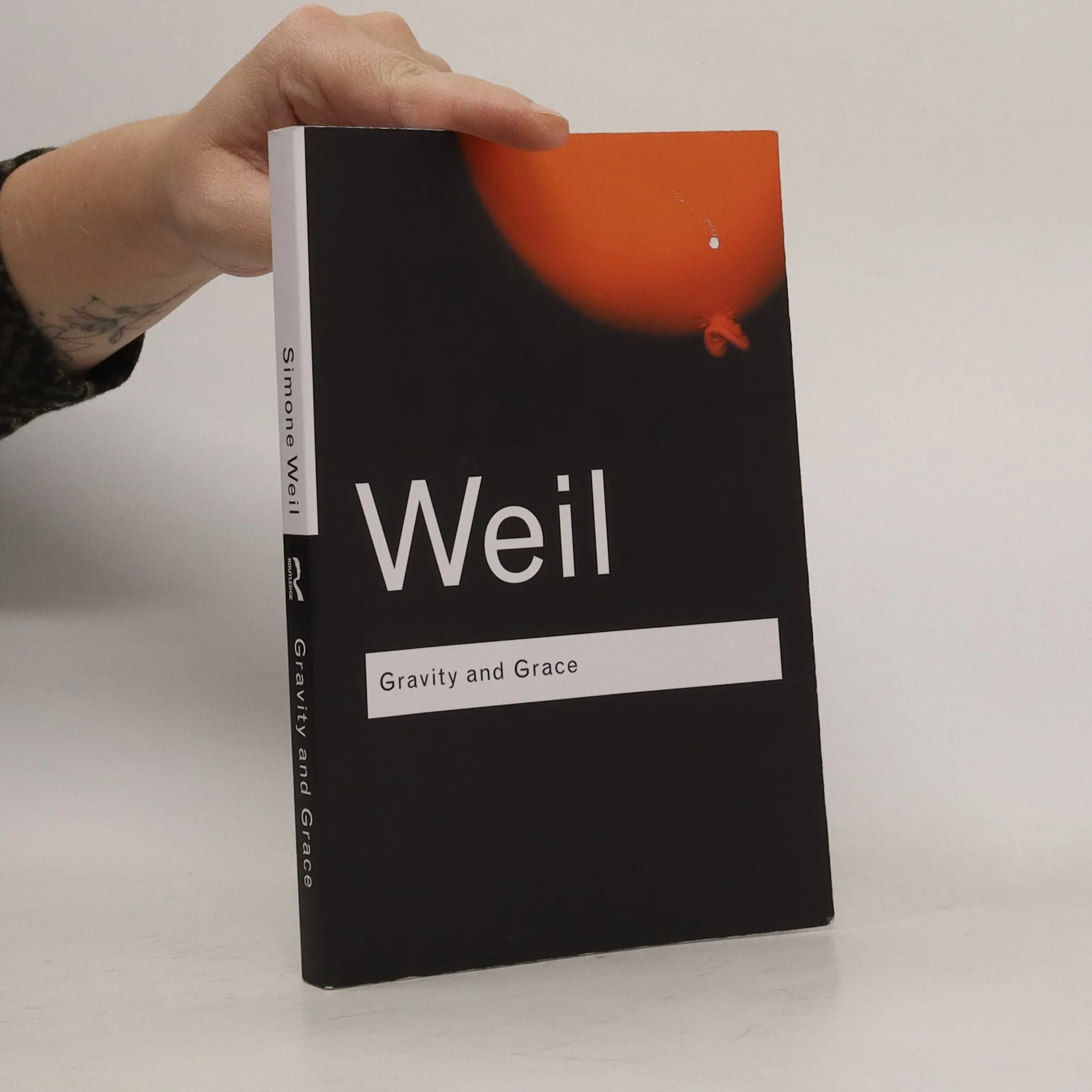
On the fiftieth anniversary of the first English edition, this Routledge Classics edition offers the English reader the complete text of this landmark work for the first time ever.
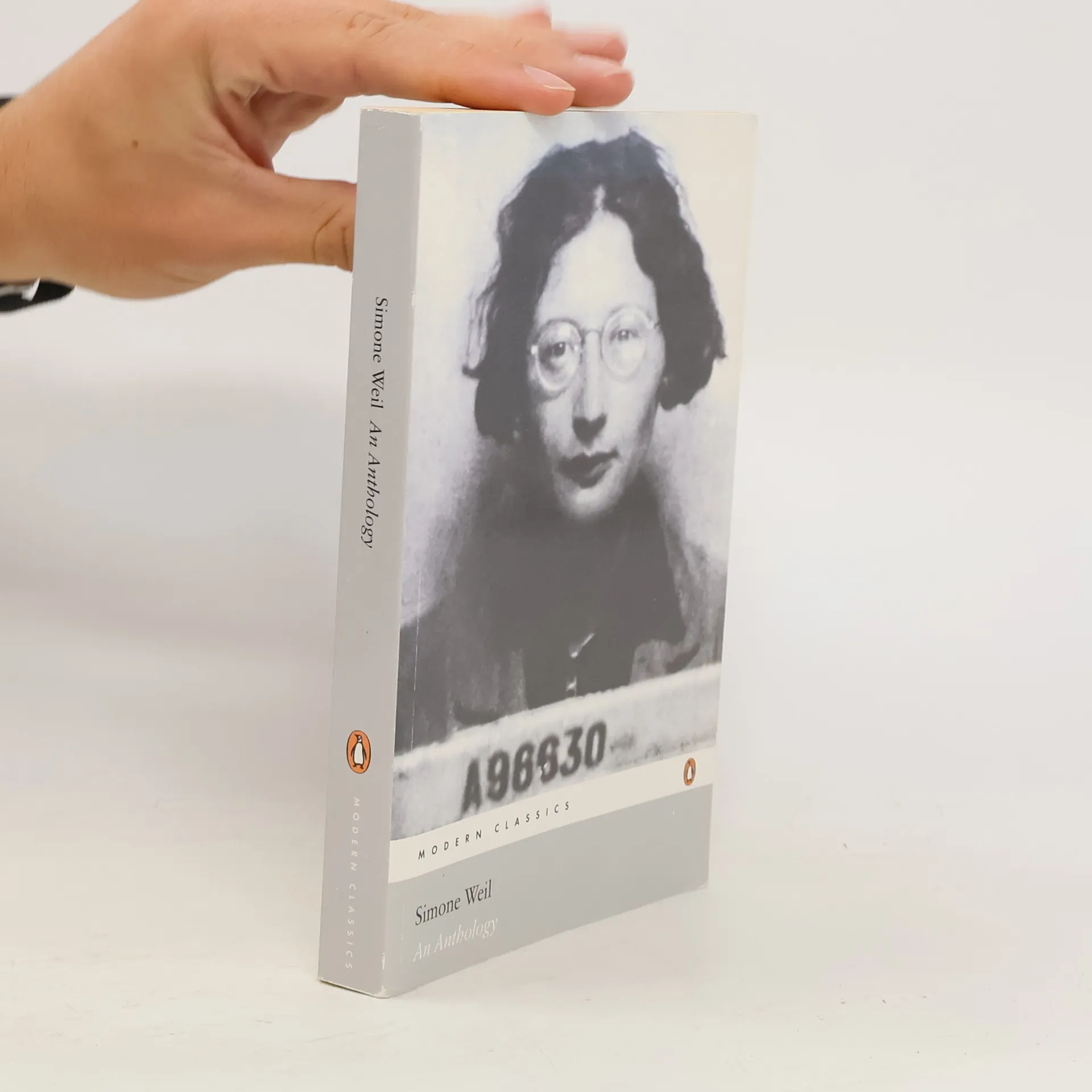
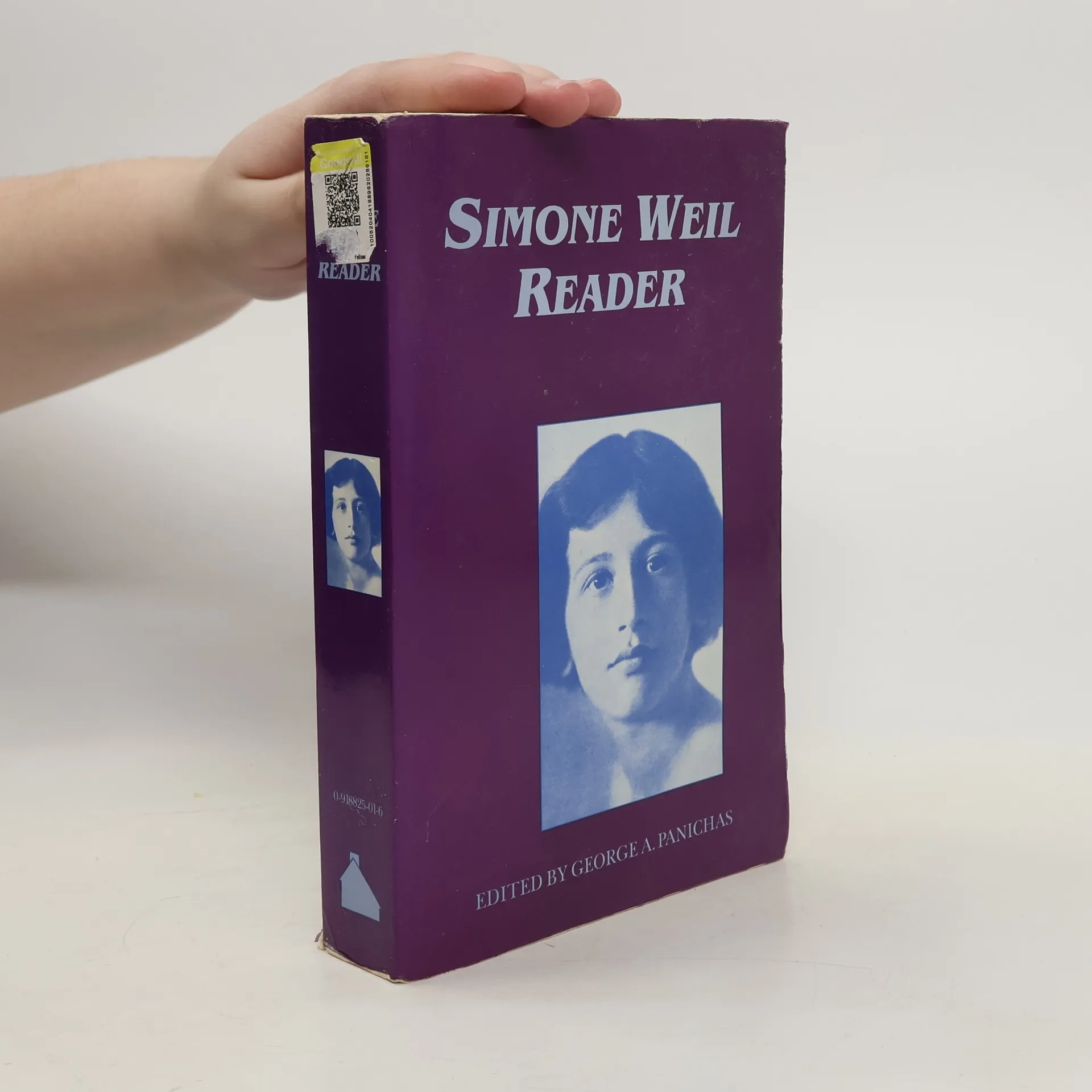
Includes some of her major essays, a selection of her letters and a biography of her work, this collection captures the essence of a remarkable woman who was one of the foremost thinkers of the 20th century.
The collection features the letters of Simone Weil, a philosopher and mystic, offering a unique glimpse into her intellectual journey and personal relationships from childhood to adulthood. Reflecting her experiences amid Europe's turmoil, these letters reveal her evolving thoughts on spirituality, politics, and social justice. Weil's connections with diverse communities and her passion for teaching, poetry, and mathematics are highlighted, alongside her involvement in significant historical events like the Spanish Civil War. An introduction by Robert Chenavier provides context, making this collection accessible to all readers.
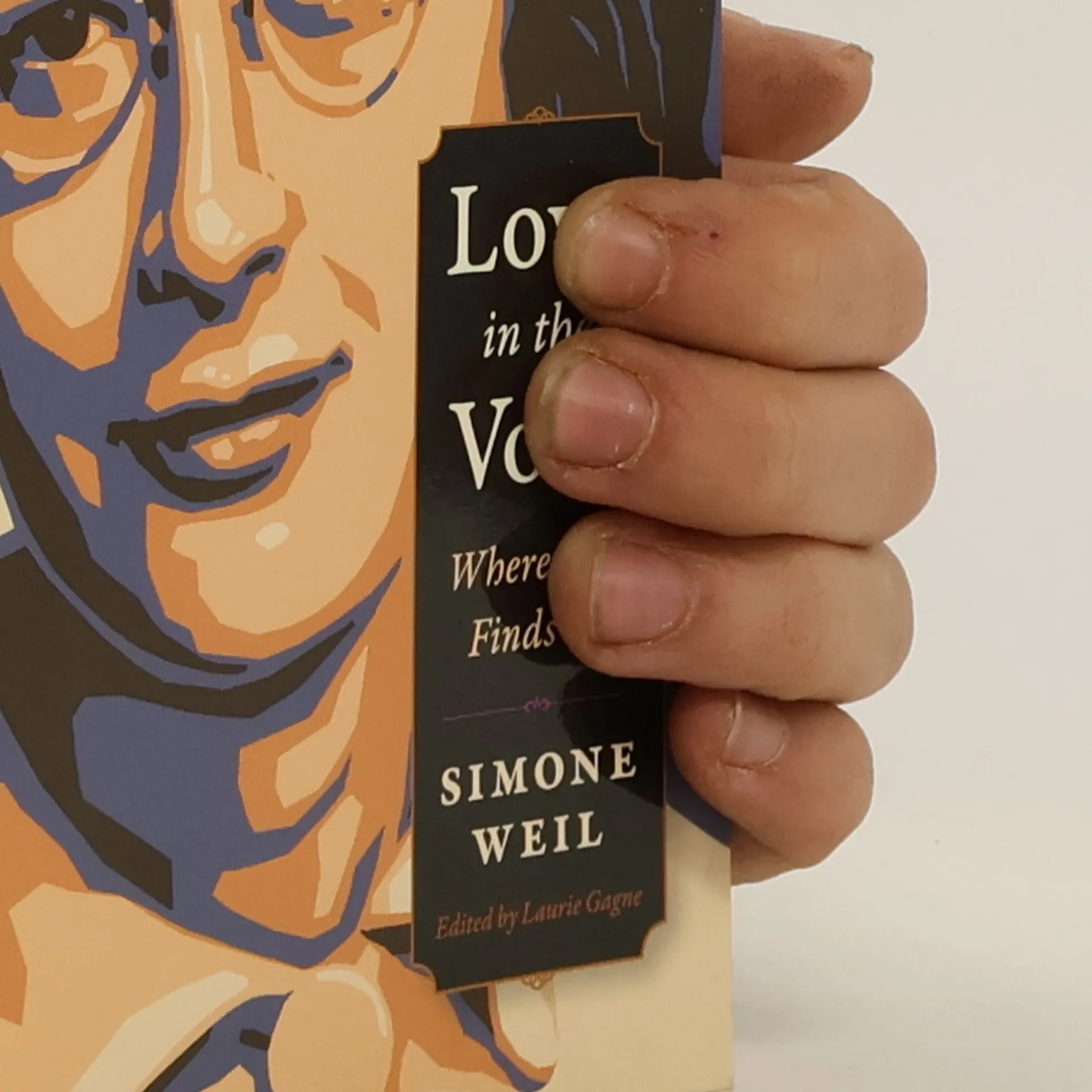
Simone Weil, the great mystic and philosopher for our age, shows where anyone
can find God. Why is it that Simone Weil, with her short, troubled life and
confounding insights into faith and doubt, continues to speak to today's
spiritual seekers? Was it her social radicalism, which led her to renounce
privilege? Her ambivalence toward institutio
In Intimations of Christianity Among the Ancient Greeks Weil apply her unique,
piercing intellect to early Greek thought, where she finds precursors to
Christianity. This Routledge Classics edition includes a new Foreword by
Christopher Hamilton.
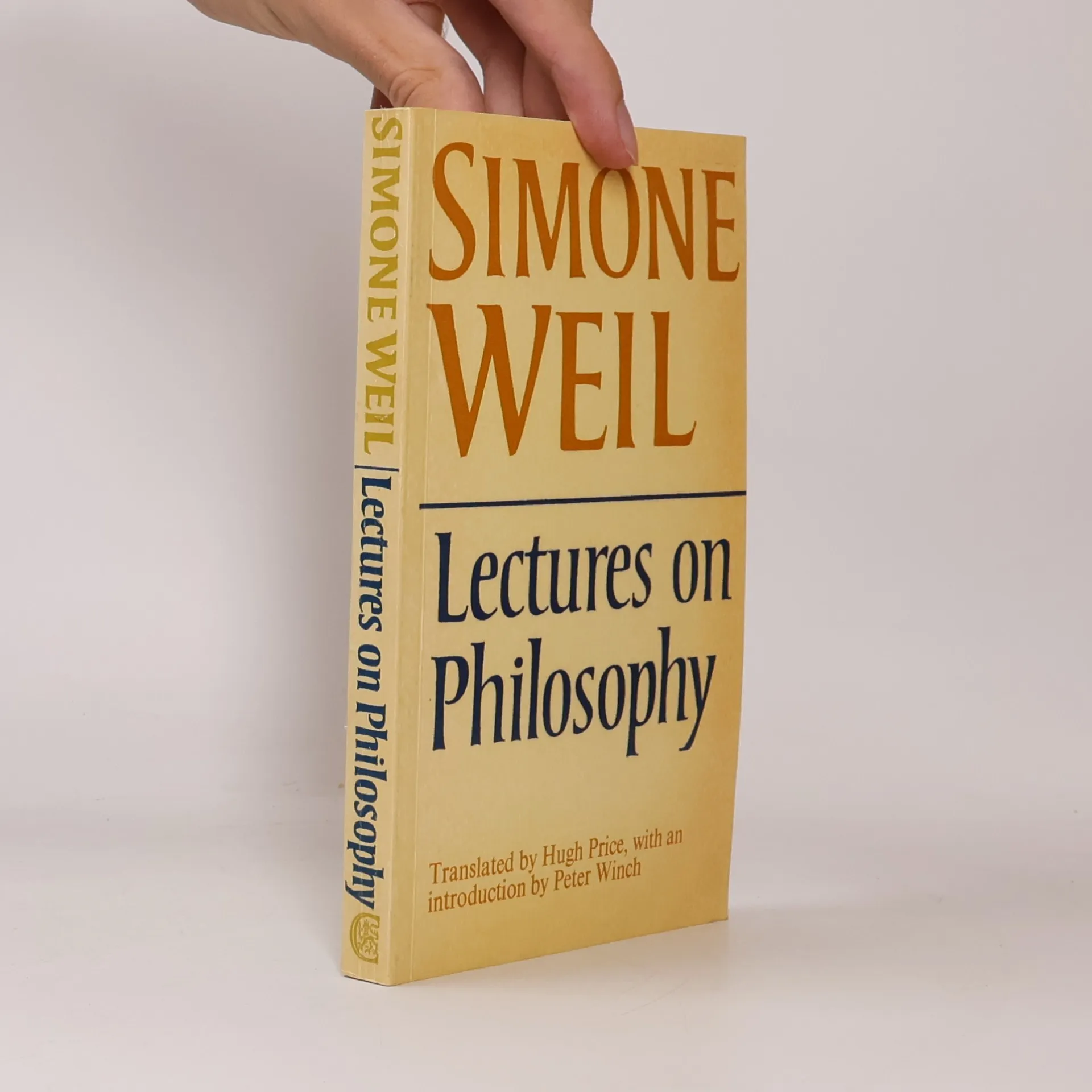
Simone Weil's Leçons de Philosophie are derived from a course she taught at the lycée for girls at Roanne in 1933-4. Anne Reynaud-Guérithault was a pupil in the class; her notes are not a verbatim record but are a very full and, as far as one can judge, faithful rendering, often catching the unmistakable tone of Simone Weil's voice as well as the force and the directness of her thought. The lectures form a good general introduction to philosophy, ranging widely over problems about perception, mind, language, reasoning and problems in moral and political philosophy too. Her method of presentation is a characteristic combination of abstract argument, personal experience and literary or historical reference. Peter Winch points out in his introduction to the book some of the more systematic connections in her philosophical work (and between this philosophical work and her other concerns), and makes a number of suggestive comparisons between Simone Weil and Wittgenstein. The translation is by Hugh Price from the Plon edition of 1959. Dr Price has added some notes to explain references in the text that might be unfamiliar to English speaking students beginning philosophy.
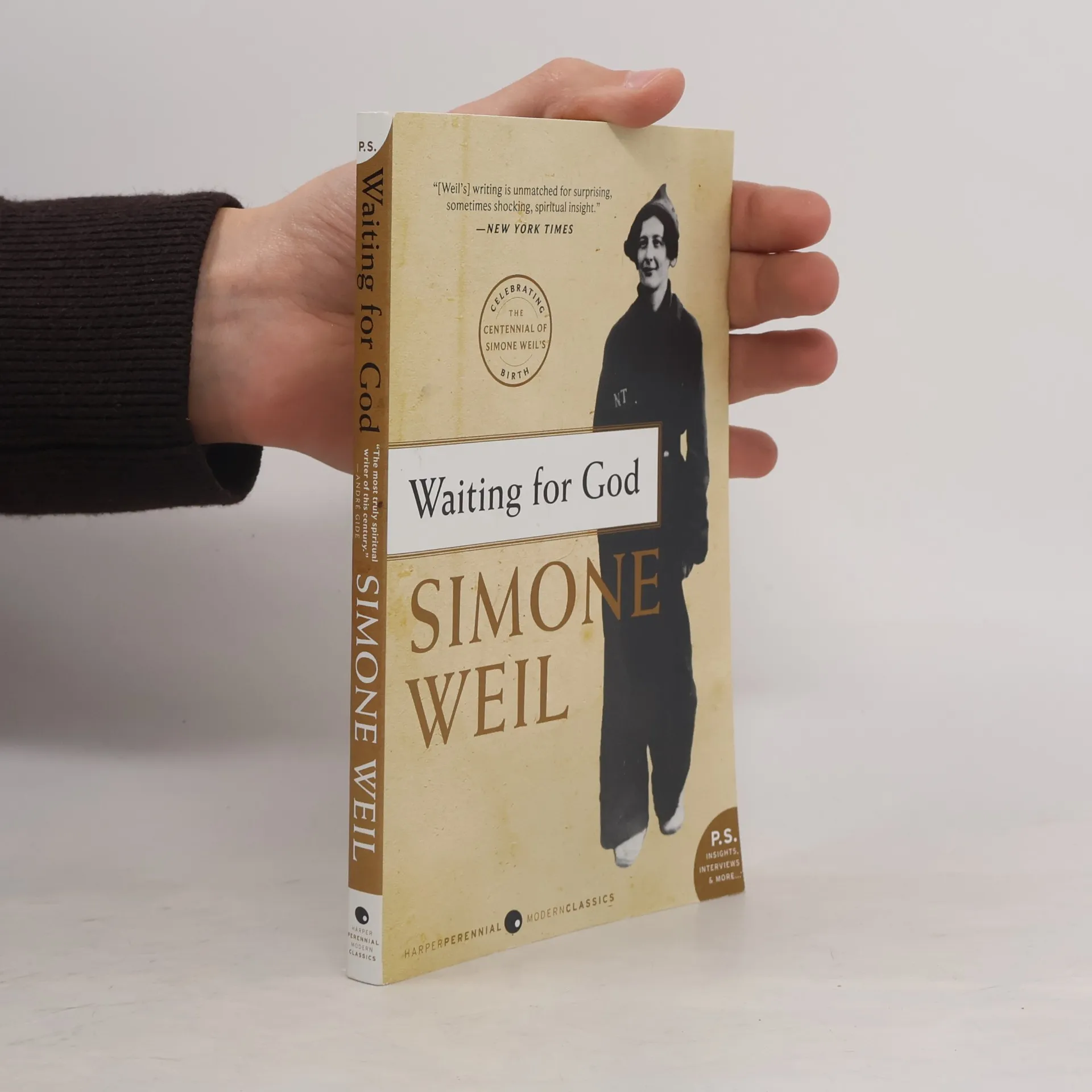
Emerging from the thought-provoking discussions and correspondence Simone Weil had with the Reverend Father Perrin, this classic collection of essays contains the renowned philosopher and social activist's most profound meditations on the relationship of human life to the realm of the transcendent. An enduring masterwork and "one of the most neglected resources of our century" (Adrienne Rich), Waiting for God will continue to influence spiritual and political thought for centuries to come.
In this remarkable work, Weil analyses the causes of oppression, its
mechanisms and forms, and questions revolutionary responses while presenting a
prophetic view of a way forward. schovat popis
Hailed by Andre Gide as the patron saint of all outsiders, Simone Weil's short life was ample testimony to her beliefs. In 1943, the final year of her life, unable to join the resistance movement in France, she worked in London for the Free French government in exile. Here she was commissioned to outline a plan for the renewal of Europe after the scourge of Nazism. The Need for Roots was the direct result. In it she seized the opportunity to denounce the false values of contemporary civilisation. In the cult of materials she witnessed a devastating loss of spirit and consequently of human values. To counteract this she sets out a radical vision for spiritual and political renewal with a passion for truth which sweeps through these pages. The book has become a lasting spiritual testament for our age, where we are confronted, as T.S. Eliot comments, by a 'genius akin to that of the saints'.
This letter, written in 1942, contains expressions of opinion on matters concerning Catholic faith, dogma and institutions. Weil asks the priest whether each of these opinions is or is not compatible with her being received into the Church.
An NYRB Classics Original A brilliant woman who was a study in fiercely maintained contradictions, a star student who went to work on a factory line, a Jewish convert to Catholicism who insisted on refusing baptism, Simone Weil is one of the most intransigent and taxing of spiritual masters, always willing to push her thinking'and us'one step beyond the apparently reasonable in pursuit of the one truth, the one good. She asks hard questions and avoids easy answers. In this essay'now in English for the first time'she challenges the foundation of the modern liberal political order, making an argument that will have particular resonance in present-day America. Examining the dynamic of power and propaganda caused by party spirit, the increasing disregard for truth in favor of opinion, and the consequent corruption of education, journalism, and art, Weil proposes that politics can only begin where the party spirit comes to an end. This volume also reprints an admiring portrait of Weil by the Nobel laureate Czeslaw Milosz and an essay about Weil's friendship with Albert Camus by the translator Simon Leys
'There are certain words which possess in themselves, when properly used, a virtue which illumines and lifts up towards the good.' The philosopher and activist Simone Weil was one of the most courageous thinkers of the twentieth century. Here she writes, with honesty and moral clarity, about the manipulation of language by the powerful, the obligations of individuals to one another and the needs for order, equality, liberty and truth, that make us human.
Simone Weil, 1909 in Paris in jüdischem Elternhaus geboren und 34-jährig im englischen Exil gestorben, „verdient es gerade in religiös unruhigen, suchenden Zeiten wie heute, neu gelesen zu werden“ (Otto Betz). Nicht zuletzt wegen ihrer spannungsreichen Persönlichkeit: eine Intellektuelle, die am eigenen Leib erfahren wollte, was Fabrikarbeit bedeutet; eine Pazifistin, die den Kampf für die Entrechteten nicht scheute; ein Mensch, der in die „Schönheit“ verliebt war und hochsensibel blieb für das „Unglück“ der Menschen. Ohne religiösen Glauben aufgewachsen, war sie offen für die Begegnung mit dem Absoluten. Einen faszinierenden Querschnitt durch ihre Erfahrung und ihr Denken bietet dieser Band.
Simone Weil laisse le souvenir d'une figure étrange, surhumaine par certains aspects, qui attire et repousse en même temps. On lui reconnaît une puissance intellectuelle exceptionnelle, une force morale digne des héros, un courage et un esprit de résistance hors pair, mais une intransigeance dans l'existence qui fait peur et qui s'accompagne d'une lucidité souvent prophétique.De son vivant, comme aujourd'hui, elle dérange, irrite, scandalise, tout en suscitant l'attachement le plus vif.Plus de cinquante ans après sa disparition, on est enfin en mesure d'embrasser la totalité d'une vie et d'une oeuvre foisonnante, et d'en dégager la cohérence dans toute sa force.Le but de ce volume est de faire tenir ensemble la militante, la philosophe et la mystique, car tout est solidaire dans cette pensée aux vues puissamment convergentes.Enfin, une série de témoignages sur Simone Weil, la réception de son oeuvre (Blanchot, Cioran, Sperber...) et sa diffusion à l'étranger complètent ce volume et lui apportent de précieux éclairages.
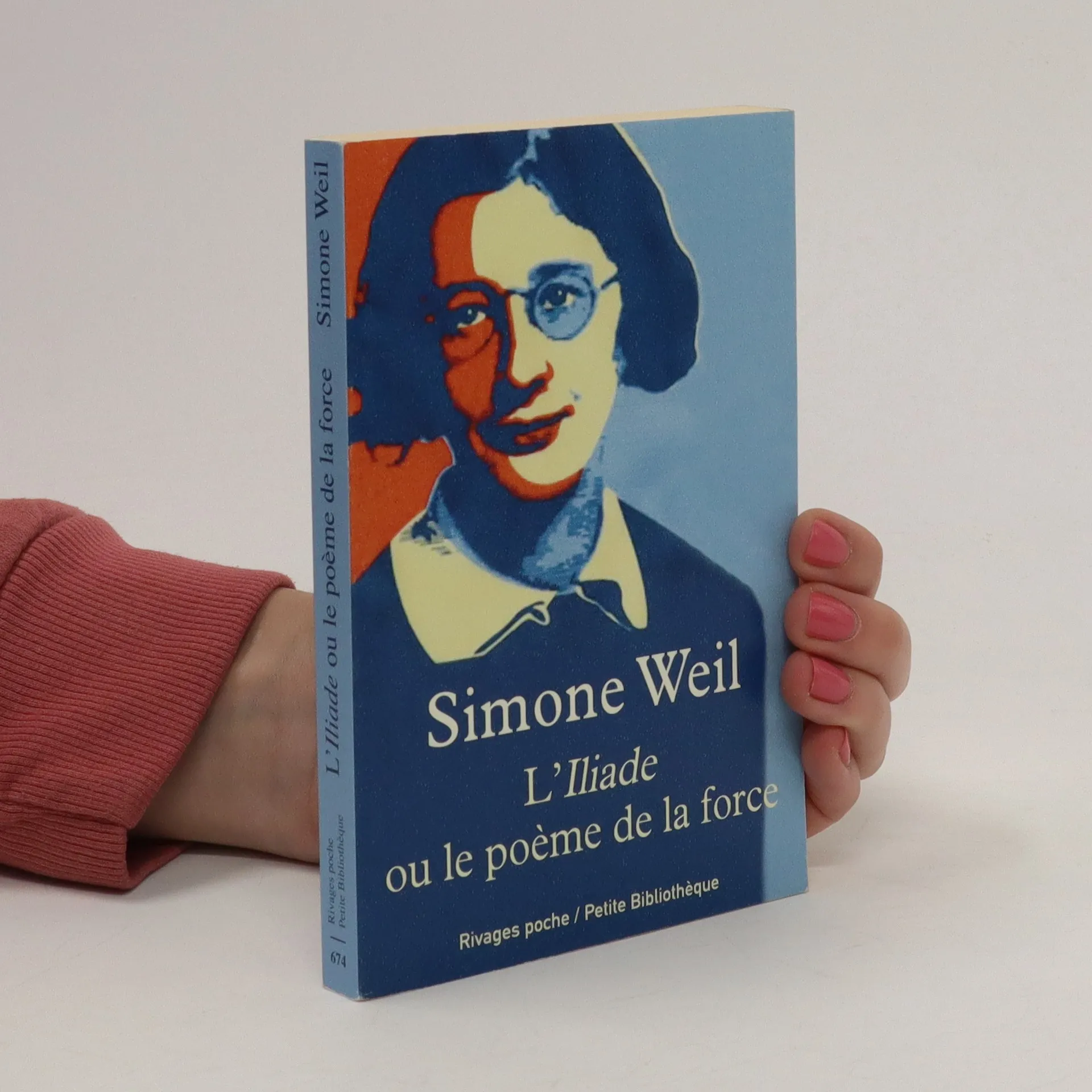
Qu'advient-il à la pensée lorsqu'elle se trouve prise dans des rapports de force ? Simone Weil s'attache à connaître la force : elle va jusqu'à la "reconnaître pour presque absolument souveraine en ce monde", ses effets implacables échappant au contrôle des hommes. "L'lliade ou le poème de la force" décrit ce que la force, maniée ou subie, fait à la pensée, privant les hommes de toute vie intérieure. Le poème d'Homère est un détour permettant de penser les enjeux d'une éventuelle conquête de l'Europe par l'Allemagne nazie : la menace est celle du malheur de la colonisation, autrement dit de la destruction d'une cité, milieu d'institutionnalisation d'un esprit, de principes et de relations humaines irréductibles à la force.
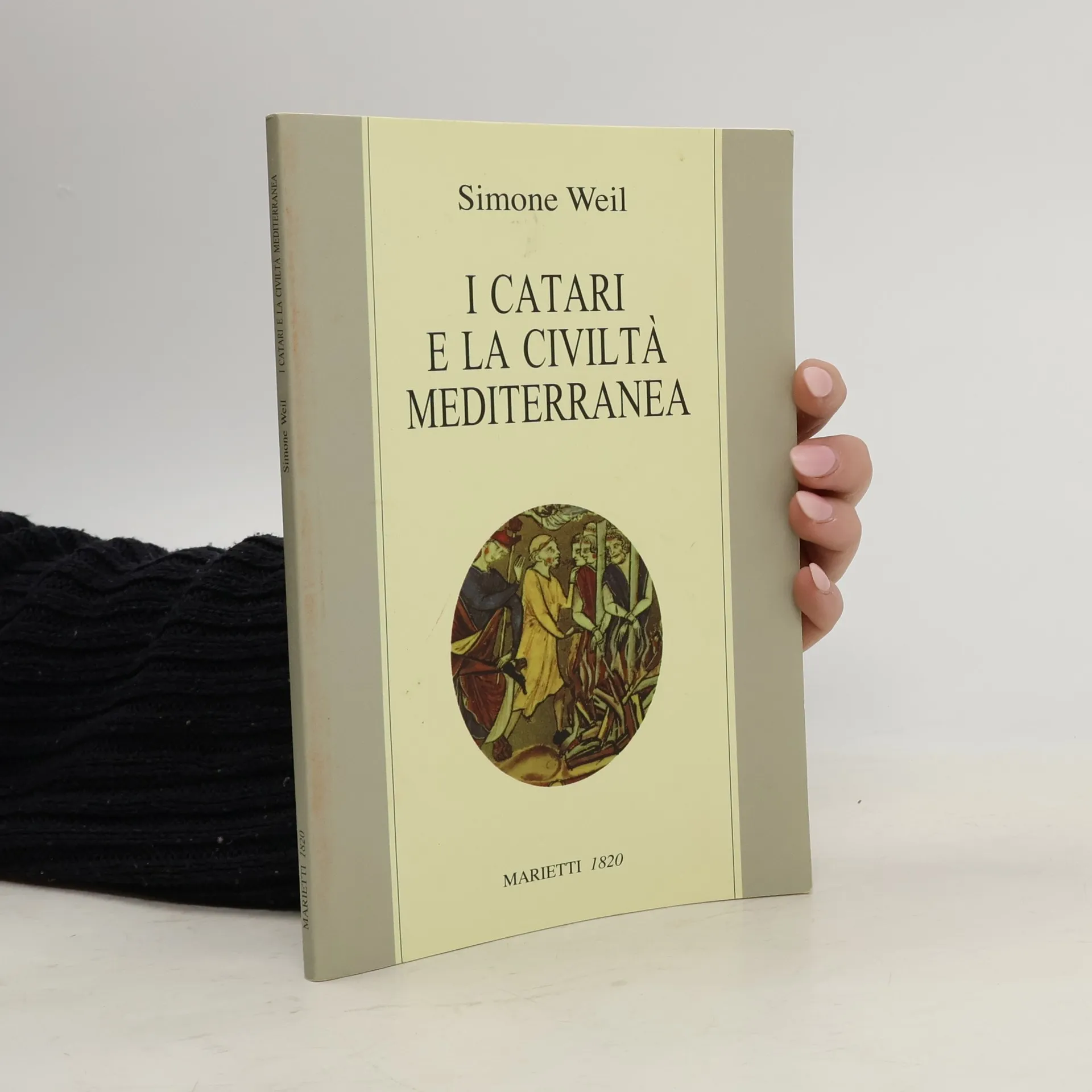
Gli scritti di Simone Weil sulla civiltà d'Oc sono parte di un progetto ambizioso voluto da Jean Ballard, fondatore dei "Cahiers du Sud", negli anni più oscuri della Francia di Pétain: ridare coscienza di sé a una civiltà un tempo luminosa, da secoli emarginata e ridotta spesso ad ambigua celebrazione di antiche virtù. Ne nacque un numero unico, pubblicato nel 1942 con il titolo "Le Génie d'Oc et l'homme méditerranéen", denso di contributi che ripercorrono i grandi filoni della poesia trobadorica e della spiritualità catara sullo sfondo di una remota cultura mediterranea. Il volume è completato dalla traduzione dei passi della "Chanson de la croisade albigeoise" commentati da Simone Weil nel primo dei due saggi.
En 1932-1933, Simone Weil se rend en Allemagne pour observer la situation politique et sociale. Elle y consacre quatre articles qui sont parmi les plus importants de la philosophe. Ces textes sont des témoignages sur cette conjoncture historique critique, mais aussi l'occasion d'une compréhension de ce que c'est, pour un pays, qu'être en crise. La question qui guide Simone Weil dans son étude de la conjoncture allemande du début des années 1930 étant «la révolution est-elle possible en Allemagne ?». Ces articles reviennent sur les échecs des révolutions pour penser ce qu'il peut rester, à partir de là, d'espoir ou de courage politique.
La montée du nazisme et les horreurs du régime véhiculé par Adolf Hitler avaient-ils des antécédents dans l'histoire ? De qui s'est-il inspiré ? Dans quelle mesure, par exemple, la Rome antique fut-elle un modèle pour le Führer ? Simone Weil soumet plusieurs pistes de réflexions qui visent à percevoir ici un ensemble de mécanismes dont elle souligne les enchevêtrements, la complexité, mettant in fine à jour les racines de la folie hitlérienne. Son exposé se compose de trois grandes parties : Permanence et changements des caractères nationaux ; Hitler et la politique extérieure de la Rome antique ; Hitler et le régime intérieur de l'empire romain.
Sie ist erst 33 Jahre alt und wird ein Jahr später sterben, als sie im April und Mai 1942 ihren wichtigsten spirituellen Text verfasst. Das Unglück und die Gottesliebe erschien posthum mit einem Vowort von T.S. Eliot. Das Unglück – in Form von physischem oder seelischem Schmerz, aber auch sozialer Erniedrigung – enwurzelt den Menschen so sehr, dass der von ihm Betroffene das Ganze seines Leben nicht mehr einzuordnen vermag und es als sinnlos empfindet. Um nicht vollständig vom Unglück zerrissen zu werden, muss der Mensch das, was ihm auferlegt ist, annehmen und ihm zustimmen. Dies gelingt ihm jedoch nur dann, wenn er sich etwas Größerem unterordnet. Das kann nur Gott sein, bzw. übernatürliche Liebe. So ist das Mysterium des Unglücks das Erleben einer religiösen Erfahrung und ein mystischer Weg in die Gottesliebe, die ihm verwehrt bliebe, wenn er von sich aus danach strebte, denn das Tor zu Gott ist unmöglich zu öffnen – es sei denn, es wird von innen geöffnet. So braucht es Geduld, um die Erfahrung der Liebe Gottes zu machen, die einem geschenkt oder vorenthalten wird, aber auf keinen Fall zu erwerben ist. Voraussetzung ist das Aufmerken, aufmerksam sein, anderen gegenüber, der Natur, den Armen, den Verstoßenen gegenüber. Aufmerksamkeit ist ein Kraftfeld, in dem das Ich kleiner wird und das Du immer größer. Aufmerksamkeit ist der Weg zu Gott.
En décembre 1934, Simone Weil entre comme «manœuvre sur la machine» dans une usine. Professeur agrégé, elle ne se veut pas «en vadrouille dans la classe ouvrière», mais entend vivre la vocation qu'elle sent être sienne : s'exposer pour découvrir la vérité. Car la vérité n'est pas seulement le fruit d'une pensée pure, elle est vérité de quelque chose, expérimentale, «contact direct avec la réalité».Ce sera donc l'engagement en usine, l'épreuve de la solidarité des opprimés - non pas à leurs côtés, mais parmi eux.L'établissement en usine, comme, plus tard, l'engagement aux côtés des anarchistes espagnols ou encore dans les rangs de la France libre, est la réponse que Simone Weil a trouvée au mensonge de la politique, notamment celle des dirigeants bolcheviks qui prétendaient créer une classe ouvrière libre, alors qu'aucun «n'avait sans doute mis le pied dans une usine et par suite n'avait la plus faible idée des conditions réelles qui déterminent la servitude ou la liberté des ouvriers».Ce qui, toujours, a fait horreur à Simone Weil dans la guerre, qu'elle soit mondiale ou de classes, «c'est la situation de ceux qui se trouvent à l'arrière».
Escrito unos meses antes de su muerte, este ensayo de Simone Weil es el resumen de un pensamiento lúcido que aún hoy es de actualidad. Como dice Giorgio Agamben en el prólogo, el libro «no deja de interpelarnos por al menos dos razones. La primera es la crítica sin reservas del concepto de persona, el cual, a más de medio siglo de distancia, no ha perdido su actualidad. La segunda -igualmente actual- es la búsqueda difícil y apasionada de un principio que se sitúa más allá de las instituciones, del derecho y de las libertades democráticas, y sin el cual éstos pierden todo sentido y toda utilidad».
Ce deuxième volume des Cahiers (qui en comprendront quatre au total) rassemble les carnets du début de la guerre, de 1941 à 1942, alors que Simone Weil, dans le sud de la France, en zone libre, s'oriente de plus en plus résolument vers l'approfondissement de son aspiration religieuse et "mystique". Ces textes témoignent donc de ses lectures des sources sacrées, la Bible, le Tao, la Bhagavad-Gita, les Upanishad, ainsi que de sa constante préoccupation philosophique : lectures de Platon, réflexion sur les sciences, les mathématiques notamment.
Juni 1942. Simone Weil verläßt mit ihren Eltern Casablanca und erreicht am 6.
Juli per Schiff New York, von wo aus sie sich um ein Visum für England bemüht,
um sich dort der Résistance-Bewegung anzuschließen. Der vierte Band der
Cahiers enthält Simone Weils letzte Aufzeichnungen bis kurz vor ihrem Tod, und
sie enden mit dem berühmten Londoner Notizbuch, das sie bis in ihre letzten
Tage führte. Am 17. August 1943 starb sie in Ashford, erschöpft und an ihrer
Gegenwart verzweifelt, im Alter von nur 34 Jahren. Die Hefte dieses Bandes,
mit dem die Ausgabe der Cahiers abgeschlossen ist, sind das Vermächtnis der
Philosophin und Mystikerin Simone Weil.
Simone Weils Cahiers, ihre Notizhefte, sind das Kernstück ihrer Schriften und
eines der großen intellektuellen und menschlichen Dokumente dieses
Jahrhunderts. Das widerständige Denken dieser großen Philosophin, die sich von
keiner weltanschaulichen Richtung, keiner politischen Gruppe oder Partei
vereinnahmen ließ, spiegelt sich in diesen nie zu einem Abschluß findenden
Reflexionsprozessen. Die Form der dauernden Auseinandersetzung mit anderen
(Platon, Descartes, Spinoza, Shakespeare, Racine, Goethe oder mit den
indischen heiligen Schriften, der Bibel und dem Mystiker Jean de la Cruz) war
für Simone Weil Voraussetzung, unter der sich ihre Gedanken entwickeln
konnten; das Gespräch, nicht das geschlossene philosophische System entsprach
der ihr eigenen Offenheit, die große Aufmerksamkeit verdient.
Am Vorabend des deutschen Einmarschs aus Paris geflüchtet, kehrt Simone Weil
im November 1941 wieder nach Marseille zurück. In den folgenden Monaten
entstehen die Hefte 5, 6 und 7, die in diesem zweiten Band der Cahiers
enthalten sind. Sie sind thematisch eng verwandt mit einer Reihe von
Vorträgen, die sie in dieser Zeit hielt, sowie mit ihrem Plan, eine Anthologie
der schönsten nicht-christlichen Texte über die Liebe zu Gott
zusammenzustellen. Simone Weils Gedanken über Grundfragen menschlichen Seins
sind nicht nur für philosophisch gebildete Leser von Belang.
En 1933, lors de l'avènement du nazisme en Allemagne, Simone Weil interroge: "Allons-nous vers la Révolution Prolétarienne ? " La célèbre philosophe nous livre dans ce texte sombre ses sentiments sur la période troublée que traverse l'Europe. Simone Weil se penche sur la difficile émancipation des ouvriers face aux régimes bureaucratiques et aux système bancaire. L'URSS de Staline et le fascisme naissant du Troisième Reich se distinguent par leur refus des positions trotskistes. Simone Weil écarte l'idée de défaite d'une internationale des travailleurs, et s'attache dans ce texte rare à trouver du sens à la valeur de la vie humaine .
Mutig, entschlossen und mit beispiellosem Einsatz kämpfte Simon Weil zeit ihres Lebens für eine bessere Welt. Dabei stellte sie die leidvolle Erfahrung der Fabrikarbeiter und -arbeiterinnen in den Mittelpunkt ihres Engagements. Überraschenderweise steht Weils Vision zur Lösung der sozialen Frage in engem Verhältnis zu Gott. Dabei geht es ihr aber keinesfalls um ein Aufgeben des Weltlichen im Glauben. Die Ordensschwester Britta Müller-Schauenburg beschreibt Weils Haltung in ihrem Vorwort vielmehr als einen „geistlichen Umgang“ mit „geistlosen Routinen“: Fremdbestimmtheit und Sinnlosigkeitsempfindungen, die sich wie die soziale Ungerechtigkeit bis heute weiter ausbreiten. Weils Texte, die jetzt endlich auf Deutsch vorliegen, legen davon ein eindrucksvolles Zeugnis ab.
Der Band versammelt, größtenteils zum ersten Mal in deutscher Sprache, bislang kaum erschlossene Schriften Simone Weils der dreißiger und frühen vierziger Jahre – am Vorabend des zweiten Weltkriegs, vor dem Hintergrund von Weltwirtschaftskrise, Volksfront und spanischem Bürgerkrieg, und zuletzt zu Kriegszeiten im besetzten Frankreich und in ihrer Aktivität für die Résistance. In ihren Analysen seziert Simone Weil die Mechanismen der Macht, die Formen der Gewalt und die Verführungskraft der Ideologie und überrascht etwa durch eine Lektüre der Ilias, die den Trojanischen Krieg als Archetyp moderner Kriegsführung und kollektiver Verblendung erkennt. In gnadenloser Klarheit zeichnen die Essays nicht nur das hellsichtige Szenario des drohenden Terrors, sondern zugleich das Porträt einer wachsamen Zeitzeugin und kontroversen Denkerin, die ihr Leben dem politischen Kampf und dem pazifistischen Widerstand gegen die Barbarei gewidmet hat.
Die Augen öffnen für die Schönheit der Welt Simone Weil ist eine der bewegendsten Gestalten des 20. Jahrhunderts. In den Texten dieses Buches – zusammengestellt von Otto Betz – zeigt sich, dass Simone Weils Gedanken nichts von ihrer Faszination und Relevanz für das heutige Leben eingebüßt haben. Sie sind eine Anleitung, in allem Kampf für ein besseres Leben die Schönheit der Welt nicht aus den Augen zu verlieren.
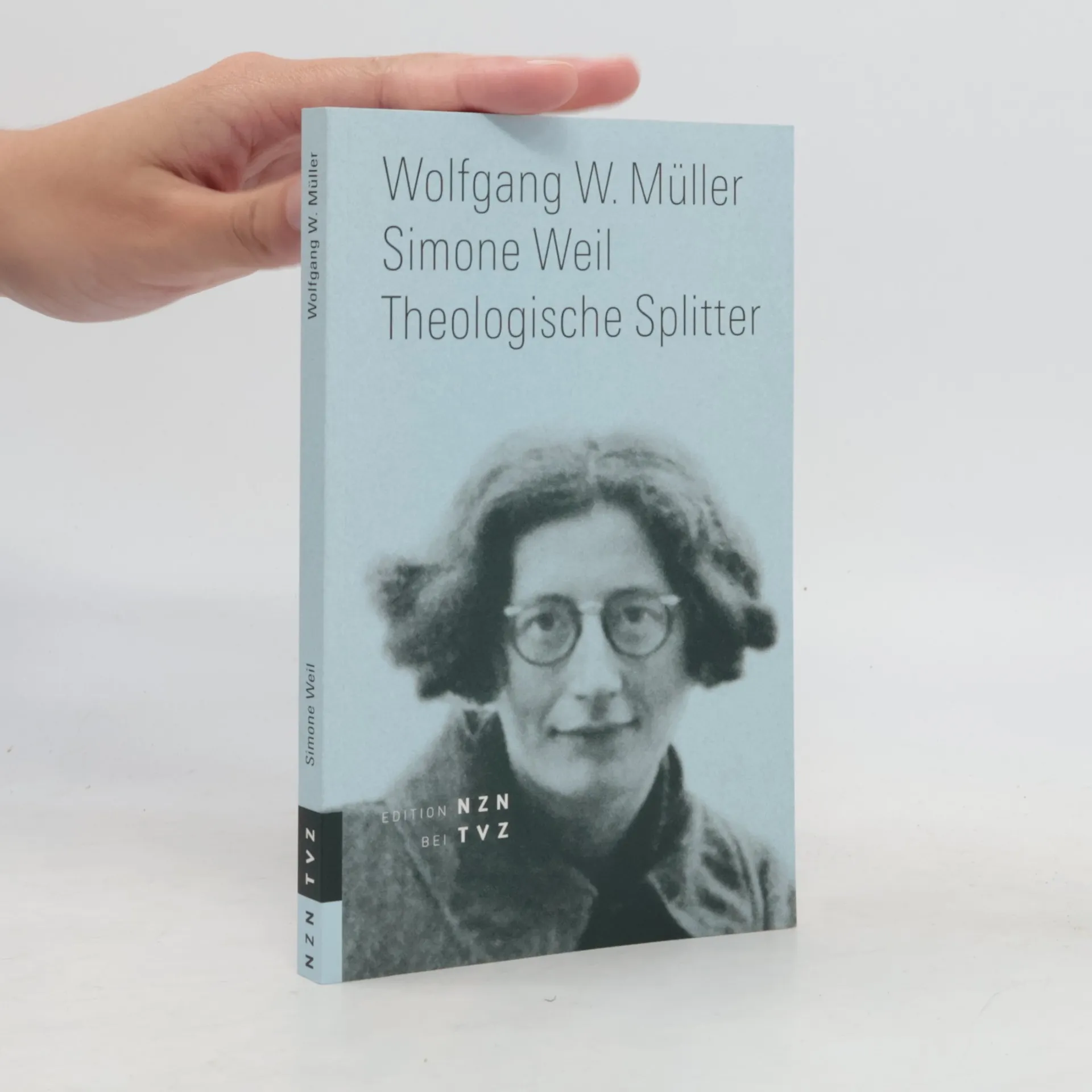
Das religionsphilosophische Denken Simone Weils, die 2009 hundert Jahre alt geworden ware, bleibt anregend und aufregend. Die Erfahrungen, die den Kontext fur ihre Uberlegungen zum christlichen Glauben bilden, sind immer noch aktuell, so z. B. das Phanomen der Entfremdung in der Arbeitswelt und die Gottesvergessenheit in der Gesellschaft. Zudem erhalten Weils Vorstellungen uber den christlichen Charakter nicht- und vorchristlicher Religionen angesichts des interreligiosen Dialogs heute neue Brisanz. Wolfgang Muller will Simone Weils Religionsphilosophie nicht theologisch weiterdenken oder gar korrigieren. Es will das sperrige Denken Simone Weils auch nicht erbaulich-spirituell vereinnahmen und verharmlosen. Vielmehr stellt er die religionsphilosophischen Grundzuge vor, die sich durch das gesamte Werk Weils ziehen. Auf diese Weise mochte Muller einen ersten Zugang zum oft fremd wirkenden Denken der franzosischen Philosophin eroffnen.
Simone Weil (1909-1943) fut une lanceuse d'alerte dont la voix fut recouverte en son temps. Ce qu'elle annonçait se vérifie aujourd'hui : le système capitaliste et industriel tend à détruire toutes les bases possibles d'une organisation différente, et il subsistera jusqu'à l'extrême limite de ses possibilités. Son appel à une dissidence ultime qui renouerait le "rapport originel de l'esprit avec le monde" doit donc plus que jamais être entendu. Simone Weil a tenté de concevoir un projet de civilisation capable d'accueillir les tensions entre exigence de liberté et confrontation avec les limites matérielles du monde – la "nécessité". Ce projet exige un renversement des valeurs instituées dans des sociétés vouées au "règne de la force". Il annonce celui de la décroissance par son exigence d'une pensée lucide, le refus de la force et de la vitesse, la coopération, la décentralisation, l'amitié et le sens de la beauté.
Simone Weilová (1909 – 1943) bola nezvyčajnou mysliteľkou, ženou veľkej viery a veľkého intelektu. Vzbudzovala protirečivé emócie – podľa jedných bola svätá, podľa iných bola heretička; čitateľov fascinuje markantnou spojitosťou medzi životom a myslením.
Texty Simone Weilovej sú nahé a prosté ako vnútorné zážitky, ktoré sú v nich vyjadrené. Slová neoddeľuje od života nijaká vrstva mäkkej výstelky: duša, myšlienka a jej vyjadrenie tvoria monolit; autorka nemá zámer vytvárať nejaký vlastný filozofický systém - nejde tu o filozofiu, ale o život.
Tento svazek sestává z dopisů a esejů francouzské filosofky a mystičky Simony
Weilové. Představuje pestrost, podnětnost a živost autorčina myšlení, zejména
dopisy dávají vhled do autorčina nitra a pohnutého života. Její úvahy nejsou
intelektuální cvičení od stolu, ale svědectví z vlastního boje o správný
postoj k sobě, druhým, Bohu. V dalších esejích, v nichž se zabývá
existenciálním rozměrem víry, Simone Weilová nabízí čtenářům vlastní prožitek
víry.
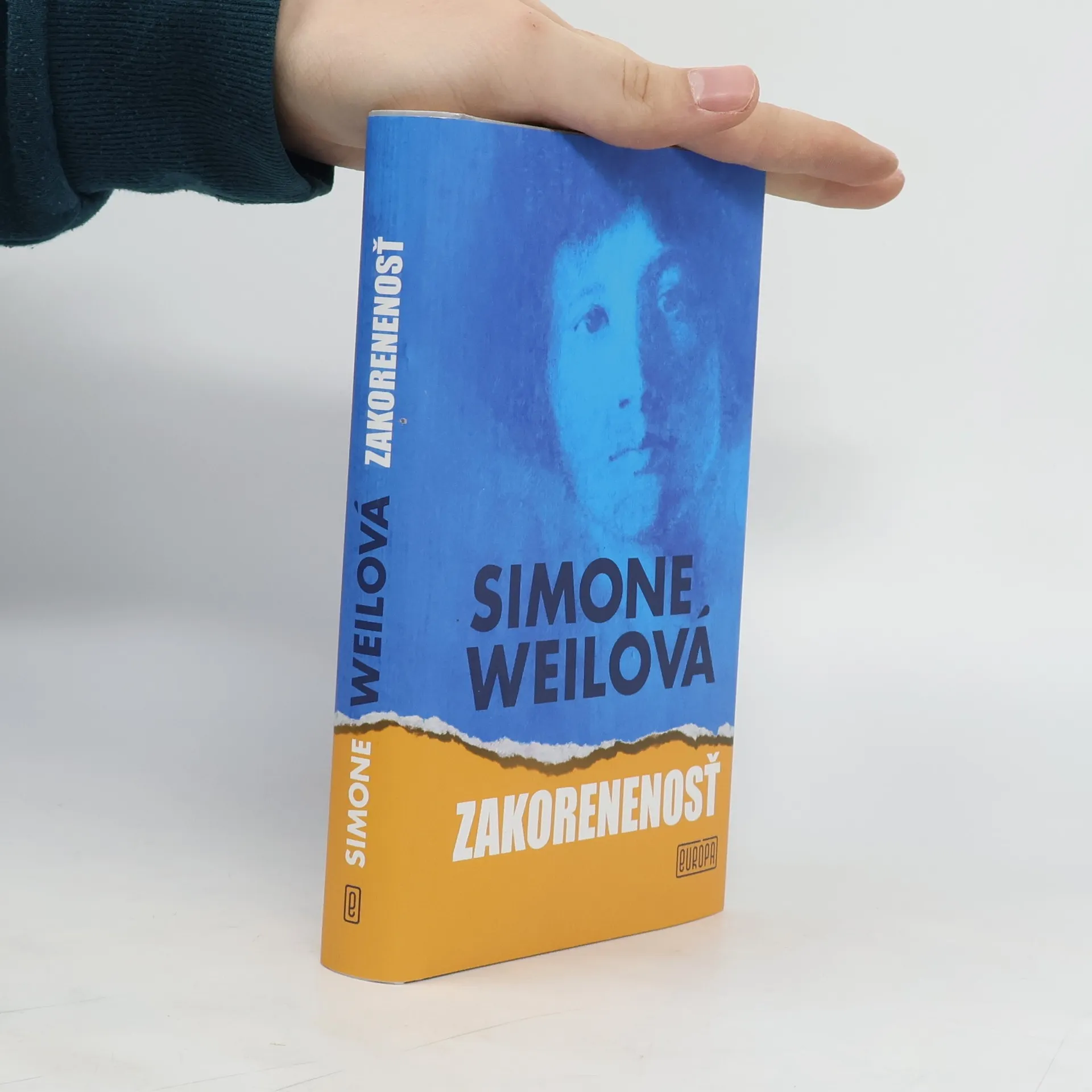
Francúzsku filozofku, mystičku, odborársku aktivistku Simone Weilovú (1909-1943), ktorej celým dielom preniká túžba po „poznaní celou dušou“, označil Albert Camus za „jediného veľkého ducha našej doby“. Filozofia podľa nej „nenapreduje, nevyvíja sa“, to, čo je v nej najpodstatnejšie, je jednota a totožnosť skutočnej múdrosti naprieč časom, čiže dotyk s večnosťou. Preto Weilová môže odmietnuť konceptuálne systematizácie, v ktorých sa skrýva totalitárna a napokon celkom imaginárna ambícia racionality na obsiahnutie celej Skutočnosti. Zakorenenosť, jeden z dvoch najvýznamnejších a zároveň posledný autorkin text, ostal pre jej smrť nedokončený. Ako pri mnohých Weilovej textoch dejinné a politické udalosti slúžia autorke ako východisko a matéria pre filozofickú reflexiu. Z tohto hlbokého, inšpiratívneho diela presvitá Weilovej snaha poskytnúť tým, ktorí budú riadiť povojnovú obnovu Francúzska a určovať jeho ďalšie smerovanie, zreteľné, ušľachtilé a hrubou silou nepoškvrnené kritériá pre vedenie ich pôsobenia. Ich zvrchovanou korunou je pre autorku Boh v zmysle platónskeho Dobra, ktoré jediné môže byť hlavným regulatívom skutočne ľudskej spoločnosti a súčasne predstavuje horizont pre naplnenie a prekročenie individuálnej ľudskej existencie.
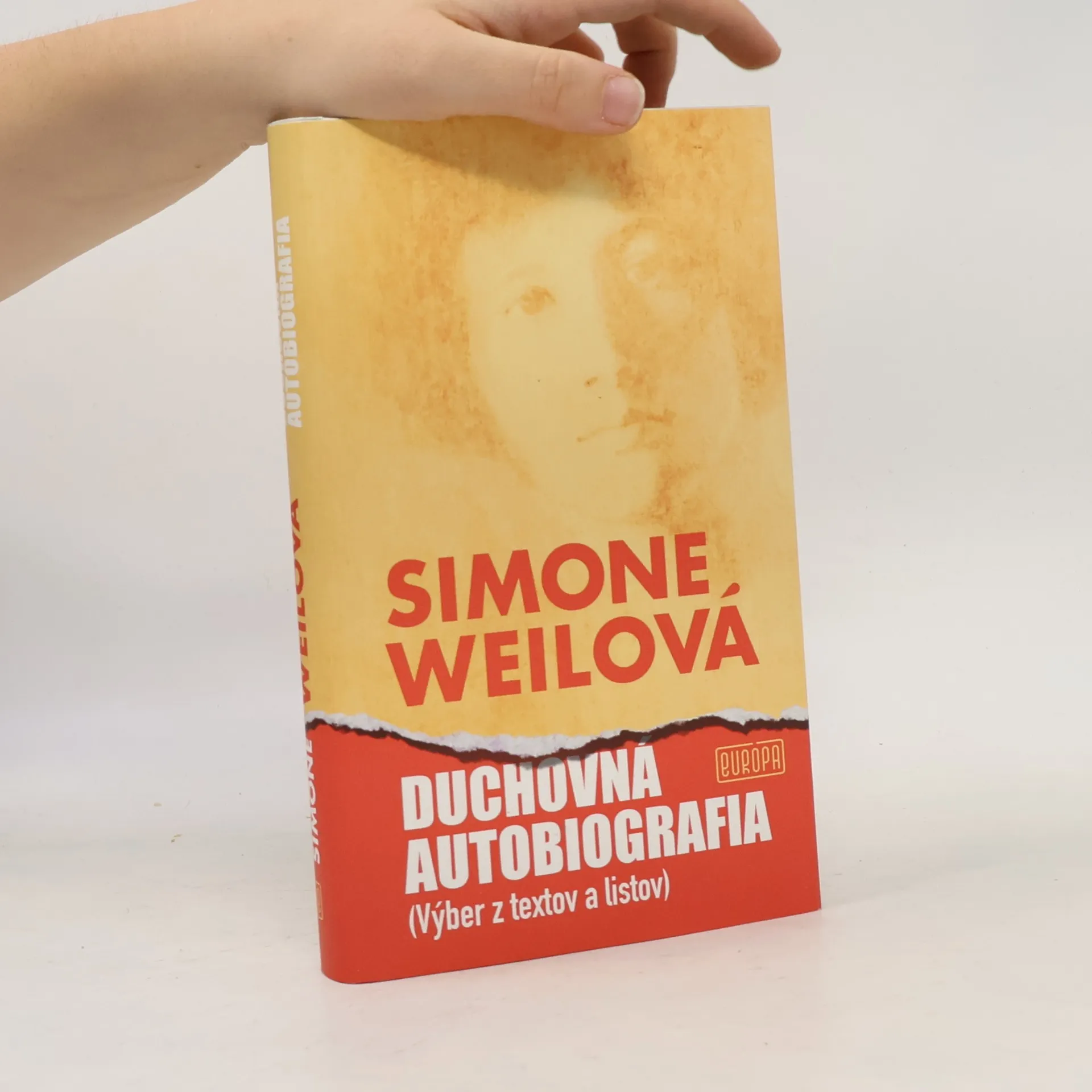
Kniha Duchovná autobiografia (Výber z textov a listov) prináša v jednom zväzku texty z posledných rokov autorkinho krátkeho života, v ktorých načrtáva obraz vlastnej duchovnej skúsenosti a presvedčenia, ktoré nie je založené na náboženských dogmách, ale na poctivom intelektuálnom skúmaní a na oddanosti prameňu, vyvierajúcemu v každom ľudskom srdci.