Manly P. Hall was a prolific author whose extensive body of work delves into the profound themes of mysticism, symbolism, and esoteric knowledge across cultures and ages. Driven by an insatiable curiosity, Hall explored ancient traditions and philosophical systems to uncover universal truths he believed were hidden within the symbols and rituals of mystical and esoteric societies. His writing serves as a journey into the heart of humanity's quest for meaning, offering readers a key to understanding the intricate tapestry of human knowledge and spiritual development. His works invite readers to question the superficial and explore the deeper significances shaping our reality.
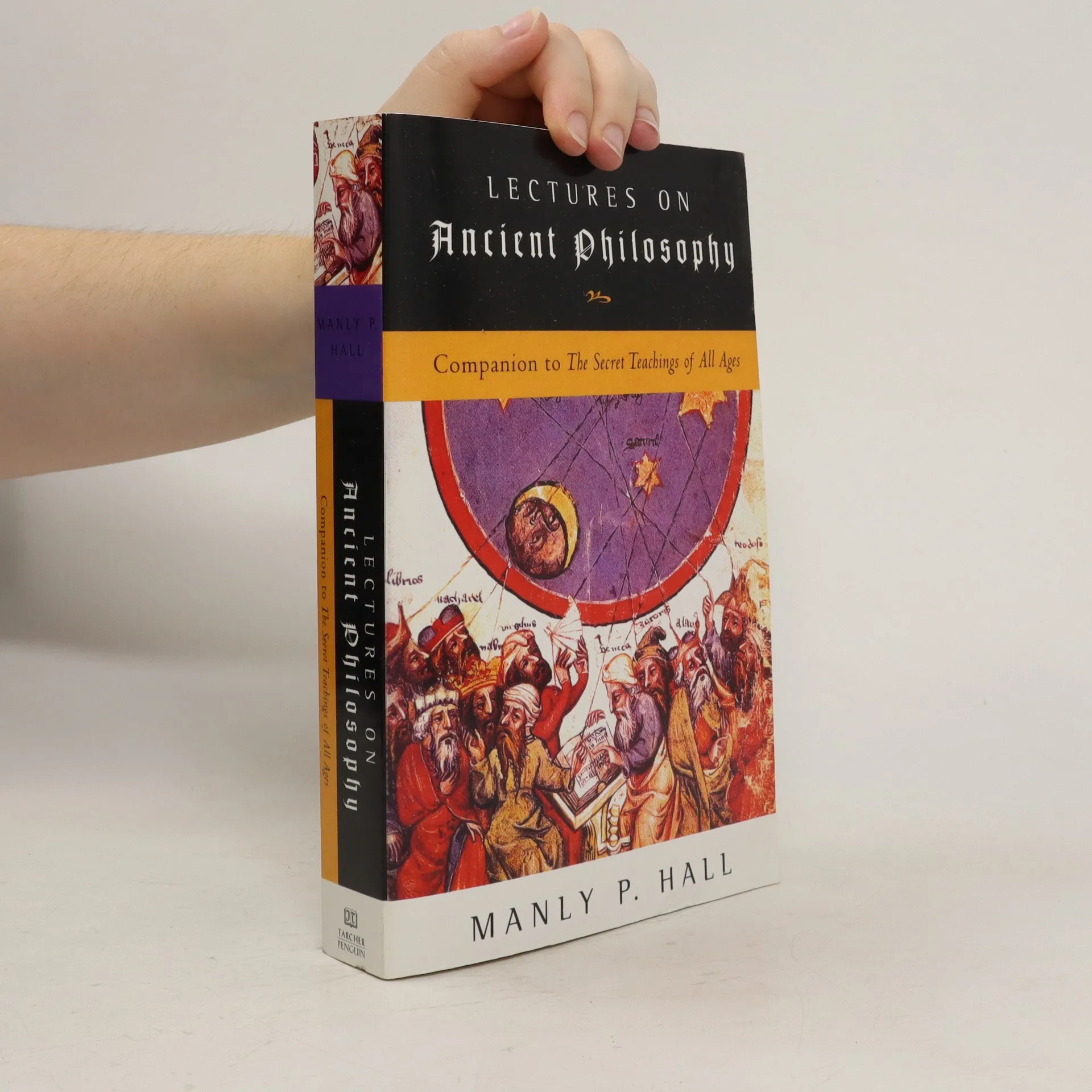
Complete in itself, this volume originated as a commentary and expansion of Manly P. Hall's masterpiece of symbolic philosophy, The Secret Teachings of All Ages. In Lectures on Ancient Philosophy, Manly P. Hall expands on the philosophical, metaphysical, and cosmological themes introduced in his classic work, The Secret Teachings of All Ages. Hall wrote this volume as a reader's companion to his earlier work, intending it for those wishing to delve more deeply into the esoteric philosophies and ideas that undergird the Secret Teachings. Particular attention is paid to Neoplatonism, ancient Christianity, Rosicrucian and Freemasonic traditions, ancient mysteries, pagan rites and symbols, and Pythagorean mathematics. First published in 1929-the year after the publication of Hall's magnum opus-this edition includes the author's original subject index, twenty diagrams prepared under his supervision for the volume, and his 1984 preface, which puts the book in context for the contemporary reader.
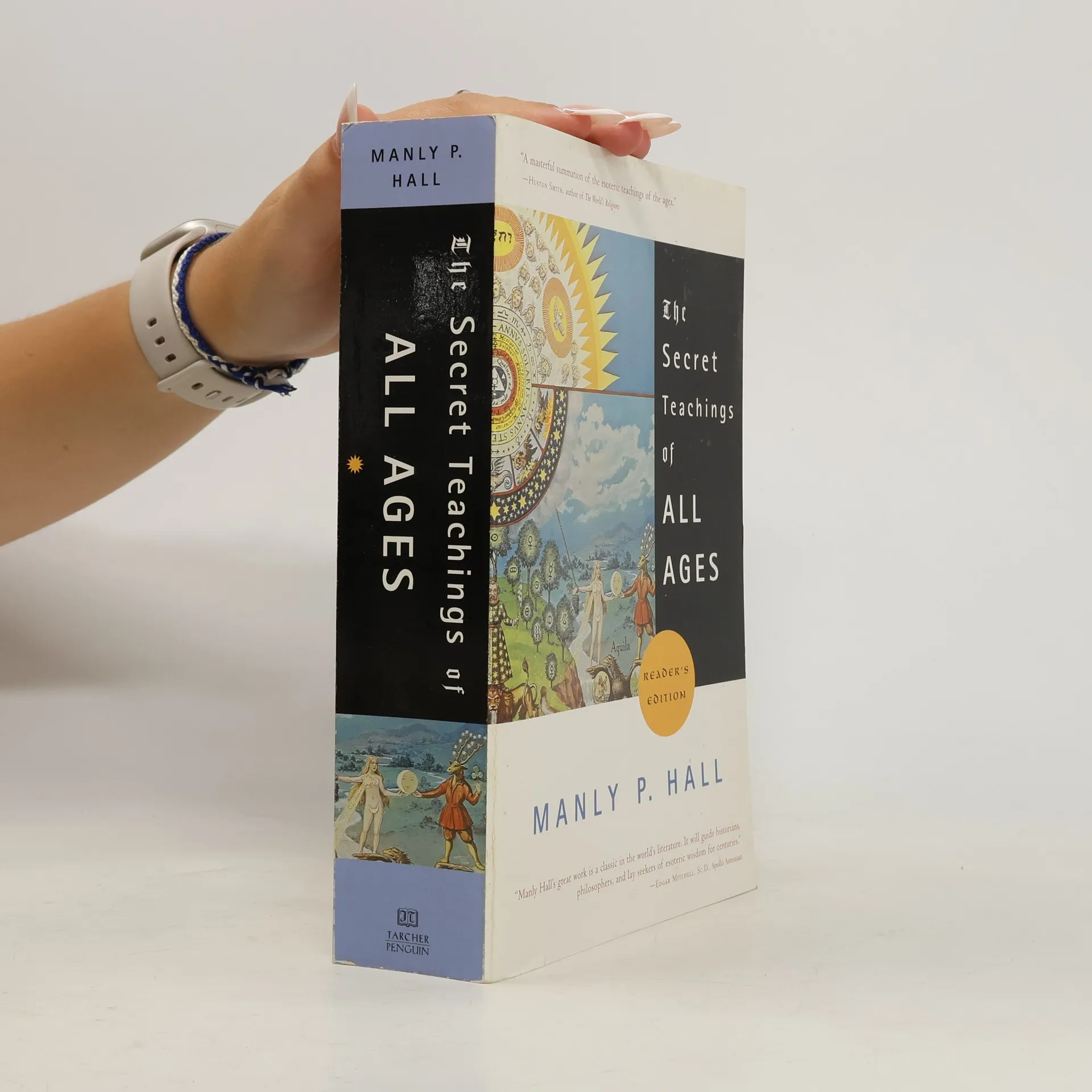
Exploring the interconnectedness of global religions, the author asserts that all faiths stem from a singular truth, rooted in Ancient Wisdom. By examining various sacred texts, the book reveals how understanding one scripture enhances comprehension of others. Hall emphasizes that the pursuit of truth is a universal journey, manifesting in diverse forms throughout history. He presents religious writings as both preservers and concealers of profound knowledge, suggesting a deeper unity among spiritual traditions.
Manly Palmer Hall is perhaps most famous for his work The Secret Teachings of All Ages: An Encyclopedic Outline of Masonic, Hermetic, Qabbalistic and Rosicrucian Symbolical Philosophy, published in 1928 when he was 27 years old. In 1934, Hall founded the Philosophical Research Society (PRS) in Los Angeles, California, dedicating it to an idealistic approach to the solution of human problems. The PRS claims to be non-sectarian and entirely free from educational, political, or ecclesiastical control, and the Society's programs stress the need for the integration of philosophy, religion, and science into one system of instruction. The PRS Library, a public facility devoted to source materials in obscure fields, has many rare and scarce items now impossible to obtain elsewhere. In his over 70-year career, Hall delivered approximately 8,000 lectures in the United States and abroad, authored over 150 books and essays, and wrote countless magazine articles.
An Unabridged Edition by Manly P. Hall as he expands on, 'He who lives the Life shall know the Doctrine, ' with all Illustrations and Descriptions, to include: Introduction - Foreword - The Fire Upon the Altar - The Sacred City of Shamballa - The Mystery of the Alchemist - The Egyptian Initiate - The Ark of the Covenant - The Knights of the Holy Grail - The Mystery of the Pyramids.
This scarce antiquarian book is a facsimile reprint of the original. Due to its age, it may contain imperfections such as marks, notations, marginalia and flawed pages. Because we believe this work is culturally important, we have made it available as part of our commitment for protecting, preserving, and promoting the world's literature in affordable, high quality, modern editions that are true to the original work.
Melchizedek and the Mystery of A Treatise in Three Parts (1926) is a short work by mystic and occultist Manly P. Hall. It explores the symbolism of ancient rituals in Christianity, and their sources in earlier religions and cultural traditions. It also explains the human body's "occult anatomy," giving meaning and symbolism to our very organs and glands.Canadian-born Manly P. Hall (1901-1990) was a writer and lecturer of mysticism for over 70 years. Introduced to the mysteries of the ancient world upon moving to Los Angeles in 1919, he quickly became a preacher at the Church of the People. At just 18 years old, he spoke about Pythagoras and Plato, along with newer doctrines like Theosophy and Rosicrucianism. Soon, this intense young man had caught the attention of the wealthy Carolyn Lloyd and her daughter, Estelle. The Lloyds became his patrons, funding an expedition around the world that gave Hall insight into ancient religions and traditions across the globe. He collected an extensive library of rare books of philosophy which he brought back with him to Los Angeles.Over a seven-decade career, Hall embarked on an ambitious career of writing and lectures, giving thousands of talks throughout his life including two at Carnegie Hall. He wrote 150 books and pamphlets, plus countless essays. One of his earlier works is Melchizedek and the Mystery of Fire . Melchizedek is a Biblical figure who first appears in Genesis 14:18-20. He was a priest-king who offered bread and wine to Abraham after returning from battle. This is often considered a precursor to the eucharist in the New Testament. The book does not focus on Melchizedek, but uses him as a starting point to explore the mysteries of ancient symbols and how they have been incorporated into modern religion-specifically Christianity. Hall believed that the stories of the Bible were allegorical and that there were secrets hidden within the parables. In his view, today's Christians and Biblical scholars, while well-intentioned, are unable to look beyond the traditions they have inherited to the truth within.Despite its short length, Melchizedek is packed full of information on mysticism. Incorporating ritual and legend from great ancient civilizations as varied as India, China, Mexico, and Japan, Hall demonstrates that the truth of humanity is rooted in similar stories across these cultures, and has continued into Biblical allegory. The final part of the work explores the human body, detailing the nerve centers, internal organs, spinal column, and glands. Hall associates different parts of the body with signs of the zodiac, and with places and events from the Bible and other spiritual stories. He felt that each human was a universe to himself, a living temple with its own High Priest.Hall continued to grow in popularity and prominence throughout the 1920s and 1930s. In the early 1930s, he founded the Philosophical Research Society, creating a home for metaphysical thought and education, and for his extensive library. While some of the books were unfortunately auctioned off after his death, over 25,000 remain. The center is still in operation today.
Manly Hall's extensive career spans over seventy-five years, during which he delivered over 8,000 lectures worldwide and authored numerous writings. He focused on the practical applications of philosophy and religion in everyday life, restating spiritual and ethical doctrines that shape humanity's ideals and conduct. Hall viewed philosophy as a vital tool for individuals to build a solid foundation for their aspirations, advocating for a world where civilization thrives through intelligence, cooperation, and a shared sense of purpose.
"The Hermetic Marriage" explores alchemical symbols related to human relationships, detailing the preparation of a Philosopher's Stone and Elixir of Life based on ancient teachings. Authored by Manly P. Hall, a prominent philosopher and lecturer, this work reflects his extensive knowledge in philosophy, religion, and psychology.
This illustrated, basic text on the subject of healing is divided into two The Historical Road to the Metaphysics of Healing and The Philosophy of Healing. It includes such subjects as magnetic healing; faith therapy; mental healing; esoteric physiology and anatomy; the pineal gland; the practices of American Indian medicine priests; the diagnosis of dreams as practiced in Greece by the followers of Asclepius, the god of medicine; the early clinics of Hippocrates, the father of modern medicine; and the mystical healings by the early Christian church. Case histories focus on the psychological factors which contribute to sickness.
Exploring the concept of Karma, this treatise offers insights into how it manifests for each astrological sign. The author delves into Vedic and Tibetan techniques for analyzing past and future lives based on one's birth chart, providing a unique perspective on astrology and personal destiny. This reprint preserves the original 1942 edition, ensuring an authentic experience for readers interested in the intersection of astrology and spiritual growth.