


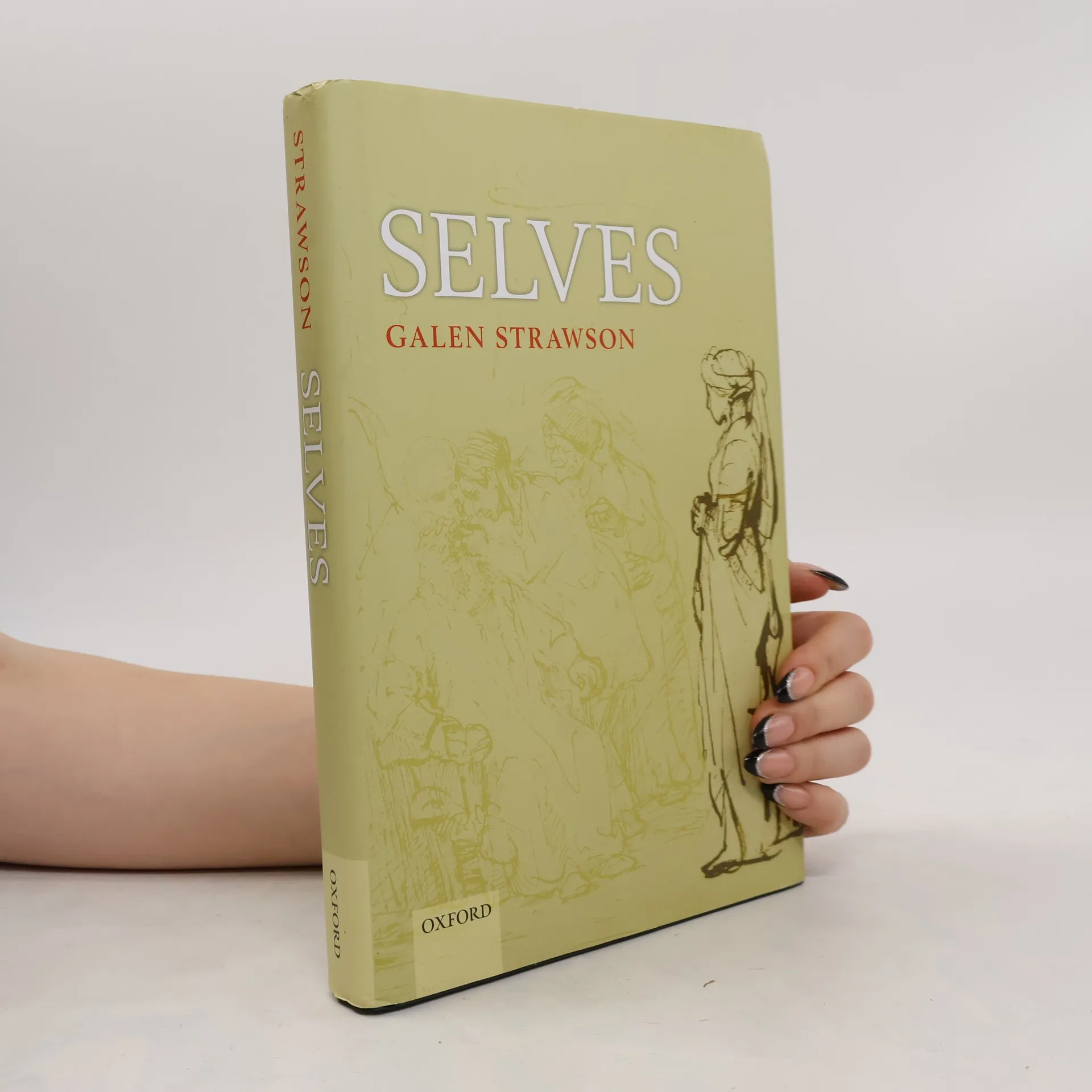
This new edition of this seminal book (originally published in 2006) contains several new postscripts on the topic of panpsychism.
Galen Strawson Books
Galen John Strawson is a British professor of philosophy and literary critic, primarily working in the fields of mind, metaphysics, and free will. His work delves deeply into the intricate questions of human existence and consciousness. Strawson examines the foundational elements of our reality and the nature of our agency. Through his analytical approach, he offers profound insights into what it means to be human.


Selves
An Essay in Revisionary Metaphysics
What is the self? Does it exist? If it does exist, what is it like? It's not clear that we even know what we're asking about when we ask these large, metaphysical questions. The idea of the self comes very naturally to us, and it seems rather important, but it's also extremely puzzling. As for the word 'self'--it's been taken in so many different ways that it seems that you can mean more or less what you like by it and come up with almost any answer. Galen Strawson proposes to approach the (seeming) problem of the self by starting from the thing that makes it seem there is a problem in the first our experience of the self, our experience of having or being a self, a hidden, inner mental presence or locus of consciousness. He argues that we should consider the phenomenology (experience) of the self before we attempt its metaphysics (its existence and nature). And when we have considered what it's like for human beings (assuming we can generalize about ourselves), we need toconsider what it might be like for other possible what's the very least that might count as experience of oneself as a self? This, he proposes, will give us a good idea of what we ought to be looking for when we go on to ask whether there is such a thing-an idea worth following wherever it leads. It leads Strawson to conclude that selves, inner subjects of experience, do indeed exist. But they bear little resemblance to traditional conceptions of the self.
Consciousness and Its Place in Nature
Why Physicalism Entails Panpsychism (2nd Ed.)
The updated edition explores the concept of panpsychism, a philosophical view suggesting that consciousness is a fundamental feature of all matter. Originally published in 2006, this version includes several new postscripts that delve deeper into contemporary discussions and developments surrounding the topic, enhancing its relevance and insight for readers interested in the intersections of philosophy, consciousness, and the nature of reality.
Was mich umtreibt
Tod, Freiheit, Ich...
Zu den hier versammelten Essays gehört »Ein Trugschluss unserer Zeit« (er inspirierte Vendela Vida zu ihrem Roman Weil ich zu spät kam), der sich mit der Klischeevorstellung beschäftigt, das Leben einer Person sei eine Geschichte. Strawson hinterfragt hier, ob es wünschenswert oder überhaupt sinnvoll ist, das Leben so zu betrachten. »Ein Sinn für das Selbst« beschreibt alternativ dazu, und teilweise sehr persönlich, dass eine starke Ich-Wahrnehmung und das Gefühl, das Ich sei etwas Unzusammenhängendes, durchaus vereinbar sind – was Strawson eine Position einnehmen lässt, die für ihn in gewisser Weise buddhistisch ist. »Realer Naturalismus« legt dar, dass eine komplett naturalistische Beschreibung des Bewusstseins auf der Vorstellung basiert, die Immanenz des Bewusstseins würde innerhalb der Natur ein Ganzes bilden (was auch Panpsychismus genannt wird), während Strawson in seinem abschließenden Essay lebhaft schildert, wie es war, in den 1960er-Jahren aufzuwachsen. Neben der Philosophie bezieht Galen Strawson auch die Literatur und das Leben in ihren vielschichtigen Schattierungen und Erlebnisformen ein. Dies ist ein Buch, das einen zum Nachdenken und zum Staunen bringt.