Explore the latest books of this year!
Bookbot

Göran Therborn Books

    September 23, 1941

    Göran Therborn's work delves into the intricate relationship between societal class structures and the function of the state apparatus. He extensively explores the formation of ideology within individuals and critically examines the future trajectory of the Marxist tradition. His analyses, deeply informed by Marxian thought, offer significant insights for contemporary political and sociological discourse.

    Die Linke im 21. Jahrhundert
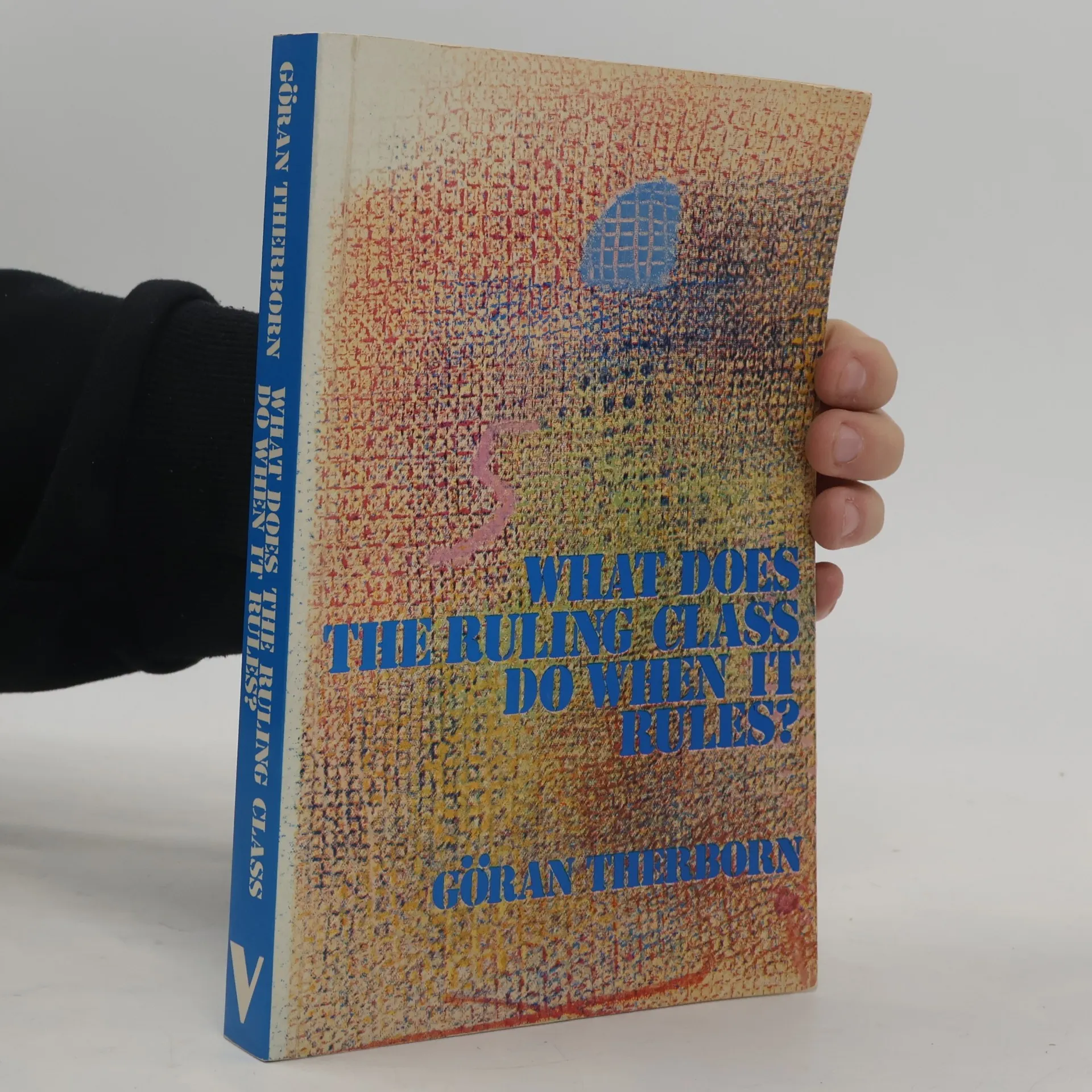
    What Does the Ruling Class Do When It Rules?
    The Ideology of Power and the Power of Ideology
    Cities of Power
    • Cities of Power

      • 416 pages
      • 15 hours of reading

      In this original survey of the politics and meanings of urban landscapes, leading sociologist Göran Therborn offers a tour of the world's major capital cities, and the forces that have shaped them. Through a global, historical lens, and with a thematic range extending from the mutations of modernist architecture to the contemporary return of urban revolutions, Therborn questions received assumptions about the source, manifestations and reach of urban power, combining perspectives on politics, sociology, urban planning, architecture, and urban iconography

      Cities of Power
      3.3
    • What Does the Ruling Class Do When It Rules?

      State Apparatuses and State Power Under Feudalism, Capitalism and Socialism

      • 290 pages
      • 11 hours of reading

      In his new book, Göran Therborn – author of the now standard comparative work on classical sociology and historical materialism, Science, Class and Society – looks at successive state structures in an arrestingly fresh perspective. Therborn uses the formal categories of modern system analysis – input mechanisms, processes of transformation, output flows – to advance a substantive Marxist analysis of state power and state apparatuses. His account of these is comparative in the most far-reaching historical sense: its object is nothing less than the construction of systematic typology of the differences between the feudal state, the capitalist state and the socialist state. Therborn ranges from the monarchies of mediaeval Europe through the bourgeois democracies of the west in the 20th century to the contemporary regimes in Russia, Eastern Europe and China. The book ends with a major analytic survey of the strategies of working class parties for socialism, from the Second International to the Comintern to Eurocommunism, that applies the structural findings of Therborn’s enquiry in the ‘Future as History’. Written with lucidity and economy, What Does the Ruling Class Do when it Rules? represents a remarkable sociological and political synthesis.

      What Does the Ruling Class Do When It Rules?
    • Die Linke im 21. Jahrhundert

      Progressive Selbsterneuerung in aggressiven Weltverhältnissen. Eine Flugschrift

      • 96 pages
      • 4 hours of reading

      Die zivilgesellschaftliche und politische Linke formiert sich weltweit neu und stellt dem Neoliberalismus ein sozialistisches Gegengewicht entgegen, das auf Gerechtigkeit und Solidarität basiert. Die Tradition des sozialistischen Kampfes wird durch eine planetarische Perspektive und Maßnahmen zur Abwendung der Klimakatastrophe erweitert. In der globalen Linken des 21. Jahrhunderts hat ein Umdenken begonnen, das auf sozial-ökologische Transformation abzielt. Neue politische Formen berühren soziale Basis, Instrumente, Modi, Strategien und Protestrepertoires. Angesichts der enormen Herausforderungen des Jahrhunderts steht die Neuerfindung der Linken auf der Agenda, die ein breites Spektrum von sozialdemokratischen Reformen bis hin zu radikalen antikapitalistischen Initiativen umfasst. Die Linke muss nicht nur geopolitisch tragfähige Positionen finden, sondern auch die Massen von ihren Vorschlägen überzeugen, um die wachsenden Klimakrisen und sozialen Ungleichheiten zu überwinden. Der Essay beleuchtet den Kontext der Linken im 21. Jahrhundert und ihre kreativen, radikalen Antworten auf aktuelle Herausforderungen wie Klimakatastrophe, imperiale Geopolitik und wirtschaftliche Ungleichheit. Welche Perspektiven gibt es für die Arbeiterklasse und die Ideen der Linken?

      Die Linke im 21. Jahrhundert
      2.0