

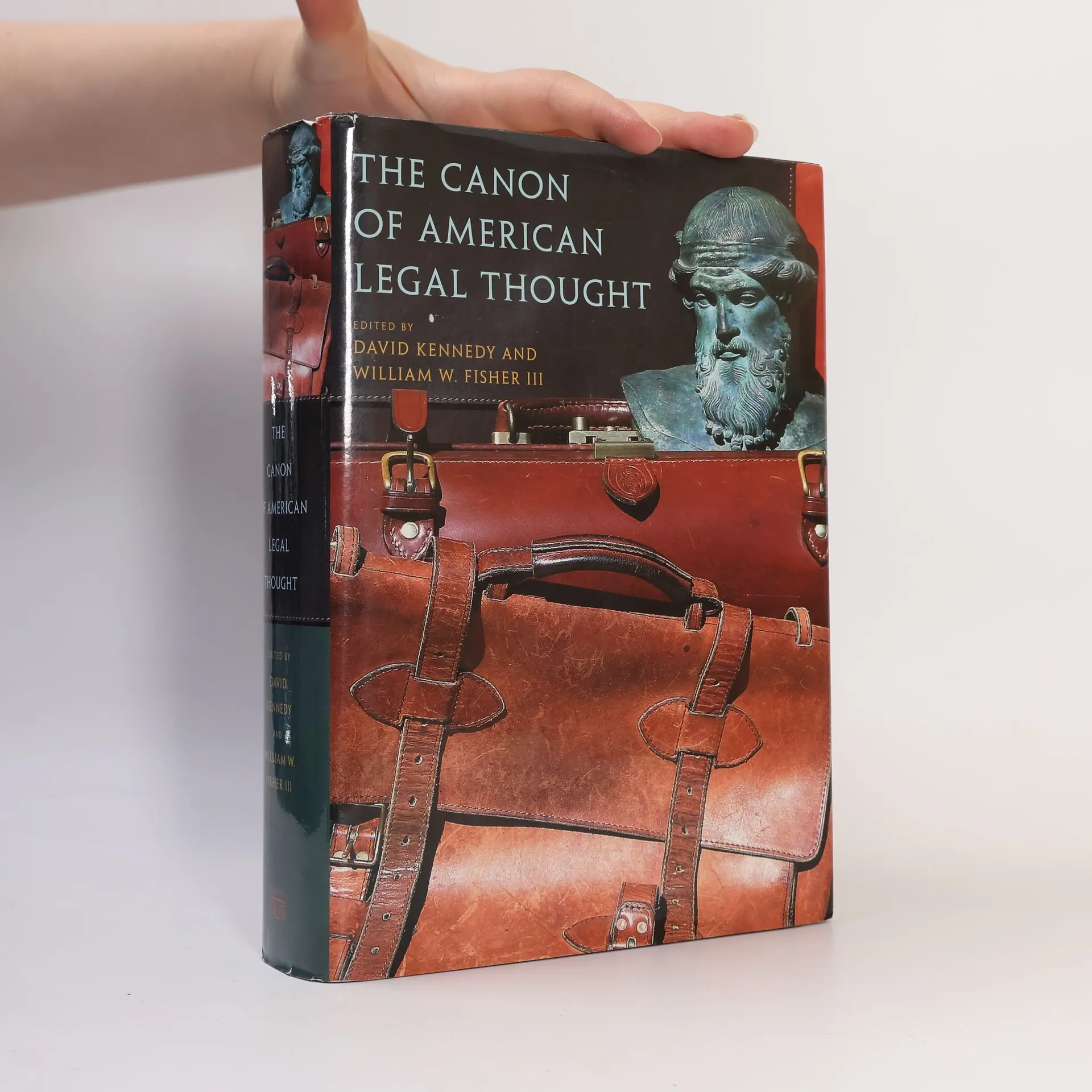
The Canon of American Legal Thought
- 936 pages
- 33 hours of reading
This anthology presents the full texts of the twenty most significant works of American legal thought since 1890, based on a course taught at Harvard Law School. It explores the rise of a unique American legal reasoning style, featuring influential authors like Oliver Wendell Holmes, Jr., Ronald Coase, Ronald Dworkin, and Catherine MacKinnon. These thinkers addressed the question, "What does it mean to think like an American lawyer?" and their diverse answers collectively advocate for a distinct mode of reasoning and governance. The legal mind is portrayed as both critical and constructive, with these texts serving as a canon of critical thinking and a toolkit for challenging the arguments of prominent legal figures. Each article includes an introduction that highlights its main ideas and situates it within the author's broader intellectual context, the scholarly debates of the time, and the article's reception. Law students and educators will find value in these classic writings, while practicing lawyers can revisit their law school experiences. All readers will appreciate the richness and sophistication with which many legal arguments, now considered clichés, were originally articulated.