Explore the latest books of this year!
Bookbot

George E. P. Box

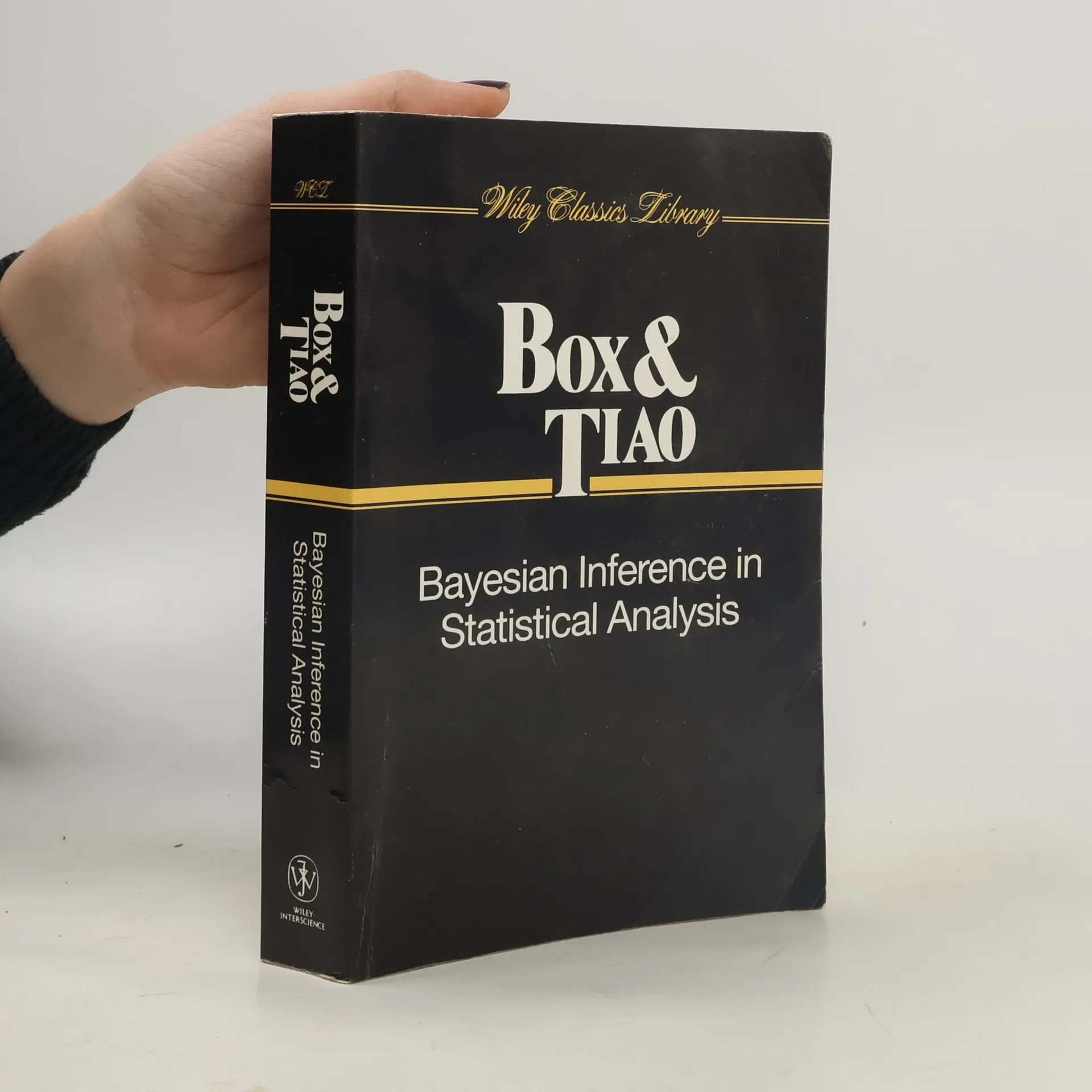
    Wiley Classics Library: Bayesian Inference in Statistical Analysis
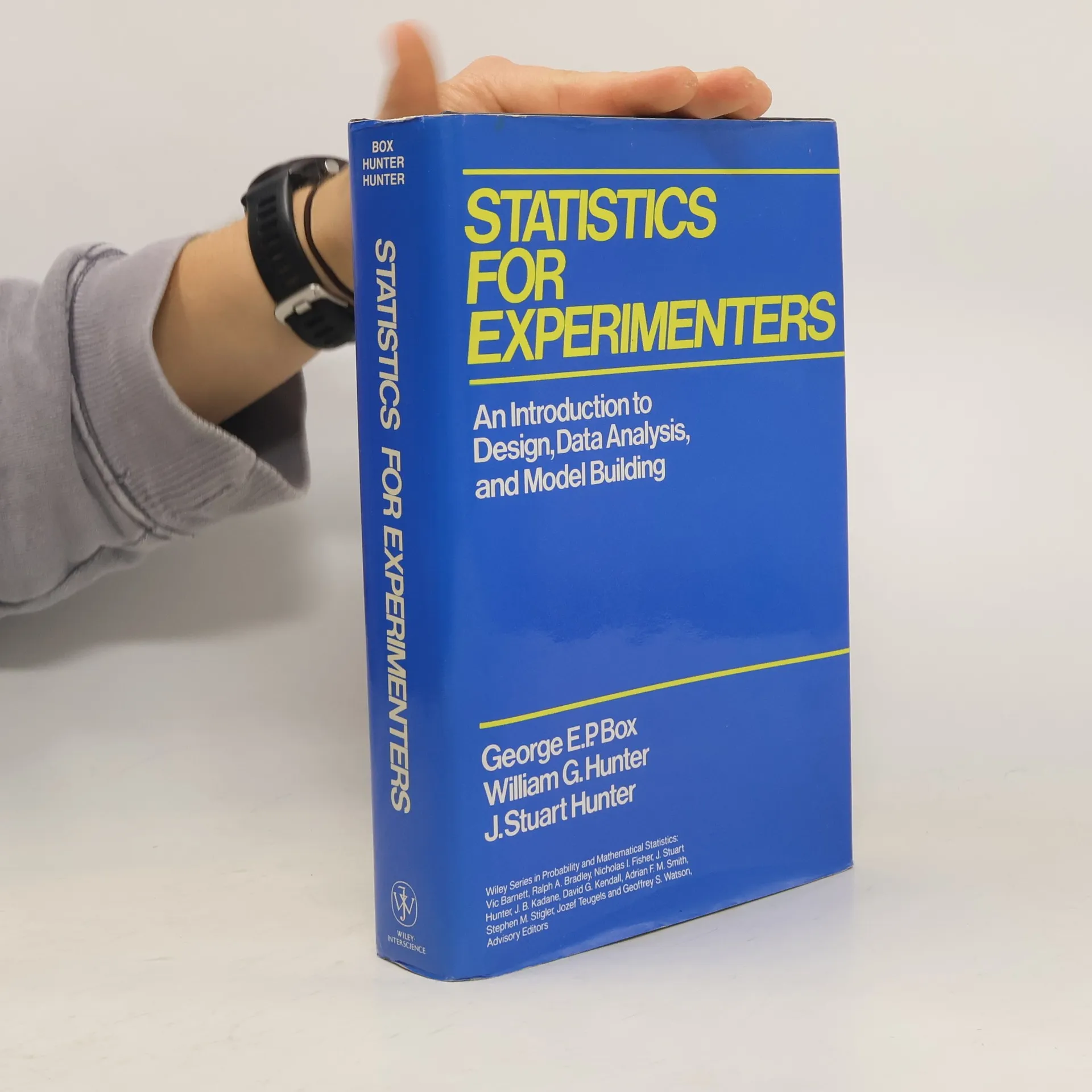
    Statistics for Experimenters
    • 2005

      Statistics for Experimenters

      Design, Innovation, and Discovery, 2nd Edition

      • 633 pages
      • 23 hours of reading
      4.2(37)Add rating

      This updated edition of a classic text adopts the same teaching methods as the original, using examples, clear graphics, and computer applications to enhance understanding. It equips experimenters with essential scientific and statistical tools to maximize insights from research data, illustrating their application throughout the investigative process. The authors focus on solving real problems and exploring suitable statistical design and analysis methods. Thoroughly revised, this edition reflects advancements in techniques and technologies since the first release. New topics include Graphical Analysis of Variance, Computer Analysis of Complex Designs, and Response Service Methods for hands-on experimentation. It also covers robust product and process design, Process Control, Forecasting, Time Series, and multi-response problem-solving using active and inert factor spaces. Bayesian approaches to model selection and sequential experimentation are introduced, along with an appendix featuring insightful quotes from various thinkers to enrich the learning experience. All computations can be performed using the statistical language R, with functions for ANOVA, Bayesian screening, and model building included, along with R packages available online. The content is applicable across physical, engineering, biological, and social sciences, making it ideal for those needing statistical methods for experiments without formal training.

      Statistics for Experimenters
    • 1992

      Its main objective is to examine the application and relevance of Bayes' theorem to problems that arise in scientific investigation in which inferences must be made regarding parameter values about which little is known a priori . Begins with a discussion of some important general aspects of the Bayesian approach such as the choice of prior distribution, particularly noninformative prior distribution, the problem of nuisance parameters and the role of sufficient statistics, followed by many standard problems concerned with the comparison of location and scale parameters. The main thrust is an investigation of questions with appropriate analysis of mathematical results which are illustrated with numerical examples, providing evidence of the value of the Bayesian approach.

      Wiley Classics Library: Bayesian Inference in Statistical Analysis