

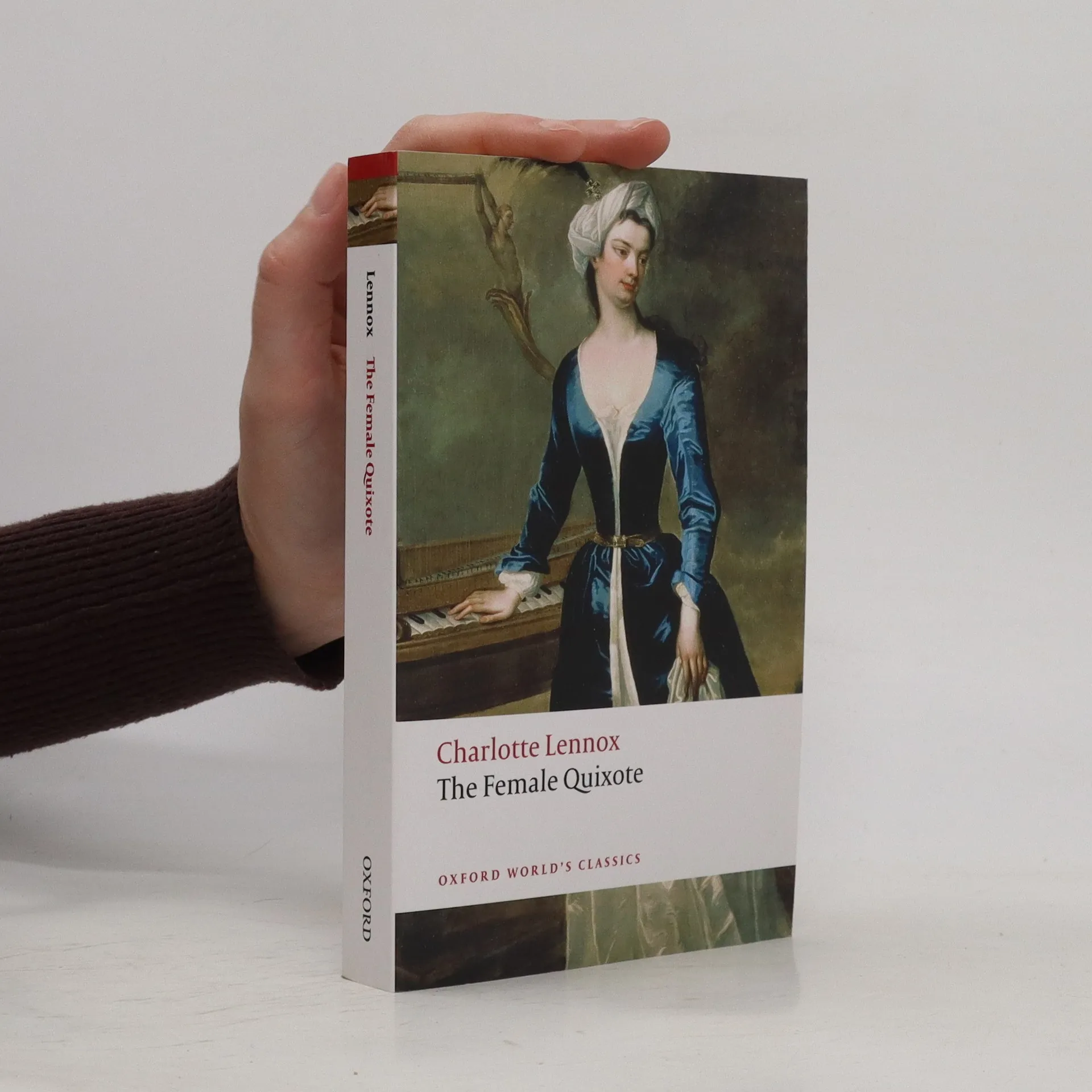
A British author and poet of the 18th century, Charlotte Ramsay Lennox is celebrated for her extensive career spanning poetry, prose, and drama. Her work is valued for its literary contributions and unique style, offering readers insightful perspectives on society and human relationships of her time.
The Female Quixote (1752), a parody of the style of Cervantes and much praised by Fielding, Richardson and Dr. Johnson, tells of the misadventures of the aristocratic Arabella, a devoted reader of romantic fiction.
Young, wealthy Arabella is obsessed with French romances: brought up by a reclusive widowed father in an isolated castle, she has educated herself through their pages, and been led to believe that their dramas and absurdities are reality. She blindly adheres to their example and interprets her everyday life through their lens, thinking that life consists of uncontrollable passions and murderous violence, and that any man would die for her. Thus she embarks on a series of hilarious misadventures, insistent on the reality of her imaginary world, like Don Quixote before her.
Arabella lebt im 18. Jahrhundert auf einem Schloss und hat eine romantisierte Vorstellung von der Welt, geprägt von französischen Liebesromanen. Sie erwartet von ihren Verehrern heroische Taten, während sie selbst nicht zwischen Realität und Fiktion unterscheiden kann. Die Geschichte thematisiert komische Missverständnisse und hinterfragt überholte Ideale.