


Explore the latest books of this year!
Bookbot

Hirsch Edward

    Edward Hirsch is a celebrated poet and a tireless advocate for poetry. His lifelong devotion to verse is evident in his profound and moving works, which explore human emotions and experiences with remarkable nuance. Hirsch's style is characterized by its rich language and penetrating insights, drawing readers into a world of metaphor and reflection. Both his prose and poetry serve as a testament to the power of language and its capacity to touch the deepest parts of the human spirit.

    Gabriel
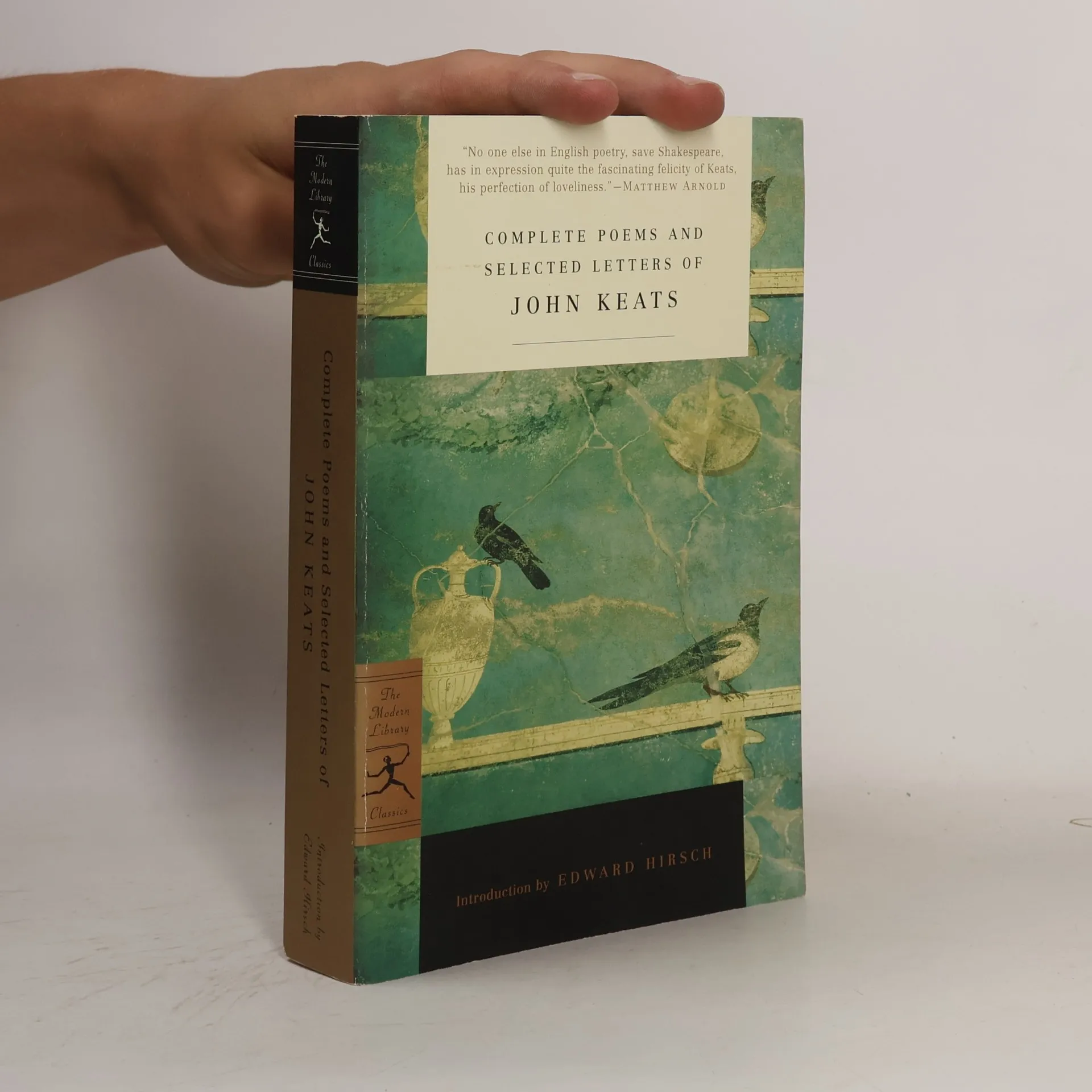
    The Modern Library Classics: Complete Poems and Selected Letters of John Keats
    100 Poems To Break Your Heart
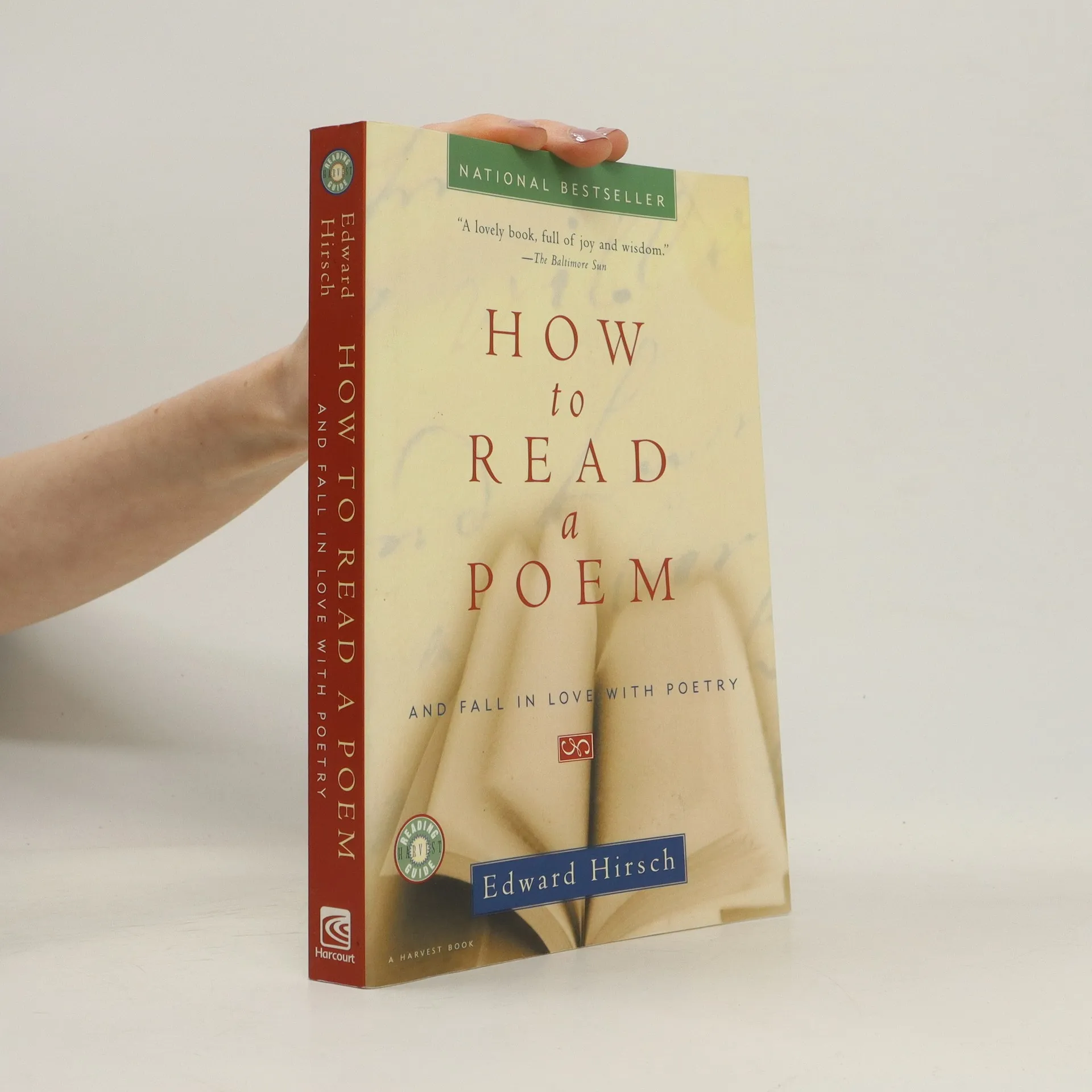
    How to Read a Poem
    Stranger by Night
    • Stranger by Night

      • 80 pages
      • 3 hours of reading

      Now in his seventies, the award-winning poet looks back on what was and accepts what is, in a deeply moving and beautiful sequence about what sustains him Beginning with "My Friends Don't Get Buried," the lament of a delinquent mourner as his friends have begun to die, and ending with the plaintive note to self "don't write elegies/anymore," Edward Hirsch takes us backward through the decades in these memory poems of startling immediacy. He recalls the black dress a lover wore when he couldn't yet know the tragedy of her burning spirit; the radiance of an autumn day in Detroit when his students smoked outside, passionately discussing Shelley; the day he got off late from a railyard shift and missed an antiwar demonstration. There are direct and indirect elegies to lost contemporaries like Mark Strand, William Meredith, and, most especially, his longtime compatriot Philip Levine, whom he honors in several poems about daily work in the late mid-century Midwest. As the poet ages and begins to lose his peripheral vision, the world is "stranger by night," but these elegant, heart-stirring poems shed light on a lifetime that inevitably contains both sorrow and joy.

      Stranger by Night
      3.9
    • How to Read a Poem

      • 368 pages
      • 13 hours of reading

      An exploration of the reasons for and meanings of poetry analyzes poems by Wordsworth, Plath, Neruda, and others to define their unique power and message.

      How to Read a Poem
      3.9
    • 100 Poems To Break Your Heart

      • 512 pages
      • 18 hours of reading

      100 of the most moving and inspiring poems of the last 200 years from around the world, a collection that will comfort and enthrall anyone trapped by grief or loneliness, selected by the award-winning, best-selling, and beloved author of How to Read a Poem Implicit in poetry is the idea that we are enriched by heartbreaks, by the recognition and understanding of suffering--not just our own suffering but also the pain of others. We are not so much diminished as enlarged by grief, by our refusal to vanish, or to let others vanish, without leaving a record. And poets are people who are determined to leave a trace in words, to transform oceanic depths of feeling into art that speaks to others. In 100 Poems to Break Your Heart, poet and advocate Edward Hirsch selects 100 poems, from the nineteenth century to the present, and illuminates them, unpacking context and references to help the reader fully experience the range of emotion and wisdom within these poems. For anyone trying to process grief, loneliness, or fear, this collection of poetry will be your guide in trying times.

      100 Poems To Break Your Heart
      3.7
    • 'I think I shall be among the English Poets after my death, ' John Keats soberly prophesied in 1818 as he started writing the blankverse epic Hyperion. Today he endures as the archetypal Romantic genius who explored the limits of the imagination and celebrated the pleasures of the senses but suffered a tragic early death. Edmund Wilson counted him as 'one of the half dozen greatest English writers, ' and T. S. Eliot has paid tribute to the Shakespearean quality of Keats's greatness. Indeed, his work has survived better than that of any of his contemporaries the devaluation of Romantic poetry that began early in this century. This Modern Library edition contains all of Keats's magnificent verse: 'Lamia, ' 'Isabella, ' and 'The Eve of St. Agnes'; his sonnets and odes; the allegorical romance Endymion; and the five- act poetic tragedy Otho the Great. Presented as well are the famous posthumous and fugitive poems, including the fragmentary 'The Eve of Saint Mark' and the great 'La Belle Dame sans Merci, ' perhaps the most distinguished literary ballad in the language. 'No one else in English poetry, save Shakespeare, has in expression quite the fascinating felicity of Keats, his perception of loveliness, ' said Matthew Arnold. 'In the faculty of naturalistic interpretation, in what we call natural magic, he ranks with Shakespeare.' schovat popis

      The Modern Library Classics: Complete Poems and Selected Letters of John Keats
    • Gabriel

      A Poem

      • 78 pages
      • 3 hours of reading

      Never has there been a book of poems quite like Gabriel, in which a short life, a bewildering death, and the unanswerable sorrow of a father come together in such a sustained elegy. This unabashed sequence speaks directly from Hirsch’s heart to our own, without sentimentality. From its opening lines—“The funeral director opened the coffin / And there he was alone / From the waist up”—Hirsch’s account is poignantly direct and open to the strange vicissitudes and tricks of grief. In propulsive three-line stanzas, he tells the story of how a once unstoppable child, who suffered from various developmental disorders, turned into an irreverent young adult, funny, rebellious, impulsive. Hirsch mixes his tale of Gabriel with the stories of other poets through the centuries who have also lost children, and expresses his feelings through theirs. His landmark poem enters the broad stream of human grief and raises in us the strange hope, even consolation, that we find in the writer’s act of witnessing and transformation. It will be read and reread.

      Gabriel