

A ground-breaking analysis from one of the world's foremost experts on global trends, including answers on how COVID-19 will amplify and accelerate each of these changes
Mauro Guillén Books
Mauro F. Guillén is a distinguished sociologist and political economist whose work explores the intricate connections between global trends and societal structures. His research delves into the dynamics of international business and the evolving landscape of corporate management, offering insightful analyses of the modern globalized economy. As an educator, he fosters a deep understanding of cross-cultural business practices and the challenges of international commerce. Guillén's contributions illuminate the complex interplay of economic forces and social realities on a worldwide scale.


2030: How Today's Biggest Trends Will Collide and Reshape the Future of Everything
- 288 pages
- 11 hours of reading
Once upon a time, the world was neatly divided into prosperous and backward economies. Babies were plentiful, workers outnumbered retirees, and people aspiring towards the middle class yearned to own homes and cars. Companies didn't need to see any further than Europe and the United States to do well. Printed money was legal tender for all debts, public and private. We grew up learning how to "play the game," and we expected the rules to remain the same as we took our first job, started a family, saw our children grow up, and went into retirement with our finances secure. That world-and those rules-are over. By 2030, a new reality will take hold, and before you know it: - There will be more grandparents than grandchildren - The middle-class in Asia and Sub-Saharan Africa will outnumber the US and Europe combined - The global economy will be driven by the non-Western consumer for the first time in modern history - There will be more global wealth owned by women than men - There will be more robots than workers - There will be more computers than human brains - There will be more currencies than countries All these trends, currently underway, will converge in the year 2030 and change everything you know about culture, the economy, and the world. According to Mauro F. Guillen, the only way to truly understand the global transformations underway-and their impacts-is to think laterally. That is, using "peripheral vision," or approaching problems creatively and from unorthodox points of view. Rather than focusing on a single trend-climate-change or the rise of illiberal regimes, for example-Guillen encourages us to consider the dynamic inter-play between a range of forces that will converge on a single tipping point-2030-that will be, for better or worse, the point of no return. 2030 is both a remarkable guide to the coming changes and an exercise in the power of "lateral thinking," thereby revolutionizing the way you think about cataclysmic change and its consequences
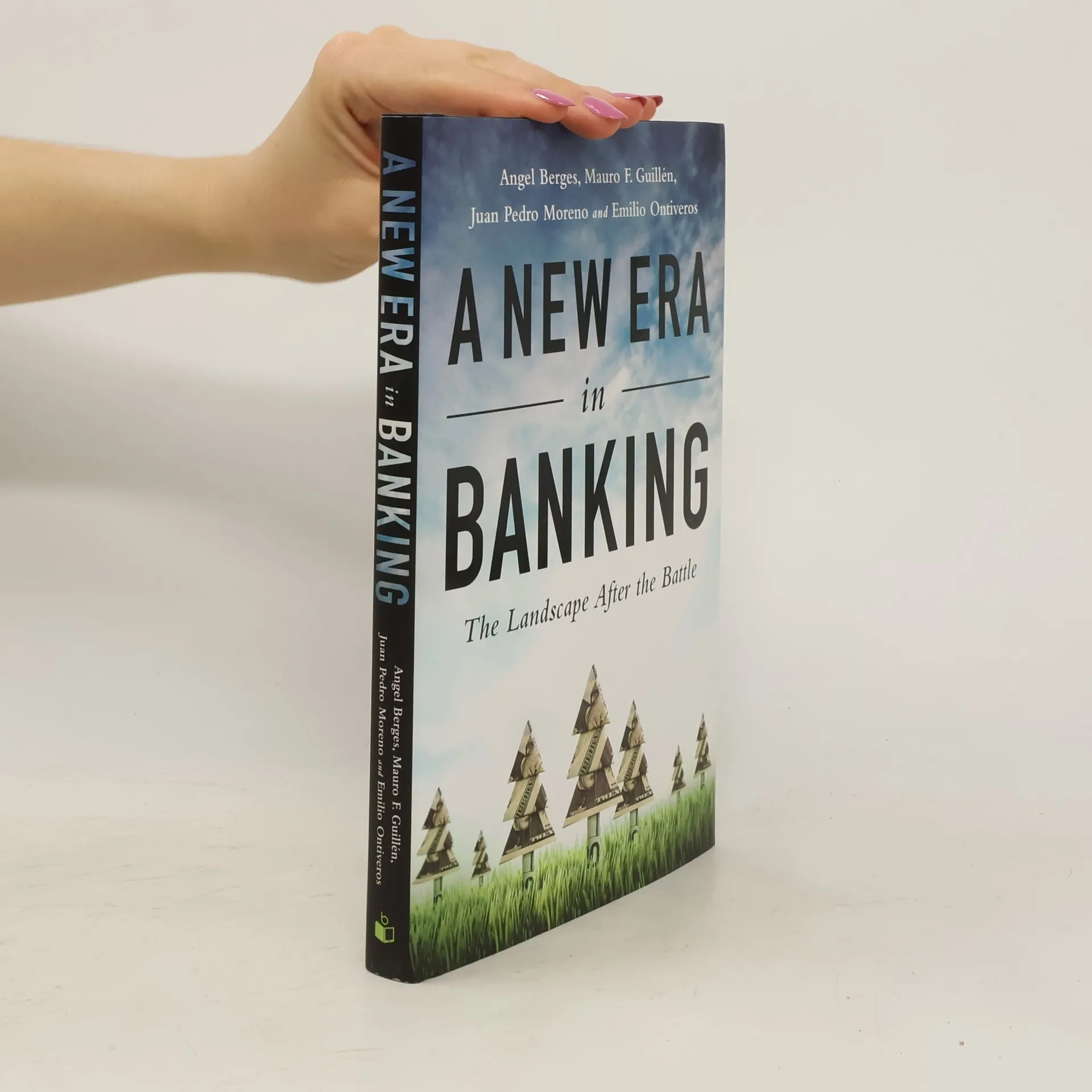
A New Era in Banking
- 186 pages
- 7 hours of reading
"A New Era in Banking: The Landscape After the Battle identifies the main drivers of change at the heart of this wholesale transformation of the financial services industry. It examines the complex challenge for financial institutions to de-risk business models, reconnect with customers, and approach stakeholder value creation"--
The Platform Paradox
- 104 pages
- 4 hours of reading
In The Platform Paradox, Wharton professor Mauro F. Guillen argues that many platforms misunderstand key aspects of what it takes to succeed globally, from culture and institutions to local competitive dynamics. He offers an integrated framework for digital platforms to identify and implement a strategy on a truly global scale.
In today’s world, the acceleration of megatrends -- increasing longevity and the explosion of technology among many others -- are transforming life as we now know it. In The Perennials, bestselling author of 2030 Mauro Guillén unpacks a sweeping societal shift triggered by demographic and technological transformation. Guillén argues that outmoded terms like Boomers, Gen X, Millennials, and Gen Z have long been used to pigeonhole us into rigid categories and life stages, artificially preventing people from reaching their full potential. A new postgenerational workforce known as “perennials'' -- individuals who are not pitted against each other either by their age or experience -- makes it possible to liberate scores of people from the constraints of the sequential model of life and level the playing field so that everyone has a chance at living a rewarding life. This multigenerational revolution is already happening and Mauro Guillén identifies the specific cultural, organizational and policy changes that need to be made in order to switch to a new template and usher in a new era of innovation powered by The Perennials.