

Explore the latest books of this year!
Bookbot

Musa Khan Jalalzai

    The UK Big-3
    Central Asia is Teetering on the Brink
    Is the UK Becoming a Failed State? Intelligence Diversity, Domestic Governance, Accountability and Devolution of Powers
    On the Brink
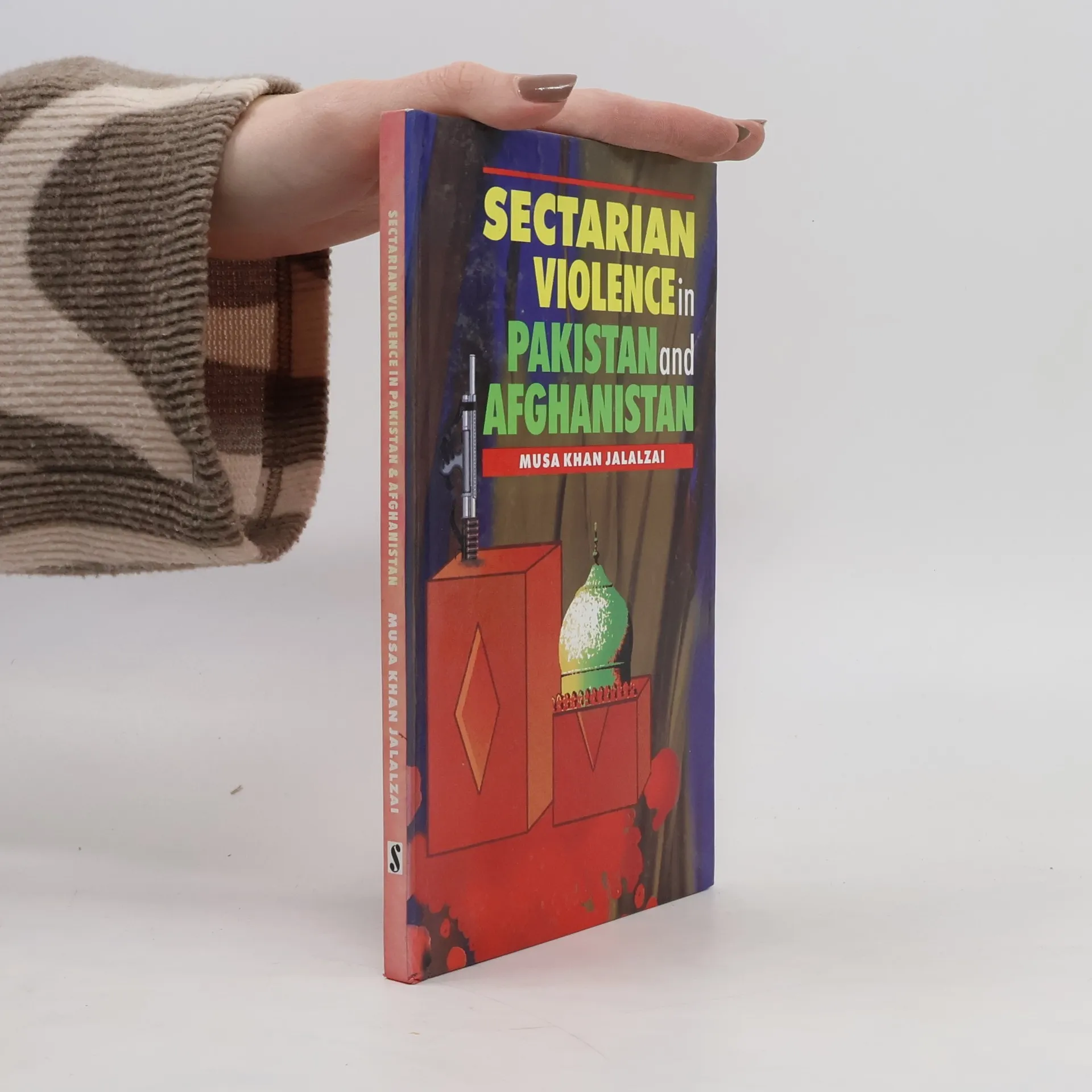
    Sectarian violence in Pakistan and Afghanistan
    Global Jihad
    • Global Jihad

      Wahabism, Salafism, the ISIS-K, Taliban, PKK, Kurdish Hezbollah, TTP and Tablighi Jamaat

      • 344 pages
      • 13 hours of reading

      Armed governance as a mood of rule, violent competition, and control has characterized the modern history of Afghanistan. The majority of actors participating in determining such a process of governance are militias supported by neighbouring states. The dynamics of Taliban legitimacy, and their disputed leadership, however, is not out of the way from other powerful terrorist groups, suchlike the ISIS, Lashkar-e-Taiba and Central Asian groups. These external actors may also influence the relationship between Taliban and Afghan civilians. Taliban's way of governance has taken place under the conditions of civil war. They have adopted culture of violence, torture and jihad against education of Afghan girls. They haven't relinquished the culture of terrorising civilians. How the Taliban seized power in Kabul is a major question. Contexts of civil war and state weakness are often characterized by situations of governance by terror actors. The failure of Taliban intelligence to provide reliable information about the IS's military strength has raised serious questions about the credibility of their misgovernment. While one of the important functions of an intelligence agency is to provide timely warnings of hostile military action in the battlefield.
      Global Jihad
    • On the Brink

      The US, China and the Nuclear War Shadows

      • 230 pages
      • 9 hours of reading

      Over the past 20 years, China has emerged as a world technological superpower to dethrone the United States as a global power. Since 2018, US policymakers adopted an anti-China policy by imposing different types of restrictions and sanctions to handle its economic rise. However, China has asserted a number of islands in the South China Sea region, where the PLA established naval bases and modern surveillance system to oversee activities of rival states. President Trump ran after the Chinese President-thinking that his friendly strategy could domesticate China's economic challenges. When failed to intercept China's technological development, he declared a trade war against the country. However, military confrontations between China and Taiwan exacerbated after the President of Taiwan, Tsai Ing, authenticated the presence of US forces in her country on 28 October 2021. The US supported Taiwan with arms sales to protect the country from Chinese aggression. The European, Asian and African states attitude towards the US leadership massively changed. They now think that as the Biden administration military and political system has broken, they cannot trust this vanquishing leadership. The rise of China has generated potential challenges to the US interests in Asia, Middle East and Africa. Internal political turmoil, politicization state institutions, and divided communities have smudged its image, while China is leading the world in cutting-edge technologies such as quantum science, 5G communications, and artificial intelligence. Chinese commentators insist that America's credibility is so shattered that no U.S.-led coalition can appeal to Asian neighbours who value their independence and freedom of manoeuvre.

      On the Brink
    • The drawing powers and attractiveness of the welfare state are government-protected minimum standards of income, health, security, housing, and education. The British welfare state has been enmeshed in multifaceted crises including poverty, racism, lack of coherence, and a smattering of social and political infrastructure. The Westminster thank tank for public services reforms has judged degenerating and decaying health of the British state from the discontenting facts and certitudes of depressed disconsolate feelings of British citizens: "Many of those losing their jobs will be shocked to find just how bare bones the welfare state is. For those earning even the median salary, benefit rates appear woefully inadequate, providing no buffer to allow for an adjustment of outgoings or time to find a comparable job". These challenges have debilitated and infirmed communication of the state on international forums, and incapacitated its domestic enforcement capabilities. After the COVID-19 and African Omicron virus's well-built attacks, and its disaffiliation with the EU, the state is facing economic and political challenges. The Labour government had failed in yesteryears, to address mistrust between government and communities, while correspondingly, and for that reason, the conservative government continued to affix its footprints to goof up and blunders.

      Is the UK Becoming a Failed State? Intelligence Diversity, Domestic Governance, Accountability and Devolution of Powers
    • Central Asia is Teetering on the Brink

      : The Kazakhstan Bellyache, Hayyat Tahrir al-Sham, Liwa al-Muhajireen wal-Ansar, Malhama Tactical, Tavhid va Jihod Katibasi, the Islamic State (IS), Taliban, and Prospect of Nuclear Terrorism

      • 308 pages
      • 11 hours of reading

      The establishment of Taliban's Suicide Brigade once more generated pain in the neck of Central Asia, Russia and Europe. Deployment of suchlike Suicide Brigade next door to their borders is a major mainspring of consternation in the region. Central Asia and Europe refused to recognise the Taliban government and forewarned deployment of over 6,000 fighters of Suicide Brigade. Recent violence in Kazakhstan has proved my prognostication that terrorist and extremist organizations based in Afghanistan will attack Central Asian states with nuclear or biological weapons. There is a strong possibility that these groups may potentially attack civilian, military and nuclear installations in Central Asia and Europe for the reason that they have retrieved professional capabilities to use a Dirty Bomb. Nuclear terrorism remains a constant threat to peace in Central Asia and Europe. A new addition to the list of terrorist organizations is Tablighi Jamaat of Pakistan that has established strong extremist networks in Pakistan, India and Bangladesh. The Tablighi extremist units recently exhibited their power and professional capabilities by organising sarcastic elements against Kazakhstan's government in January 2022. Recent events in Kazakhstan and Tajikistan have raised the prospect of extremist and jihadist groups using biological, radiological and chemical weapons against military installations and national critical infrastructure in both states. The greatest threat to the national security of Russia stems from the business of nuclear smuggling and state sponsored terror groups operating in Central Asia.

      Central Asia is Teetering on the Brink
    • The UK Big-3

      The French and German Intelligence Reforms, Intelligence Diversity and Foreign Espionage

      • 252 pages
      • 9 hours of reading
      The UK Big-3
    • Militant Wahhabism

      The Chechen Jihad, Tablighi Jamaat and the Taliban Suicide Terrorism in Pakistan and Afghanistan

      • 188 pages
      • 7 hours of reading

      The narrative explores the alarming rise of terrorist and extremist organizations in Central Asia, particularly following recent violent incidents in Kazakhstan. It highlights the potential threats these groups pose, including the use of nuclear or biological weapons against civilian, military, and nuclear sites in the region and Russia. The author emphasizes the retrieved capabilities of these organizations to execute sophisticated attacks, raising urgent concerns about security and stability in Central Asia.

      Militant Wahhabism
    • Manage Deaths Instead of Managing Life

      • 200 pages
      • 7 hours of reading

      The book examines the UK's response to the Covid-19 pandemic, analyzing the government's strategies and decisions throughout the crisis. It delves into the effectiveness of policies implemented, public health measures, and the societal impact, providing a critical perspective on leadership and accountability during a time of national emergency.

      Manage Deaths Instead of Managing Life
    • The book discusses the controversial statements made by Pakistani Mullah Abdul Aziz, who claims that the Quran instructs Muslims to engage in terrorism against non-Muslims. His remarks have sparked outrage and raised concerns about state-sponsored terrorism in Pakistan. Critics highlight the silence of religious scholars and political leaders in response to his statements, which they view as a distortion of Islamic teachings. The narrative also addresses the implications of Aziz's actions, including a legal case against him for threatening police and the radicalization occurring in his seminary.

      China's New Engagement with Taliban and the Wakhan Corridor