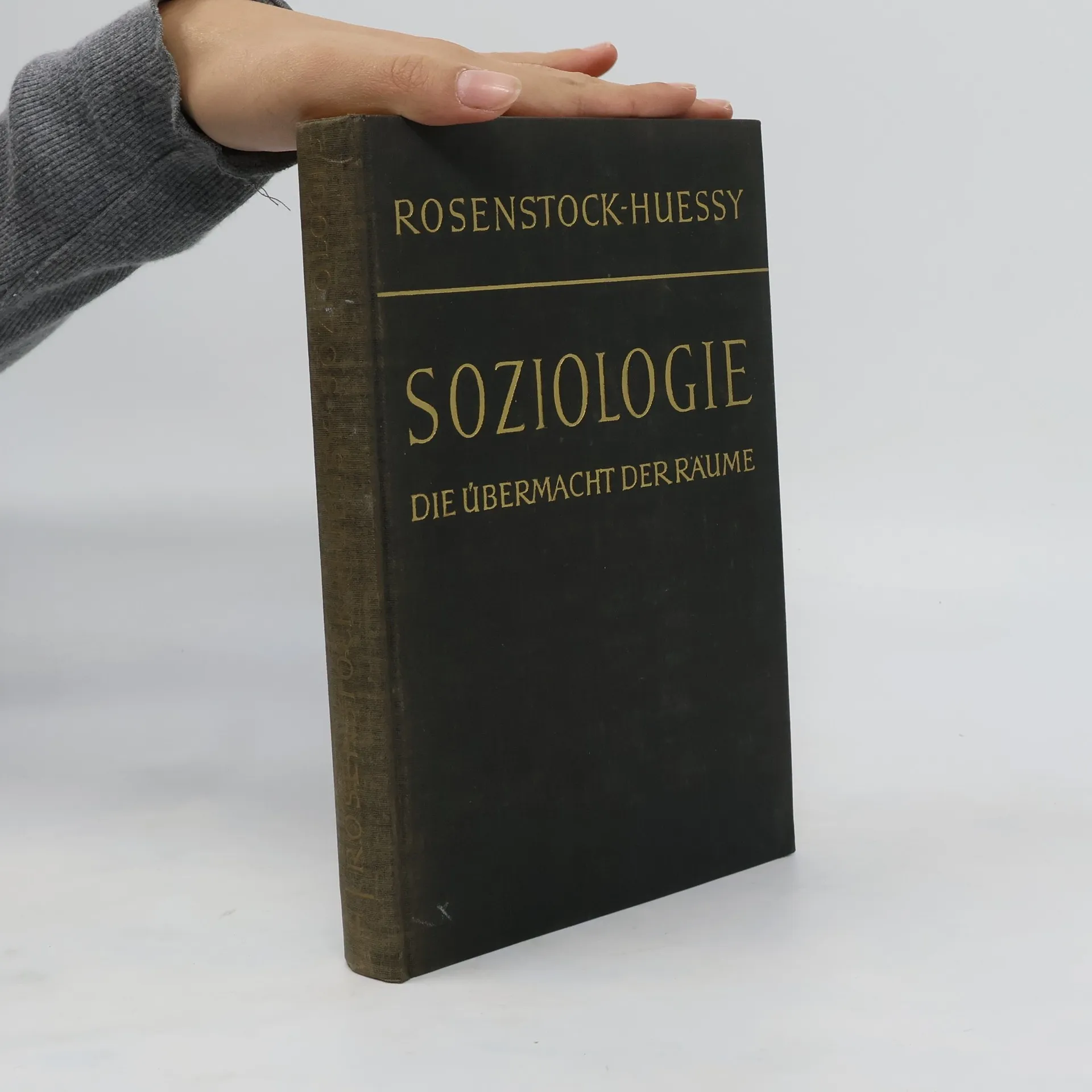
In this first English translation of Eugen Rosenstock-Huessy's Soziologie, the author critiques the dominance of abstract, spatially-based categories in social philosophy, advocating instead for a focus on temporal processes that shape social organization. He contends that this shift in perspective is crucial for understanding the dynamics of society. The book offers a fresh lens on sociological thought, encouraging readers to reconsider how they conceptualize social structures and their evolution over time.
Eugen Rosenstock-Huessy Book order
Eugen Rosenstock-Hüssy was a historian and social philosopher whose thought spanned history, theology, sociology, and linguistics. His work focused on how speech and language shape human character and abilities across social contexts. As a thinker who revived post-Nietzschean religious thought, Rosenstock-Hüssy examined the foundations of Western culture and its liberal underpinnings, particularly following his experiences in World War I. His writings, influenced by his personal conversion to Christianity, often explored interpretations of that faith. He taught at universities in the United States, and his work influenced the modern encounter between Judaism and Christianity.


- 2024
- 2012
Der Band präsentiert Texte von Eugen Rosenstock-Huessy, die weitgehend in Vergessenheit geraten sind: „Die Kopernikanische Wendung der Grammatik“ (1944) kann als Schlüsseltext gelten, wie ein Umdenken in der Sprachphilosophie vollzogen werden kann. Das „Liturgische Denken“ (1949) wirft unter anderem einen kritischen, aber nicht abwertenden Blick auf die Naturalisierung des Menschen durch die Wissenschaften und ist von daher nicht nur grundlegend, sondern auch aktuell. Der Text „Im Prägstock eines Menschenschlags oder der tägliche Ursprung der Sprache“ (1964) kann als die Summe des sprachphilosophischen, vielleicht sogar des gesamten Denkens von Eugen Rosenstock-Huessey gesehen werden. Der Aufsatz „Angewandte Seelenkunde“ (1916/1923) schließlich, der hier verkürzt wiedergegeben wird, kann als Gründungsdokument des dialogischen oder grammatischen Denkens bezeichnet werden.

- 1990
Der Atem des Geistes
- 294 pages
- 11 hours of reading
- 1968
Ja und nein
autobiographische Fragmente
- 1968