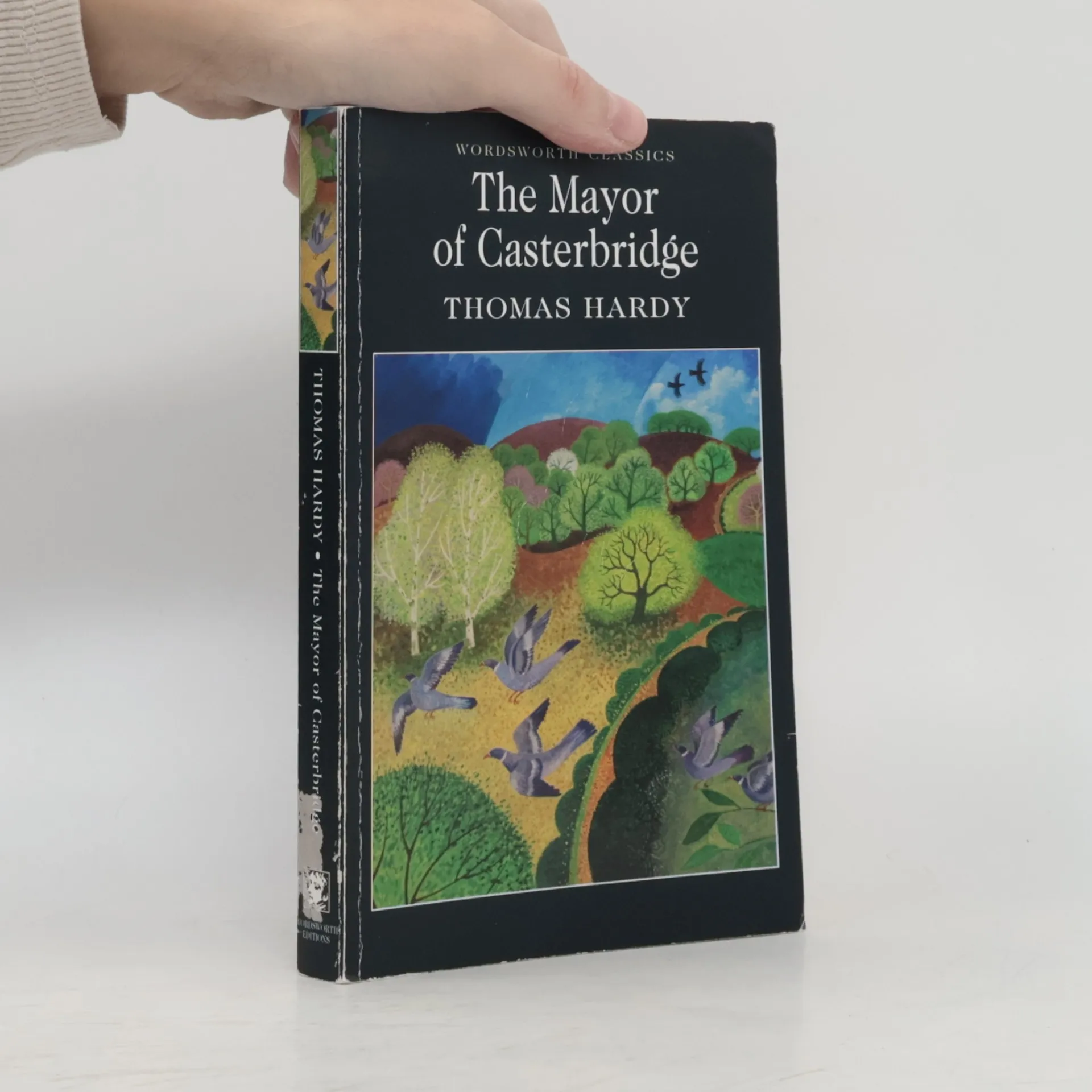
The Mayor of Casterbridge
A Story of a Man of Character
Under the influence of rum, Michael Henchard sells his wife and daughter to a sailor. Years later, the widowed wife returns to find her husband the Mayor of Casterbridge.
4.4


Craig Raine is a distinguished poet and critic whose work is characterized by precise language and a keen insight into the human experience. His poetry often explores themes of memory, family, and cultural identity, with a style known for its intellectual depth and emotional resonance. His writing is described as innovative and literarily ambitious, making him a significant voice in contemporary British poetry. Raine also engages in literary criticism and essay writing, focusing on the analysis and defense of key literary works.



A Story of a Man of Character
Under the influence of rum, Michael Henchard sells his wife and daughter to a sailor. Years later, the widowed wife returns to find her husband the Mayor of Casterbridge.
The seventh volume in the British Council's New Writing series. From some of Britain's most formidable literary talent, it places new names alongside more established ones, and offers contributions ranging from poetry to essays, and from short stories to previews of novels in progress.
The Nobel Prize-winning poet T.S. Eliot, often perceived as obscure and difficult, is reexamined in this insightful exploration by prize-winning poet Craig Raine. Contrary to the belief that Eliot's work is forbiddingly learned and enigmatic, Raine reveals that his poetry, drama, and criticism form a unified and coherent body of work. Despite its originality and radical experimentation, Eliot's verse conveys meaning akin to more conventional poetry. Raine identifies a central theme—the buried life or failure of feeling—manifesting in diverse ways throughout Eliot's oeuvre. He highlights the tension between Eliot's desire "to live with all intensity" and his skepticism towards "violent emotion for its own sake." Through close readings of notable works such as "The Love Song of J. Alfred Prufrock," "Gerontion," "The Hollow Men," and "Ash Wednesday," Raine sheds light on this paradoxical figure: an anti-romantic realist troubled by emotional failure. The book features in-depth analyses of Eliot's masterpieces, "The Waste Land" and "Four Quartets," and explores his critical contributions, including key literary concepts like the objective correlative and dissociation of sensibility. Raine also addresses and refutes accusations of anti-Semitism against Eliot, making this volume essential for admirers of Eliot and lovers of modern literature alike.