

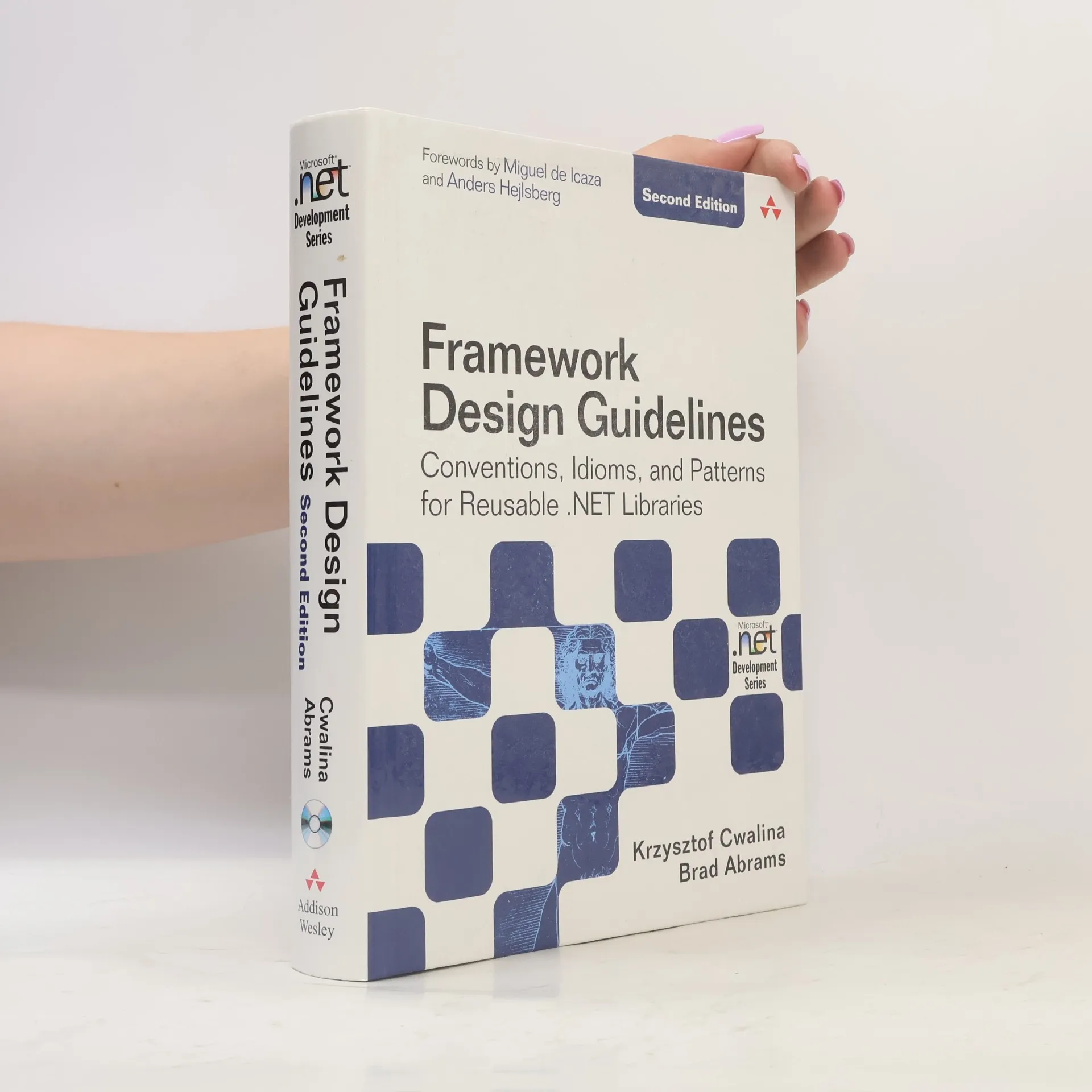

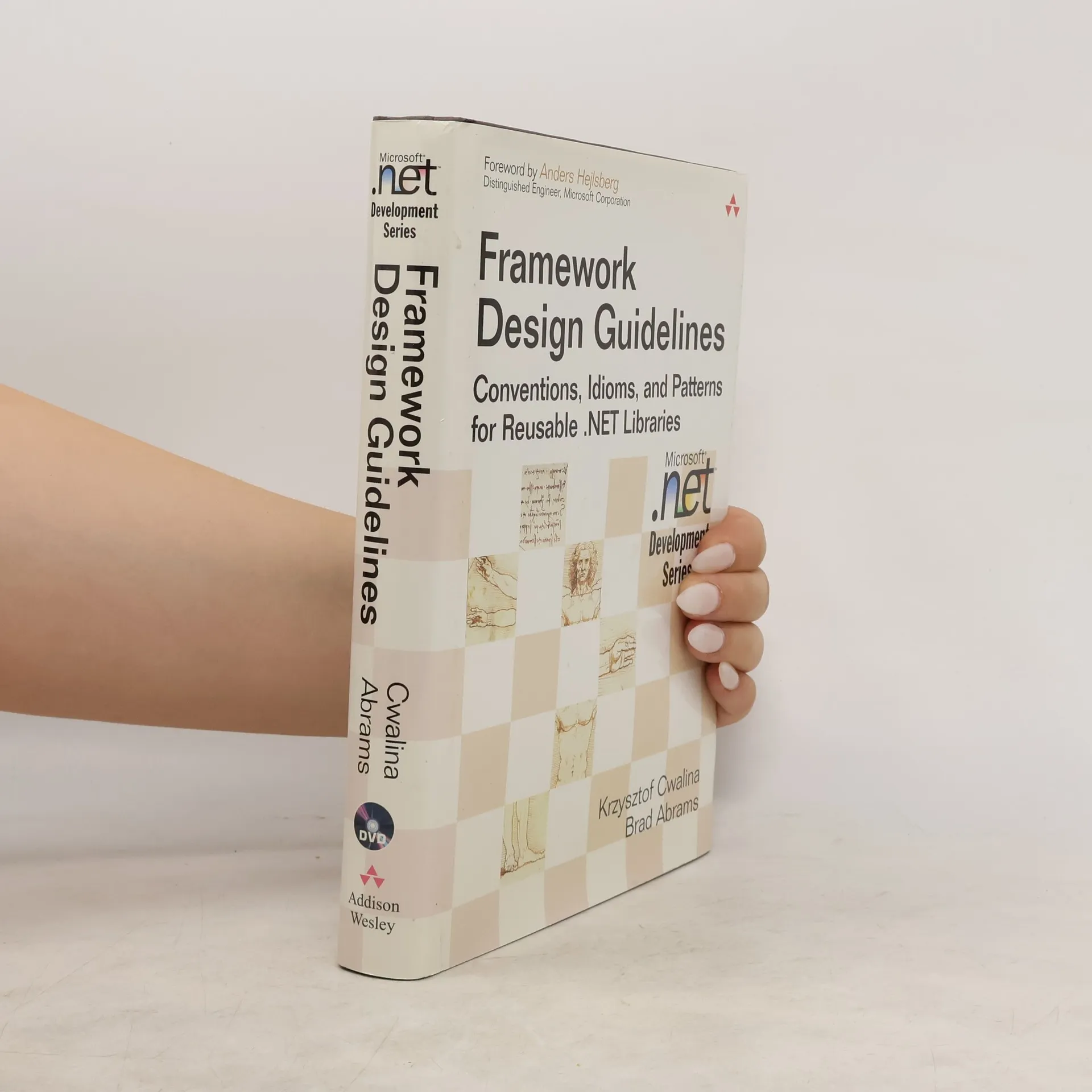
Framework design guidelines : conventions, idioms, and patterns for Reusable .NET libraries
- 384 pages
- 14 hours of reading
"Framework Design Guidelines: Conventions, Idioms, and Patterns for Reusable .NET Libraries teaches developers the best practices for designing system frameworks and reusable libraries for use with the Microsoft .NET Framework and WinFx. This book focuses on the design issues that directly affect the programmability of a framework, specifically its publicly accessible APIs." "This book can improve the work of any .NET developer producing code that other developers will use. An added benefit is a collection of annotations to the guidelines by various members of the Microsoft .NET Framework and WinFx teams, which provide a lively discussion of the motives behind the guidelines, along with examples of good reasons for breaking the guidelines."--Jacket