
Explore the latest books of this year!
Bookbot

Milton Rokeach

    Umysł otwarty i zamknięty
    The Open and Closed Mind
    The Three Christs of Ypsilanti
    • The Three Christs of Ypsilanti

      • 370 pages
      • 13 hours of reading
      3.8(194)Add rating

      On July 1, 1959, at Ypsilanti State Hospital in Michigan, the social psychologist Milton Rokeach brought together three paranoid schizophrenics: Clyde Benson, an elderly farmer and alcoholic; Joseph Cassel, a failed writer who was institutionalized after increasingly violent behavior toward his family; and Leon Gabor, a college dropout and veteran of World War II. The men had one thing in common: each believed himself to be Jesus Christ. Their extraordinary meeting and the two years they spent in one another’s company serves as the basis for an investigation into the nature of human identity, belief, and delusion that is poignant, amusing, and at times disturbing. Displaying the sympathy and subtlety of a gifted novelist, Rokeach draws us into the lives of three troubled and profoundly different men who find themselves “confronted with the ultimate contradiction conceivable for human beings: more than one person claiming the same identity.”

      The Three Christs of Ypsilanti
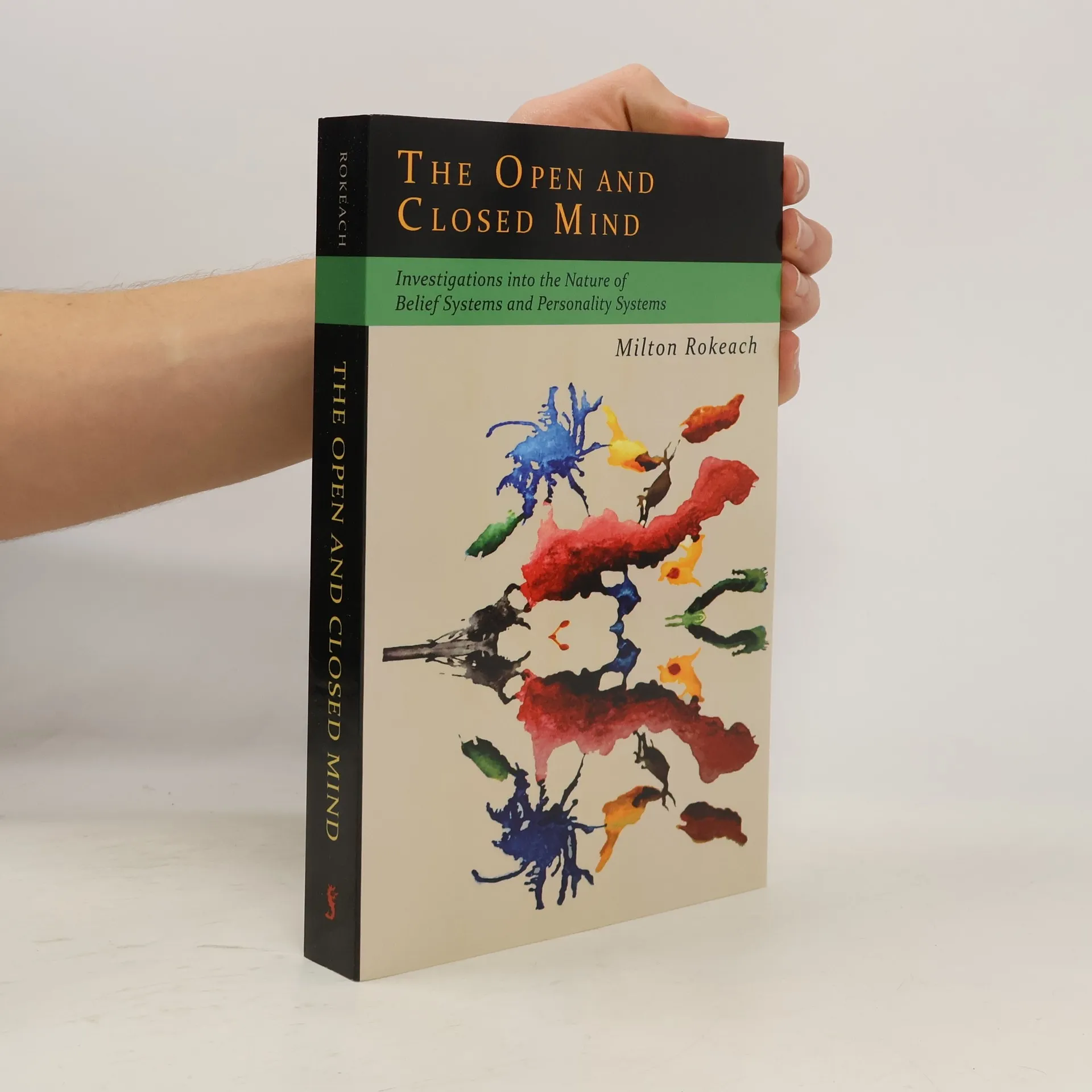
    • The Open and Closed Mind

      Investigations into the Nature of Belief Systems and Personality Systems

      • 464 pages
      • 17 hours of reading

      The book delves into the intricacies of prejudice and dogmatic thinking, exploring how individuals form and structure their belief systems. It examines the connection between personal beliefs and personality traits, drawing on extensive research. This work continues the intellectual legacy of influential texts like "Escape from Freedom" and "The Authoritarian Personality," offering insights into the psychological underpinnings of belief formation and societal attitudes.

      The Open and Closed Mind
    • Na przestrzeni lat obserwowaliśmy osoby, głównie intelektualistów, które w codziennym życiu jawiły się jako zdogmatyzowane i zamknięte w swoich przekonaniach. Ich dogmaty miały różnorodne źródła, reprezentując różne punkty widzenia polityczne, religijne i naukowe. Wśród nich byli liberałowie, konserwatyści, żydzi, katolicy, ateiści oraz przedstawiciele różnych szkół psychologicznych. Już przed zdefiniowaniem dogmatyzmu ideologicznego, dostrzegano jego związek z zamkniętym sposobem myślenia, autorytaryzmem i brakiem tolerancji. Osoby zdogmatyzowane formują swoje poglądy w sposób, który wpływa na ich myślenie o różnych zagadnieniach. Umysł zamknięty, choć trudny do zdefiniowania, jest widoczny w politycznych i religijnych przekonaniach oraz w środowiskach akademickich. Konflikty dotyczące racjonalności oraz dogmatyzmu są powszechne. Początkowe zainteresowanie skrajnymi systemami przekonań przerodziło się w badania nad ogólną istotą systemów przekonań. Milton Rokeach, znany z badań nad strukturą systemu wartości, podsumowuje swoje dziewięcioletnie badania nad dogmatyzmem, koncentrując się na strukturze przekonań, co pozwala odnosić jego hipotezy do współczesnych zjawisk, takich jak populizm czy uprzedzenia. Rokeach bada cechy systemów przekonań osób dogmatycznych, zadając pytania o ich autorytaryzm i nietolerancję.

      Umysł otwarty i zamknięty