


Explore the latest books of this year!
Bookbot

Richard Baxter

    Richard Baxter was an English Puritan church leader, poet, hymn-writer, theologian, and controversialist. After initial false starts, he established his reputation through his ministry in Kidderminster, simultaneously launching a long and prolific career as a theological writer. Following the Restoration, he refused preferment, maintained a non-separatist Presbyterian stance, and became a leading figure among nonconformists, enduring periods of imprisonment.

    The Saint's Everlasting Rest
    Dying Thoughts
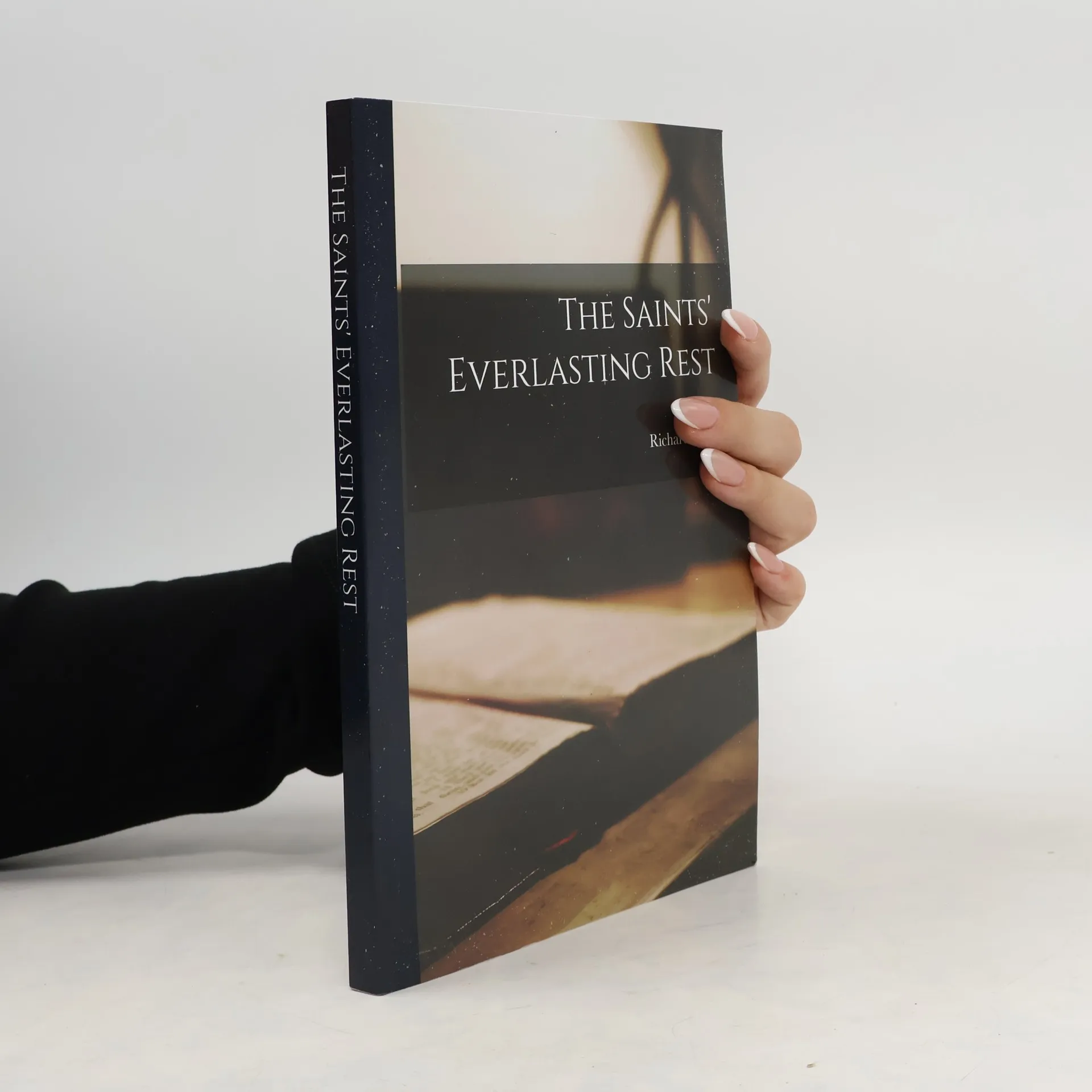
    The Saints' Everlasting Rest
    Baxter
    Tongue-Tied
    The Reformed Pastor
    • The Reformed Pastor

      • 176 pages
      • 7 hours of reading
      4.5(97)Add rating

      In his classic text The Reformed Pastor, Richard Baxter expounds on the apostle Paul's encouragement to the elders of Ephesus to keep watch over themselves and their flocks. Updated and abridged edition.

      The Reformed Pastor
    • Baxter

      A Holy Commonwealth

      • 292 pages
      • 11 hours of reading

      Set against the backdrop of the English Civil War, this work reveals Richard Baxter's candid reflections on his support for Parliament and the Cromwellian Protectorate. Written in 1659, it became highly controversial, leading to Baxter's public repudiation and its inclusion in a notorious book-burning by Oxford University in 1683. The scandal has often overshadowed its significance, making it a key text for understanding the tensions within Puritan thought during a tumultuous period in English history.

      Baxter
    • The Saints' Everlasting Rest

      • 216 pages
      • 8 hours of reading

      Recognized for its cultural significance, this work contributes to the foundational knowledge of civilization. Scholars have deemed it an important resource, reflecting its value in understanding historical and societal contexts.

      The Saints' Everlasting Rest
    • Dying Thoughts

      • 144 pages
      • 6 hours of reading
      4.0(86)Add rating

      More well known for his Reformed Pastor, Richard Baxter was the outstanding pastor of Kidderminster. Dying Thoughts is his exposition of Paul's words in Philippians 1:23: 'For I am in a strait betwixt two, having a desire to depart, and to be with Christ, which is far better.' Benjamin Fawcett who made this abridged version of the original work wrote, 'The Dying Thoughts of Mr. Baxter chiefly present to our view what every Christian may attain, and what it is the highest interest, as well as the indispensable duty of every Christian to aspire after.' In this little book, we see Baxter wrestling with his own doubts and fears as he faces eternity, jealously examining his own heart, anxious to test his own sincerity, taking nothing for granted. Baxter wanted to die with every grace in his soul in full vigour. A man of life passions as ourselves, his Dying Thoughts provides much needed counsel, strength and comfort because it deals with the same conflicts, complaints and desires which fill our own hearts.

      Dying Thoughts
    • The Saint's Everlasting Rest

      Or, A Treatise Of The Blessed State Of The Saints In Their Enjoyment Of God In Heaven. Abridged By Benjamin Fawcett. M. A.

      • 212 pages
      • 8 hours of reading

      Exploring the profound joy and fulfillment of the saints in heaven, this treatise delves into the blessed state of eternal communion with God. The author articulates the spiritual rewards awaiting the faithful, emphasizing themes of divine love and ultimate rest. Abridged by Benjamin Fawcett, the work distills complex theological concepts into accessible reflections, making it a significant resource for those seeking to understand the Christian perspective on eternal life and the nature of heavenly bliss.

      The Saint's Everlasting Rest
    • A Call to the Unconverted to Turn and Live

      Directions and Persuasions for a Sound Conversion

      • 168 pages
      • 6 hours of reading

      The book passionately addresses the plight of sinners who overlook the profound love and sacrifice of Christ. It urges readers to recognize the immense value of the gospel and the certainty of everlasting life, which they currently disregard. The author implores individuals to abandon their sins and reassess their priorities, encouraging a transformation in devotion and lifestyle. Through heartfelt appeals, it emphasizes the urgency of seeking a deeper relationship with God and the joy that comes from embracing faith.

      A Call to the Unconverted to Turn and Live
    • The Scripture Gospel Defended - and Christ, grace and free justification vindicated against the libertines In two books, the first, A breviate of fifty controversies about justification - The second upon the sudden reviving of Antinomianism is an unchanged, high-quality reprint of the original edition of 1690. Hansebooks is editor of the literature on different topic areas such as research and science, travel and expeditions, cooking and nutrition, medicine, and other genres. As a publisher we focus on the preservation of historical literature. Many works of historical writers and scientists are available today as antiques only. Hansebooks newly publishes these books and contributes to the preservation of literature which has become rare and historical knowledge for the future.

      The Scripture Gospel Defended
    • A second admonition to Mr. Edward Bagshaw: - Written to call him to repentance for many false doctrines, crimes, and specially fourscore palpable untruths .. is an unchanged, high-quality reprint of the original edition of 1671. Hansebooks is editor of the literature on different topic areas such as research and science, travel and expeditions, cooking and nutrition, medicine, and other genres. As a publisher we focus on the preservation of historical literature. Many works of historical writers and scientists are available today as antiques only. Hansebooks newly publishes these books and contributes to the preservation of literature which has become rare and historical knowledge for the future.

      A second admonition to Mr. Edward Bagshaw: