This author's work primarily focuses on linguistics and anthropology. Their academic career has spanned various university appointments. Their research delves into the intricacies of language and its profound connection to human society.
This guide offers essential insights for those new to linguistic fieldwork, covering all stages from preparation to result presentation. It emphasizes practical techniques and methodologies, making it an invaluable resource for aspiring linguists. The book aims to equip readers with the tools needed for effective data collection and analysis, ensuring a comprehensive understanding of the fieldwork process.
Part passionate memoir, part scientific exploration, a life-changing tale set among a small tribe of Amazonian Indians in Brazil that offers a riveting look into the nature of language, thought, and life itself. "Immensely interesting and deeply moving.... One of the best books I have read."—Lucy Dodwell, New Scientist A riveting account of the astonishing experiences and discoveries made by linguist Daniel Everett while he lived with the Pirahã, a small tribe of Amazonian Indians in central Brazil. Daniel Everett arrived among the Pirahã with his wife and three young children hoping to convert the tribe to Christianity. Everett quickly became obsessed with their language and its cultural and linguistic implications. The Pirahã have no counting system, no fixed terms for color, no concept of war, and no personal property. Everett was so impressed with their peaceful way of life that he eventually lost faith in the God he'd hoped to introduce to them, and instead devoted his life to the science of linguistics.
Is it in our nature to be altruistic or evil, to create art, use tools, or develop language? Daniel L. Everett argues that human nature, as commonly understood, does not exist. He challenges major trends in Evolutionary Psychology, asserting that humans are hardwired only for freedom: freedom from evolutionary instincts and the ability to adapt to diverse environments and cultures. Through years of field research with the Pirahã people of the Amazon, Everett scrutinizes various cognitive theories, including Noam Chomsky's universal grammar, Freud's unconscious forces, and the concept of psychic unity by Adolf Bastian, as well as ideas from evolutionary psychologists like Leda Cosmides and Steven Pinker. By examining the unique features of the Pirahã language, he illustrates how culture shapes thought and highlights its role in cognitive flexibility. He proposes a view of the cultural self as a collection of experiences linked by memories, values, knowledge, and social roles, rather than biological instincts. This perspective reveals the "dark matter of the mind" and suggests that our greatest evolutionary adaptation is our capacity for adaptability itself.
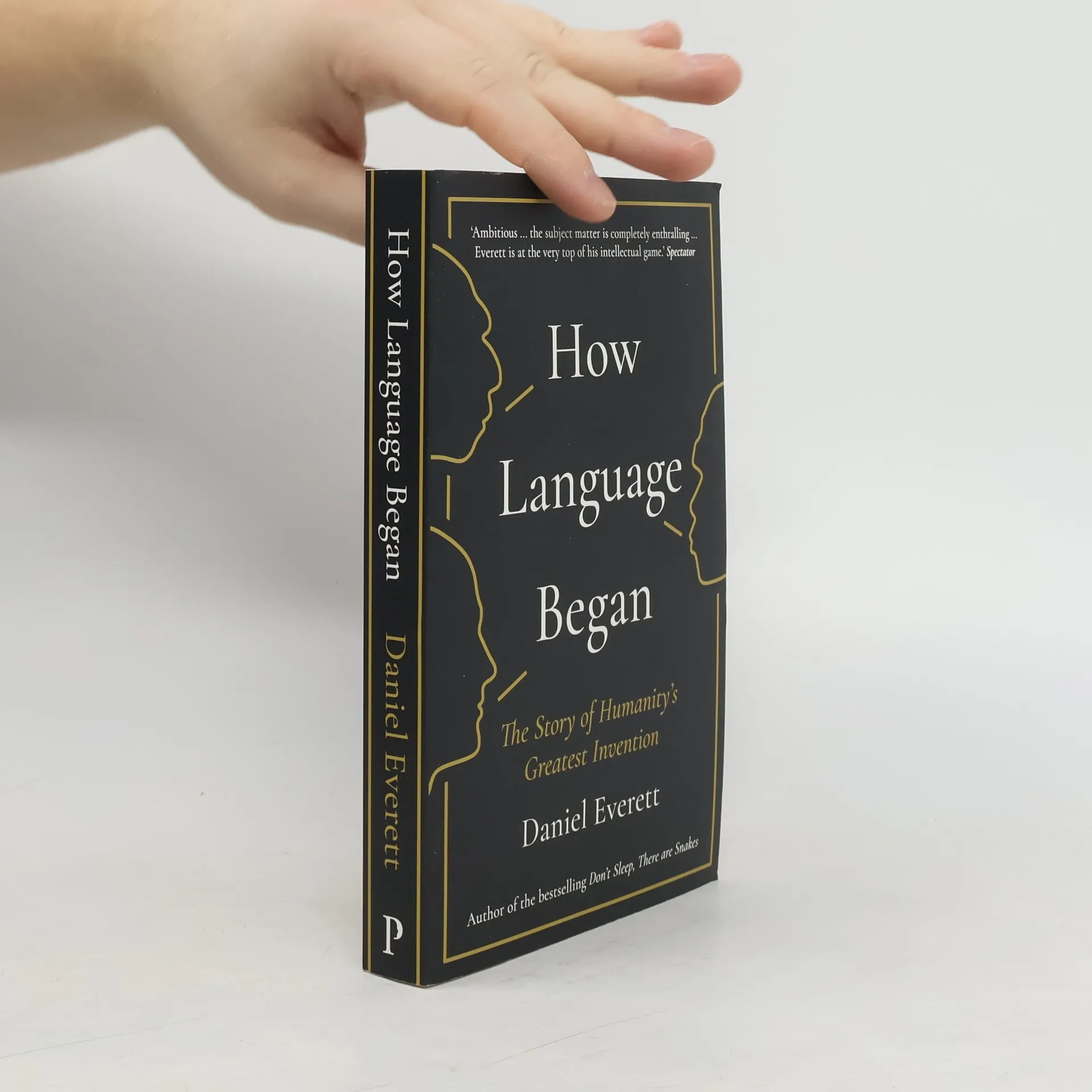
In his groundbreaking new book Daniel Everett seeks answers to questions that have perplexed thinkers from Plato to Chomsky: when and how did language begin? What is it? And what is it for?Daniel Everett confounds the conventional wisdom that language originated with Homo sapiens 150,000 years ago and that we have a 'language instinct'. Drawing on evidence from a wide range of fields, including linguistics, archaeology, biology, anthropology and neuroscience, he shows that our ancient ancestors, Homo erectus, had the biological and mental equipment for speech one and half million years ago, and that their cultural and technological achievements (including building ocean-going boats) make it overwhelmingly likely they spoke some kind of language.How Language Began sheds new light on language and culture and what it means to be human and, as always, Daniel Everett spices his account with incident and anecdote. His book is convincing, arresting and entertaining.
Эта книга предлагает инновационные идеи от ведущих психологов, нейробиологов и философов, которые радикально увеличивают наше понимание человеческого мышления. Темы, рассматриваемые в книге, могут удивить многих, но в то же время будут непонятны для других. Она содержит термины и концепции, которые могут значительно изменить многие представления о мышлении. Это новое знание решает множество старых загадок и открывает целостный взгляд на все возможности мышления внутри нас.