Explore the latest books of this year!
Bookbot

Michael Faraday

    September 22, 1791 – August 25, 1867

    Michael Faraday was an English scientist whose contributions profoundly shaped electromagnetism and electrochemistry. Despite lacking formal education, he became one of history's most influential scientific minds. His pioneering research on the electromagnetic field laid the groundwork for modern physics and revealed the intricate relationship between magnetism and light. Discoveries such as electromagnetic induction and the principles of electrolysis became foundational for technological advancement, enabling the practical application of electricity.
    On the various forces of nature (Illustrated)
    On the Various Forces of Nature
    On The Various Forces Of Nature And Their Relations To Each Other
    The Chemical History of a Candle
    The Chemical History Of A Candle
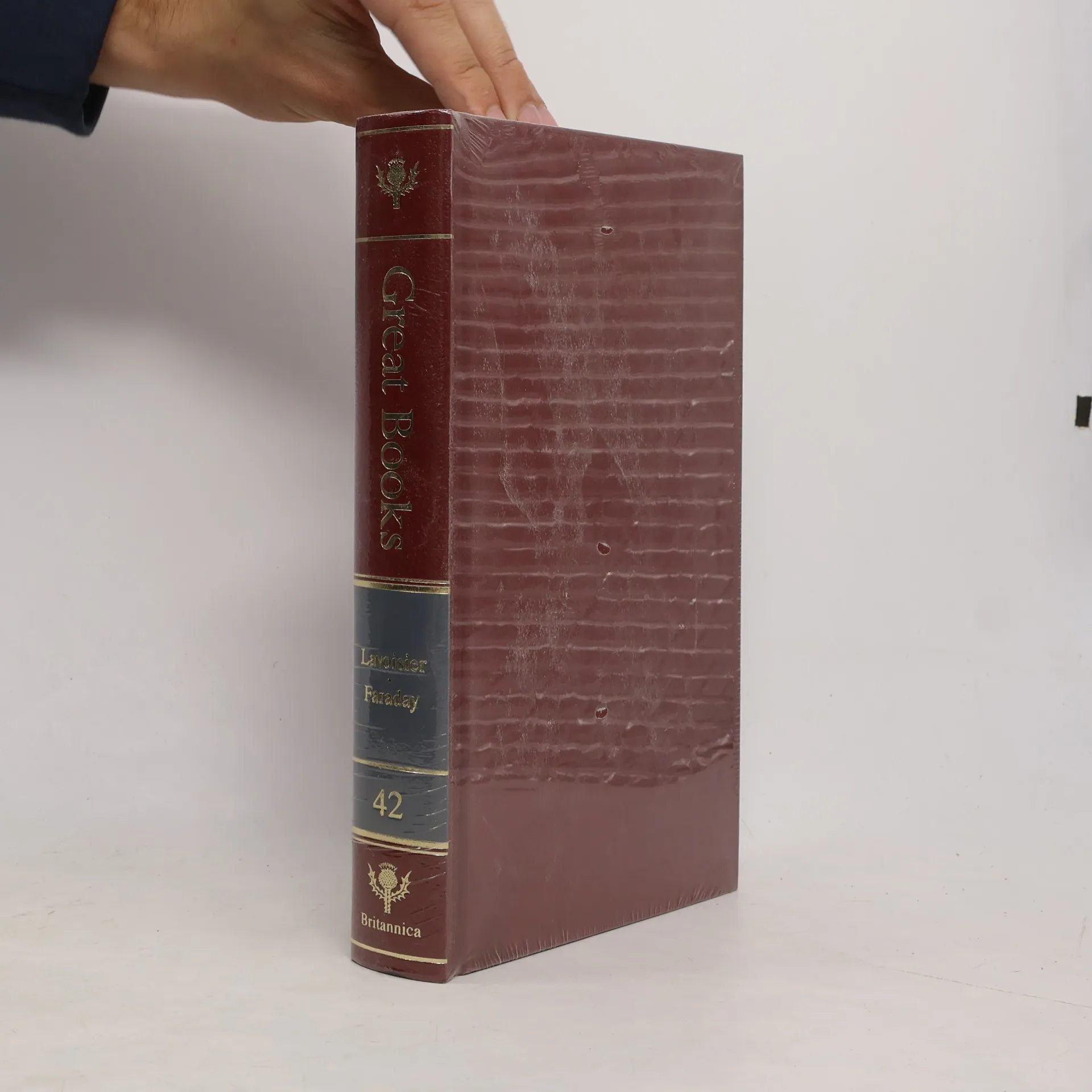
    Great Books 42. Lavoisier, Faraday
    • The Chemical History Of A Candle

      A Course Of Lectures Delivered Before A Juvenile Audience At The Royal Institution Edited By William Crookes

      • 90 pages
      • 4 hours of reading

      Exploring the science behind combustion and chemical reactions, this collection of lectures presents complex concepts in an accessible manner for young audiences. The author, through engaging demonstrations and clear explanations, delves into the properties of light, heat, and matter as illustrated by the humble candle. Each lecture captivates with its blend of education and entertainment, making intricate scientific principles relatable and understandable for children, fostering a sense of curiosity and wonder about the natural world.

      The Chemical History Of A Candle
    • The Chemical History of a Candle

      • 150 pages
      • 6 hours of reading

      Focusing on the science of combustion, this classic work delves into the chemical reactions involved in burning a candle. Renowned scientist Michael Faraday provides an engaging exploration that connects these reactions to broader principles in physics and chemistry, making complex concepts accessible to readers. Through this detailed examination, Faraday enhances the understanding of everyday phenomena while showcasing the intricate relationship between science and the world around us.

      The Chemical History of a Candle
    • On The Various Forces Of Nature And Their Relations To Each Other

      A Course Of Lectures Delivered Before A Juvenile Audience At The Royal Institution Edited By William Crookes, F.C.S.

      • 84 pages
      • 3 hours of reading

      Exploring the fundamental forces of nature, this collection of lectures aims to engage a young audience with scientific concepts. Delivered at the Royal Institution, the discussions cover the interconnections between various natural phenomena, making complex ideas accessible and intriguing. Edited by William Crookes, the work emphasizes the relationships between different forces, fostering curiosity and understanding in the minds of its youthful listeners.

      On The Various Forces Of Nature And Their Relations To Each Other
    • On the Various Forces of Nature

      • 132 pages
      • 5 hours of reading

      Focusing on the groundbreaking contributions of an English scientist, this book delves into Michael Faraday's pivotal discoveries in electromagnetism and electrochemistry. It highlights his foundational principles of electromagnetic induction, diamagnetism, and electrolysis, showcasing how his work laid the groundwork for modern electrical science. Faraday's innovative approach and experiments are explored, illustrating his lasting impact on the scientific community and technology.

      On the Various Forces of Nature
    • Exploring the interdependence of matter and force, the book delves into the idea that neither can exist without the other. It discusses how, upon creation, God established various forces that become apparent through interactions between matter. The narrative highlights the interconnectedness of natural forces, illustrating how one form of energy can release or influence others, such as heat generating light or chemical reactions producing electricity. This intricate relationship emphasizes the dynamic systems present in nature, where the motion of one entity impacts another.

      On the various forces of nature (Illustrated)
    • Naturgeschichte einer Kerze

      Sechs Vorlesungen für die Jugend

      • 204 pages
      • 8 hours of reading

      Die Naturgeschichte einer Kerze bietet in sechs Vorlesungen spannende Einblicke in die Entstehung und Funktionsweise von Kerzen. Anhand anschaulicher Erklärungen und interessanter Anekdoten wird das Thema für junge Leser verständlich und ansprechend aufbereitet. Der Nachdruck der Originalausgabe aus dem Jahr 1884 bewahrt den historischen Charme und die didaktische Absicht des Autors, Wissen über Alltagsgegenstände auf unterhaltsame Weise zu vermitteln.

      Naturgeschichte einer Kerze
    • reprint, daher altdeutsche Schrift (Fraktur) Die Royal Institution, an der Faraday als Professor tätig war, war keine staatliche Einrichtung, sondern ein Labor, das aus den (relativ bescheidenen) Zuwendungen von fördernden Mitgliedern und den Einkünften aus Vorträgen und chemischen Analysen finanziert wurde. Vortrags- und Vorlesungsreihen waren daher wichtige Einrichtungen, und in die Zeit der angespannten finanziellen Situation des Jahres 1826 fällt auch die Einrichtung der „Weihnachtsvorlesungen für die Jugend“ - Vorträge über verschiedene Wissensgebiete, die die Schüler Londons während der Weihnachtsferien gegen Eintritt hören konnten und die bald einen großen Zulauf erhielten. Die in diesem Band abgedruckten Vorlesungen über die „Naturgeschichte der Kerze“ sind in diesem Zusammenhang entstanden und wurden im Dezember 1860 und Januar 1861 gehalten.
      Naturgeschichte einer Kerze