


Explore the latest books of this year!
Bookbot

Carol Alexander

    Carol Alexander is a writer whose work delves into literature, education, and environmental concerns. Her poetry explores the intricate connections between humanity and nature, often offering perspectives through the lens of childhood. Alexander's sensitive style reveals the fragility of human existence while celebrating the beauty of the surrounding world. Her writings provide profound reflections on our place within the ecosystem.

    Wiley Series in Financial Engineering - 1: Risk Management and Analysis
    Market Models. A Guide to Financial Data Analysis
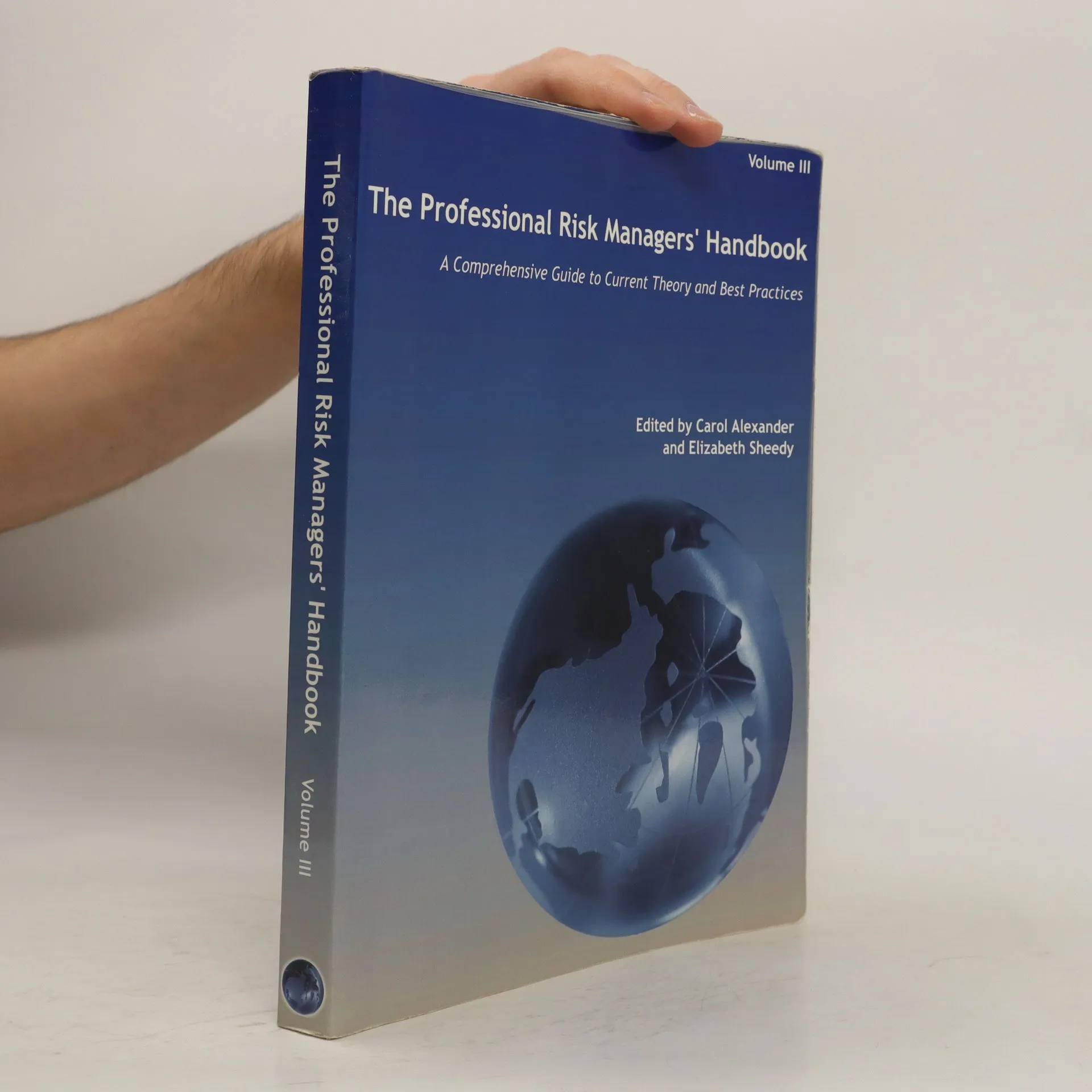
    The Professional Risk Managers' Handbook Volume III
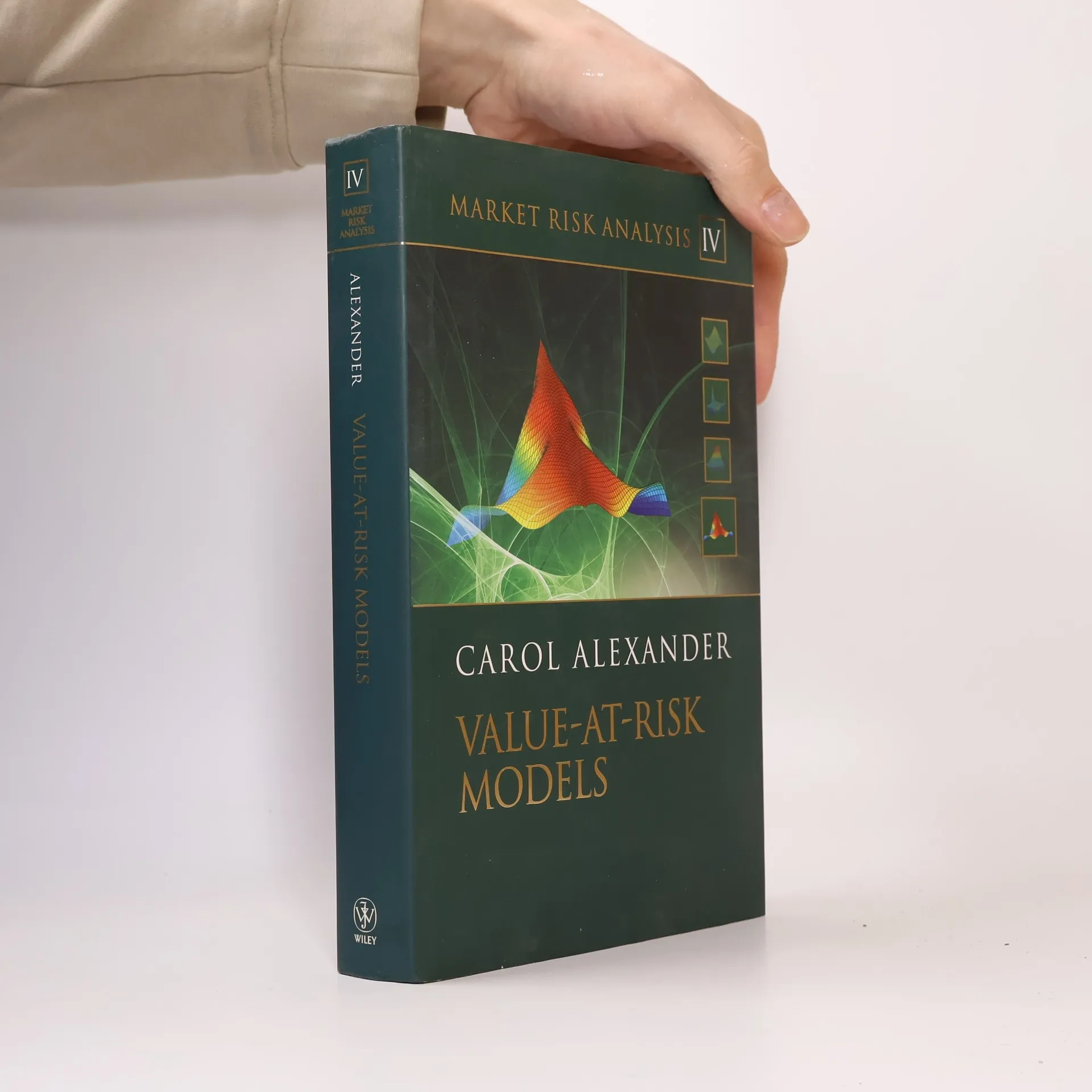
    The Wiley Finance Series - 4: Market Risk Analysis, Value at Risk Models
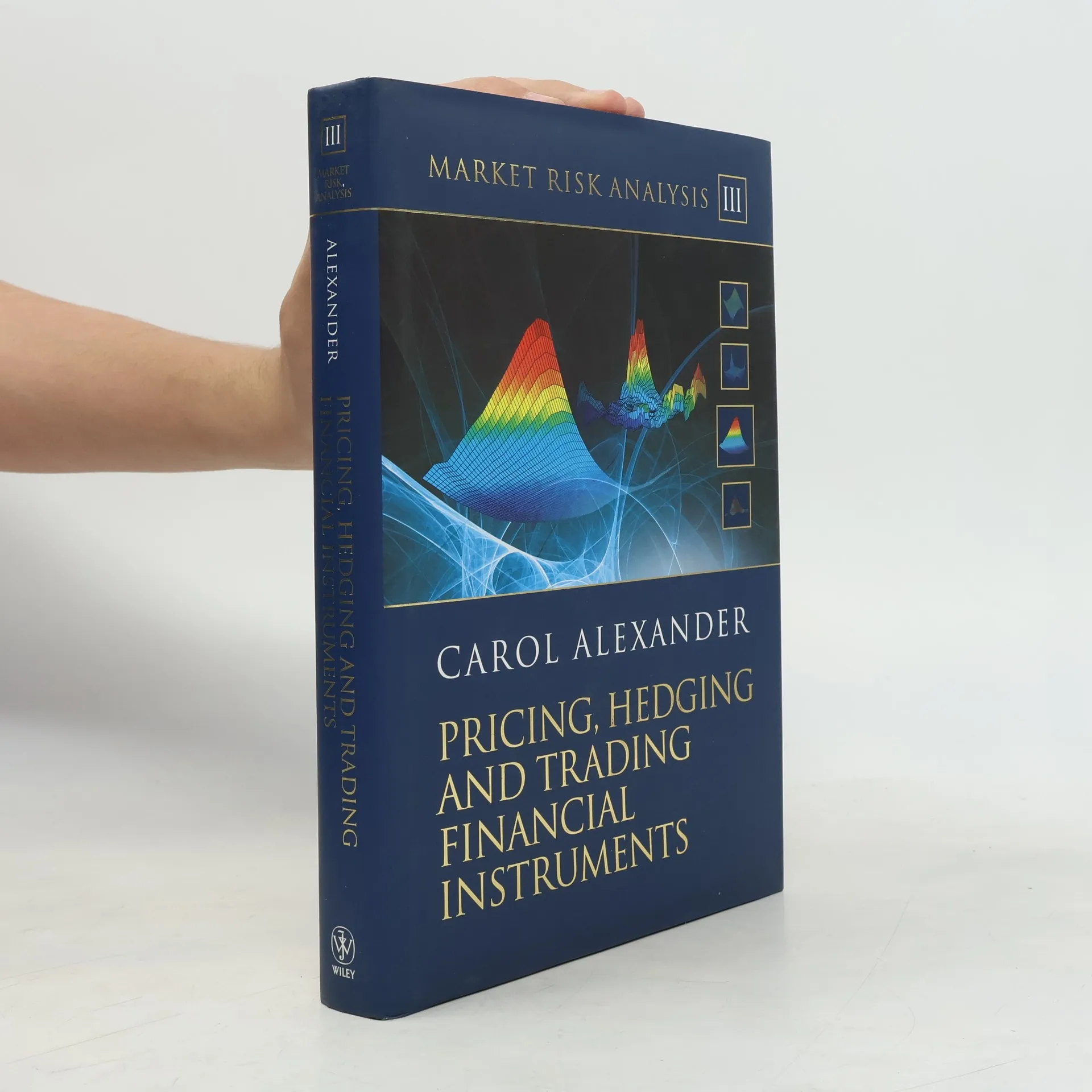
    Market Risk Analysis, Pricing, Hedging and Trading Financial Instruments
    • Written by leading market risk academic, Professor Carol Alexander, Pricing, Hedging and Trading Financial Instruments forms part three of the Market Risk Analysis four volume set. This book is an in-depth, practical and accessible guide to the models that are used for pricing and the strategies that are used for hedging financial instruments, and to the markets in which they trade. It provides a comprehensive, rigorous and accessible introduction to bonds, swaps, futures and forwards and options, including variance swaps, volatility indices and their futures and options, to stochastic volatility models and to modelling the implied and local volatility surfaces. All together, the Market Risk Analysis four volume set illustrates virtually every concept or formula with a practical, numerical example or a longer, empirical case study. Across all four volumes there are approximately 300 numerical and empirical examples, 400 graphs and figures and 30 case studies many of which are contained in interactive Excel spreadsheets available from the the accompanying CD-ROM . Empirical examples and case studies specific to this volume

      Market Risk Analysis, Pricing, Hedging and Trading Financial Instruments
      4.2
    • Written by leading market risk academic, Professor Carol Alexander, Value-at-Risk Models forms part four of the Market Risk Analysis four volume set. Building on the three previous volumes this book provides by far the most comprehensive, rigorous and detailed treatment of market VaR models. It rests on the basic knowledge of financial mathematics and statistics gained from Volume I, of factor models, principal component analysis, statistical models of volatility and correlation and copulas from Volume II and, from Volume III, knowledge of pricing and hedging financial instruments and of mapping portfolios of similar instruments to risk factors. A unifying characteristic of the series is the pedagogical approach to practical examples that are relevant to market risk analysis in practice. All together, the Market Risk Analysis four volume set illustrates virtually every concept or formula with a practical, numerical example or a longer, empirical case study. Across all four volumes there are approximately 300 numerical and empirical examples, 400 graphs and figures and 30 case studies many of which are contained in interactive Excel spreadsheets available from the the accompanying CD-ROM . Empirical examples and case studies specific to this volume

      The Wiley Finance Series - 4: Market Risk Analysis, Value at Risk Models
      4.2
    • In part 1, Carol Alexander brings many new insights to the pricing and hedging of options with her understanding of volatility and correlation, and the uncertainty which surrounds these key determinants of option portfolio risk. Modelling the market risk of portfolios is covered in part 2 where the main focus is on a linear algebraic approach; the covariance matrix and principal component analysis are developed as key tools for the analysis of financial systems. The traditional time series econometric approach is explained in part 3, with coverage ranging from the application cointegration to long-short equity hedge funds, to high-frequency data prediction using neural networks and nearest neighbour algorithms . Throughout this text the emphasis is on understanding concepts and implementing solutions. It has been designed to be accessible to a very wide audience: the coverage is comprehensive and complete and the technical appendix makes the book largely self-contained.

      Market Models. A Guide to Financial Data Analysis
      3.8
    • Wiley Series in Financial Engineering - 1: Risk Management and Analysis

      Measuring and Modelling Financial Risk

      • 304 pages
      • 11 hours of reading

      In the two years since the previous publication, interest in managing, modeling, and controlling financial risks has surged. The editor has created two companion volumes, with only a third of the original material retained. This volume is organized into four parts: the first three chapters explore standard methods for measuring and modeling financial risk from a risk manager's perspective, while Chapters 4 and 5 focus on quantitative risk analysts responsible for implementing these systems. Chapters 6 and 7 address critical issues in IT and systems design, and the final chapters discuss pricing and risk management of credit-risky products. Contributions come from leading experts in the field, including Michel Crouhy, Dan Galai, and Robert Mark, among others. The importance of risk management has grown for financial institutions, fund managers, and corporate treasurers, shifting the focus of top quantitative analysts from exotic derivatives to risk management. This volume compiles nine articles on various aspects of risk management and analysis, covering topics such as the regulatory framework, volatility and correlation models, value at risk, and credit risk, making it a valuable reference for market participants and students alike.

      Wiley Series in Financial Engineering - 1: Risk Management and Analysis