Explore the latest books of this year!
Bookbot

Bernd Heinrich

    June 1, 1962
    Racing the Clock
    White Feathers: The Nesting Lives of Tree Swallows
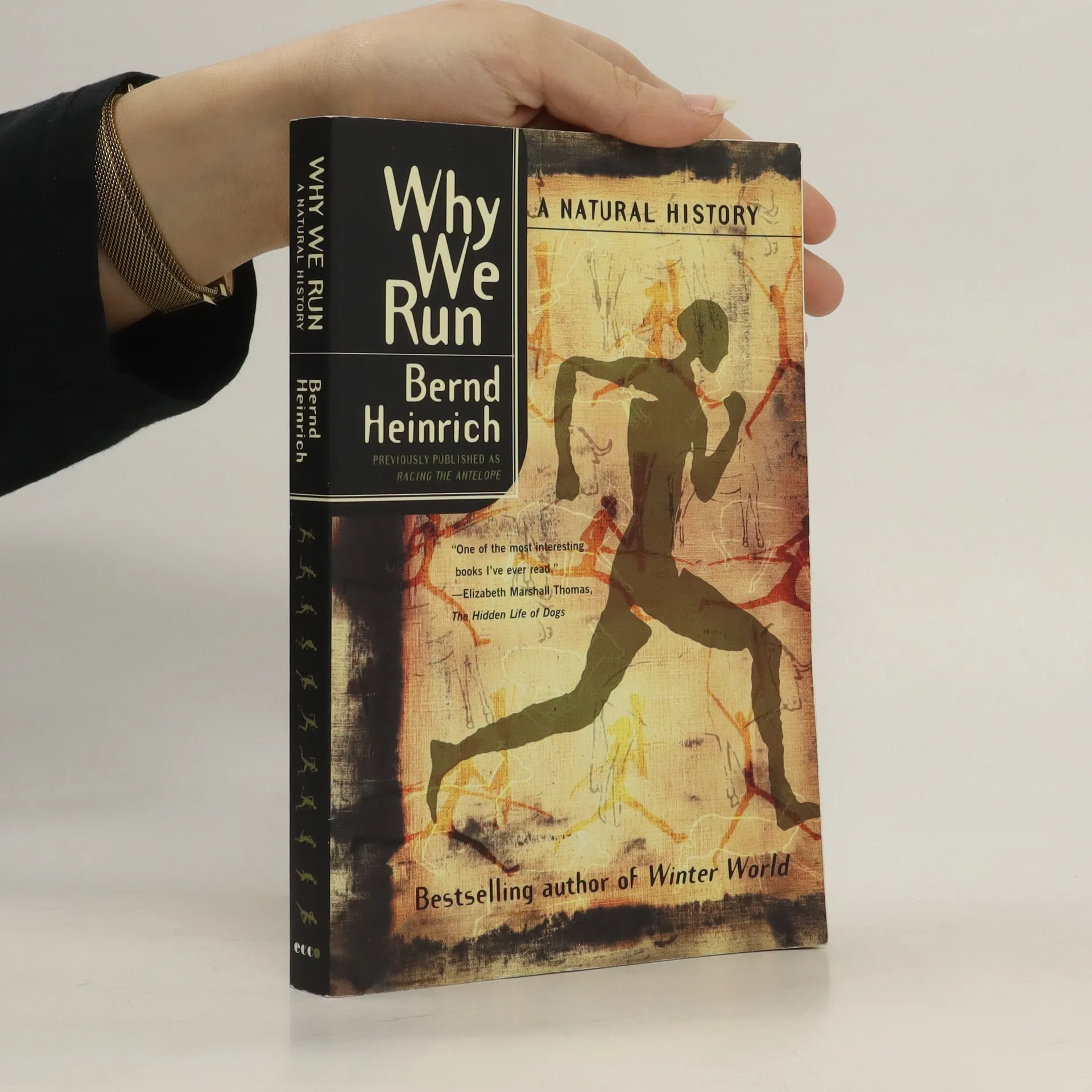
    Why we run : a natural history
    Winter World
    Mind of the Raven
    Summer World
    • Summer World

      • 304 pages
      • 11 hours of reading
      4.2(56)Add rating

      Exploring the intricate interactions between animals, plants, and their environments, this book delves into the survival strategies of cicadas in extreme heat, the migratory instincts of hummingbirds, and the growth patterns of trees. Bernd Heinrich combines awe and expertise to illuminate the profound relationships between habitats and the impacts of climate change, offering readers a deeper understanding of the natural world and its response to warming temperatures.

      Summer World
    • Heinrich involves us in his quest to get inside the mind of the raven. But as animals can only be spied on by getting quite close, Heinrich adopts ravens, thereby becoming a "raven father," as well as observing them in their natural habitat. He studies their daily routines, and in the process, paints a vivid picture of the ravens' world. At the heart of this book are Heinrich's love and respect for these complex and engaging creatures, and through his keen observation and analysis, we become their intimates too. Heinrich's passion for ravens has led him around the world in his research. Mind of the Raven follows an exotic journey—from New England to Germany, and from Montana to Baffin Island in the high Arctic—offering dazzling accounts of how science works in the field, filtered through the eyes of a passionate observer of nature. Each new discovery and insight into raven behavior is thrilling to read, at once lyrical and scientific.

      Mind of the Raven
    • Winter World

      • 400 pages
      • 14 hours of reading
      4.1(134)Add rating

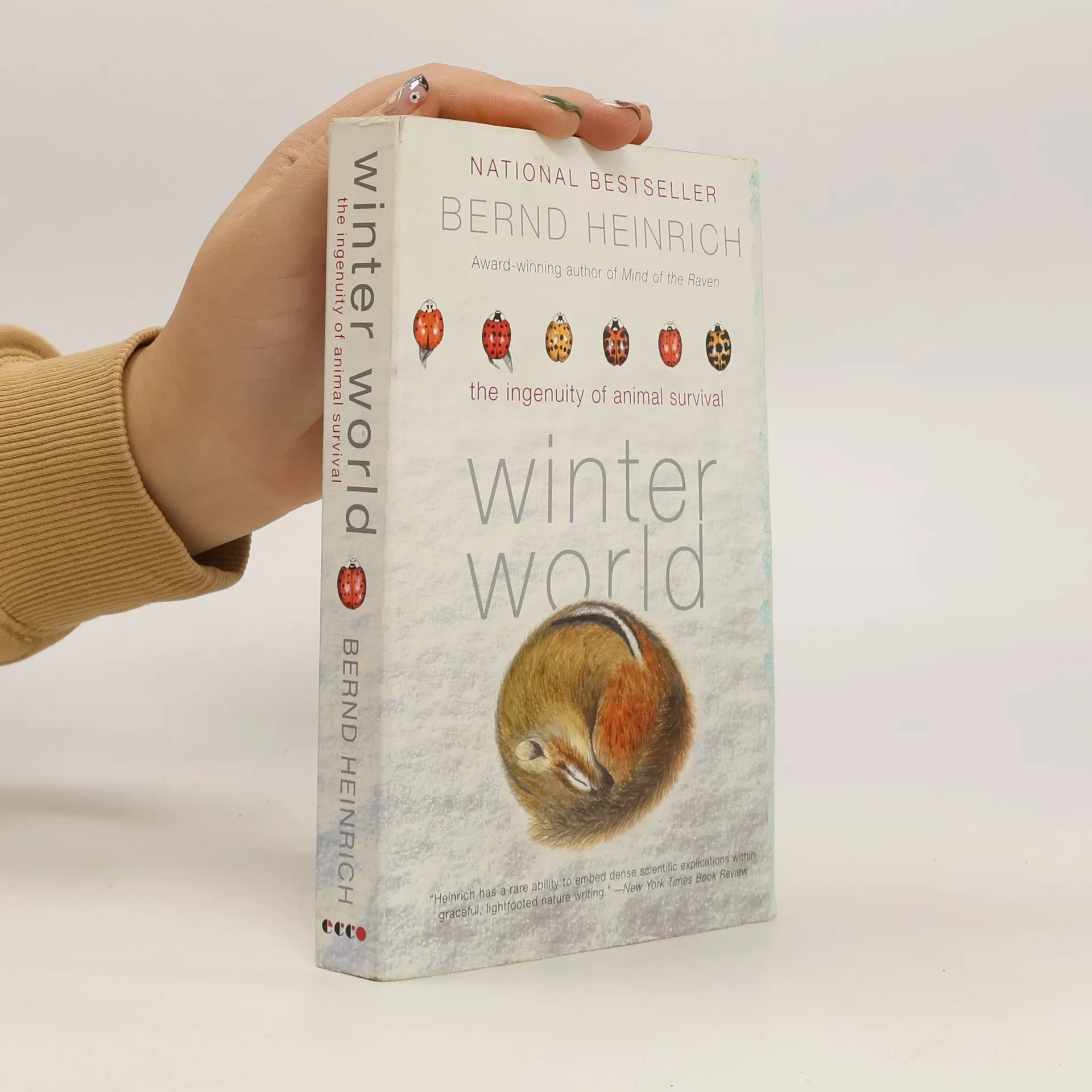
      From flying squirrels to grizzly bears, and from torpid turtles to insects with antifreeze, the animal kingdom relies on some staggering evolutionary innovations to survive winter. Unlike their human counterparts, who must alter the environment to accommodate physical limitations, animals are adaptable to an amazing range of conditions. Examining everything from food sources in the extremely barren winter land-scape to the chemical composition that allows certain creatures to survive, Heinrich's Winter World awakens the largely undiscovered mysteries by which nature sustains herself through winter's harsh, cruel exigencies.

      Winter World
    • Why we run : a natural history

      • 304 pages
      • 11 hours of reading
      3.8(1860)Add rating

      In Why We Run, biologist, award-winning nature writer, and ultramarathoner Bernd Heinrich explores a new perspective on human evolution by examining the phenomenon of ultraendurance and makes surprising discoveries about the physical, spiritual -- and primal -- drive to win. At once lyrical and scientific, Why We Run shows Heinrich's signature blend of biology, anthropology, psychology, and philosophy, infused with his passion to discover how and why we can achieve superhuman abilities.

      Why we run : a natural history
    • An award-winning, much-loved biologist turns his gaze on himself, using his long-distance running to illuminate the changes to a human body over a lifetime Part memoir, part scientific investigation, Racing the Clock is the book biologist and natural historian Bernd Heinrich has been waiting his entire life to write. A dedicated and accomplished marathon (and ultra-marathon) runner who won his first marathon at age thirty-nine, Heinrich looks deeply at running, aging, and the body, exploring the unresolved relationship between metabolism, diet, exercise, and age. Why do some bodies age differently than others? How much control do we have over that process and what effect, if any, does being active have? Bringing to bear research from his entire career and in the spirit of his classic Why We Run, Heinrich probes the questions of how we use energy and continue to adapt to our mutable surroundings and circumstances. Beyond that, he examines how our bodies change while we age but also how we can work with, if not overcome, many of these changes--and what all this tells us about evolution and the mechanisms of life, health, and happiness. Racing the Clock offers fascinating and surprising conclusions, all while bringing the reader along on Heinrich's compelling journey to what he says will be his final race--a fifty-kilometer race at age eighty.

      Racing the Clock
    • The Geese of Beaver Bog

      • 240 pages
      • 9 hours of reading

      In the summer of 1998, award-winning writer and biologist Bernd Heinrich found himself the unwitting -- but doting -- foster parent of an adorable gosling named Peep. Good-natured, spirited Peep drew Heinrich into her world -- one he found to be filled with as much color and drama as that of her human counterparts. And so, with a scientist's training and a nature lover's boundless curiosity and enthusiasm, Heinrich set out to observe and understand the travails and triumphs of the Canada geese, or honkers, living in the beaver bog adjacent to his rural Vermont home. His presence in the bog, at all hours, in all weather, became as commonplace as that of the local beavers and birds. The resident geese learned that Heinrich could be trusted, enabling him to watch and record their daily routines from up close. Heated battles over territory, mysterious nest raids, jealousy over a lover's inattention, all are recounted here in an engaging, anecdotal narrative that sheds light on how geese live and why they behave as they do. Far from staid or predictable, the lives of geese are packed with adventure and full of surprises. In The Geese of Beaver Bog , Heinrich takes his readers through mud, icy waters, and overgrown sedge hummocks into a seemingly impenetrable world. He does so with deft insight, respectful modesty, and infectious good humor. Illustrated throughout with Heinrich's trademark sketches and featuring beautiful four-color photographs, The Geese of Beaver Bog is part love story, part science experiment, and wholly delightful.

      The Geese of Beaver Bog
    • Flugbahn und Federflaum

      Vom Beobachten wilder Vögel

      Die Erzählung beginnt mit einem Kind und seinem besonderen Haustier, der Krähe Jacob, die ihm aus der Hand frisst, während andere Wildvögel unerreichbar bleiben. Sechzig Jahre später reflektiert Bernd Heinrich, der einst der Junge war, seine Erfahrungen als Naturbeobachter. Er beschreibt das Goldspechtgelege in seiner Hütte in Maine, Krähen, die ohne Neid teilen, aber klare Hierarchien haben, und einen Star, der nicht nur eigene Lieder, sondern auch das Klingeln eines Telefons imitiert – eine Fähigkeit, die auch Mozart bewunderte. Das Buch ist eine lebendige Sammlung von Beobachtungen, in der verschiedene Vogelarten wie Streifenkauz, Sägekauz, Bussard und viele andere vorkommen. Es behandelt Themen wie Geburtenkontrolle, Polyamorie und Paarkonstellationen in der Vogelwelt sowie Territorialverhalten und unerwartete Zusammenschlüsse. Heinrichs Naturerkundungen spiegeln seine Freude wider, die Welt um uns herum aufmerksam wahrzunehmen und sie in Sprache zu fassen.

      Flugbahn und Federflaum
    • In "Die Weisheit der Raben" erzählt Bernd Heinrich lebendig von seinen Erlebnissen mit Raben und seinem Streben, diese faszinierenden Vögel zu verstehen. Er beschreibt seine Entdeckungsreisen durch die Wälder von Maine, Experimente zu ihrem Verhalten und die Mythen, die sich um sie ranken. Ein Meisterwerk des Nature Writing.

      Die Weisheit der Raben