

Exploring the implications of Heidegger's philosophy, this work presents a fresh interpretation that connects his ideas to contemporary ethical living. It delves into how his existential concepts can inform our understanding of morality and guide the development of a meaningful life in today's world. The book emphasizes the relevance of Heidegger's thoughts for fostering a responsible and authentic existence, aiming to inspire readers to reflect on their values and actions in light of his philosophical insights.
David Michael Kleinberg-Levin Book order (chronological)
This author delves into profound philosophical concepts, exploring intricate ideas through their writing. Their work is characterized by a meticulous examination of human existence and consciousness. Through their literary output, they seek to illuminate fundamental questions of life.
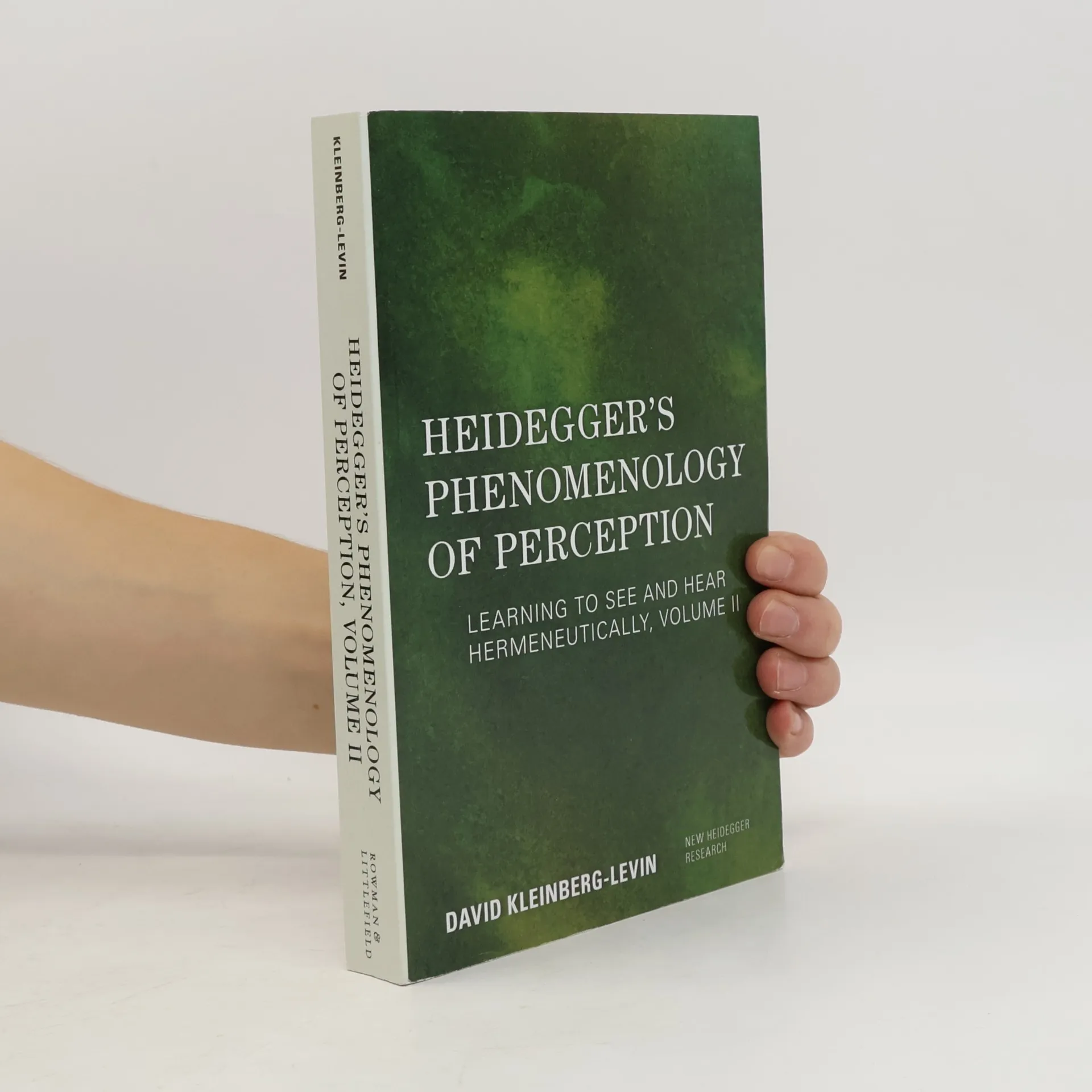


Heidegger's Phenomenology of Perception
Learning to See and Hear Hermeneutically
- 382 pages
- 14 hours of reading
Focusing on Heidegger's phenomenology, this volume examines the roles of seeing and hearing in understanding perception. It delves into how these sensory capacities respond to the issues highlighted by Heidegger's critique of metaphysics and the pervasive nihilism affecting the Western world. The author, David Kleinberg-Levin, offers a critical and constructive analysis, shedding light on Heidegger's philosophical approach to these fundamental aspects of human experience.
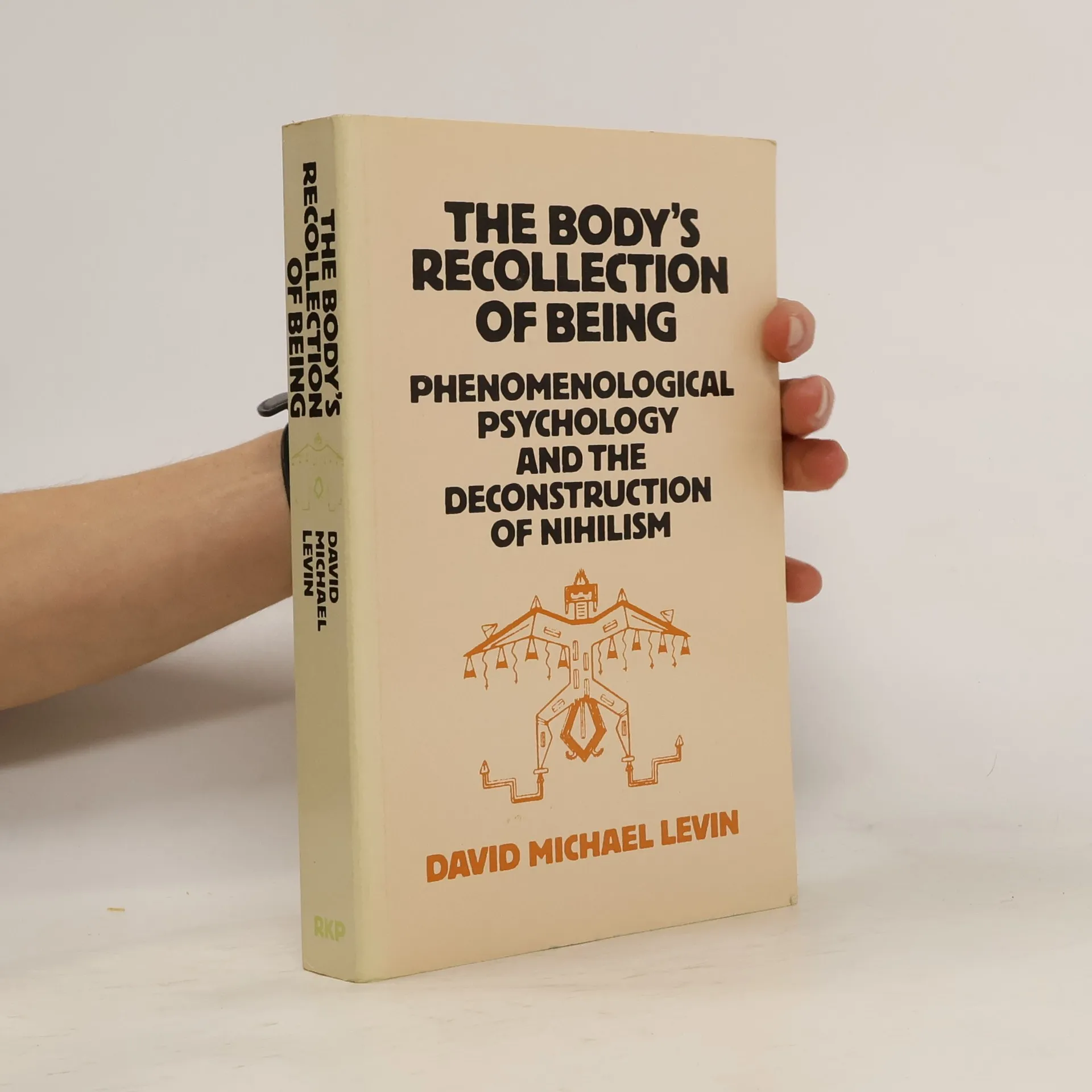
Body's Recollection of Being
Phenomenological Psychology and the Deconstruction of Nihilism
- 404 pages
- 15 hours of reading
This is a unique study, contuining the work of Merleau-Ponty and Heidegger, and using the techniques of phenomenology against the prevailing nihilism of our culture. It expands our understanding of the human potential for spiritual self-realization by interpreting it as the developing of a bodily-felt awareness informing our gestures and movements. The author argues that a psychological focus on our experience of well-being and pathology as embodied beings contributes significantly to a historically relevant critique of ideology. It also provides an essential touchstone in experience for a fruitful individual and collective response to the danger of nihilism.Dr Levin draws on Merleau-Ponty's phenomenology to clarify Heidegger's analytic of human beings through an interpretation that focuses on our experience of being embodied. He reconstructs in modern terms the wisdom implicit in western and semitic forms of religion and philosophy, considering the work of Freud, Jung, Focault and Neitzsche, as well as that of American educational philosophers, including Dewey. In particular, he draws on the psychology of Freud and Jung to clarify our historical experience of gesture and movement and to bring to light its potential in the fulfilment of Selfhood. Throughout the book, the pathologies of the ego and its journey into Selfhood are considered in relation to the conditons of technology and the powers of nihilism.
The Listening Self
Personal Growth, Social Change and the Closure of Metaphysics
- 333 pages
- 12 hours of reading
In a study that goes beyond the ego affirmed by Freudian psychology, David Levin offers an account of personal growth and self-fulfillment based on the development of our capacity for listening. Drawing on the work of Dewey, Piaget, Erikson, and Kohlberg, he uses the vocabulary of phenomenological psychology to distinguish four stages in this developmental process and brings us the significance of these stages for music, psychotherapy, ethics, politics, and ecology. This analysis substantiates his claim that the development of our listening capacity is a process that fits Foucault's conception of a practice of the self, forming our character as social beings and moral agents. David Levin contends that our self- development as auditory beings is necessary for the achievement of a just and democratic society.
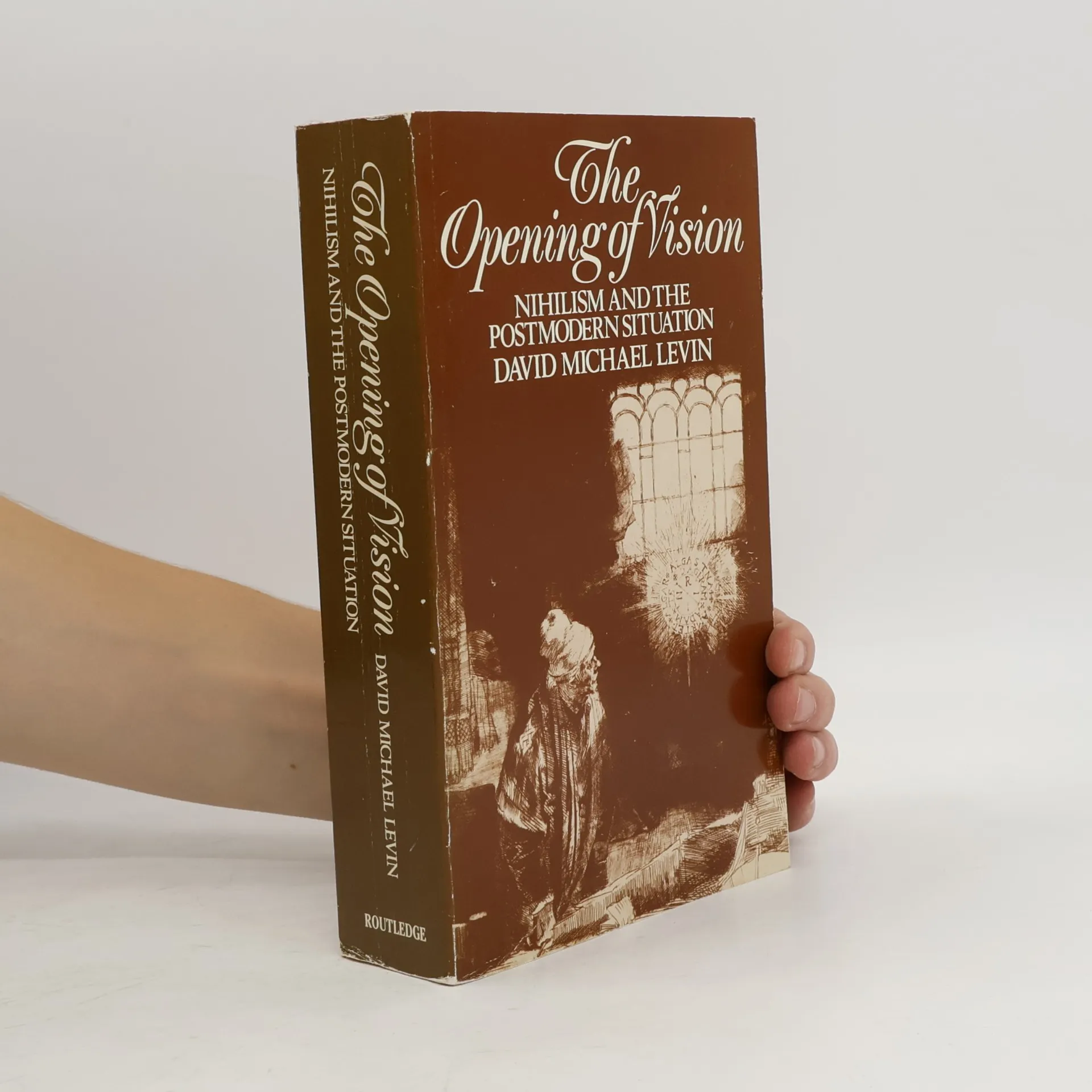
Nietzsche and Heidegger saw in modernity a time endangered by nihilism. Starting out from this interpretation, David Levin links the nihilism raging today in Western society and culture to our concrete historical experience with vision.