
Explore the latest books of this year!
Bookbot

Hans-Georg Glaeßer

    Ecosystems of the Mediterranean Sea
    Experiencing Geometry, Physics, and Biology
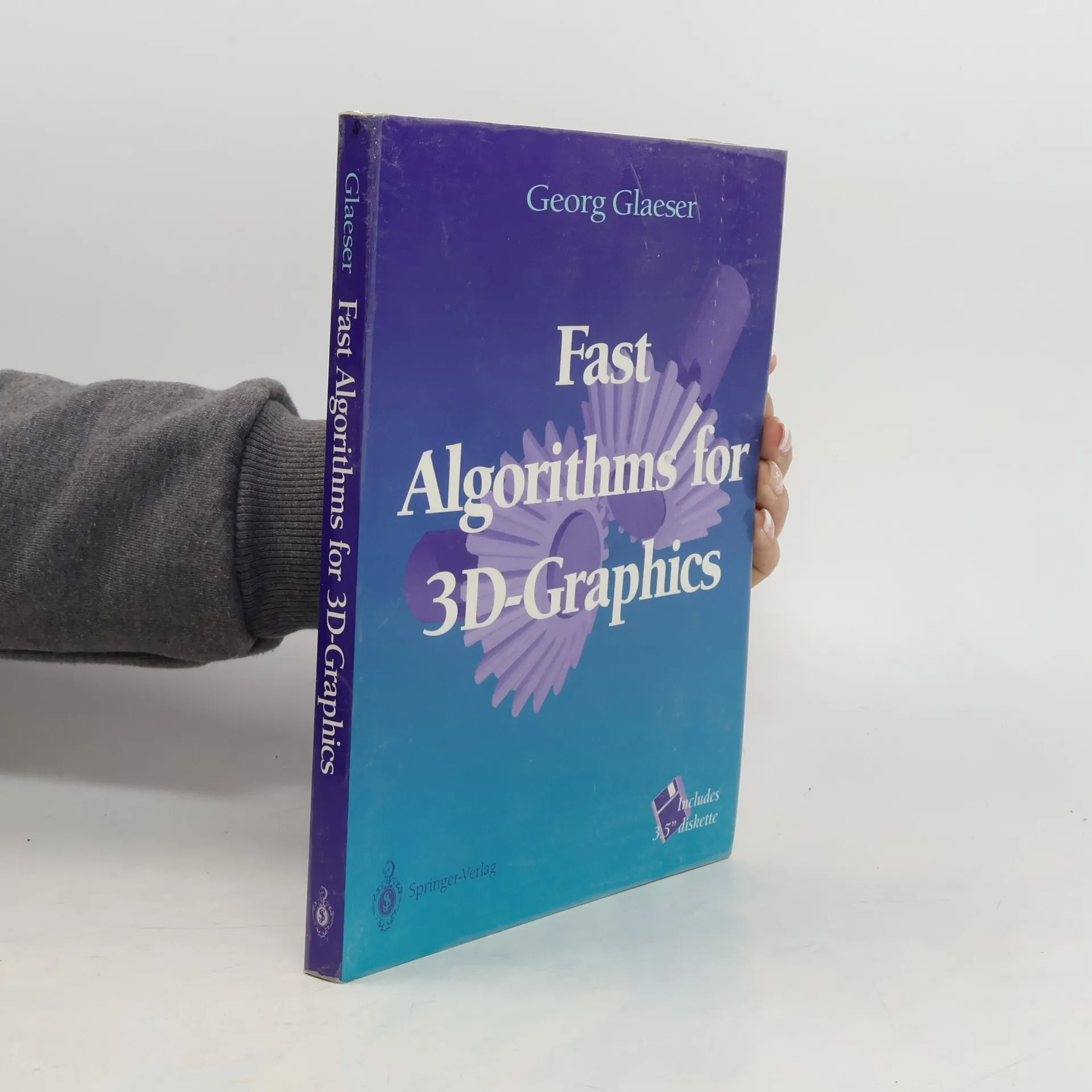
    Fast Algorithms for 3D-graphics
    Nature and Numbers
    A Mathematical Picture Book
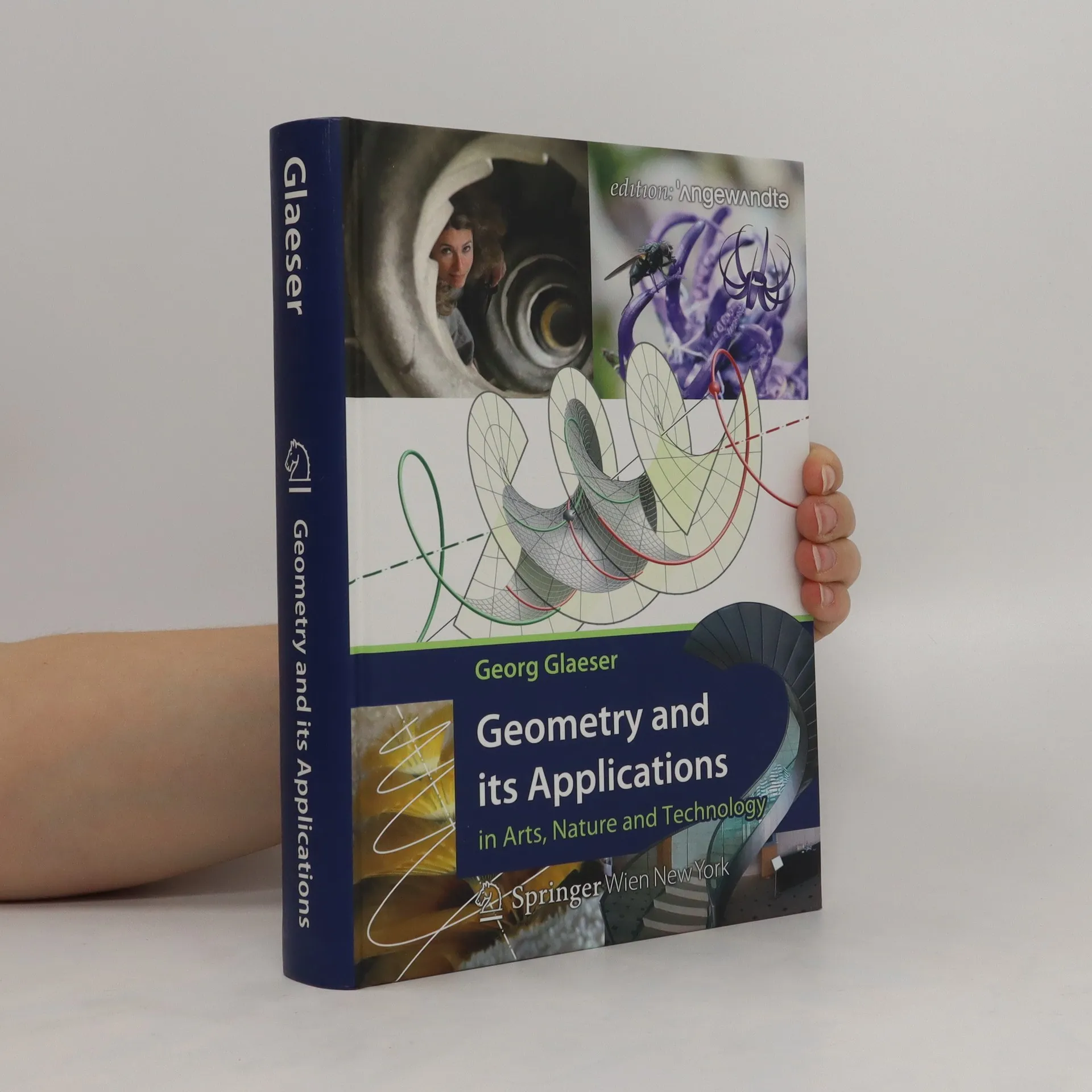
    Geometry and its applications in arts, nature and technology
    • Geometry and its Applications is meant to address those who are interested in geometrical relationships, from simple plane geometry problems to difficult tasks in spatial geometry. The main emphasis is on the application of geometry in different fields such as engineering, biology, art history and music. Important geometrical terms and concepts such as multi-view projection and 3D projection, the curvature of lines and surfaces, the geometry of movement and non-Euclidian space are explained with many examples and numerous photos. Two practical tutorials round off this volume: free-hand geometrical drawing and the geometry of photography. Easy to understand tips support readers as they create their own distinctive, accurate spatial sketches.
      Geometry and its applications in arts, nature and technology
    • How can one visualize a curve that fills the entire plane or all of space? Can a polyhedron be smoothly turned inside out? What is the projective plane? What does four-dimensional space look like? Can soap bubbles exist that are not spherical? How can one better understand the structure of vortices and currents? In this book you will experience mathematics from the visual point of view, discovering fascinating and never previously published images that offer illustrative examples to the above questions. Every picture is accompanied by a brief explanatory text, references to further reading, and a number of web links where you can obtain further information. This book is intended for all friends of mathematics—students, teachers, amateurs, and professionals—who want to see something beyond dry text and endless formulas. It will provide inspiration for pursuing further one or another topic that may previously have seemed inaccessible. You will get to know mathematics from a totally new and colorful viewpoint.

      A Mathematical Picture Book
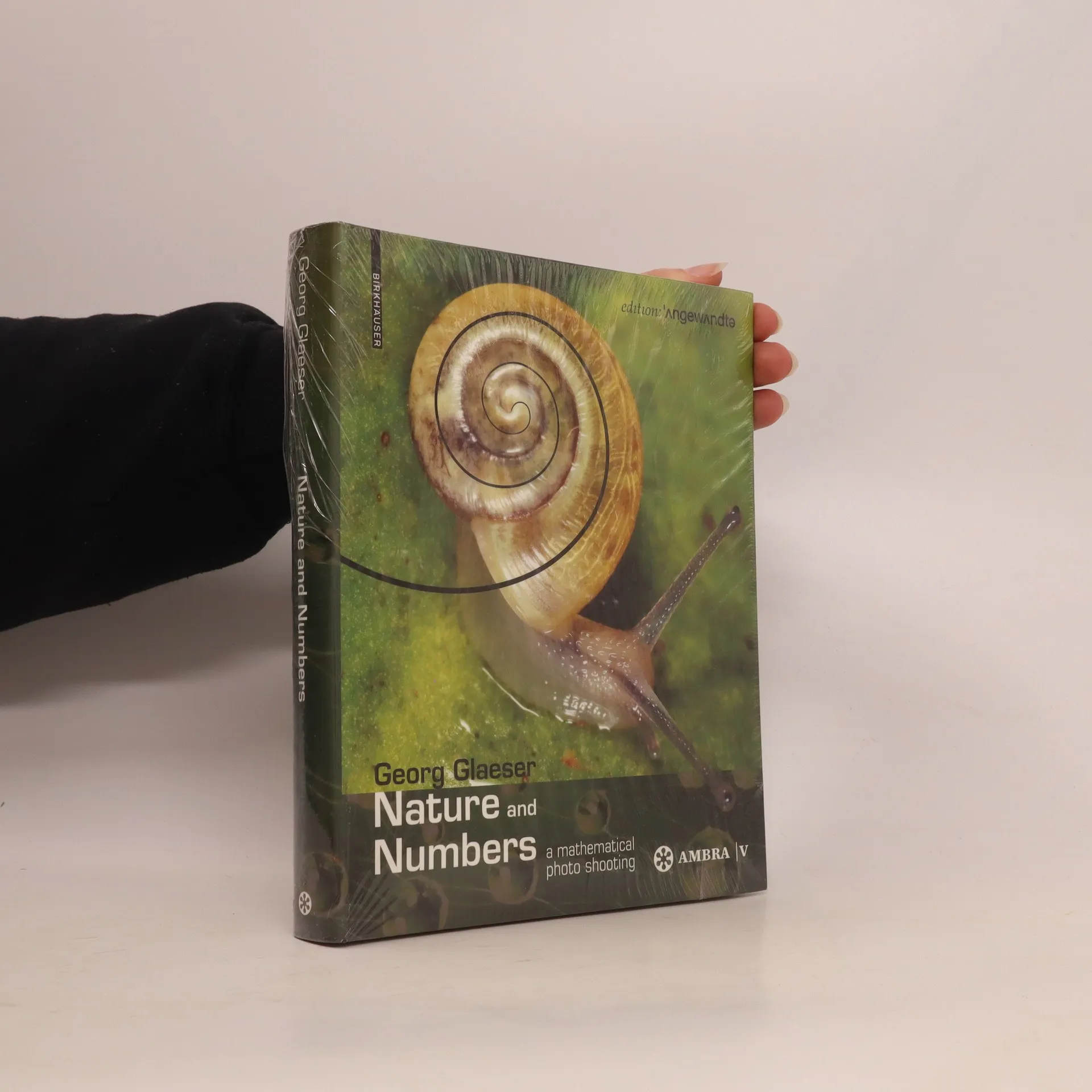
    • Nature and Numbers

      A Mathematical Photo Shooting

      • 360 pages
      • 13 hours of reading

      Mathematicians with special interest in biology, physics, geography, astronomy, architecture, design, etc., and being prepared to take pictures at any time, might try to answer unusual questions like the followings: What do a zebra, a tiger shark, and a hard coral have in common? How is this with drying mud, wings of dragon flies, and the structures of leaves? What is the “snail king” and is there also a “worm king”? Which curves stay of the same type after being photographed? Do fishes see like we do if we look through a fisheye lens? Which geometric properties of an object have physical consequences? Which kinds of geometric patterns appear when waves are interfering? In this book you can find 180 double pages with at least as many questions of this kind. The principle to attack a problem is often similar: It starts with a photo that is for some reasons remarkable. In a short description an explanation is offered, including relevant Internet links. Additionally one can frequently find computer simulations in order to illustrate and confirm.

      Nature and Numbers
    • Exploring the interconnectedness of geometry, physics, and biology, this book delves into how these disciplines inform and enhance each other. It discusses the mathematical principles underlying physical phenomena and biological structures, providing readers with a comprehensive understanding of how these fields interplay in the natural world. Through engaging examples and clear explanations, it aims to bridge the gap between abstract concepts and real-world applications, making complex ideas accessible to a broad audience.

      Experiencing Geometry, Physics, and Biology
    • This book invites snorkelers and divers on an educational visit to the most important ecosystems of the Mediterranean Sea. Keystone species from brown algae to dolphins are presented in their marine habitats and understood as part of a complex ecological system. Instead of grouping animals and plants taxonomically, we have organised them according to the eight main habitats of the Mediterranean Sea. Our journey starts with different types of rocky grounds, then takes you further to the Mediterranean’s sandy and muddy grounds, and finally ends with the fish and dolphins of the blue open sea. You will be introduced to 220 ecologically significant animal and plant species via the texts of Daniel Abed-Navandi, a long-time lecturer on the biodiversity of the Mediterranean Sea at the University of Vienna, and the photographs of Georg Glaeser, the master behind the camera, who captures marine life on the spot.

      Ecosystems of the Mediterranean Sea
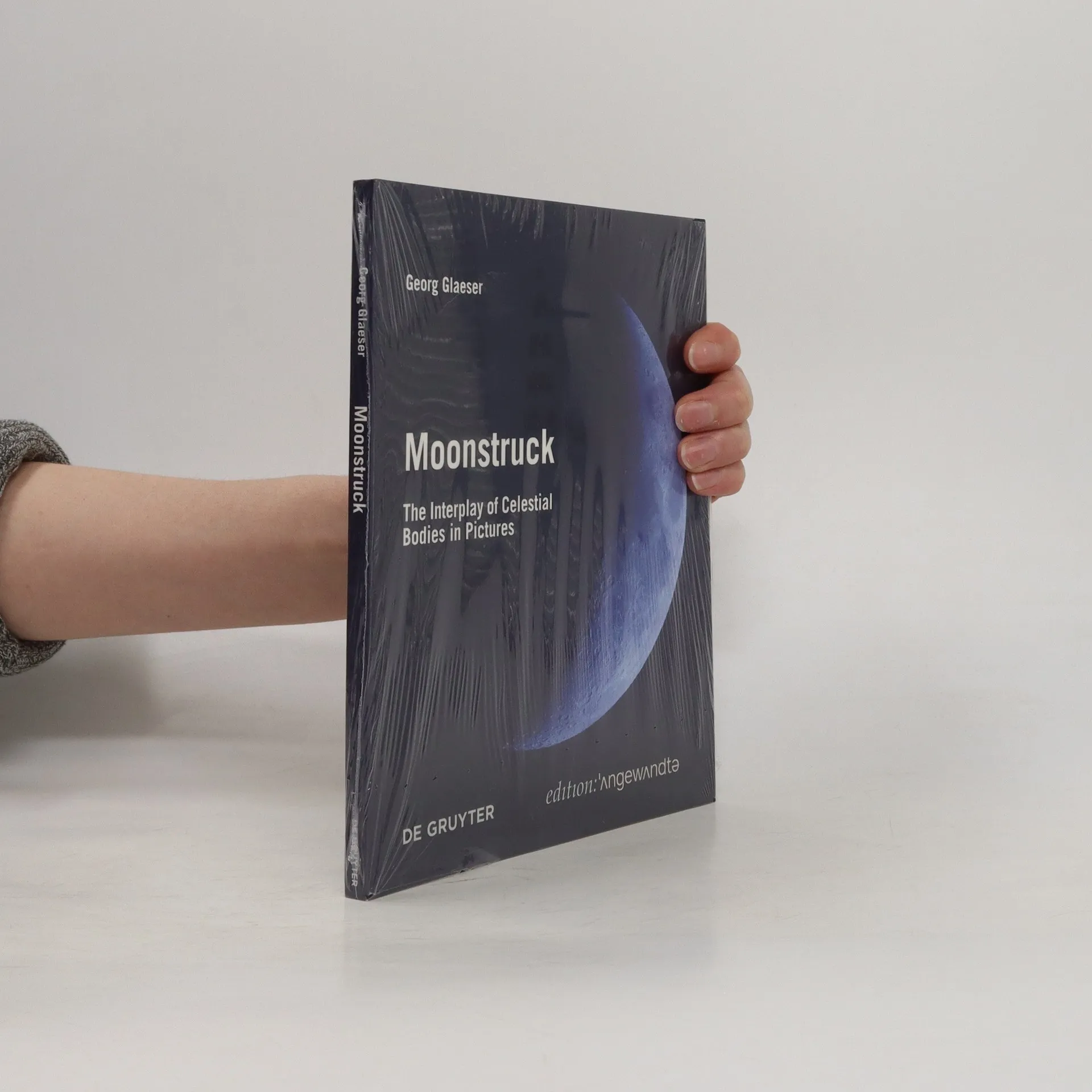
    • Moonstruck

      The Interplay of Celestial Bodies in Pictures

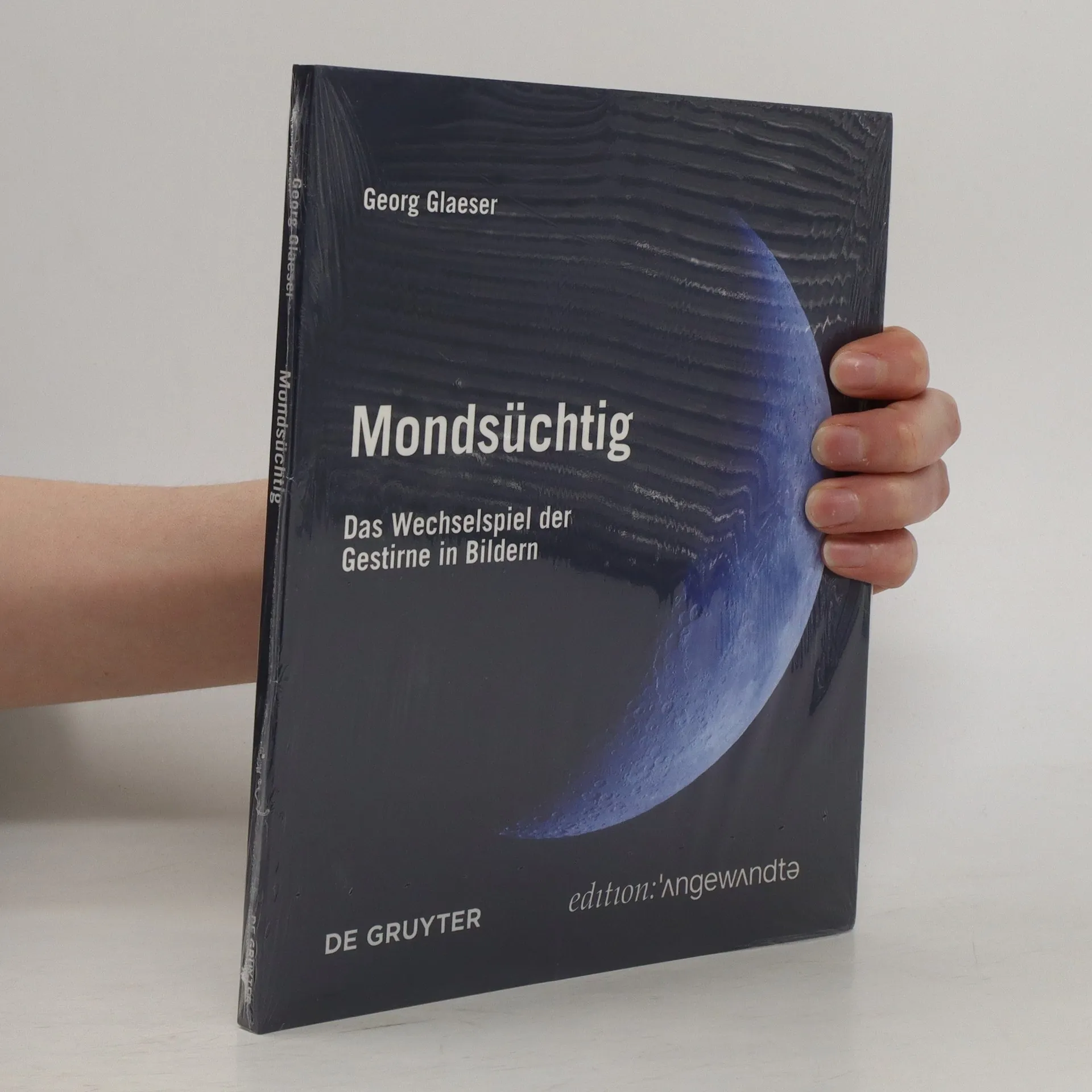
      The Moon has always been an object of immense fascination for humanity – and not just because of its prominence in the night sky. With its complex orbit, it is far closer to our planet than any other celestial body. Already in ancient Babylon, humans have studied the Moon and its relationship to the planets and constellations. Through incisive texts and illustrations using photos and computer simulations, this book explores the similarities and differences to other planets and their moons, the Moon’s interactions with the Sun and the Earth, and interesting historical associations. In addition to scientifically accurate texts, it contains numerous large-format photographs and graphics that vividly explain the complex phenomenon of the Moon. Richly illustrated, it is designed for anyone interested in astronomy.

      Moonstruck
    • Maths and humour

      Solving everyday problems with mathematics

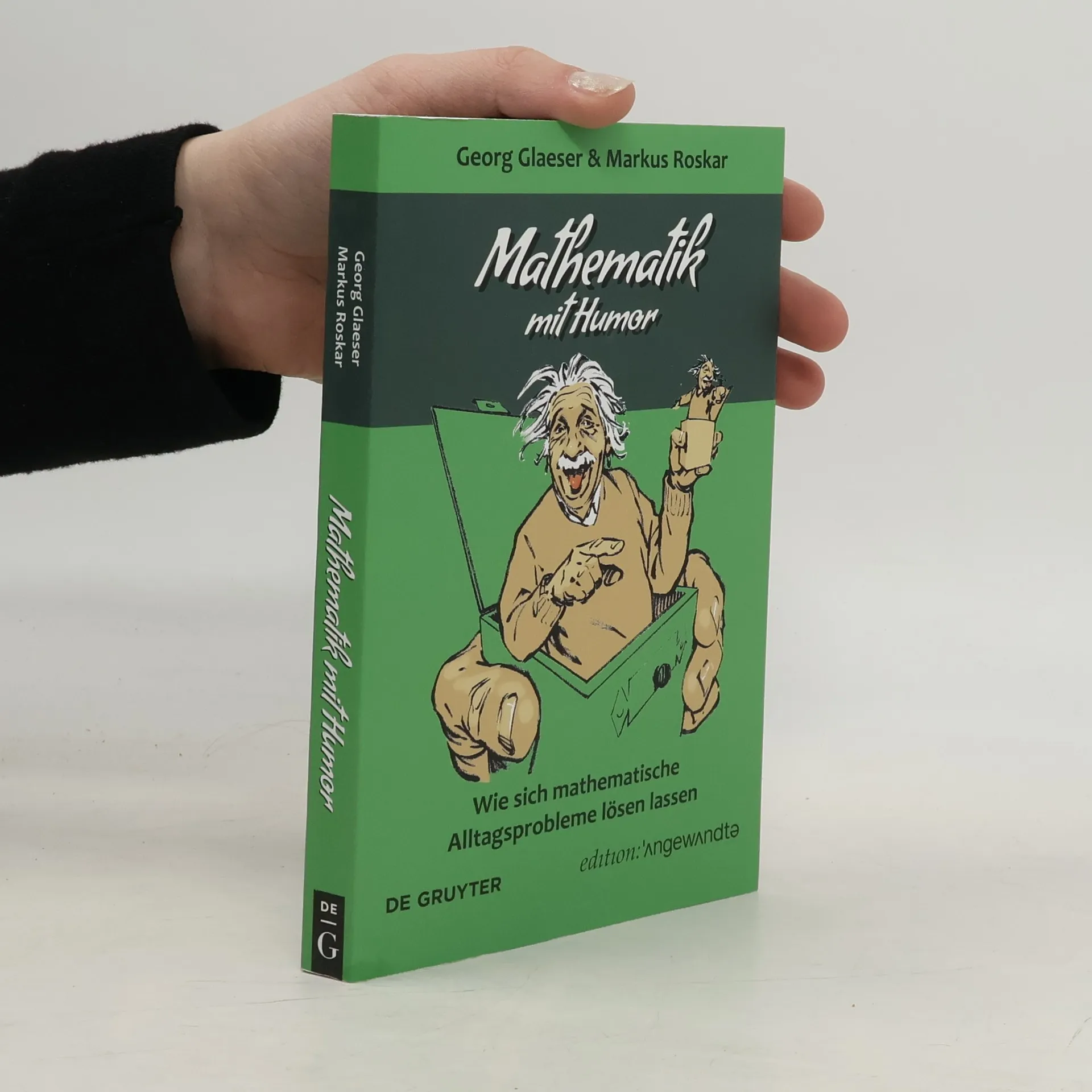
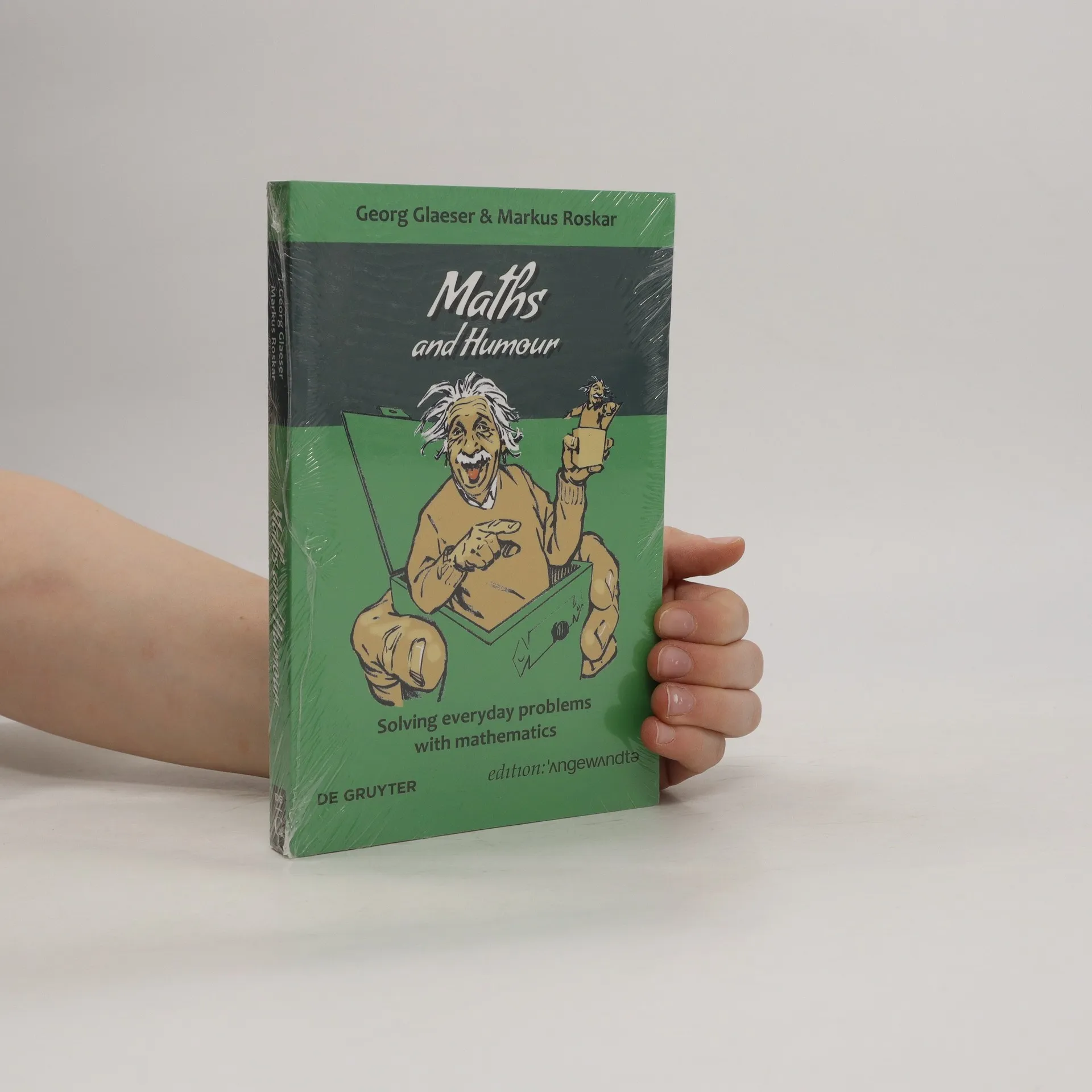
      The artist Markus Roskar and Professor of Mathematics, Georg Glaeser, (who both teach at the University for Applied Arts in Vienna) have written a mathematics book of the other kind . In this book, mathematics sheds its image as an inaccessible, cumbersome science, and acquires an open and emotional dimension. The book is structured on the double-page principle: each double page includes an almost always humorous professional drawing that relates to the text on the other page. This text is written in an easy-going, often humorous, but always mathematically correct manner. It mostly deals with an everyday subject that has a mathematical background or an unorthodox mathematical question. Readers can count on a wealth of surprising solutions to often complex problems.

      Maths and humour
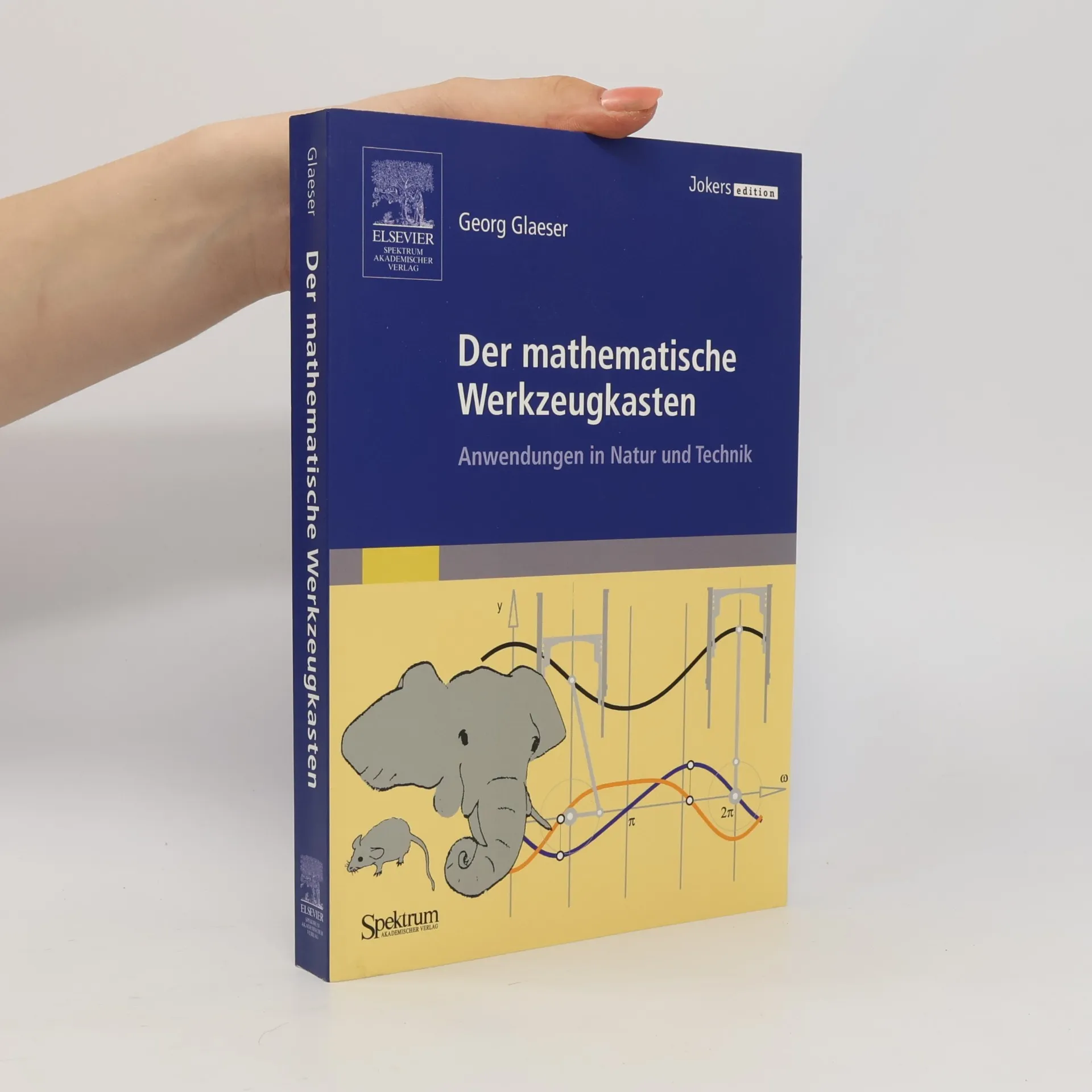
    • (Autor)Georg Glaeser(Titel)Der mathematische WerkzeugkastenAnwendungen in Natur und Technik(copy)Mathematik einmal anders. Durch eine Vielzahl von Anwendungsbeispielen aus Disziplinen wie Biologie, Physik, Chemie, Astronomie, Geografie, ja sogar der Musik, werden algebraische Gleichungen, Proportionen, Trigonometrie, Vektorrechnung und Infinitesimalrechnung n her gebracht. Wegen der f cher bergreifenden Anwendungen eignet sich das Werk als Fundgrube f r engagierte Mathematiklehrer, welche motivierende Beispiele f r die diversen Teilgebiete der Mathematik suchen!(Biblio)2004, 392 S., 430 s/w Abb., geb. ISBN 3-8274-1485-7 25, -

      Der Mathematische Werkzeugkasten
    • 77-mal Mathematik für zwischendurch

      Unterhaltsame Kuriositäten und unorthodoxe Anwendungen

      Dieses Buch bietet bunt gemischte Beiträge aus Algebra und Logik, Analysis, Geometrie, Zahlentheorie, Stochastik und vielem mehr. Die Artikel sind voneinander unabhängig und können in beliebiger Reihenfolge gelesen werden. Das Buch wendet sich an alle, die sich gerne von unterhaltsamen Kuriositäten und oft unorthodoxen Anwendungen der Mathematik überraschen lassen wollen, insbesondere auch an interessierte SchülerInnen und LehrerInnen. Die einzelnen Beiträge sind sogenannte ,,Mathe-Briefe'', die zwischen 2010 und 2020 von mehr als einem Dutzend österreichischer MathematikerInnen verfasst wurden. Die einzelnen Briefe umfassen meist wenige Seiten und entstanden auf Initiative und unter Betreuung von em. Prof. Gilbert Helmberg (Universität Innsbruck, 1928–2019); sie wurden auf der Webseite der Österreichischen Mathematischen Gesellschaft (ÖMG) veröffentlicht. Der Herausgeber: Georg Glaeser hat die Briefe in Buchform zusammengefasst und als Editor fungiert. Er ist Professor für Geometrie an der Universität für angewandte Kunst Wien und selbst Autor und Koautor einer Reihe von Büchern über Mathematik, Geometrie, Fotografie und Evolutionsbiologie.

      77-mal Mathematik für zwischendurch