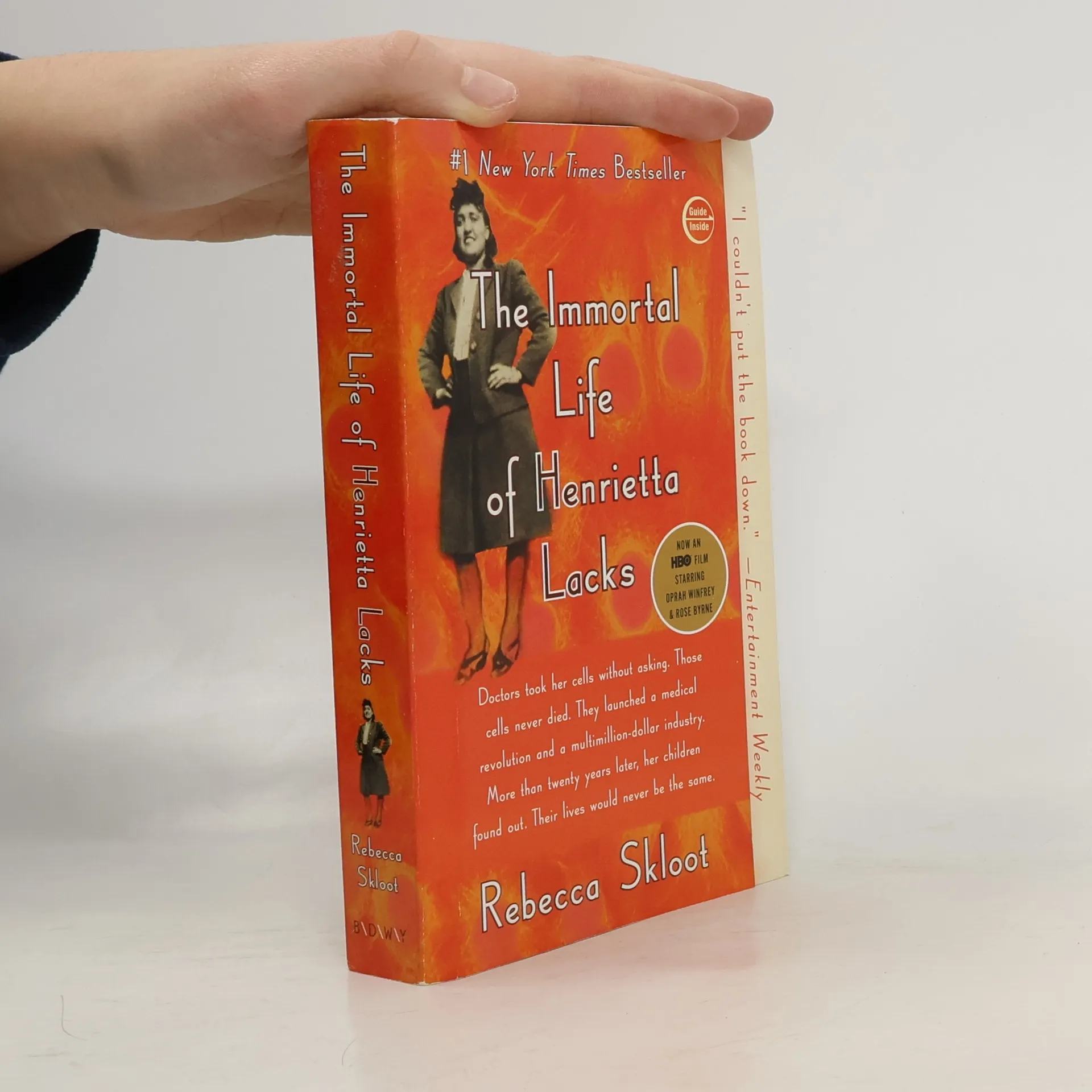
"Her name was Henrietta Lacks, but scientists know her as HeLa. She was a poor Southern tobacco farmer, yet her cells--taken without her knowledge--became one of the most important tools in medicine. The first "immortal" human cells grown in culture, they are still alive today, though she has been dead for more than sixty years. HeLa cells were vital for developing the polio vaccine; uncovered secrets of cancer and viruses; helped lead to in vitro fertilization, cloning, and gene mapping; and have been bought and sold by the billions. Yet Henrietta Lacks is buried in an unmarked grave. Her family did not learn of her "immortality" until more than twenty years after her death, when scientists began using her husband and children in research without informed consent. The story of the Lacks family is inextricably connected to the dark history of experimentation on African Americans, the birth of bioethics, and the legal battles over whether we control the stuff we are made of"--Publisher's description
Rebeca Skloot Book order
Rebecca Skloot is a celebrated author who excels in narrative science writing, blending rigorous research with compelling storytelling. Her work delves into a diverse range of topics, from bioethics and medical frontiers to the intricate relationship between race and medicine. Skloot is renowned for her ability to illuminate complex subjects with clarity and emotional depth. Readers are drawn to her distinctive voice, which masterfully combines intellectual curiosity with profound human insight.

- 2012