

Regarded as a monumental achievement in Western music, Beethoven's Ninth Symphony stands out as a powerful emblem of unity and affirmation. Despite its profound impact, it faced initial criticism for being cryptic and eccentric, stemming from the struggles of a deaf and aging composer. The symphony's journey from skepticism to acclaim highlights its significance and enduring legacy in the musical landscape.
Nicholas Cook Book order (chronological)
June 5, 1950
Nicholas Cook is a British musicologist and writer. His work delves into the ways we perceive and understand music, exploring the interplay between music theory, history, and practice. Cook's approach often uncovers surprising connections between seemingly disparate musical worlds, prompting readers to reconsider the very meaning of music. He skillfully makes complex musical ideas accessible and engaging for a broad audience.


Music: A Very Short Introduction
- 152 pages
- 6 hours of reading
Presenting an introduction to music, this book draws on many examples ranging from Beethoven to the Spice Girls to Chinese zither music. It also prompts us to call on our personal musical experiences in order to think critically about the roles of the performer and the listener, and about music as a commodity and an experience. schovat popis
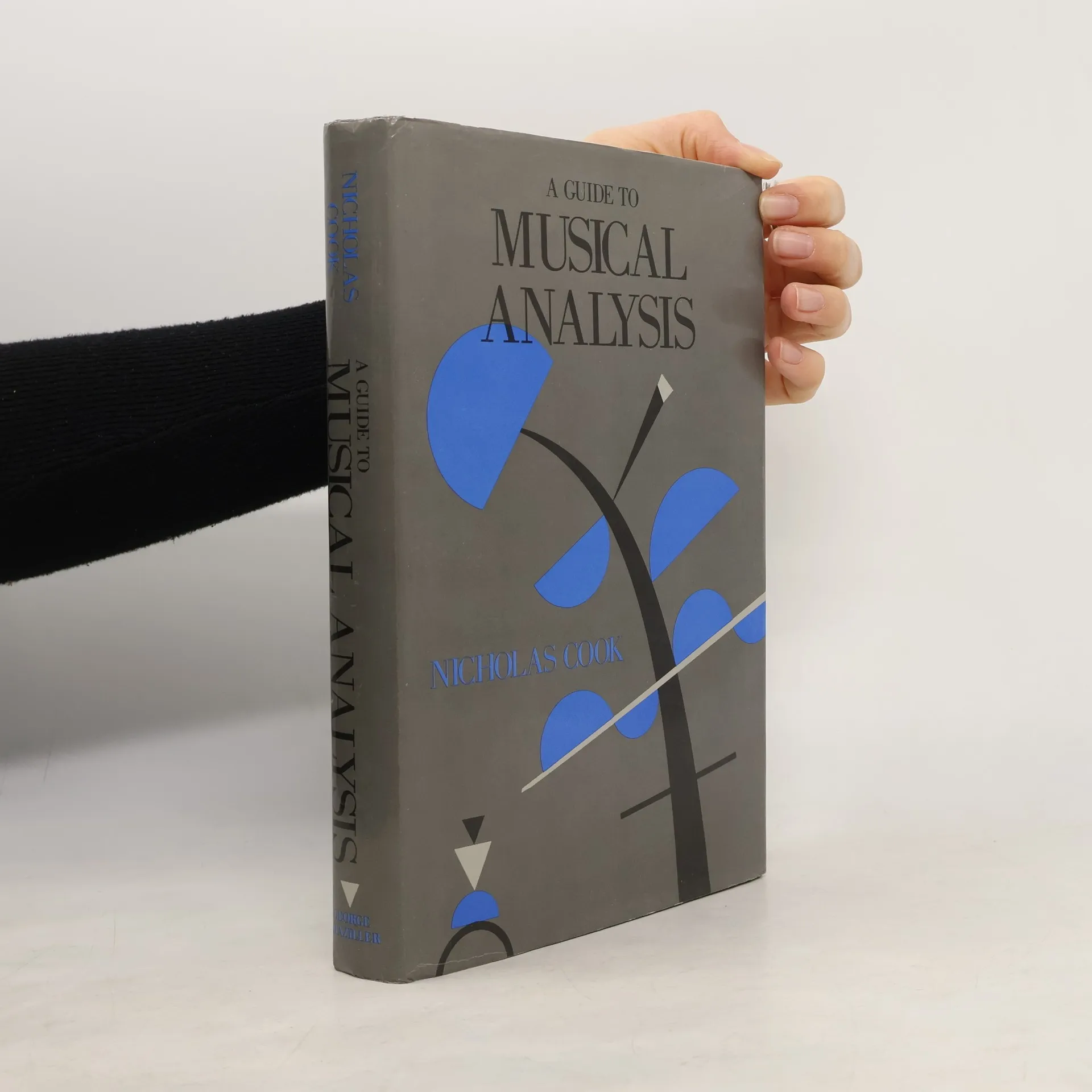
A Guide to Musical Analysis
- 377 pages
- 14 hours of reading
The text is divided into two parts: part One deals with the most important analytical methods current in the English-speaking world, treating each in turn. They are presented method by method because each one involves a characteristic set of beliefs and it is important to identify those beliefs i order to avoid applying inappropriate techniques that produce irrelevant data. The question of how you decide what method to adopt is addressed in the second part of the book, in which given compositions rather than given analytical methods form the starting point. The analyses in this section are each designed to highlight a different aspect of analytical procedure.