

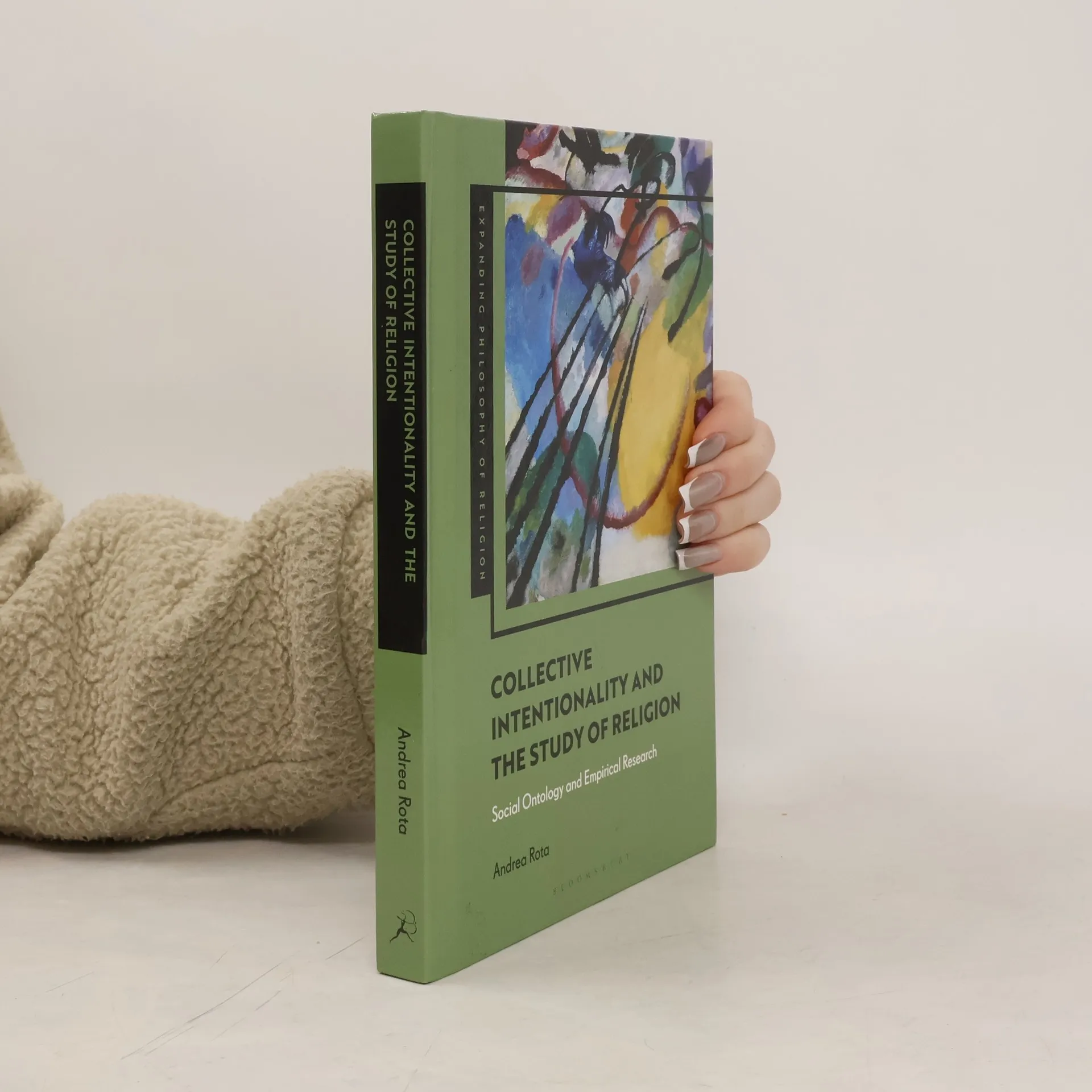
Expanding Philosophy of Religion: Collective Intentionality and the Study of Religion
Social Ontology and Empirical Research
- 278 pages
- 10 hours of reading
In this open access book, Andrea Rota makes the case for philosophical, theoretical, and empirical approaches to the study of religion, drawing on ongoing debates and challenging individualist perspectives. Rota begins with a survey of the work of Michael Bratman, John Searle, Raimo Tuomela, and Margaret Gilbert exploring the relevance of their insights for the study of religion. He sets out a theoretical framework to operationalize their philosophical ideas in an empirical research setting. Applying this framework in Part Two, Rota analyses the collective agency of Jehovah’s Witnesses, focusing on the roles that print and electronic media play in structuring communicative processes that conduce to collective intentions and commitments. He presents extensive fieldwork carried out in Switzerland and Germany, examining both qualitative and quantitative data. By demonstrating the fruitfulness of philosophical perspectives on collective intentionality and social ontology, Rota's study makes a timely contribution to our understanding of the beliefs, emotions, and aesthetic experiences of religious groups. The eBook editions of this book are available open access under a CC BY-NC-ND 4.0 licence on bloomsburycollections.com. Open access was funded by the Swiss National Science Foundation.