
Explore the latest books of this year!
Bookbot

Charles A. Beard

    Charles Austin Beard was among the most influential American historians of the first half of the 20th century. He is noted for his radical re-evaluation of the founding fathers of the United States, whom he believed were motivated more by economics than by philosophical principles. His wide-ranging and bestselling work, co-authored with his wife Mary Beard, profoundly impacted American historiography. Beard's prolific output, encompassing hundreds of monographs and studies, continues to inspire deeper examinations of American history.

    Mr. President. The Presidents in American History 1789-1980
    The Office of Justice of the Peace in England in Its Origin and Development
    Whither Mankind; a Panorama of Modern Civilization
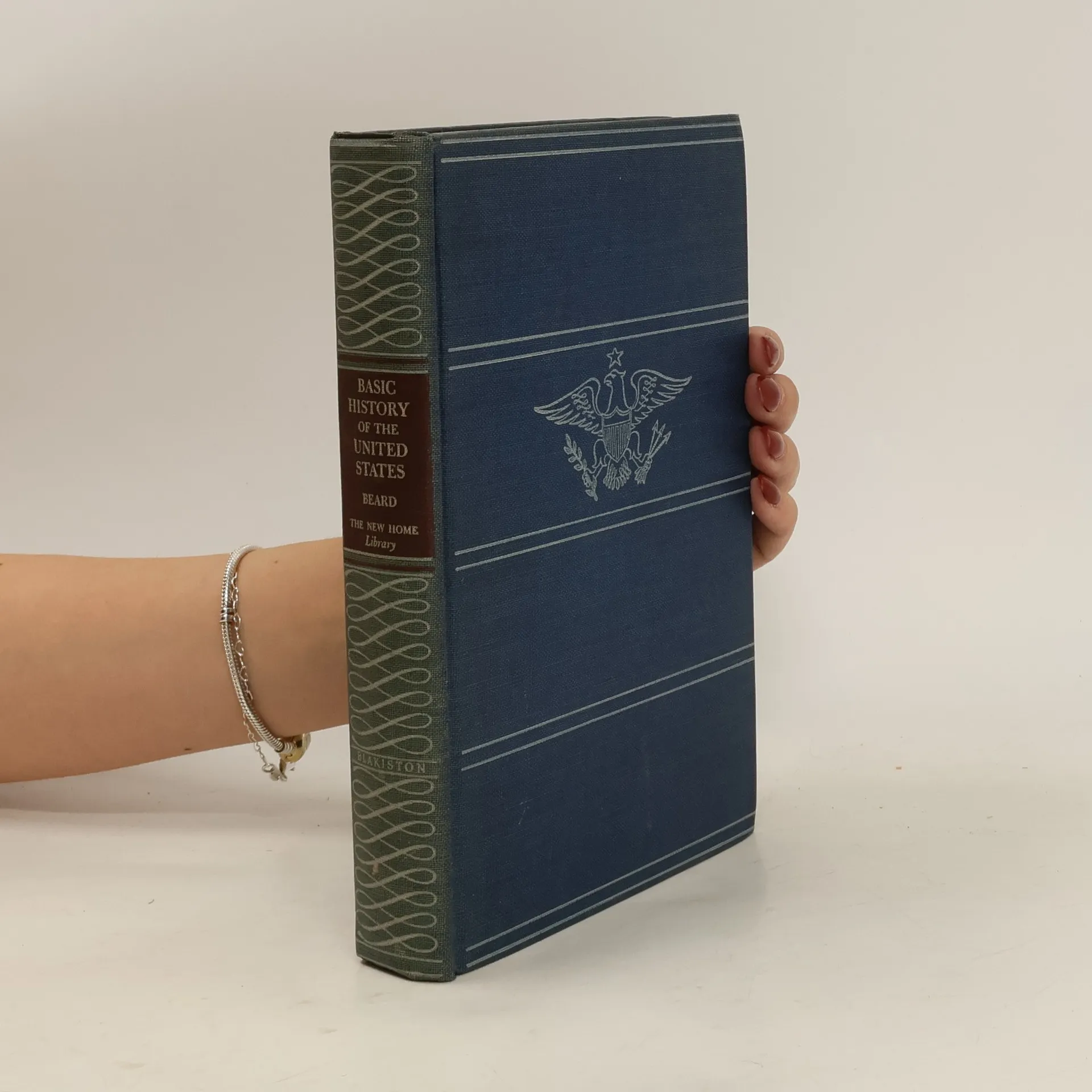
    A Basic History of the United States
    An Economic Interpretation of the Constitution of the United States
    • This scarce antiquarian book is a facsimile reprint of the original. Due to its age, it may contain imperfections such as marks, notations, marginalia and flawed pages. Because we believe this work is culturally important, we have made it available as part of our commitment for protecting, preserving, and promoting the world's literature in affordable, high quality, modern editions that are true to the original work.

      Whither Mankind; a Panorama of Modern Civilization
    • Beard, Charles Austin. The Office of the Justice of the Peace in England, in its Origin and Development. New York: Columbia University Press, 1904. 184, [1] pp. Reprinted 2001 by The Lawbook Exchange, Ltd. ISBN 1-58477-102-X. Cloth. $60. * Beard's first book, in which he points out that the office of the justice of the peace was originally a creation of the Crown, traces the struggle of the office to establish its independence. ""It was the King's Peace that after many ages swallowed up every other 'peace,' and it is as a phase of the prolonged struggle for mastery between the principle of centralized administration and the principle of local independence that we must view the evolution of the office of Justice of the Peace. This is well brought out by Dr. Beard, and he is especially clear in tracing the long series of tentative steps and experiments that led up to the final establishment of the office by the statute of 1360."" H.J.R., Law Quarterly Review 21:186-188 as cited in Marke, A Catalogue of the Law Collection at New York University (1953) 198.

      The Office of Justice of the Peace in England in Its Origin and Development