


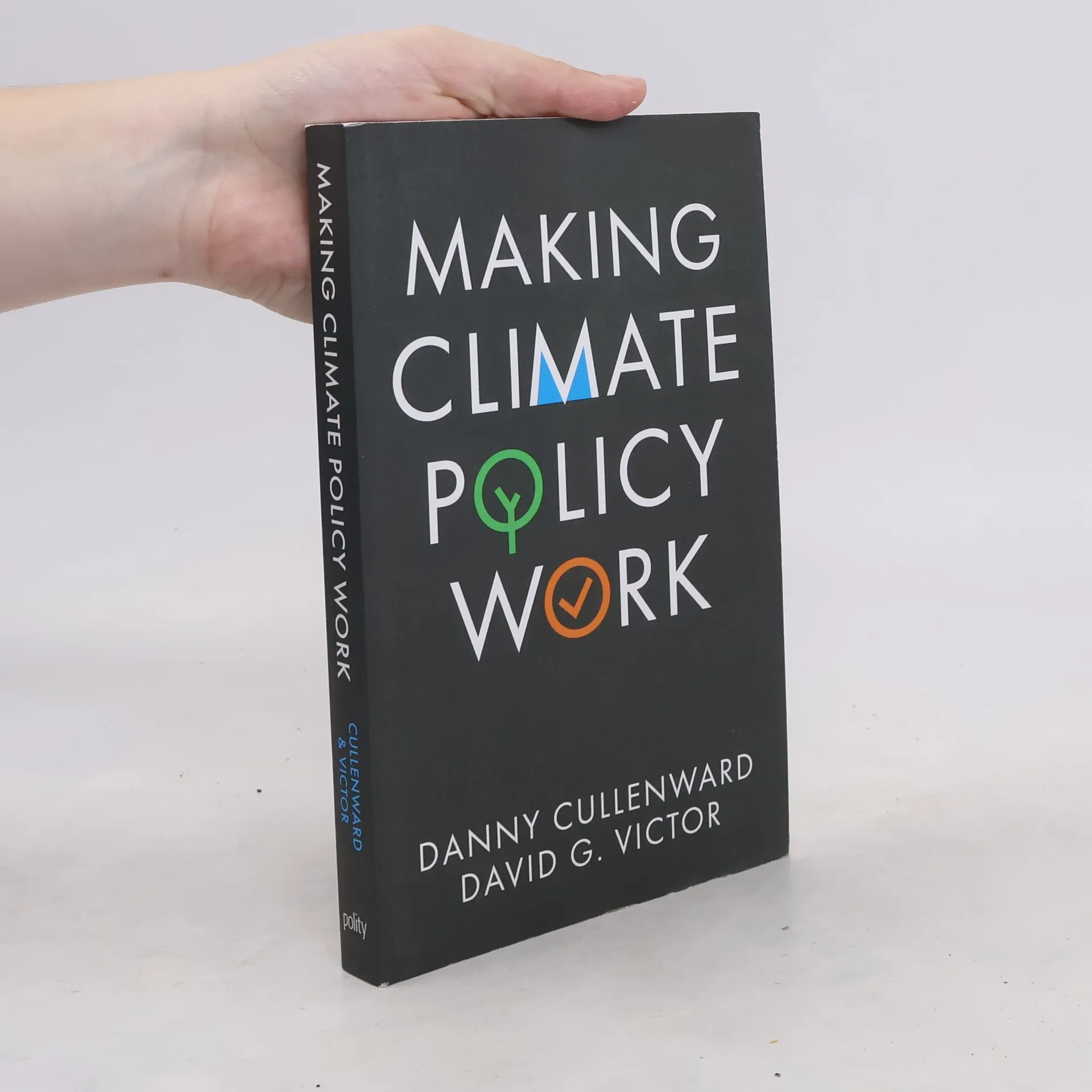
Making Climate Policy Work
- 256 pages
- 9 hours of reading
For decades the world’s governments have struggled to move from talk to action on climate. Many now hope that growing public concern will lead to greater policy ambition, but progress depends on sound strategy. Yet the most widely promoted climate policy—the use of market-based programs to reduce climate pollution—hasn’t been working and isn’t ready to scale. Danny Cullenward and David Victor show why the elegant theory of markets has failed to have much impact in practice. The reasons, they argue, are deeply rooted in the politics of creating and maintaining effective markets—forces that have caused low prices and led to few climate benefits in nearly every program to date. These problems are structural and won’t disappear with increasing demand for climate solutions. Confronting them requires counterintuitive reforms, but even reformed markets are unlikely to drive the scale of change needed to stabilize the climate. Facing that reality, Cullenward and Victor argue, requires relying more heavily on regulation and industrial policy—strategies that ultimately turn on strengthened government capacities to deliver the benefits markets promise, but rarely deliver.