


Explore the latest books of this year!
Bookbot

Bill Hayes

    Bill Hayes writes with penetrating sensitivity about the themes of life, death, and the human experience. His work, often accompanied by his own artistic photography, explores the depths of human connection and the complexities of our existence. With a unique perspective, he captures fleeting moments, offering readers profound contemplation. His writing is a distinctive contribution to contemporary literature, marked by its artistry and emotional resonance.

    Steam Trains
    Sweat
    Framed in Monte Carlo
    How We Live Now
    Insomniac City
    • 2022

      Sweat

      • 336 pages
      • 12 hours of reading
      3.4(17)Add rating

      From the author of Insomniac City 'who can tackle just about any subject in book form, and make you glad he did' (San Francisco Chronicle)- a cultural, scientific, literary, and personal history of exercise. Exercise is our modern obsession, and we have the fancy workout gear and fads to prove it. Exercise - a form of physical activity distinct from sports, play, or athletics - was an ancient obsession, too, but as a chapter in human history, it's been largely overlooked. In Sweat, Bill Hayes runs, jogs, swims, spins, walks, bikes, boxes, lifts, sweats, and downward-dogs his way through the origins of different forms of exercise, chronicling how they have evolved over time, and dissecting the dynamics of human movement. Hippocrates, Plato, Galen, Susan B. Anthony, Jack LaLanne, and Jane Fonda, among many others, make appearances in Sweat, but chief among the historical figures is Girolamo Mercuriale, a Renaissance-era Italian physician who aimed singlehandedly to revive the ancient Greek "art of exercising" through his 1569 book De arte gymnastica. In the pages of Sweat, Mercuriale and his illustrated treatise are vividly brought back to life. As Hayes ties his own personal experience to the cultural and scientific history of exercise, from ancient times to the present day, he gives us a new way to understand its place in our lives in the 21st century

      Sweat
    • 2021

      Framed in Monte Carlo

      • 336 pages
      • 12 hours of reading
      3.1(10)Add rating

      An ex-Green Beret working as a nurse to a Lebanese international banking mogul describes how a series of bizarre circumstances led to his wrongful conviction for murdering his employer in his secured residence in 1999

      Framed in Monte Carlo
    • 2020

      How We Live Now

      • 160 pages
      • 6 hours of reading
      4.1(623)Add rating

      Winner of the New York City Book Award From the beloved author of Insomniac City, a poignant and profound tribute in stories and images to a city amidst a pandemic. A bookstore where readers shout their orders from the street. A neighborhood restaurant turned to-go place where one has a shared drink--on either end of a bar--with the owner. These scenes, among many others, became the new normal as soon as the world began to face the COVID-19 pandemic. In How We Live Now, author and photographer Bill Hayes offers an ode to our shared humanity--capturing in real time this strange new world we’re now in (for who knows how long?) with his signature insight and grace. As he wanders the increasingly empty streets of Manhattan, Hayes meets fellow New Yorkers and discovers stories to tell, but he also shares the unexpected moments of gratitude he finds from within his apartment, where he lives alone and--like everyone else--is staying home, trying to keep busy and not bored as he adjusts to enforced solitude with reading, cooking, reconnecting with loved ones, reflecting on the past--and writing. Featuring Hayes’s inimitable street photographs, How We Live Now chronicles an unimaginable moment in time, offering a long-lasting reminder that what will get us through this unprecedented, deadly crisis is each other.

      How We Live Now
    • 2018

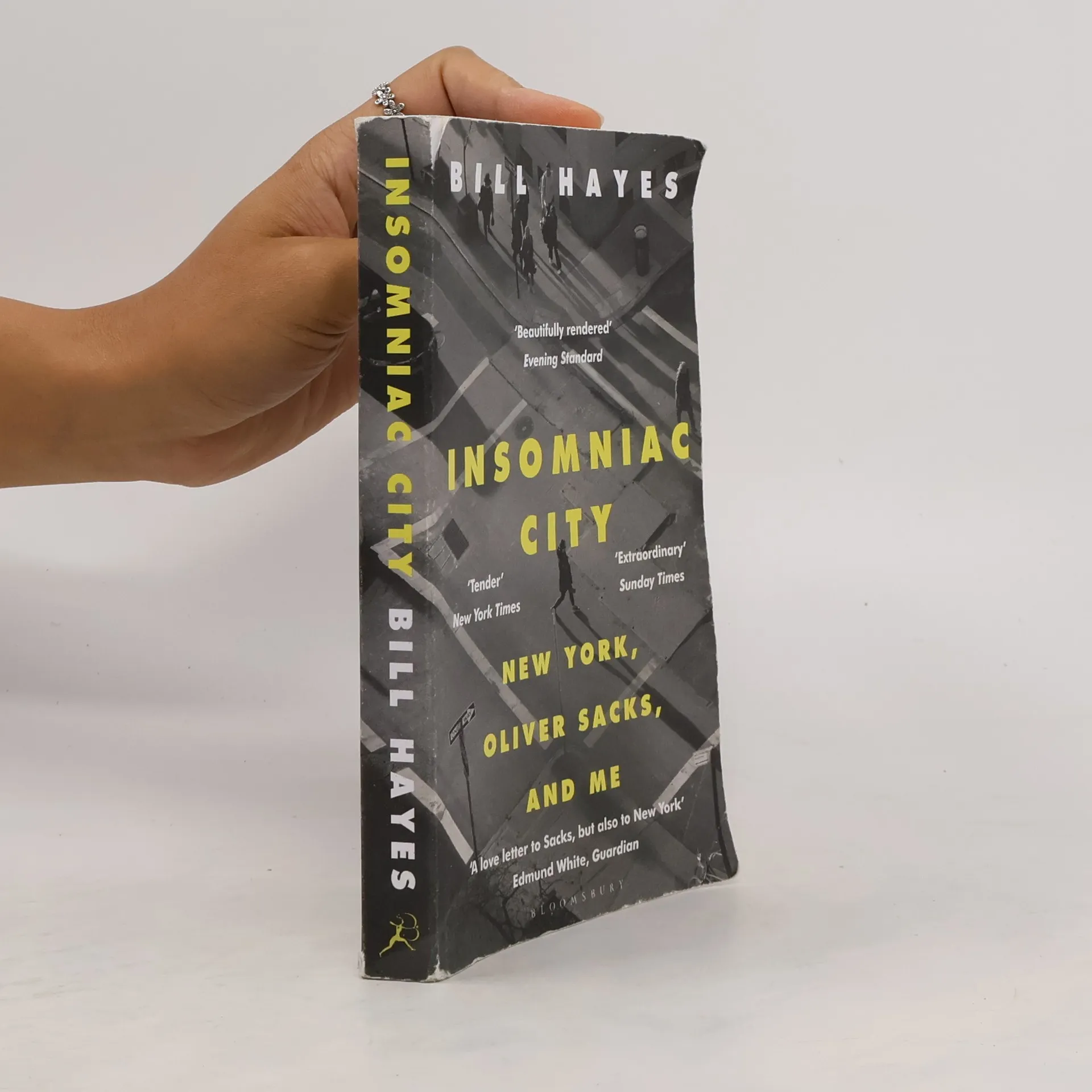
      Insomniac City

      • 304 pages
      • 11 hours of reading
      4.4(6327)Add rating

      A loving tribute to Sacks and to New York ... Read just 50 pages, and you'll see easily enough how Hayes is Sacks's logical complement. Though possessed of different temperaments, both are alive to difference, variety, the possibilities of our rangy humanity; both are avid chroniclers of our species Jennifer Senior New York Times

      Insomniac City
    • 1981