Nietzsche's Voices , the latest volume of John Sallis's Collected Writings, presents his two-semester lecture course on Nietzsche offered in the Philosophy Department of Duquesne University during the school year 1971-72. "Nietzsche is easy to read; his is apparently the easiest of all the great philosophies. Yet the easy intelligibility is deceptive. Nietzsche's writings make us believe we have understood when in fact we have not. His philosophy is actually the exact opposite of easy," says Sallis. He first discusses Nietzsche's life and the relevance of the classical Greeks to his thought. Then, in invigorating detail, Sallis discusses Nietzsche's views on truth, morality, and the death of God. The final lecture covers Thus Spoke Zarathustra, Nietzsche's influential but highly debated work of philosophical fiction. Nietzsche's Voices represents an essential introduction to the thought of Friedrich Nietzsche, as presented by one of today's most significant philosophers.
John Sallis Books

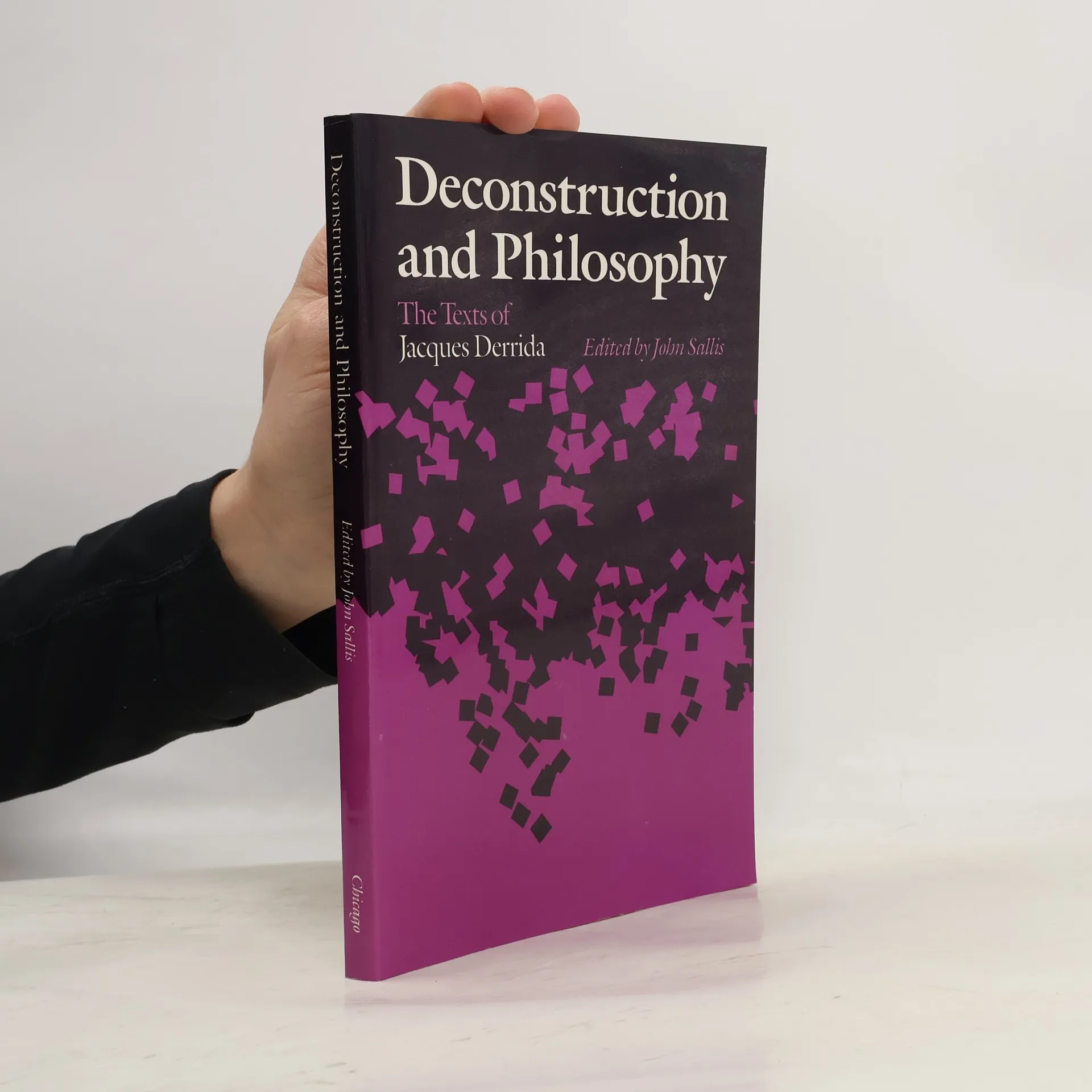
Acknowledgments -- Note on Translations -- Introduction -- Deconstruction and the Inscription of Philosophy -- Infrastructures and Systematicity / Rodolphe Gasche -- Philosophy Has Its Reasons . . . / Hugh J. Silverman -- Destinerrance: The Apotropocalyptics of Translation / John P. Leavey, Jr. -- Deconstruction and the History of Metaphysics -- In Stalling Metaphysics: At the Threshold / Ruben Berezdivin -- Doubling the Space of Existence: Exemplarity in Derrida - the Case of Rousseau / Irene E. Harvey -- Regulations: Kant and Derrida at the End of Metaphysics / Stephen Watson -- A Point of Almost Absolute Proximity to Hegel / John Llewelyn -- Deconstruction and Phenomenology -- The Economy of Signs in Husserl and Derrida: From Uselessness to Full Employment / John D. Caputo -- The Perfect Future: A Note on Heidegger and Derrida / David Farrell Krell -- Deconstruction and the Possibility of Ethics / Robert Bernasconi -- Deconstruction--in Withdrawal? -- Following Derrida / David Wood -- Geschlecht II: Heidegger's Hand / Jacques Derrida -- Notes on Contributors -- Index.
The Verge of Philosophy
- 172 pages
- 7 hours of reading
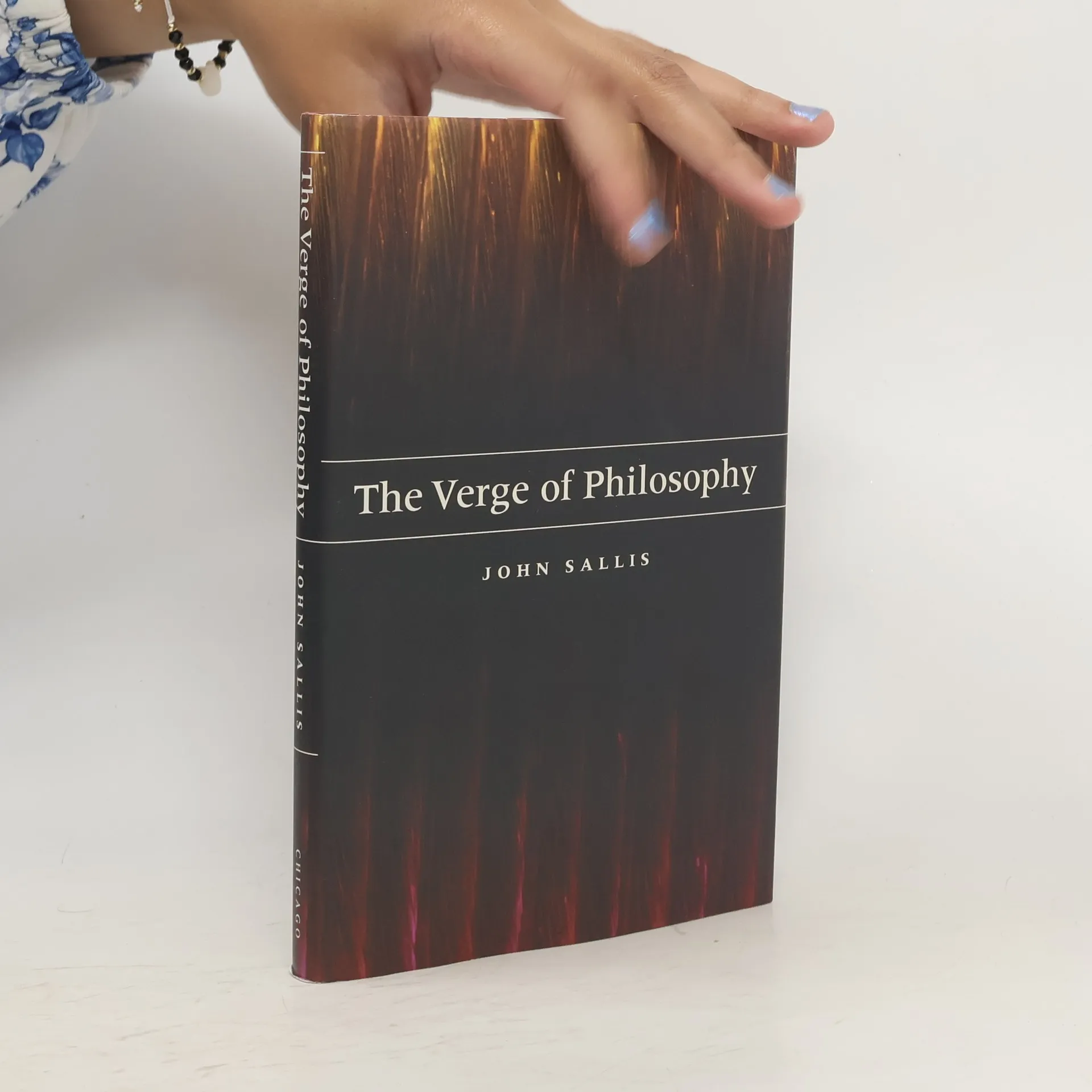
The Verge of Philosophy is in one sense a memorial for Sallis's longtime friend and interlocutor Jacques Derrida. The centerpiece of the book is an extended examination of three sites in Derrida's thought: his interpretation of Heidegger regarding the privileging of the question, Derrida's account of the Platonic figure of the good, and his interpretation of Plato's discourse on the elusive notion of the receptacle of all things, which Plato designates by the enigmatic word chora. Sallis's explorations are given added weight-even poignancyby his discussion of his many public and private philosophical conversations with Derrida over the decades of their friendship. The Verge of Philosophy thus simultaneously serves to mourn and remember a friend and to push forward the deeply searching discussions that lay at the very heart of that friendship.
German Idealism and the Question of System
- 184 pages
- 7 hours of reading
Focusing on German Idealism, this volume explores the evolution of philosophical thought from Kant to Fichte and Schelling. John Sallis offers insightful interpretations of key texts, emphasizing themes of freedom, the subject-object relationship, and the imagination. The book begins with Kant's philosophy and its reception, followed by an in-depth analysis of Fichte's Wissenschaftslehre and Schelling's contributions. Sallis's clear exposition and relevance to contemporary philosophy make this work appealing to both general readers and specialists.
Focusing on Martin Heidegger's Being and Time, this volume compiles John Sallis's lectures from two different academic years, providing a comprehensive synthesis of his teachings. The significant gap between the two courses allows for a nuanced understanding of Heidegger's work, reflecting on the developments in the field during that time. Aimed at both students and advanced scholars, this collection enhances accessibility to Heidegger's complex ideas while fostering deeper engagement with his philosophy.
Klee's Mirror
- 160 pages
- 6 hours of reading
Exploring the intricate connection between Paul Klee's artistic creations and his philosophical ideas, this book delves into how his unique perspective shaped his work. It examines Klee's innovative techniques and themes, revealing the depth of his thought processes and the underlying concepts that inform his art. By analyzing specific pieces, the text highlights the interplay between visual expression and philosophical inquiry, offering readers a comprehensive understanding of Klee's contributions to both art and philosophy.
Songs of Nature
- 128 pages
- 5 hours of reading
This latest philosophical text by John Sallis is inspired by the work of contemporary Chinese painter Cao Jun. It carries out a series of philosophical reflections on nature, art, and music by taking up Cao Jun's art and thought, with a focus on questions of the elemental.
Ethicality and Imagination is the astounding conclusion to John Sallis's landmark trilogy launched with Force of Imagination and Logic of Imagination. In this new work, Sallis embarks on an unforgettable voyage spanning the cosmos and delving deep into what makes us human. If the first two works consider the question of being and thinking, respectively, the third and culminating volume takes up the question of action. In a series of highly original and always provocative meditations, Sallis articulates the way humans are rooted in their abodes yet not determined by them. Ethicality and Imagination develops a new approach to the relation of the imagination to literature, ethics, political thought, and recent discoveries in astrophysics. It represents a brilliant conclusion to one of the most exciting works of thinking in the Continental school in recent decades.
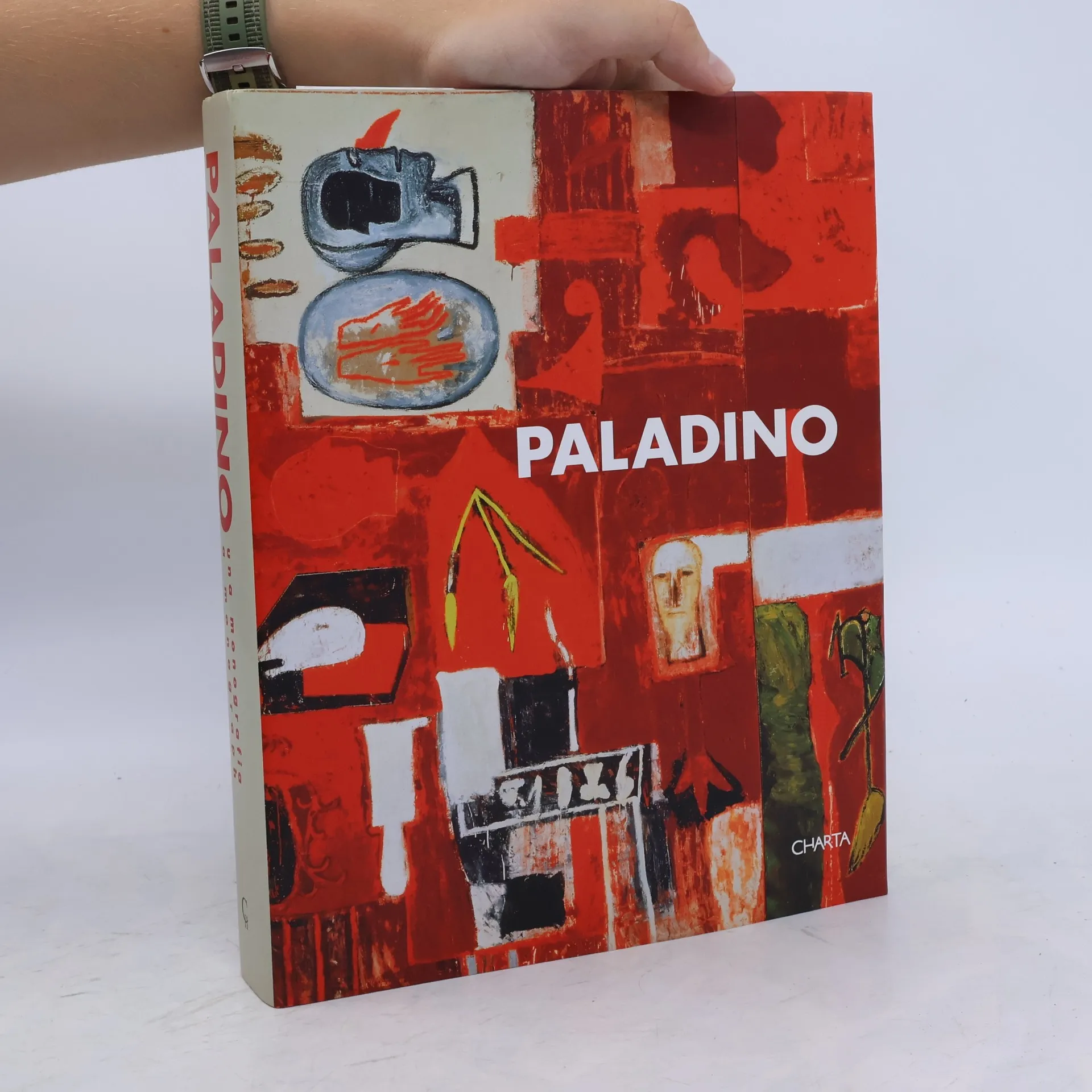
As well as containing many color plates that document the illusive quality of Paladino's work, this monograph also includes seven essays that explore the nature and meaning of his imagery and the temperament that produced them.
John Sallis untersucht den Kerngedanken der Einbildungskraft und zeigt, daß deren Kraft auf alle Bereiche des menschlichen Lebens Einfluß hat. Aus dem Blickwinkel der gegenwärtigen Dekonstuktion des klassischen Gegensatzes zwischen der intelligiblen und der sinnlichen Wirklichkeit setzt er sich kritisch mit der gesamten Geschichte der Philosophie auseinander. Dadurch, daß er das Wesen der Einbildungskraft hinterfragt, wendet sich seine Untersuchung dem Sinnlichen und dem Elementaren in der Natur zu. Er greift auf die Methoden der radikalisierten Phänomenologie und der Hermeneutik zurück, um ein ganz neues Konzept der Einbildungskraft zu erarbeiten. So wird deutlich, daß die Einbildungskraft eine zentrale Rolle für das Verständnis des Wesens von Zeit, Eigenen und Fremden sowie der Kunst spielt. Dies wird an Werken von Shakespeare, Keats und Hölderlin veranschaulicht. Der Autor zeigt, daß die Einbildungskraft, sobald sie von jeglicher Subjektivität befreit ist, die Momente unserer Wahrnehmung sinnlicher Dinge zusammenbringt und gleichzeitig die Wahrnehmung für Licht, Atmosphäre, Erde und Himmel öffnet.
Die Problemlage, von der Sallis ausgeht, ist die noch keineswegs bewältigte, aber auch nicht mehr mit Aussicht auf Erfolg revidierbare Einsicht, daß die das abendländische Denken von Beginn an leitende Hoffnung, die dem Menschen gegebene Vernunft biete ihm die Chance zur Erkenntnis des Absoluten und damit der Sinnhaftigkeit seines Daseins, sich als eine unverzichtbare , aber uneinlösbare Illusion entpuppte. Da es nicht weiterhilft, das Scheitern aller Bemühungen um die Grundlegung einer die Sinnfrage verbindlich entscheidenden Metaphysik zu beklagen, unternimmt Sallis den Versuch, den Grenzpunkt zu bestimmen, an dem der Anspruch der Vernunft, der Erkenntnis des Absoluten mächtig zu sein, de facto zusammenbricht – denn nur von diesem Punkt aus läßt sich allenfalls eine Chance eröffnen, auf die Sinnfrage eine nichtmetaphysische, befriedigende Antwort zu finden. In vier aufeinanderfolgenden, von Stufe zu Stufe radikalisierten Interpretationsgängen gelingt Salis der Nachweis, daß die von Kant in der „Transzendentale Dialektik“ aufgestellten Paralogismen und Antinomien den Grenzpunkt markieren, an dem deutlich wird, daß alle von Vernunft gesetzte Einheit notwendig fragmentarisch bleibt: was sie als ihre Leistung ansieht, das „Versammeln von Mannigfaltigkeit in der Einheit“, entspringt nicht der Autonomie des erkennenden Subjekts, sondern dem aller Ration uneinholbar vorausliegenden Spiel der Einbildungskraft.