

Explore the latest books of this year!
Bookbot

Cesar Hidalgo

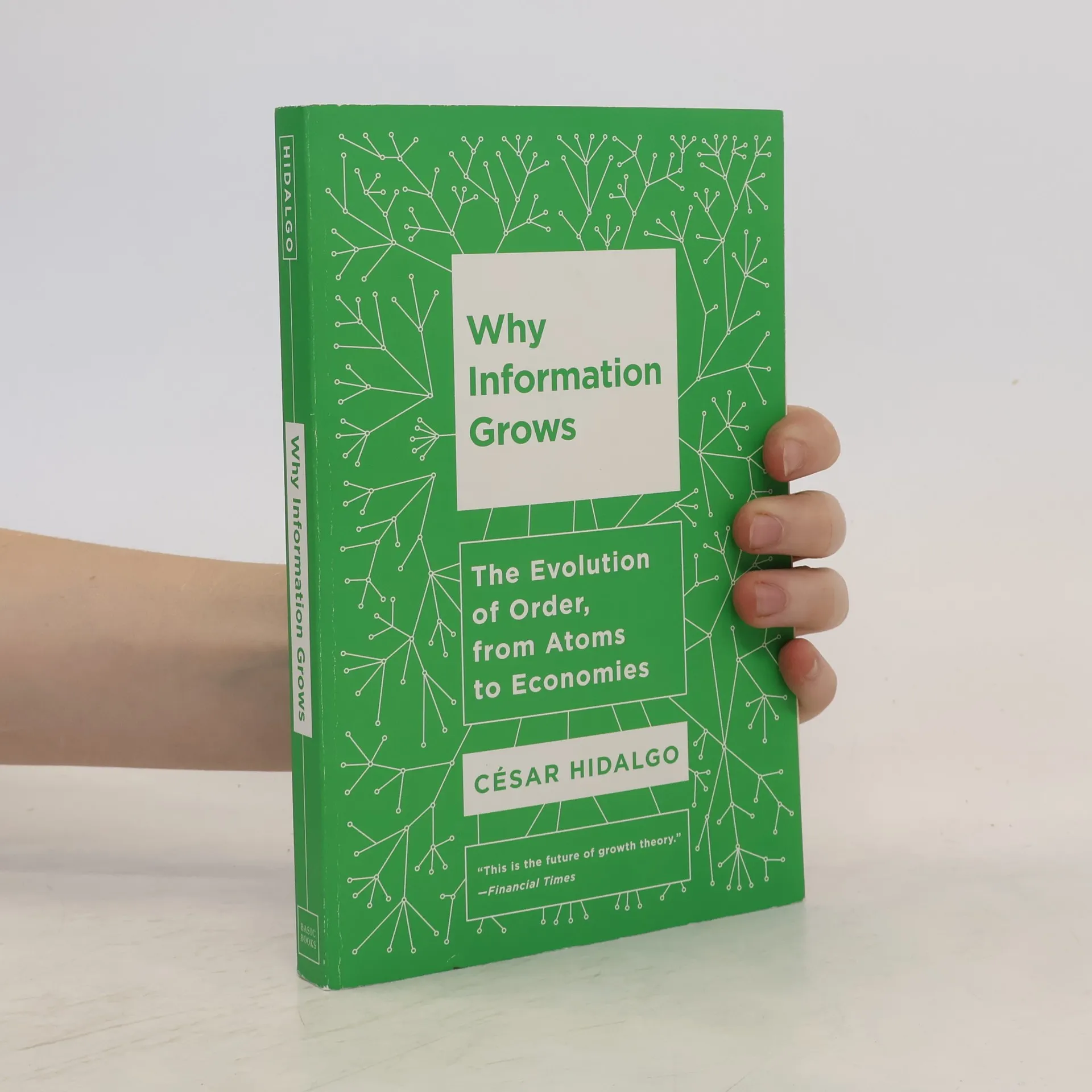
    Why Information Grows
    How Humans Judge Machines
    • How Humans Judge Machines

      • 224 pages
      • 8 hours of reading
      4.1(39)Add rating

      A detailed examination of people's reactions to machine actions as compared to human actions. Through dozens of experiments, this book explores when and why people judge humans and machines differently. How would you feel about losing your job to a machine? How about a tsunami alert system that fails? Would you react differently to acts of discrimination depending on whether they were carried out by a machine or by a human? What about public surveillance?How Humans Judge Machines compares people's reactions to actions performed by humans and machines. Using data collected in dozens of experiments, this book reveals the biases that permeate human-machine interactions.Are there conditions in which we judge machines unfairly? Is our judgment of machines affected by the moral dimensions of a scenario? Is our judgment of machine correlated with demographic factors such as education or gender?César Hidalgo and colleagues use hard science to take on these pressing technological questions. Using randomized experiments, they create revealing counterfactuals and build statistical models to explain how people judge artificial intelligence and whether they do it fairly. Through original research, How Humans Judge Machines bring us one step closer tounderstanding the ethical consequences of AI.

      How Humans Judge Machines
    • Why Information Grows

      The Evolution of Order, from Atoms to Economies

      3.9(12)Add rating

      In this thought-provoking work, Cesar Hidalgo presents a radical interpretation of global economics, challenging traditional views on economic growth and its historical concentration in certain regions. While previous analyses have focused on institutions, geography, and psychology, Hidalgo argues that understanding economic growth requires a shift towards the science of information, networks, and complexity. He posits that economic growth is intrinsically linked to the growth of order—or information. Despite the universe's tendency towards disorder, there are pockets where information flourishes, such as cities. However, not all cities foster the same level of economic development. For instance, the disparities between economies like those of the US and Brazil, or Brazil and Chad, highlight the importance of how individuals and organizations process information. The success of regions like Silicon Valley compared to others, such as Boston's Route 128, further illustrates this point. Hidalgo emphasizes that economies consist of networks of people, and society functions as a collective computer. Thus, enhancing these networks is key to economic development. This work fundamentally redefines our understanding of wealth creation and aims to transform economics into a more insightful discipline.

      Why Information Grows