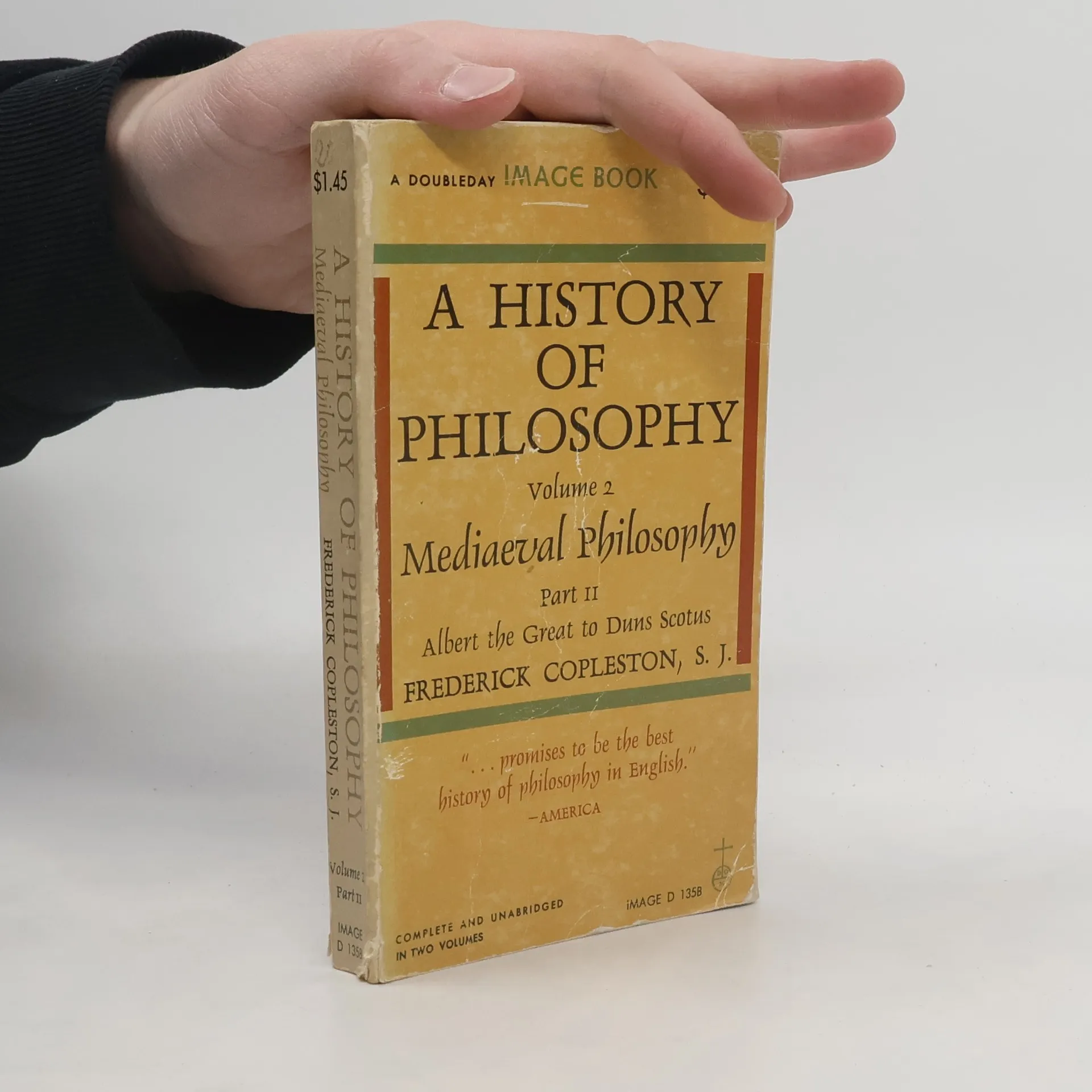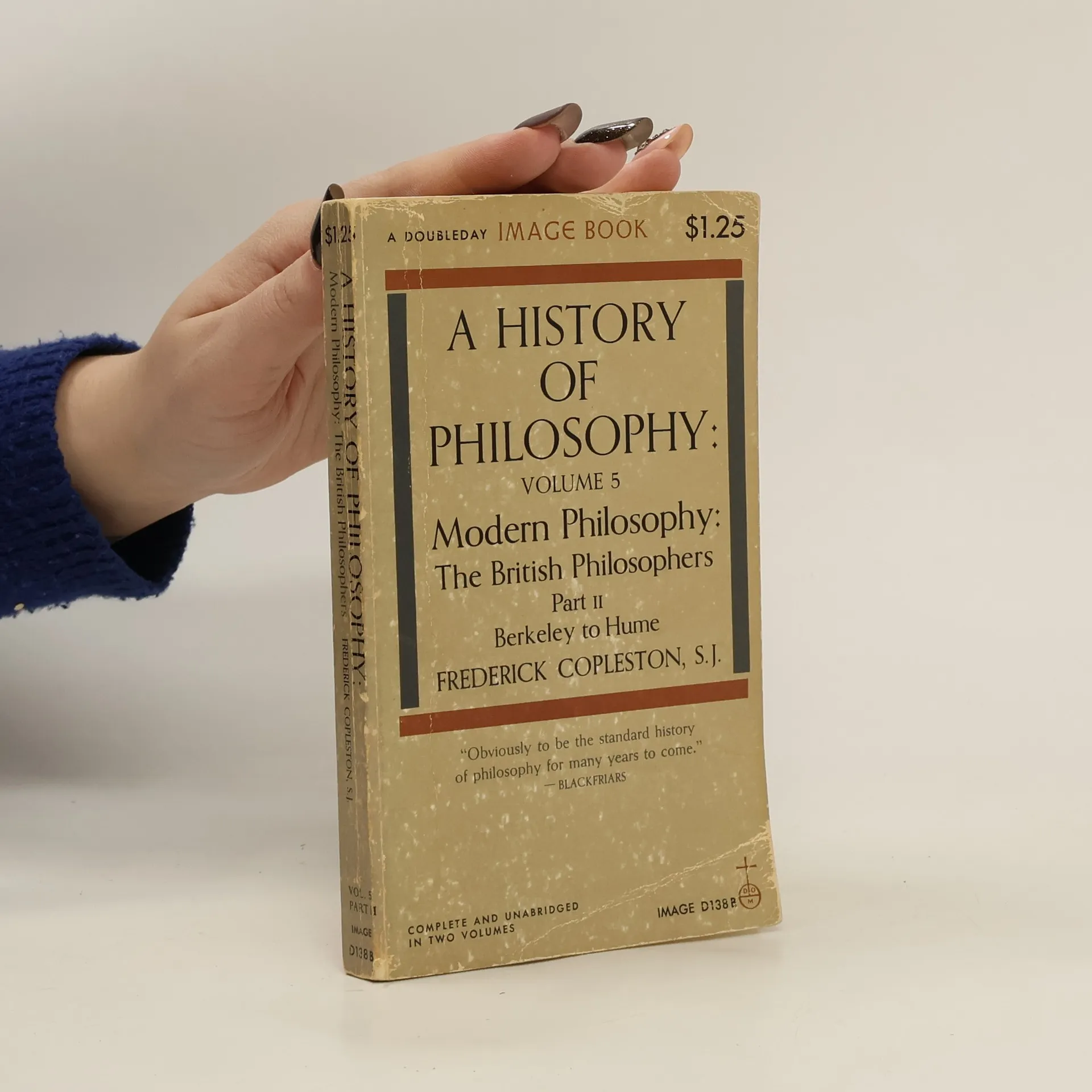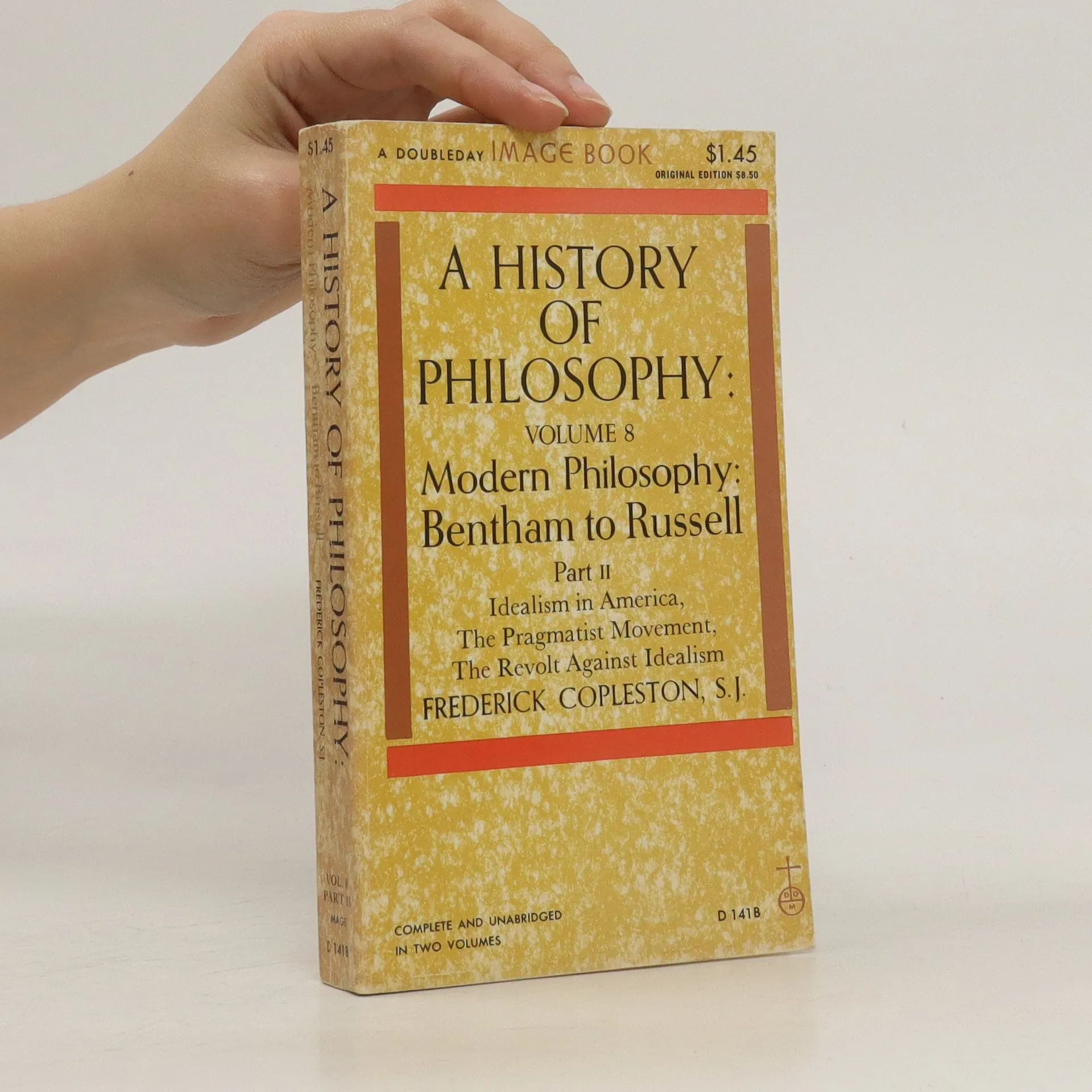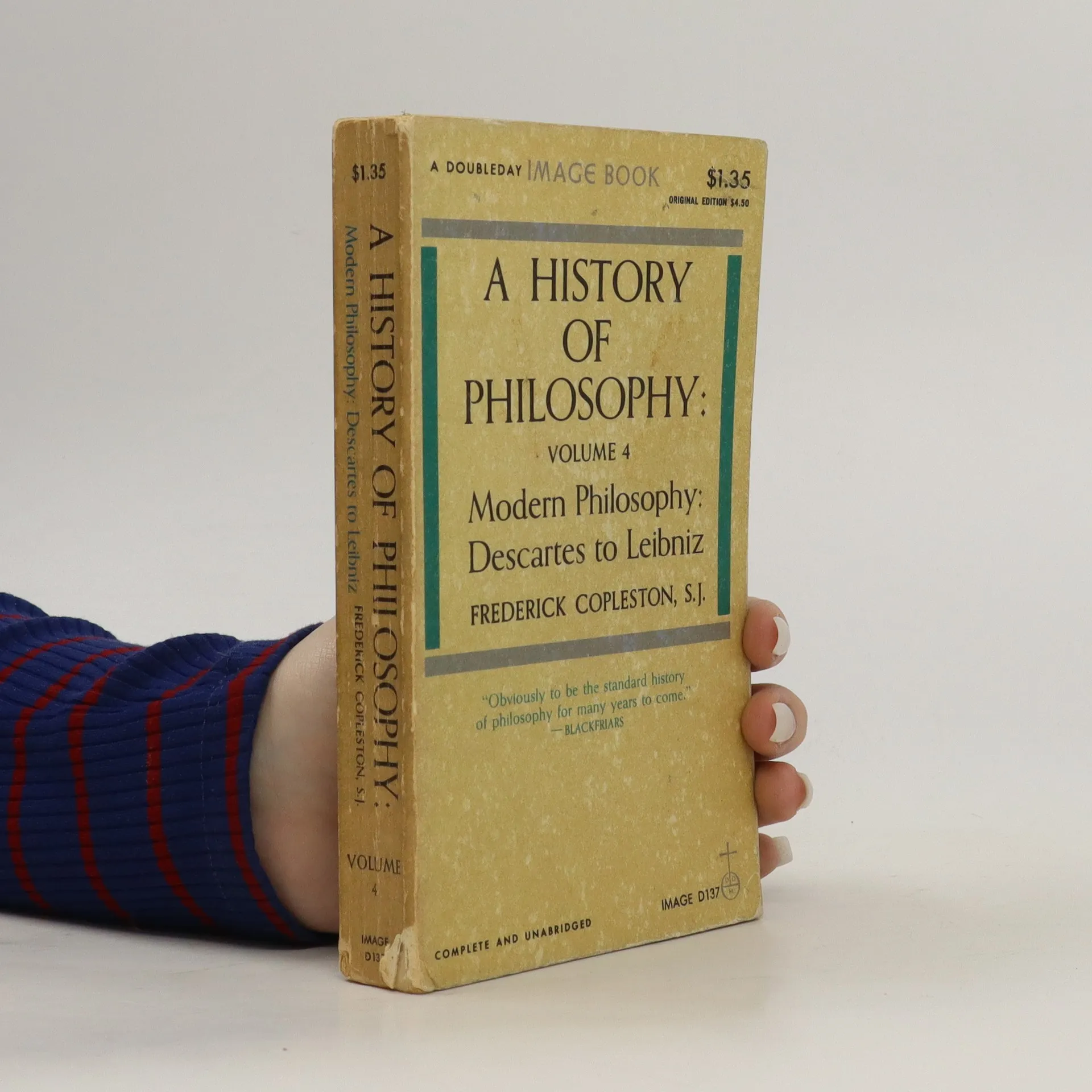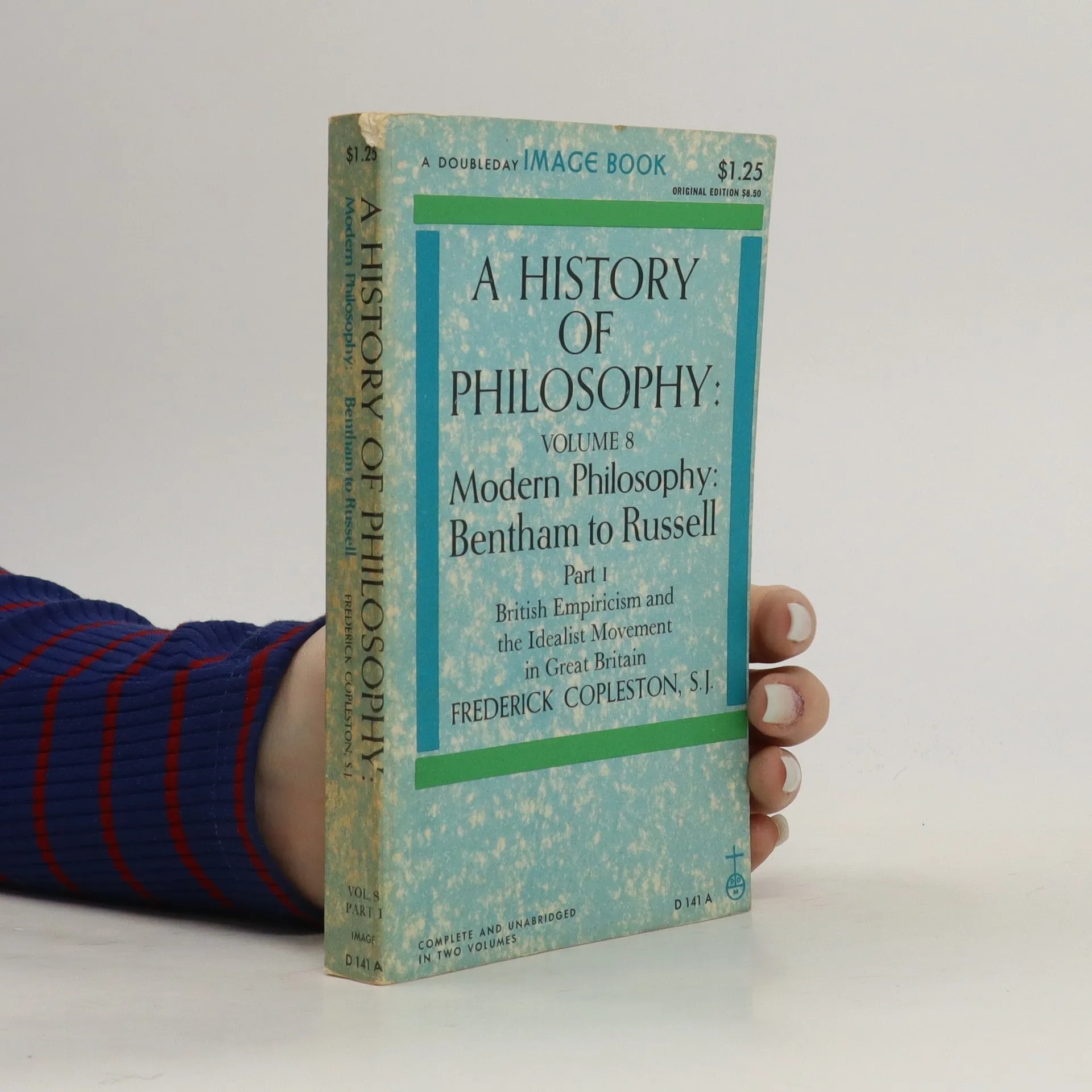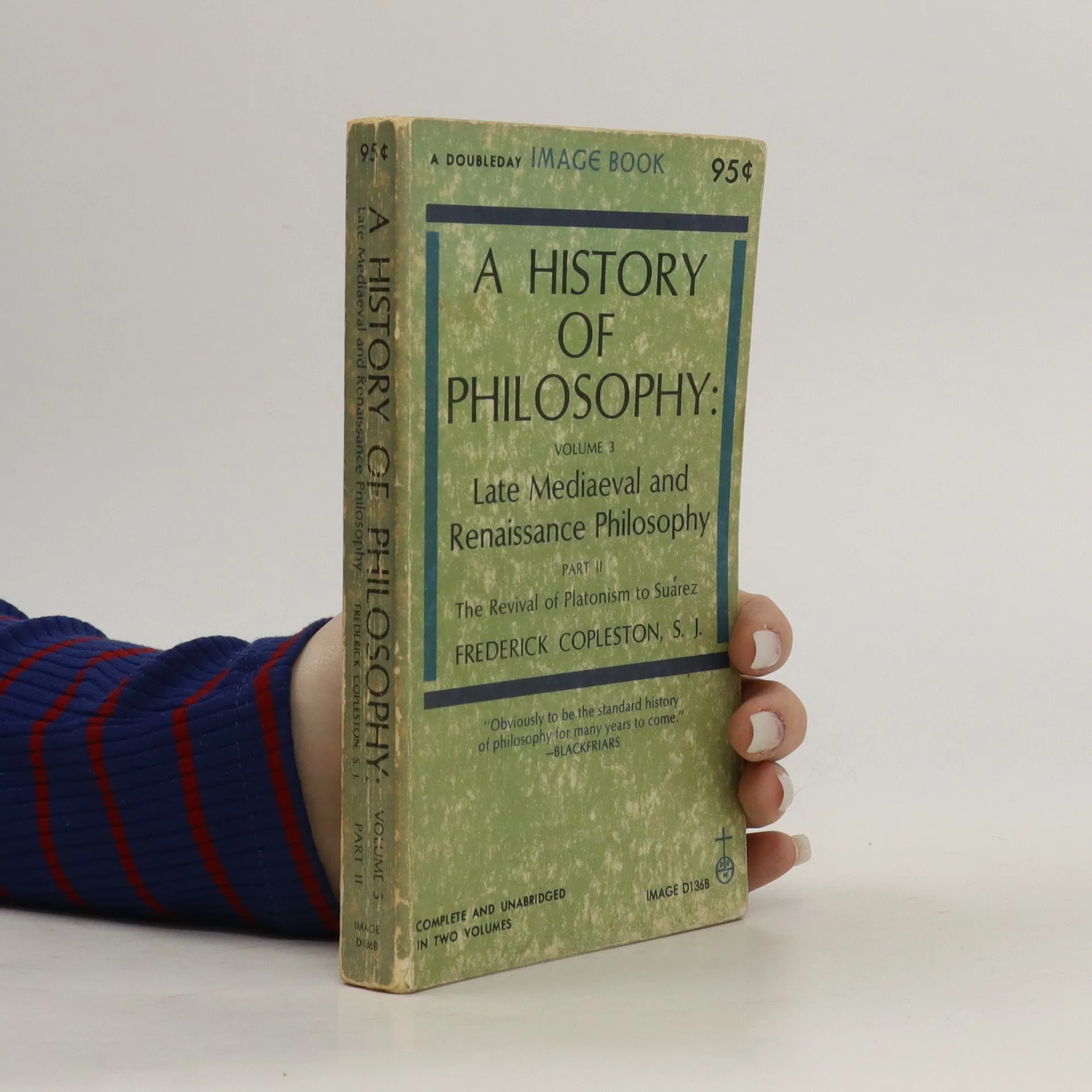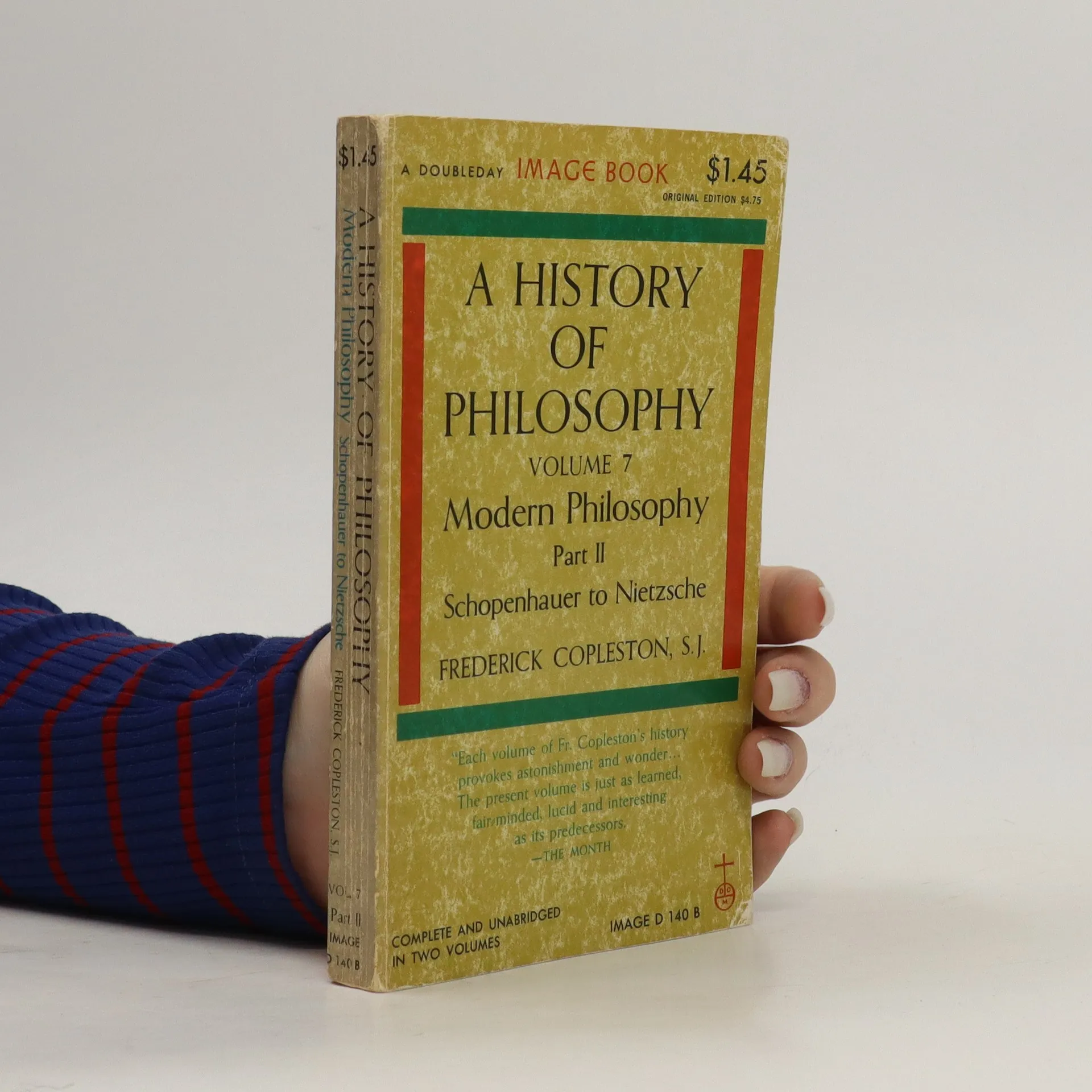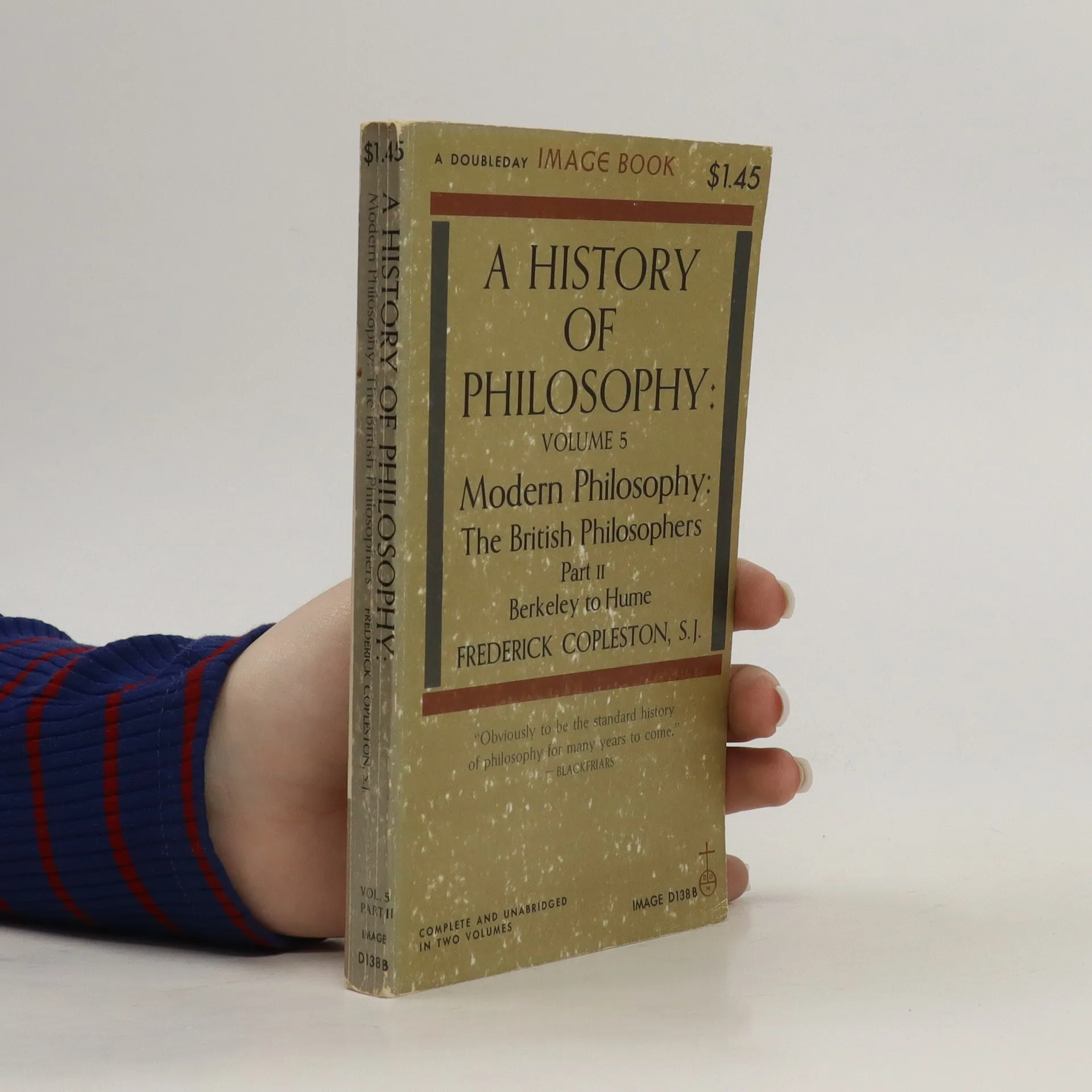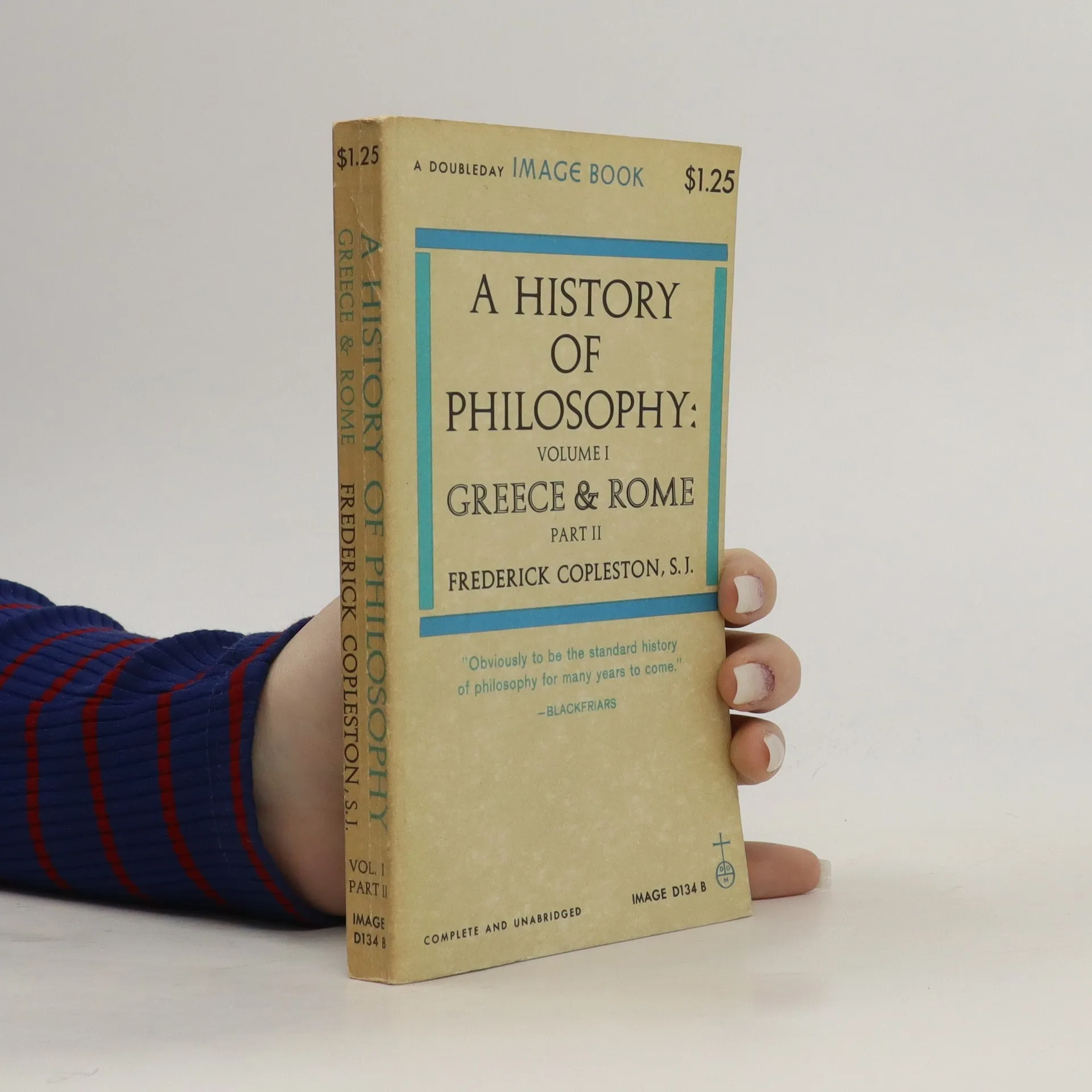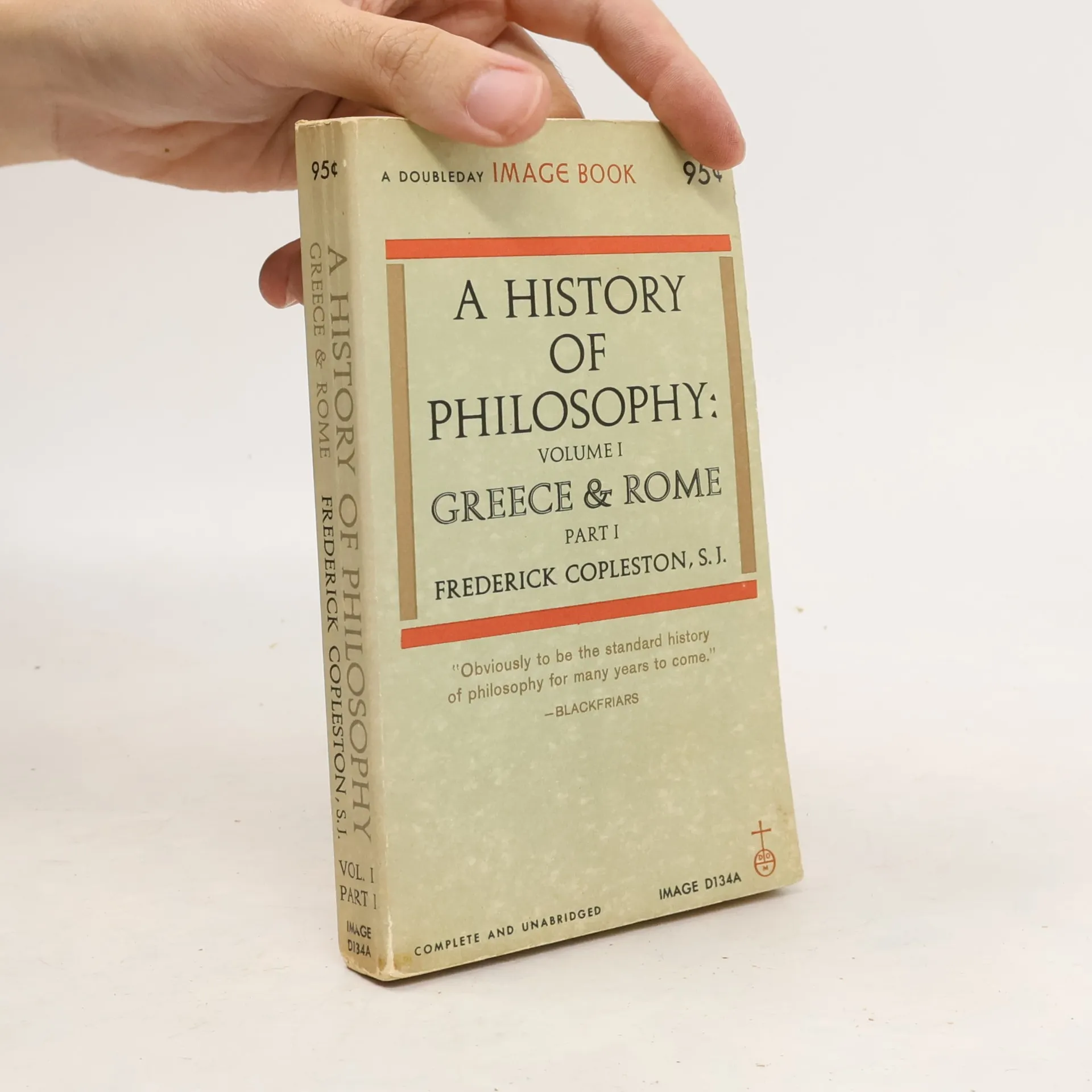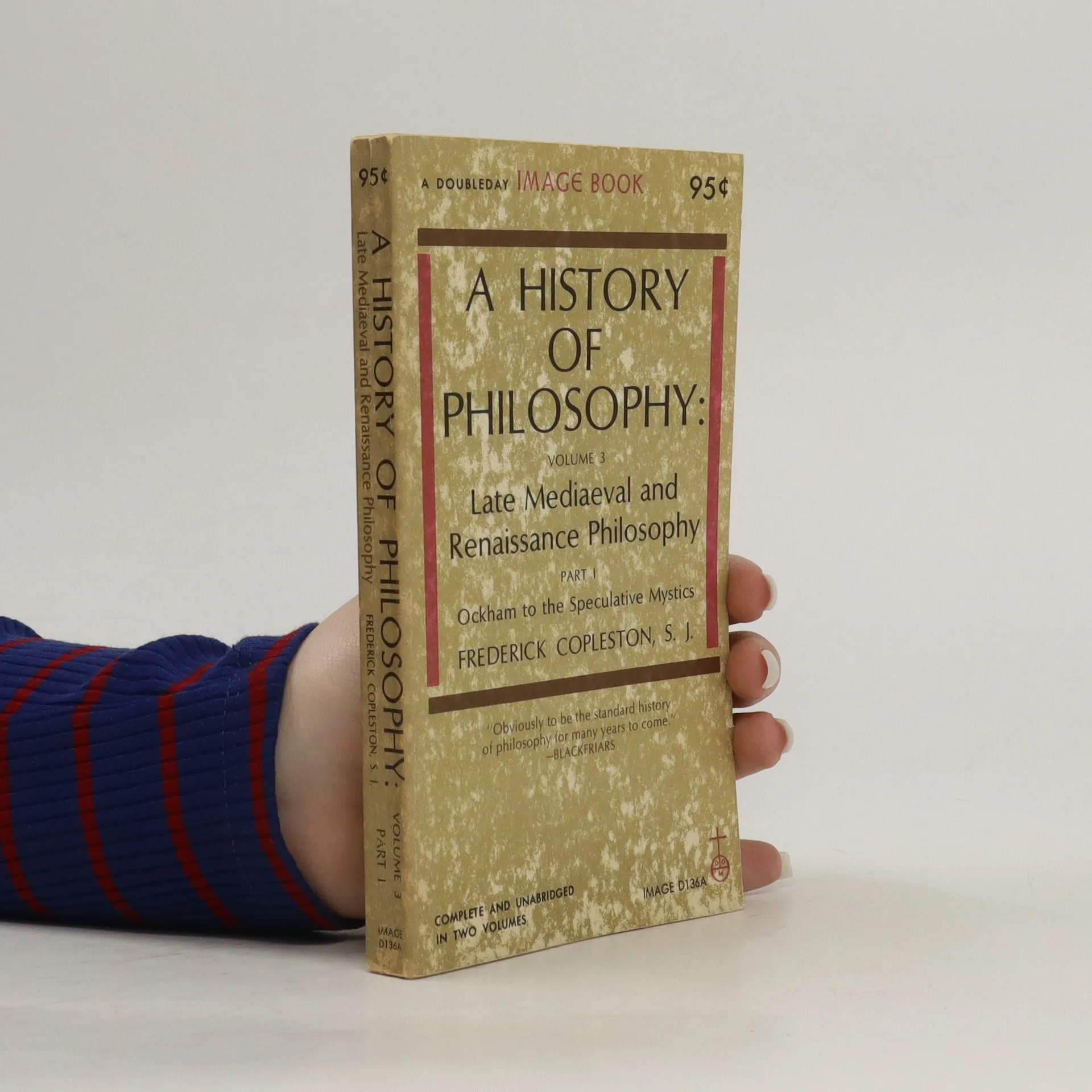
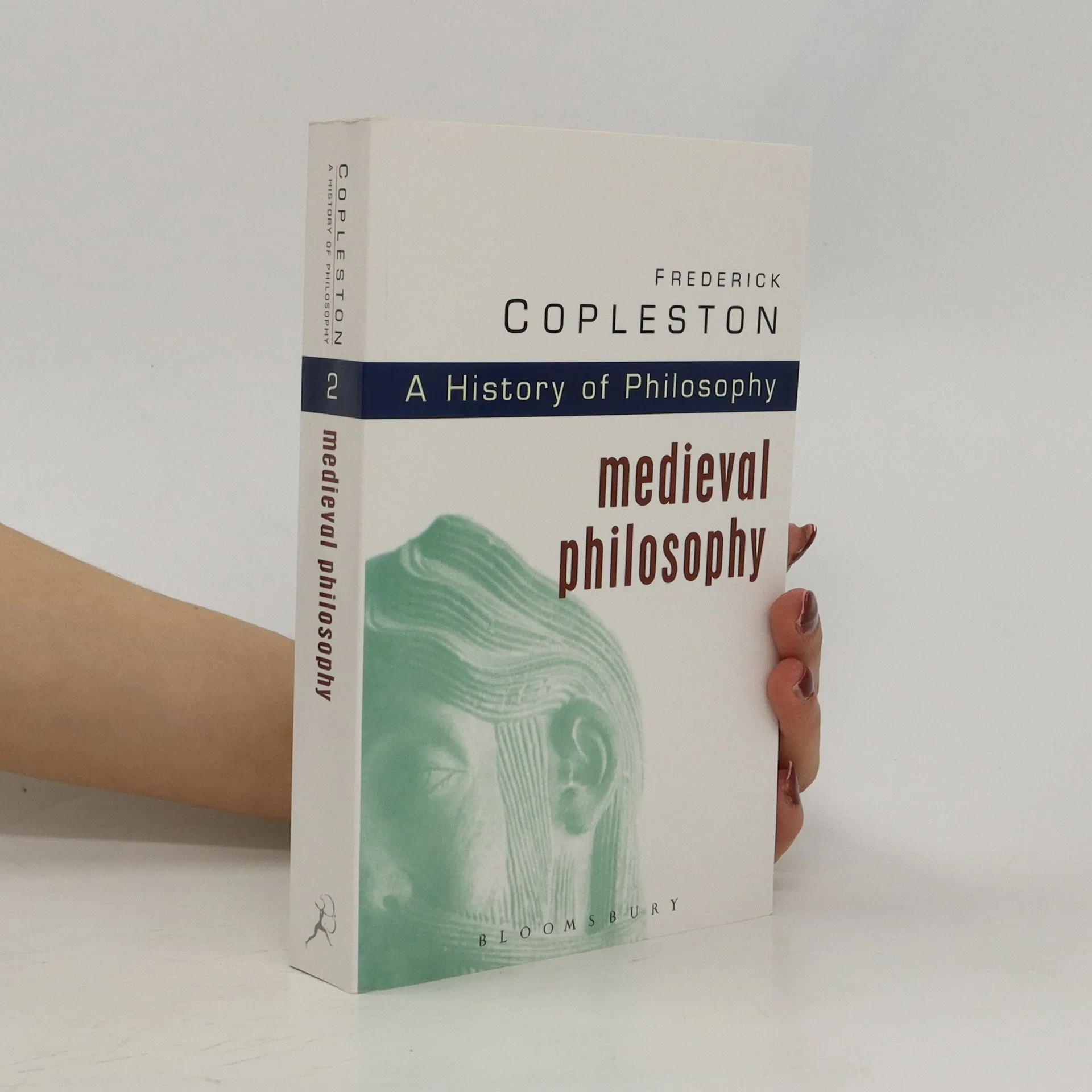

Frederick Copleston was a Jesuit philosopher and historian renowned for his monumental nine-volume "A History of Philosophy." This extensive work aimed to deliver a clear and faithful exposition of philosophical thought from antiquity to the modern era. Copleston's approach is characterized by its precision and fair representation of all authors discussed, making his scholarship an invaluable resource for understanding philosophical traditions. Beyond his magnum opus, he also explored metaphysical themes in his personal writings, though he acknowledged that such deep philosophical inquiries might not always boost sales.
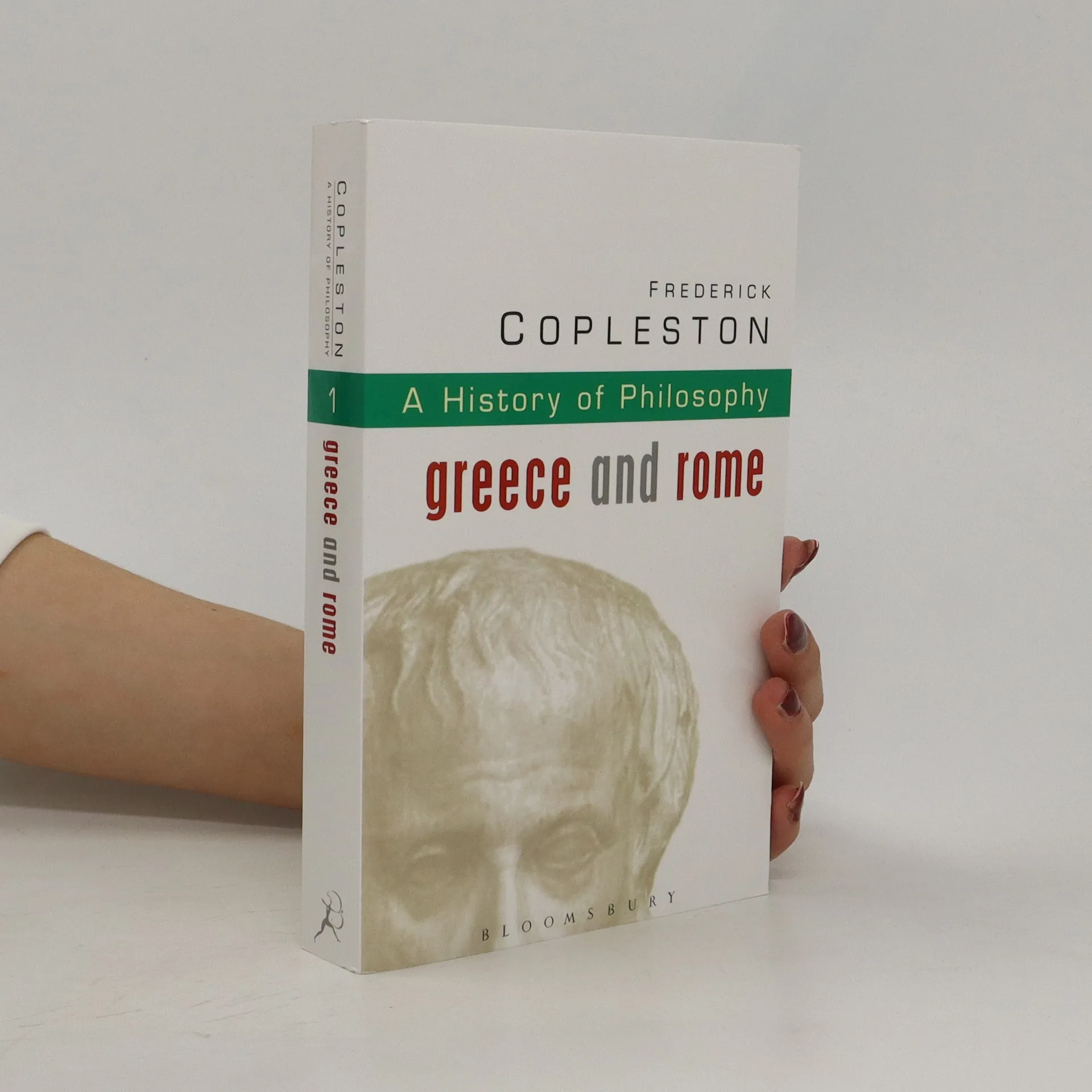
Copleston, an Oxford Jesuit and specialist in the history of philosophy, created his history as an introduction for Catholic ecclesiastical seminaries. The 11-volume series gives an accessible account of each philosopher's work, and explains their relationship to the work of other philosophers.
Copleston, an Oxford Jesuit and specialist in the history of philosophy, first created his history as an introduction for Catholic ecclesiastical seminaries. However, since its first publication (the last volume appearing in the mid-1970s) the series has become the classic account for all philosophy scholars and students. The 11-volume series gives an accessible account of each philosopher's work, but also explains their relationship to the work of other philosophers.
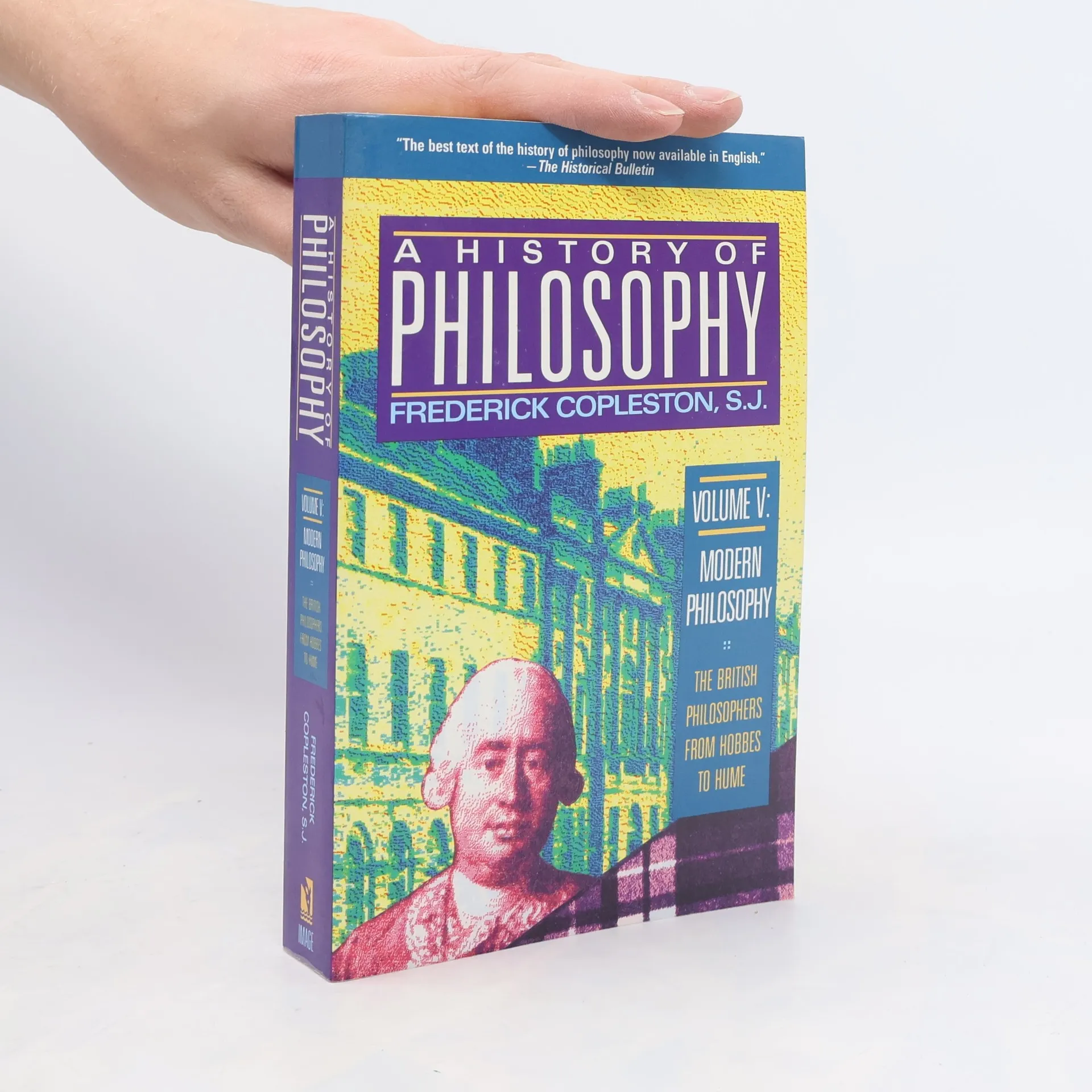
Modern Philosophy, The British Philosophers from Hobbes to Hume
440 pages
16 hours of reading
Conceived originally as a serious presentatin of the development of philosophy for Catholic seminary students, Frederick Copleston's nine-volume A History Of Philosophy has journeyed far beyond the modest purpose of its author to universal acclaim as the best history of philosophy in English. Copleston, an Oxford Jesuit of immense erudition who once tangled with A.J. Ayer in a fabled debate about the existence of God and the possibility of metaphysics, knew that seminary students were fed a woefully inadequate diet of theses and proofs, and that their familiarity with most of history's great thinkers was reduced to simplistic caricatures. Copleston set out to redress the wrong by writing a complete history of Western Philosophy, one crackling with incident an intellectual excitement - and one that gives full place to each thinker, presenting his thought in a beautifully rounded manner and showing his links to those who went before and to those who came after him.
Conceived originally as a serious presentation of the development of philosophy for Catholic seminary students, Frederick Copleston's nine-volume A History Of Philosophy has journeyed far beyond the modest purpose of its author to universal acclaim as the best history of philosophy in English.Copleston, an Oxford Jesuit of immense erudition who once tangled with A.J. Ayer in a fabled debate about the exiatenceof God and the possibility of metaphysics, knew that seminary students were fed a woefully inadequate diet of theses and proofs, and that their familiarity with most of history's great thinkers was reduced to simplistic caricatures. Copelston sets out to redress the wrong by writing a complete history of Western philosophy, one crackling with incident and intellectual excitement - and one that gives full place to each thinker, presenting his thought in a beautifully rounded manner and showing his links to those who went before and to those who came after them.
From the Post-Kantian Idealists to Marx, Kierkegaard, and Nietzsche
512 pages
18 hours of reading
Conceived originally as a serious presentation of the development of philosophy for Catholic seminary students, Frederick Copleston's nine-volume A History Of Philosophy has journeyed far beyond the modest purpose of its author to universal acclaim as the best history of philosophy in English.Copleston, an Oxford Jesuit of immense erudition who once tangled with A. J. Ayer in a fabled debate about the existence of God and the possibility of metaphysics, knew that seminary students were fed a woefully inadequate diet of theses and proofs, and that their familiarity with most of history's great thinkers was reduced to simplistic caricatures. Copleston set out to redress the wrong by writing a complete history of Western philosophy, one crackling with incident and intellectual excitement -- and one that gives full place to each thinker, presenting his thought in a beautifully rounded manner and showing his links to those who went before and to those who came after him.The result of Copleston's prodigious labors is a history of philosophy that is unlikely ever to be surpassed. Thought magazine summed up the general agreement among scholars and students alike when it reviewed Copleston's A History of Philosophy as "broad-minded and objective, comprehensive and scholarly, unified and well proportioned... We cannot recommend [it] too highly."
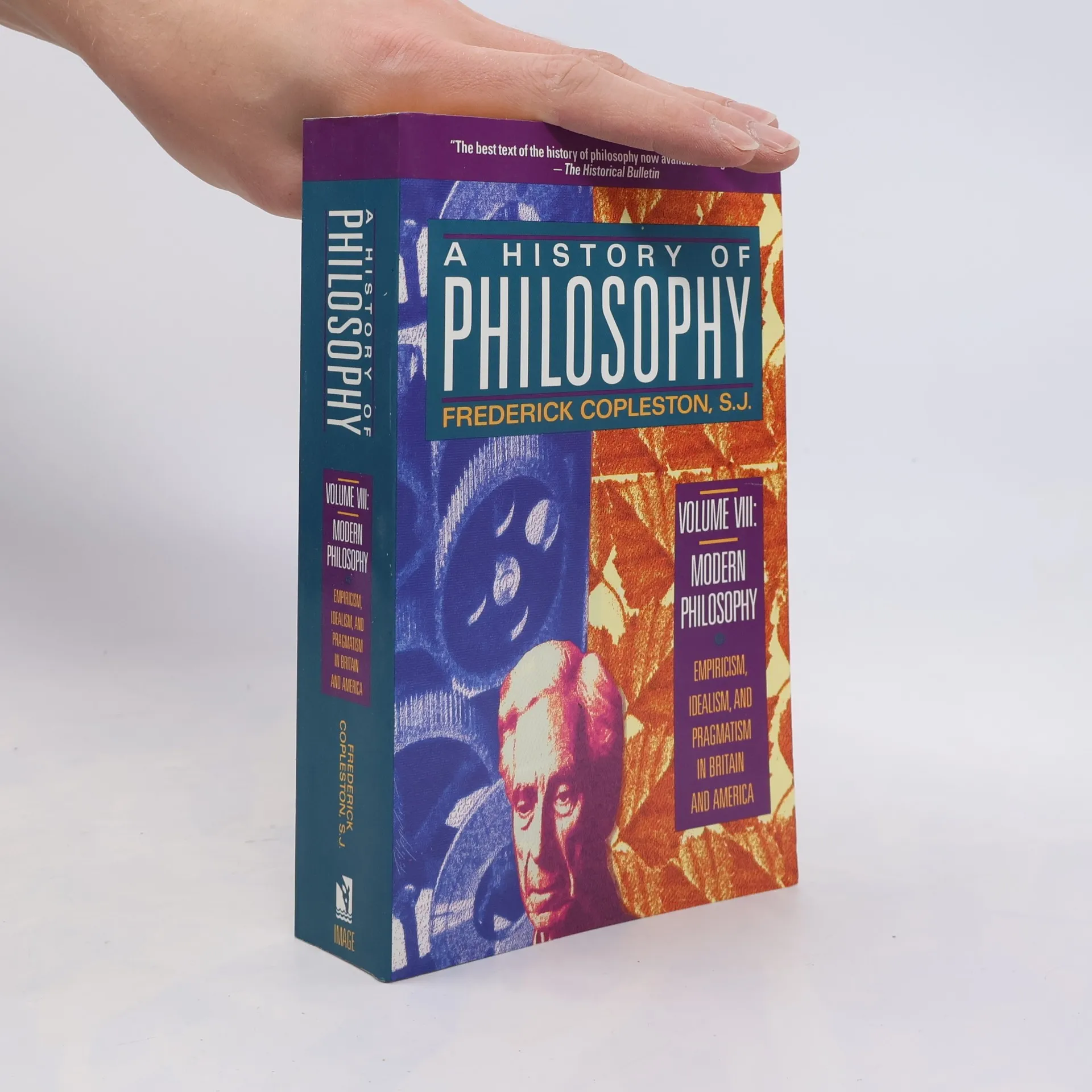
Modern Philosophy, Empiricism, Idealism, and Pragmatism in Britain and America
592 pages
21 hours of reading
Conceived originally as a serious presentation of the development of philosophy for Catholic seminary students, Frederick Copleston's nine-volume A History Of Philosophy has journeyed far beyond the modest purpose of its author to universal acclaim as the best history of philosophy in English.Copleston, an Oxford Jesuit of immense erudition who once tangled with A. J. Ayer in a fabled debate about the existence of God and the possibility of metaphysics, knew that seminary students were fed a woefully inadequate diet of theses and proofs, and that their familiarity with most of history's great thinkers was reduced to simplistic caricatures. Copleston set out to redress the wrong by writing a complete history of Western philosophy, one crackling with incident and intellectual excitement -- and one that gives full place to each thinker, presenting his thought in a beautifully rounded manner and showing his links to those who went before and to those who came after him.The result of Copleston's prodigious labors is a history of philosophy that is unlikely ever to be surpassed. Thought magazine summed up the general agreement among scholars and students alike when it reviewed Copleston's A History of Philosophy as "broad-minded and objective, comprehensive and scholarly, unified and well proportioned... We cannot recommend [it] too highly."
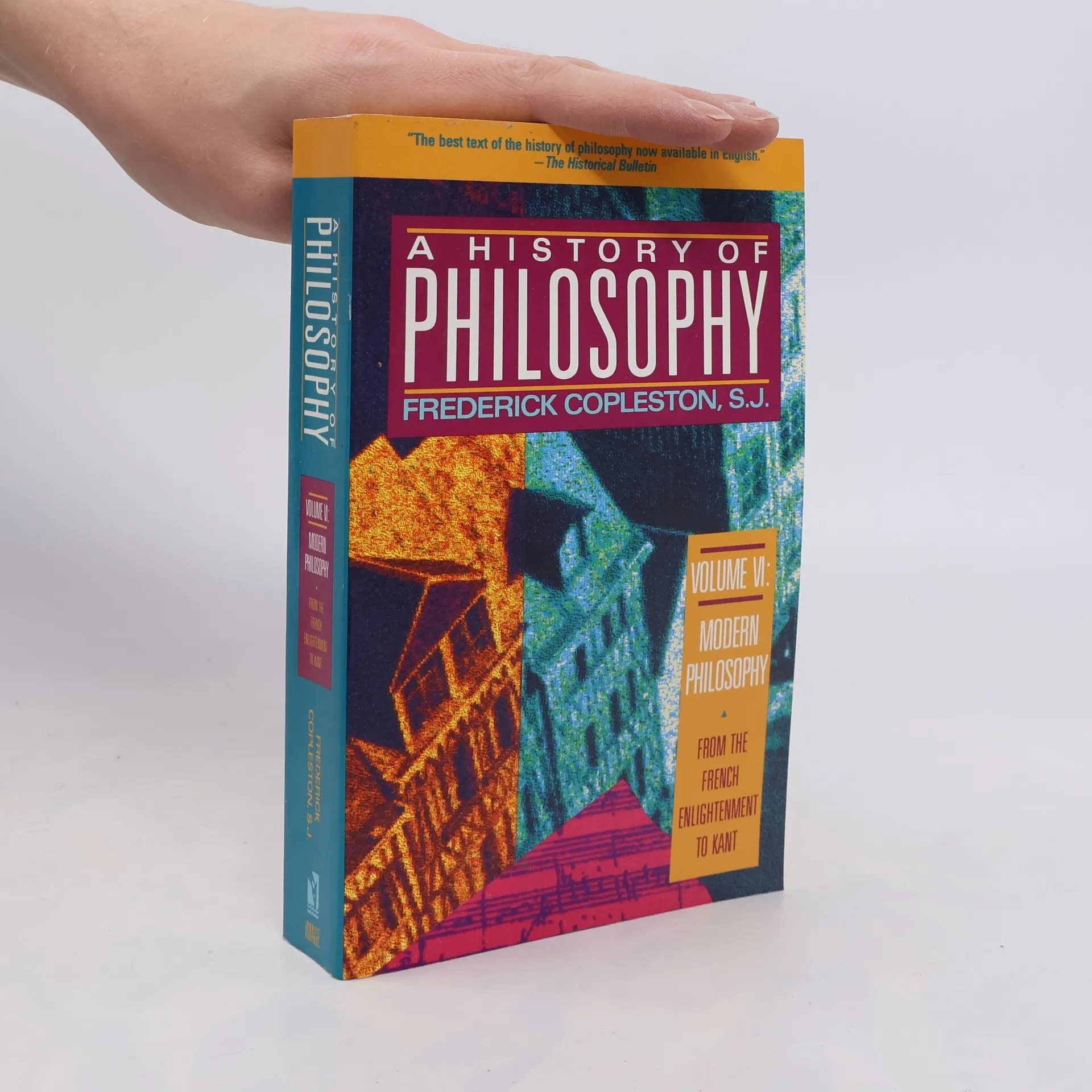
Modern Philosophy, from the French Revolution to Sartre, Camus, and Levi-Strauss
496 pages
18 hours of reading
Conceived originally as a serious presentation of the development of philosophy for Catholic seminary students, Frederick Copleston's nine-volume A History Of Philosophy has journeyed far beyond the modest purpose of its author to universal acclaim as the best history of philosophy in English.Copleston, an Oxford Jesuit of immense erudition who once tangled with A. J. Ayer in a fabled debate about the existence of God and the possibility of metaphysics, knew that seminary students were fed a woefully inadequate diet of theses and proofs, and that their familiarity with most of history's great thinkers was reduced to simplistic caricatures. Copleston set out to redress the wrong by writing a complete history of Western philosophy, one crackling with incident and intellectual excitement -- and one that gives full place to each thinker, presenting his thought in a beautifully rounded manner and showing his links to those who went before and to those who came after him.The result of Copleston's prodigious labors is a history of philosophy that is unlikely ever to be surpassed. Thought magazine summed up the general agreement among scholars and students alike when it reviewed Copleston's A History of Philosophy as "broad-minded and objective, comprehensive and scholarly, unified and well proportioned... We cannot recommend [it] too highly."
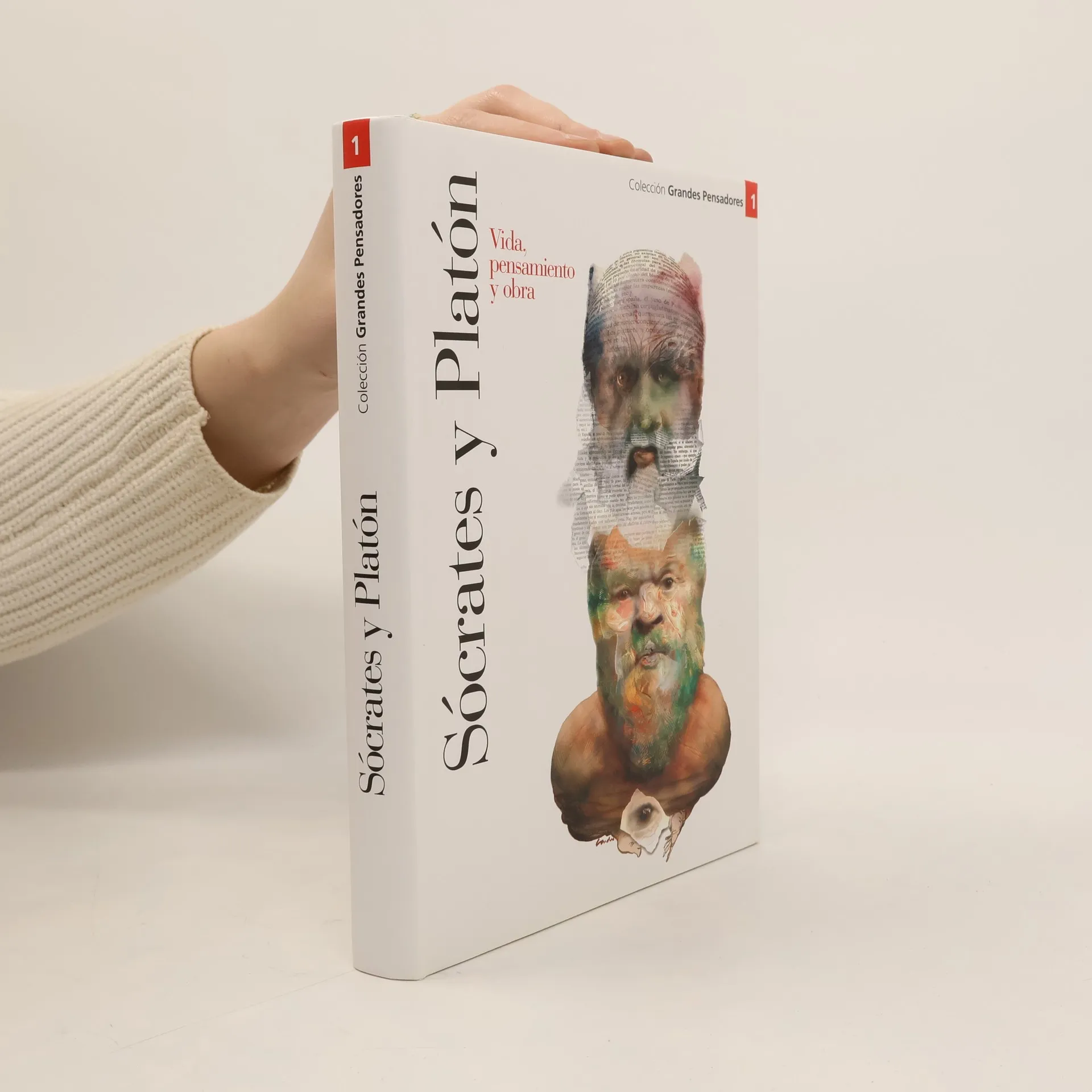
O presente volume revela o contributo de dois filósofos fundamentais do pensamento ocidental, Sócrates e Platão, que assimilaram saberes das correntes orientais e da Grécia arcaica. Eles mantiveram um diálogo que aborda questões centrais da cultura, como o destino humano, o tempo e o cosmos. A valorização da realidade, apresentada como um estágio moral, é um tema central, onde a sociedade encontra seus fundamentos. A pequena comunidade, a cidade e o Estado são objetos de especulação nos escritos platónicos, assim como a argumentação sobre a alma e o corpo, conceitos que, ao longo dos séculos, geraram uma cisão marcante no pensamento ocidental. A atualidade do pensamento de Sócrates e Platão é evidenciada pela influência de pensadores como Leo Strauss, cuja releitura dos clássicos impactou os neoconservadores norte-americanos que inspiraram a administração de George Bush. Este volume da coleção "Grandes Pensadores" apresenta a vida, obra e pensamento de Sócrates e Platão separadamente. Na parte "Escritos", são reproduzidos excertos dos diálogos de Platão, incluindo "O Banquete", "República" e "Leis", que ilustram aspectos fundamentais do pensamento deste filósofo ateniense imprescindível.
Druhý díl jedenáctisvazkových Dějin filosofie jezuity Frederica Coplestona zahrnuje dobu od Augustina k Dunsi Scotovi. Jde tudíž o dobu od vrcholné patristiky až k vrcholnému středověku. Uznávaná autorita v oboru dějin filosofie, dlouholetý vyučující v Římě a hostující profesor na jiných univerzitách (USA, Německo aj.) se ve vědeckém světě skvěle osvědčil. Jeho text vždy zohledňuje jak vlastní životopis pojednávaného filosofa, tak i analýzu díla a odkazu.
Rozsáhlý mnohaletý redakční počin zamýšlí v českém prostředí zpřístupnit zásadní dílo nadčasového rázu. Jezuita Frederick Charles Copleston v sobě nezapře kus anglické kultury: harmonické vtipné slovo, odpovídající dlouhodobé praxi vyučujícího na světových univerzitách. Početné recenze, i napříč rozličnými filosofickými východisky, hovoří o „poctivém metafyzikovi, s otevřenou vnímavostí vůči všemu, co přichází jako podnětné“.
Třetí díl jedenáctisvazkových Dějin filosofie jezuity Frederica Coplestona zahrnuje dobu od Ockhama k Suárezovi. Jde tudíž o dobu od vrcholného středověku po raný novověk. Uznávaná autorita v oboru dějin filosofie, dlouholetý vyučující v Římě a hostující profesor na jiných univerzitách (USA, Německo aj.) se ve vědeckém světě skvěle osvědčil. Jeho text vždy zohledňuje jak vlastní životopis pojednávaného filosofa, tak i analýzu díla a odkazu.
Čtvrtý díl jedenáctisvazkových Dějin filosofie jezuity Frederica Coplestona s podtitulem Od Descarta k Leibnizovi se zabývá racionálními systémy filosofie v kontinentální Evropě v období před Kantem. Autor, dlouholetý vyučující v Římě a hostující profesor na jiných univerzitách (USA, Německo aj.), se těší ve vědeckém světě mimořádné oblibě. Jeho text zohledňuje jak vlastní životopis pojednávaného filosofa, tak i analýzu díla a odkazu.
Pátý díl jedenáctisvazkových Dějin filosofie jezuity Frederica Coplestona s podtitulem Od Hobbese k Humovi se zabývá britskými empirickými systémy filosofie v období před Kantem. Autor, dlouholetý vyučující v Římě a hostující profesor na jiných univerzitách (USA, Německo aj.), se těší ve vědeckém světě mimořádné oblibě. Jeho text zohledňuje jak vlastní životopis pojednávaného filosofa, tak i analýzu díla a odkazu.
Sedmý díl jedenáctisvazkových Dějin filosofie jezuity Fredericka Coplestona s podtitulem Od Fichteho k Nietzschemu se zabývá německou filosofií devatenáctého století.
Šestý díl jedenáctisvazkových Dějin filosofie jezuity Frederica Coplestona s podtitulem Od Wolffa ke Kantovi se zabývá francouzským a německým osvícenstvím, vznikem filosofie dějin a Kantovým systémem. Autor, dlouholetý vyučující v Římě a hostující profesor na jiných univerzitách (USA, Německo aj.), se těší ve vědeckém světě mimořádné oblibě. Jeho text zohledňuje jak vlastní životopis pojednávaného filosofa, tak i analýzu díla a odkazu.