



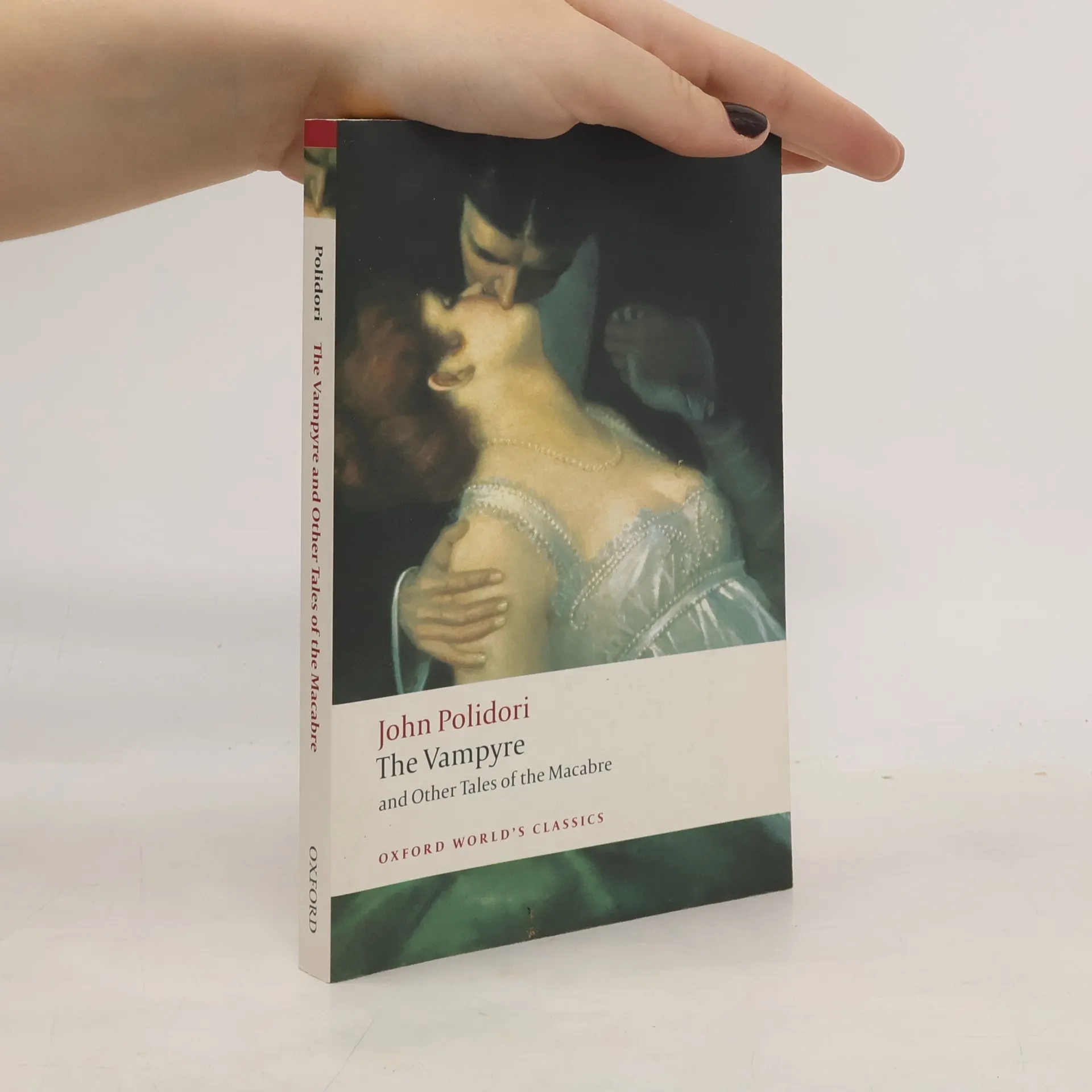
The Vampyre
- 30 pages
- 2 hours of reading
John William Polidori, a physician and writer associated with the Romantic movement, is credited as the progenitor of the vampire genre. His tale, "The Vampyre," first introduced the aristocratic vampire who preys within high society to English literature. Rather than drawing from folklore, Polidori based his character on Lord Byron, thereby establishing the archetype of the modern vampire. This seminal work, published without his consent, laid the groundwork for countless subsequent narratives in both literature and film.


`The Vampyre' was first published in 1819 in the London New Monthly Magazine. The present volume - a companion to Tales of Terror from Blackwood's Magazine in World's Classics - selects thirteen other tales of the macabre first published in the leading London and Dublin magazines between 1819 and 1838. It includes Edward Bulwer's chilling account of the doppelganger, Letitia Landon's elegant reworking of the Gothic romance, William Carleton's terrifying description of an actual lynching, and James Hogg's ghoulish exploitation of the cholera epidemic of 1831-2.
The original story of Sweeney Todd, 'The Demon Barber of Fleet Street'.
In 1816, John William Polidori travelled to Geneva as Lord Byron’s personal physician. There they met Mary Godwin (later Shelley) and her lover Percy Shelley and decided to while away a wet summer by writing ghost stories. The only two to complete their stories were Mary Shelley, who published Frankenstein in 1818, and Polidori, whose The Vampyre and Ernestus Berchtold were both published in 1819. The Vampyre, based on a discarded idea of Byron’s, is the first portrayal of the alluring vampire figure familiar to readers of Bram Stoker and Anne Rice. Ernestus Berchtold scandalously draws on the rumours of Byron’s affair with his half-sister for a Faustian updating of the myth of Oedipus, which it combines with an account of the struggle of Swiss patriots against the Napoleonic invasion. Along with Polidori’s work, this edition also includes stories read and written by the travellers in the Genevan summer of 1816 and contemporary responses to The Vampyre and Ernestus Berchtold.
John William Polidori, Lord Byron's physician in 1816, is portrayed as a complex figure in literary history, often criticized for his arrogance and sensitivity in the company of Byron and Shelley. The editor, Polidori's nephew, acknowledges these shortcomings, suggesting that while some criticisms are valid, they fail to capture the full depth of his character. The diary offers insights into Polidori's life, revealing his struggles with self-perception and social dynamics among the prominent literary figures of his time.