
Explore the latest books of this year!
Bookbot

Susan Haack

    Susan Haack is a distinguished philosopher renowned for her incisive investigations into epistemology and logic. Her key contribution, the concept of 'foundherentism,' offers an innovative attempt to overcome the limitations of traditional theories of knowledge. Haack rigorously critiques perspectives that advocate for a feminine approach to scientific truth, championing an objective stance in philosophical inquiry. Her essays are characterized by clarity, precision, and an uncompromising intellectual rigor.

    Deviant Logic, Fuzzy Logic
    Evidence Matters
    • 2015

      Evidence Matters

      • 446 pages
      • 16 hours of reading

      The book features a comprehensive table of contents, outlining the structure and key topics covered within the text. It serves as a guide to navigate through various chapters, each focusing on distinct themes or subjects, providing readers with a clear overview of the content and organization of the material. This structured approach enhances the reader's understanding and engagement with the book.

      Evidence Matters
    • 1996

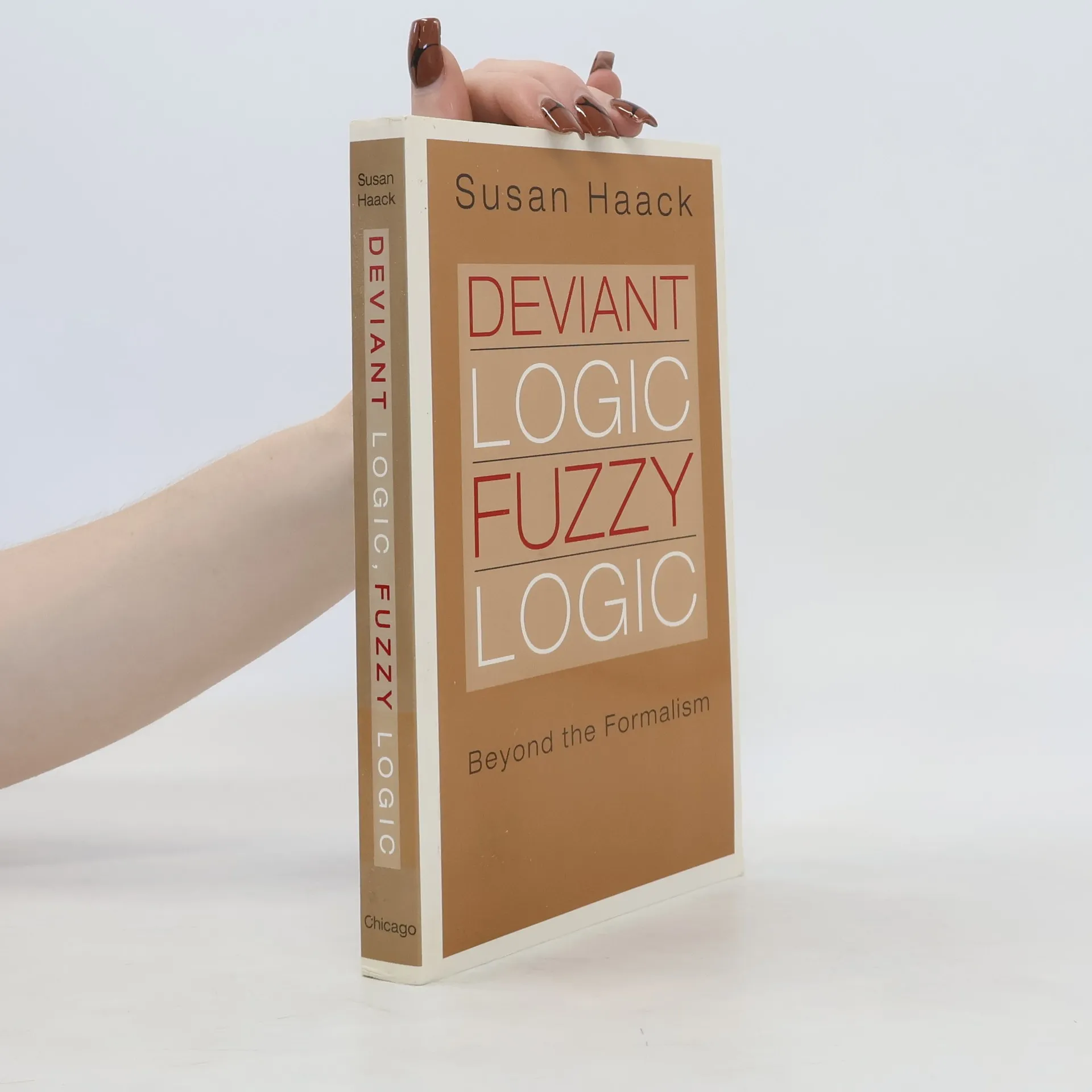
      Initially proposed as rivals of classical logic, alternative logics have become increasingly important in areas such as computer science and artificial intelligence. Fuzzy logic, in particular, has motivated major technological developments in recent years.Susan Haack's Deviant Logic provided the first extended examination of the philosophical consequences of alternative logics. In this new volume, Haack includes the complete text of Deviant Logic , as well as five additional papers that expand and update it. Two of these essays critique fuzzy logic, while three augment Deviant Logic 's treatment of deduction and logical truth. Haack also provides an extensive new foreword, brief introductions to the new essays, and an updated bibliography of recent work in these areas.Deviant Logic, Fuzzy Logic will be indispensable to students of philosophy, philosophy of science, linguistics, mathematics, and computer science, and will also prove invaluable to experienced scholars working in these fields.

      Deviant Logic, Fuzzy Logic