

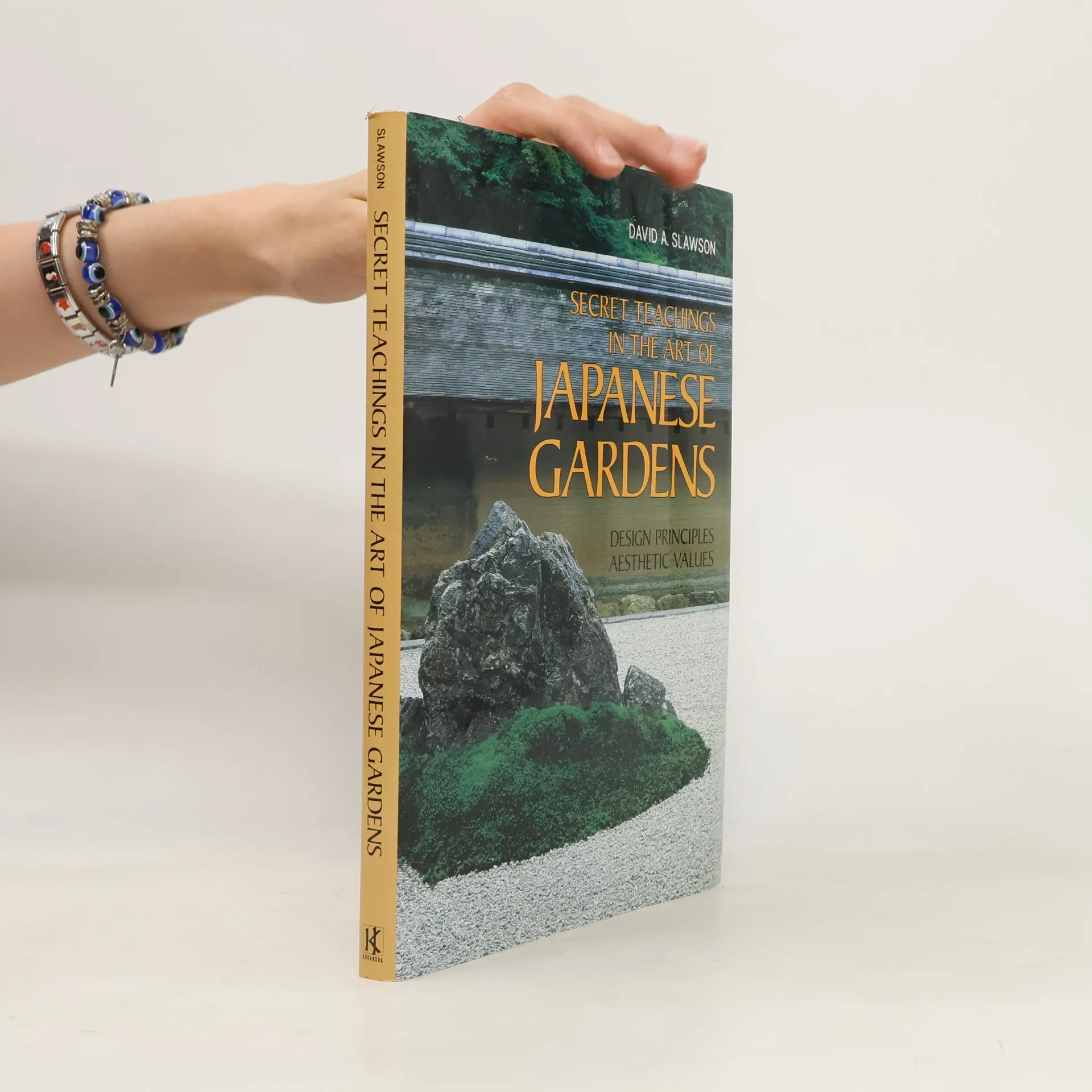
Secret Teachings in the Art of Japanese Gardens
Design Principles, Aesthetic Values
- 220 pages
- 8 hours of reading
This work presents an approach to practical, hands-on gardening and is also a study of Japanese aesthetic. The art of the Japanese garden is a 1,500-year-old landscape design tradition that is still evolving, still instructive. Secret Teachings in the Art of Japanese Gardens explains the fundamental principles of this tradition and describes how those principles may be applied to a much wider range of environments than exists in Japan. In the first section the author draws on his own experience as an apprentice to a master gardener in Kyoto, as well as his considerable