This field-defining volume of queer anthropology foregrounds both the brilliance of anthropological approaches to queer and trans life and the ways queer critique can reorient and transform anthropology.
This revised and updated edition of The Mexico Reader provides an expansive
and comprehensive guide to the many varied histories and cultures of Mexico,
from pre-Columbian times to the twenty-first century.
The contributors to this volume examine the artistic practice of Consuelo
Jimenez Underwood, whose innovative art and urgent engagement with a range of
pressing contemporary issues mark her as one of the most vital artists of our
time.
The contributors to Animalia analyze twenty-six animals-from yaks and vultures
to whales and platypuses-that played central roles in the history of British
imperial control.
The contributors to Biopolitics, Geopolitics, Life investigate biopolitics and
geopolitics as two distinct yet entangled techniques of settler colonial
states across the globe, contending that Indigenous life and practices cannot
be contained and defined by the racialization and dispossession of settler
colonialism.
The contributors to The Social Sciences in the Looking Glass outline the
present transformations of the social sciences, explore their connections with
critical humanities, analyze the challenges of alternate paradigms, and
interrogate recent endeavors to move beyond the human.
Contributors to Gaza on Screen, including scholars and Gazan filmmakers,
explore the practice, production, and impact of film and videos from and about
the Gaza Strip.
The contributors to Viapolitics center the vehicle, its infrastructures, and
the environments it navigates in the study of migration and borders across a
range of sites, from ships crossing the Pacific and deportation train cars in
the United States to treacherous Alpine mountain passes.
Coming from the worlds of cultural anthropology, geography, philosophy,
science fiction, poetry, and fine art, the contributors to this volume
consider the possibility for multispecies justice and speculate on the forms
it would take.
The contributors to Gramsci in the World examine the varying receptions and
uses of Antonio Gramsci's thought in diverse geographical, historical, and
political contexts, highlighting its possibilities and limits for
understanding and changing the social world.
The contributors to Left of Queer offer a detailed examination of queerness and its nearly three-decade academic institutionalization. They interrogate contemporary material conditions that create socially and politically acceptable queer subjects and identities; trace the development of queer studies as a brand of US area studies predicated on American culture and exceptionalism; and bring together queer theory and Marxism to reject claims that the two fields are incompatible. In examining these themes, the contributors explore how emergent debates in three key areas--debility, indigeneity, and trans--connect queer studies to a host of urgent sociopolitical issues. Taking a position that is politically left of the current academic and political mainstreaming of queerness, the essays in this issue examine what is left of queer--what remains outside of the political, economic, and cultural mandates of the state and the liberal individual as its prized subject. Contributors. Neel Ahuja, Aren Z. Aizura, Paul Amar, Toby Beauchamp, Marquis Bey, Jodi A. Byrd, Christina Crosby, Aniruddha Dutta, Treva Ellison, Fatima El-Tayeb, David L. Eng, Jules Gill-Peterson, Cristina B. Hanhardt, Kwame Holmes, Janet R. Jakobsen, Eng-Beng Lim, Petrus Liu, Tavia Nyong'o, Jasbir K. Puar, Sherene Seikaly, Eliza Steinbock
Contributors to this special issue of Radical History Review study histories of fascism and antifascism after 1945 to show how fascist ideology continues to circulate and be opposed transnationally despite its supposed death at the end of World War II. The essays cover the use of fascism in the 1970s construction of the Latinx Left, the connection of antifascism and anti-imperialism in 1960s Italian Communist internationalism, post-dictatorship Argentina and the transhistorical alliance between Las Madres and travestí activism, cultures of antifascism in contemporary Japan, and global fascism as portrayed through the British radical right's attempted alliance with Qathafi's Libya. The issue also includes a discussion about teaching fascism through fiction in the age of Trump, a reflection on the practices of archiving and displaying antifascist objects to various publics, and reviews of recent works on antifascism, punk music, and the Rock Against Racism movement. Contributors. Benjamin Bland, Mark Bray, Rosa Hamilton, Jessica Namakkal, Giulia Riccò, Cole Rizki, Eric Roubinek, Antonino Scalia, Stuart Schrader, Vivian Shaw, Michael Staudenmaier
The contributors to Pakistan Desires offer a multidisciplinary view on figures
and forms of queerness in Pakistan, inviting reflection on queer's myriad
meanings in Pakistan and explore how desire can serve as a mode of queer
future-making.
In thirteen sharp essays, the contributors to Decay attend to the processes
and experiences of symbolic and material forms of decay in a variety of
sociopolitical contexts across the globe.
The contributors to Visualizing Fascism examine the imagery and visual
rhetoric of interwar fascism in East Asia, southern Africa, and Europe to
explore how fascism was visualized as a global and aesthetic phenomenon.
The contributors to Beyond Man reckon with the colonial and racial
implications of the philosophy of religion's history by staging a conversation
between it and Black, Indigenous, and decolonial studies.
A concise, easy-to-understand reference book, the revised and updated second
edition of the bestselling All about Your Eyes tells you what you need to know
to care for your eyes, various eye diseases and treatments, and what to expect
from your eye doctor.
Weaving U.S. history into the larger fabric of world history, the contributors
to Crossing Empires de-exceptionalize the American empire, placing it in a
global transimperial context as a way to grasp the power relations that shape
imperial formations.
Examining theater, performance art, music, sports, dance, and photography, the
contributors to Race and Performance after Repetition explore how theater and
performance studies account for the complex relationship between race and
time.
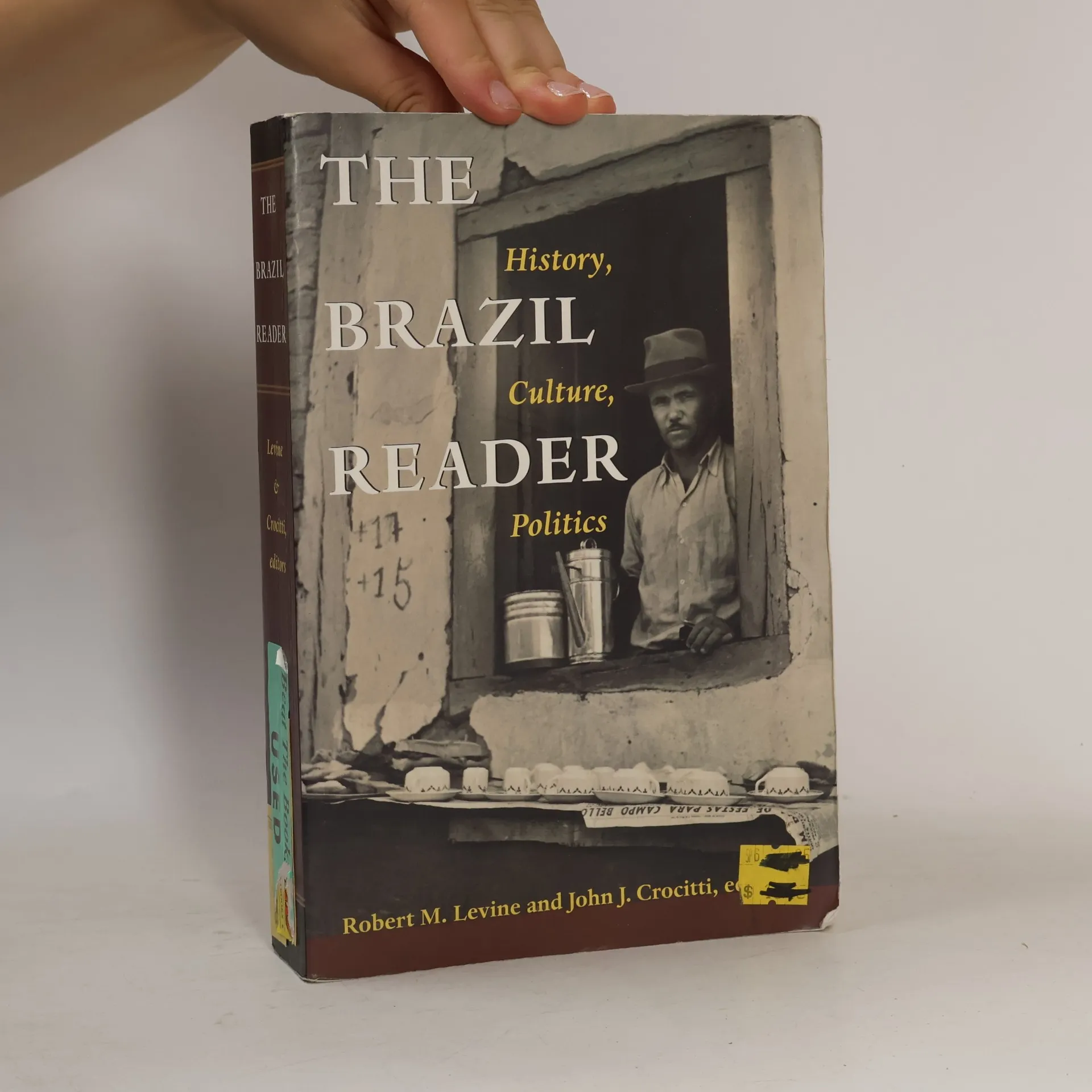
Capturing the scope of this country's rich diversity--with over 100 entries
from a wealth of perspectives--The Brazil Reader offers a fascinating guide to
Brazilian life, culture, and history. 52 photos. Map & illustrations.
The contributors to Crip Genealogies reorient the field of disability studies
by centering the work of transnational feminism, queer of color critique, and
trans scholarship and activism, showing how a white and Western-centric
narrative of disability studies enables ableism and racism.
The contributors to Siting Postcoloniality reevaluate the notion of the
postcolonial by focusing on the Sino-sphere-the region of East and Southeast
Asia that has been significantly shaped by relations with China throughout
history.
Much of the scholarly debate around the “Afropolitan”—the image of mobility, cultural production, and consumerism in Africa and the African diaspora—has focused on the elitism associated with the concept. Most critiques object to how the ideals of transnationalism and mobility inevitably refer to Western models of leisure and style, and Afropolitanism has rarely been contextualized in global African diaspora histories. This volume of written and photographic essays is one of the first sustained historical treatments of the Afropolitan. Contributors analyze the concept in a variety of itinerant artisans in fourteenth-century southern Africa, sixteenth-century African diaspora communities in Latin America, West African kingdoms and port cities in the waning decades of the Atlantic slave trade, a hair salon in twenty-first-century Paris, a road trip through Bangladesh. By engaging with the Afropolitan as a historical phenomenon, the authors highlight new methods and theories for analyzing global diasporas.Contributors. Paulina L. Alberto, Antonia Carcelén-Estrada, Rosa Carrasquillo, Elizabeth Fretwell, Dawn Fulton, Mathangi Krishnamurthy, Patrícia Martins Marcos, Ndubueze Mbah, Héctor Mediavilla, Emeka Okereke, Melina Pappademos, Aniova Prandy, David Schoenbrun, Lorelle Semley
The Cunning of Gender Violence focuses on how a once visionary feminist
project to combat gender-based violence and violence against women has folded
itself into contemporary world affairs in ways that that harm the very people
it seeks to protect.
When the Smoke Cleared contains poetry written by incarcerated poets in Attica
Prison and journal entries and poetry by Celes Tisdale, who led poetry
workshops following the uprising there in 1971. číst celé
The contributors to Grammars of the Urban Ground develop a new conceptual
framework and vocabulary for capturing the complex, ever-shifting, and
interactive processes that shape contemporary cities.
This special issue advances transnational feminist approaches to the globally proliferating phenomenon of anti-Muslim racism. The contributors trace the global circuits and formations of power through which anti-Muslim racism travels, operates, and shapes local contexts. The essays center attention on and explore the gendered, sexualized, and racialized forms of anti-Muslim oppression and resistance in modern social theory, law, protest cultures, social media, art, and everyday life in the United States and transnationally. The contributors illuminate the complex nature of global anti-Muslim racism through various topics including Islamophobia in the context of race, gender, and religion; hate crimes; the sexualization of Islam in social media; queer Muslim futurism; the connection between secularism and feminism in Pakistan; the racialization of Muslims in the early Cold War period; and anti-Muslim racism in Russia. The essays together provide a complex picture of the multifaceted nature of the worldwide spread of anti-Muslim racism. Contributors. Evelyn Alsultany, Natasha Bakht, Zulfikar Ali Bhutto, Taneem Husain, Amina Jamal, Amina Jarmakani, Zeynep K. Korkman, Minoo Moellem, Nadine Naber, Tatiana Rabinovich, Sherene H. Razack, Tom Joseph Abi Samra, Elora Shehabuddin, Saiba Varma
The special issue of Pedagogy brings together scholars interested in instructing students about misinformation, disinformation, and the role of bias in reading and writing in this era of rapidly circulating fake news. Contributors examine the current information landscape, across both digital and traditional platforms, in order to assist students in developing critical literacy skills. Topics include how to recognize misinformation and disinformation; contemporary concerns about race and matters of identity; collaborative critical literacy practices among writing faculty and librarians; and more. Useful for both undergraduate and graduate instruction, this issue demonstrates the important role of critical literacy in disrupting the power of fake news. ContributorsNicholas N. Behm, Noel Holton Brathwaite, Ellen C. Carillo, Irene Clark, Peg Cook, Doug Downs, Joanne Baird Giordano, Mara Lee Grayson, Holly Hassel, Alice S. Horning, Nusrat Jahan, Anna Maria Johnson, Tina S. Kazan, Christine Kervina, Kelly King-O’Brien, Timothy Oleksiak, Michelle Sprouse, Mary Traester
With historically underrepresented communities experiencing higher rates of COVID-19 infection and mortality, the pandemic has thrown into stark relief the severe inequities in US health care. In this special issue, a multidisciplinary group of contributors presents empirical evidence for how the pandemic has had a disproportionately negative impact on people of color, incarcerated people, and people with disabilities. These articles show how the pandemic response has been both wholly inadequate for the magnitude of the problem and, in certain policy arenas, has exacerbated existing inequities. Topics include changes in the treatment of disabilities under crisis standards of care, systemic racism in the federal pandemic health care response, and compounded racialized vulnerability within incarceration facilities. The contributors offer a dynamic and accessible analysis of the impacts of and public attitudes about the varieties of inequity in the COVID-19 pandemic. Contributors. Zackary Berger, Andrea Louise Campbell, Katharine Carman, Maria Casoni, Anita Chandra, Matthew Denney, Doron Dorfman, Ramon Garibaldo Valdez, Sarah E. Gollust, Colleen Grogan, Michael Gusmano, Morgan Handley, Yu-An Lin, Julia Lynch, Carolyn Miller, Rebecca Morris, Ari Ne'eman, Christopher Nelson, Sara Rosenbaum, Michael Sances, Michael Stein, Jhacova Williams
Contributors to this issue reconfigure concepts of art, culture, and politics through the lens of cosmopolitanism. Focusing on the historical and cultural entanglement of Africa and Europe at the intersection of decolonization and modernity, the contributors emphasize the potential of cosmopolitanism to shape possibilities for coexistence and living with difference among all people. Visual and textual essays address the causes and consequences of migration between Africa and Europe; the classification of artistic practices whose roots are not confined to any particular nation; and mid-twentieth-century debates on decolonization, modernity/modernism, and identity through a cosmopolitan viewpoint. Examining cosmopolitanism through theoretical perspectives as well as visual art practices, contributors to this heavily illustrated issue fill in the gaps in contemporary understandings of cultural and political dynamics between Africa and Europe. Contributors. Hans Belting, Susan Buck-Morss, Jareh Das, Naminata Diabate, Fatima El Tayeb, Salah M. Hassan, Achille Mbembe, Sandy Prita Meier, Chika Okeke-Agulu, Tejumola Olaniyan, Manuela Ribeiro Sanches, Berni Searle, Bahia Shehab, Brett M. Van Hoesen, Selene Wendt, Siegfried Zielinski
Contributors to this issue of Nka complicate the key paradigms that have shaped the theories and cultural productions of the African diaspora by offering a critical and nuanced analysis of global black consciousness. Literary scholars, historians, visual art critics, and diaspora theorists explore the confluence between theories of African diaspora and theories of decolonization. They examine the intersections of visual art, literature, film, and other cultural productions alongside the crosscurrents that shaped the transnational flow of black consciousness. The contributors revisit major black and Pan-African intellectual movements and festivals in the 1960s and 1970s, including the Dakar Festival of World Negro Arts held in Dakar in 1966, the Pan-African Cultural Festival in 1969 in Algiers, and FESTAC 1977 in Lagos, Nigeria. Throughout this issue, the contributors examine both the problem and promise of mobilizing "blackness" as a unifying concept. Contributors: Hisham Aidi, Souleymane Bachir Diagne, Ahmed Bedjaoui, Margo Natalie Crawford, Romi Crawford, Lydie Diakhaté, Manthia Diawara, Amanda Gilvin, Salah M. Hassan, Shannen Hill, Tsitsi Jaji, Barbara Murray, Zita Nunes, Ugochukwu-Smooth C. Nzewi, Richard J. Powell, Holiday Powers, Shana L. Redmond, Penny M. Von Eschen, Dagmawi Woubshet