

This revised philosophy textbook has been updated and enlarged to include new recommendations for further reading and a new conclusion. Discussions of evolution, of sociobiology and of the importance of gender differences are among the features of this final chapter.
Leslie Forster Stevenson Books
December 15, 1943
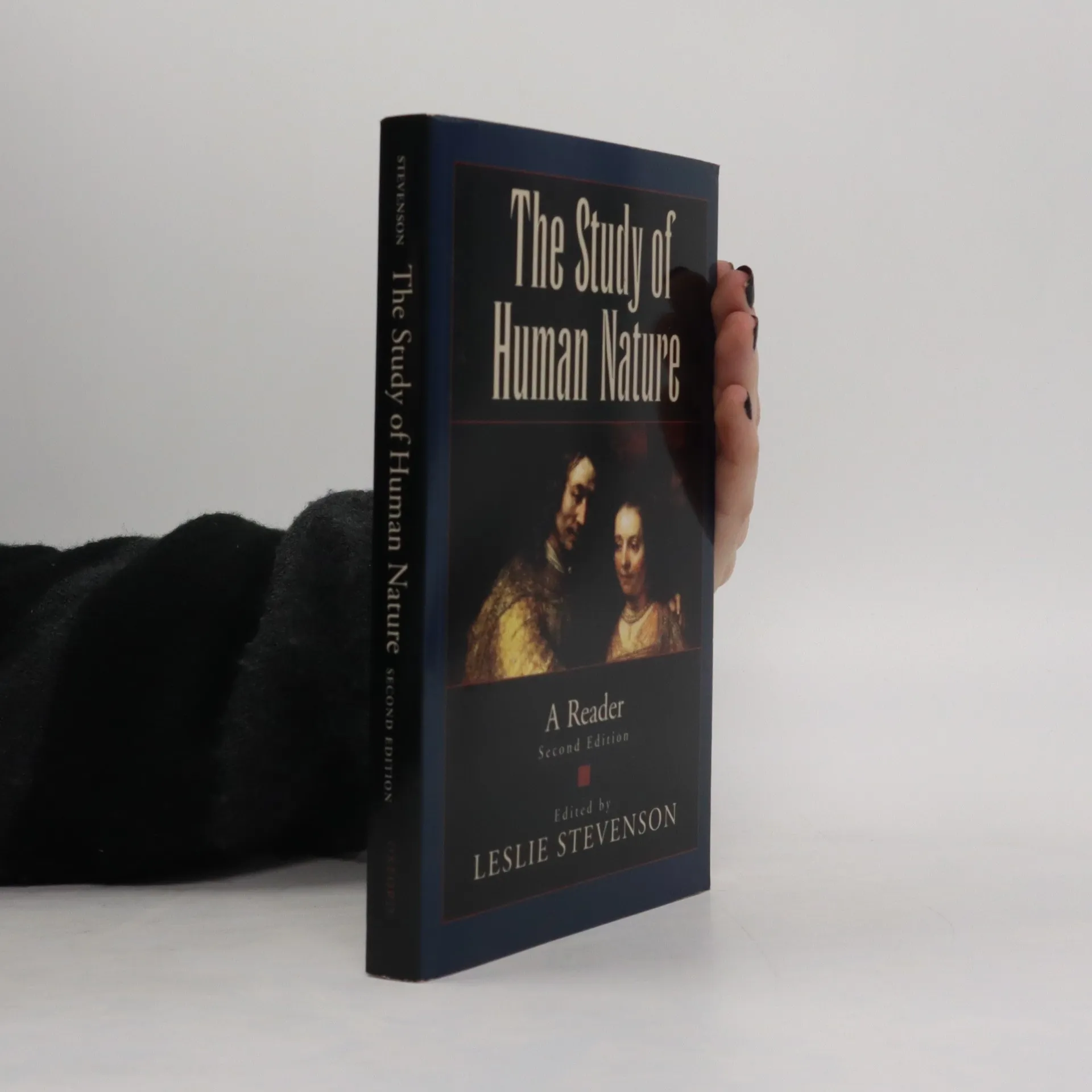
The Study of Human Nature
- 336 pages
- 12 hours of reading
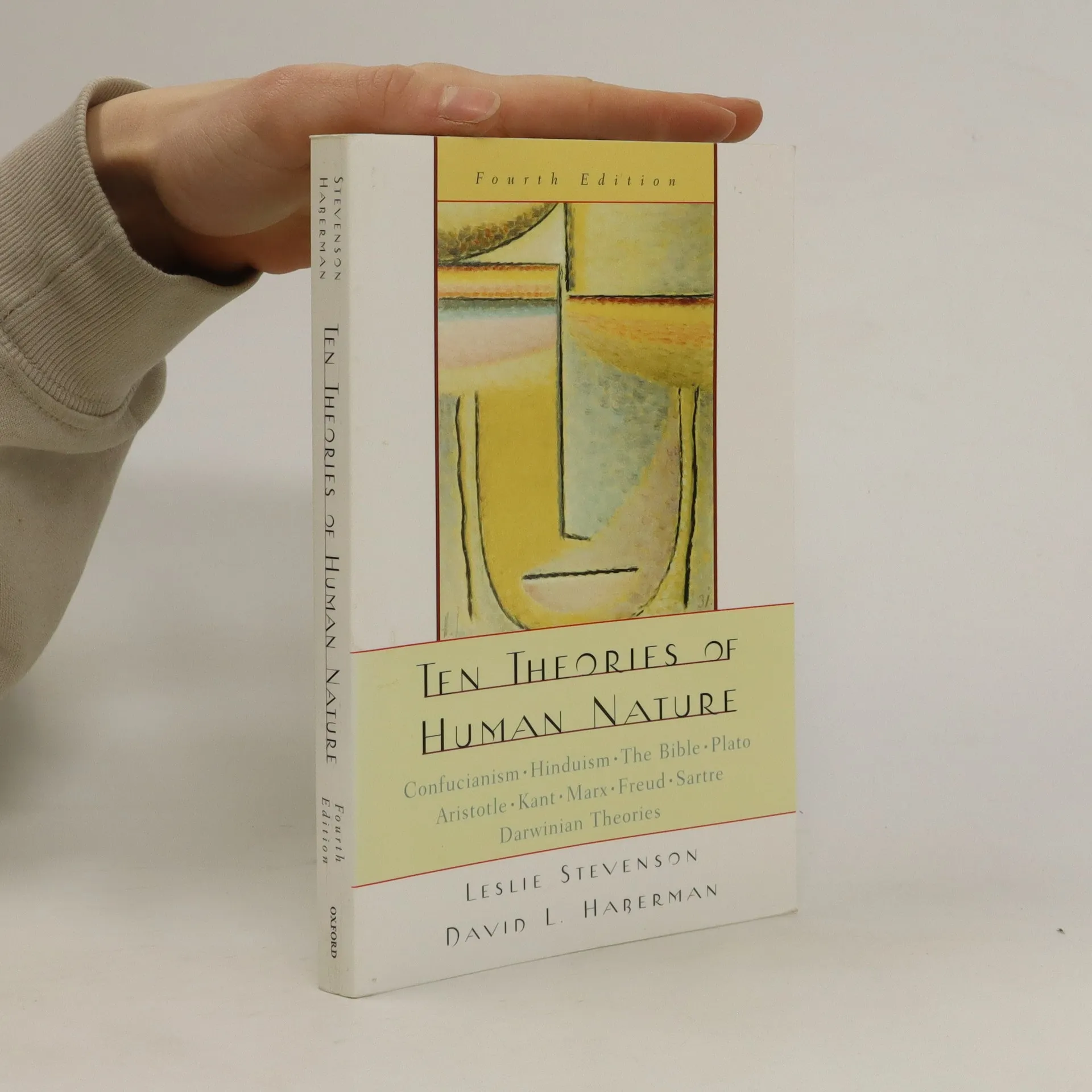
"Now in a new edition, this anthology provides an introduction to a wide variety of views on human nature. Drawing from diverse cultures over three millennia, Leslie Stevenson has chosen selections ranging from ancient religious texts to contemporary theories based on evolutionary science. An ideal companion to the editor's recent book, Ten Theories of Human Nature, 3/e (OUP, 1998), this interdisciplinary reader can also be used independently."--Jacket
"Ten Theories of Human Nature compresses into a small space the essence of such ancient traditions as Confucianism, Hinduism, and the Old and New Testaments as well as the theories of Plato, Immanuel Kant, Karl Marx, Sigmund Freud, and Jean-Paul Sartre. The authors juxtapose the ideas of these and other thinkers and traditions in a way that helps readers understand how humanity has struggled to comprehend its nature. To encourage readers to think critically for themselves and to underscore the similarities and differences between the many theories, the book examines each one on four points - the nature of the universe, the nature of humanity, the diagnosis of the ills of humanity, and the proposed cure for these problems. Ideal for introductory courses in human nature, philosophy, religious studies, and intellectual history, Ten Theories of Human Nature will engage and motivate students and other readers to consider how we can understand and improve both ourselves and human society."--Jacket
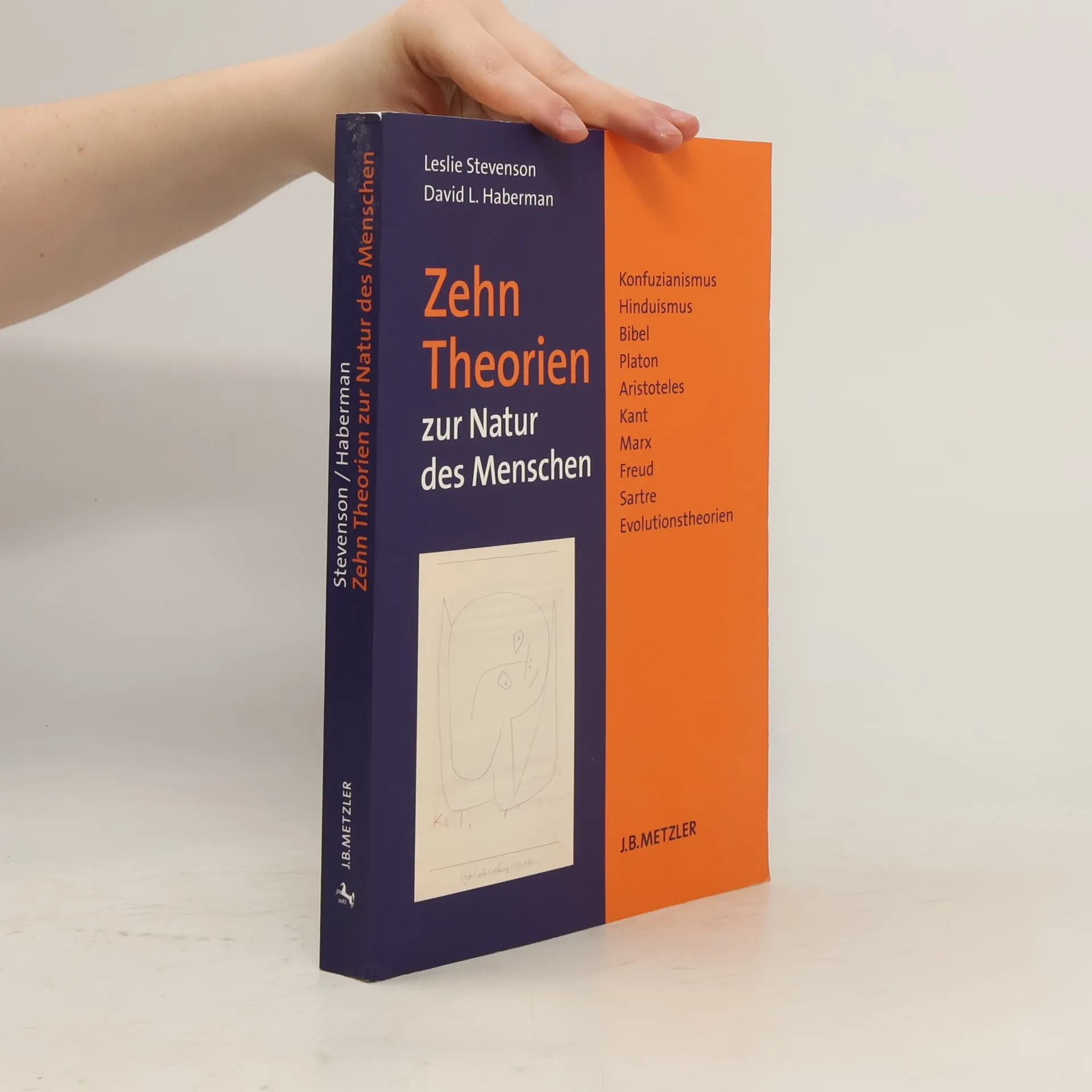
Zehn Theorien zur Natur des Menschen
Konfuzianismus, Hinduismus, Bibel, Platon, Aristoteles, Kant, Marx, Freud, Sartre, Evolutionstheorien
- 296 pages
- 11 hours of reading
Welche Erklärungs- und Handlungsmöglichkeiten für ein glückliches Leben bieten uns die philosophische Vernunft und die religiöse Weltsicht? Zehn Theorien aus Philosophie und Religion führen in die elementaren Fragen unseres Lebens ein. Anschaulich präsentiert der Band zentrale Ideen der großen u. a. Platon, Aristoteles, Kant, Marx, Freud und Sartre. Zudem werden Vorstellungen aus Judentum, Christentum, Hinduismus und Konfuzianismus beleuchtet. Spannende und gut lesbare Einführung, gerade auch für Philosophie-Anfänger.