





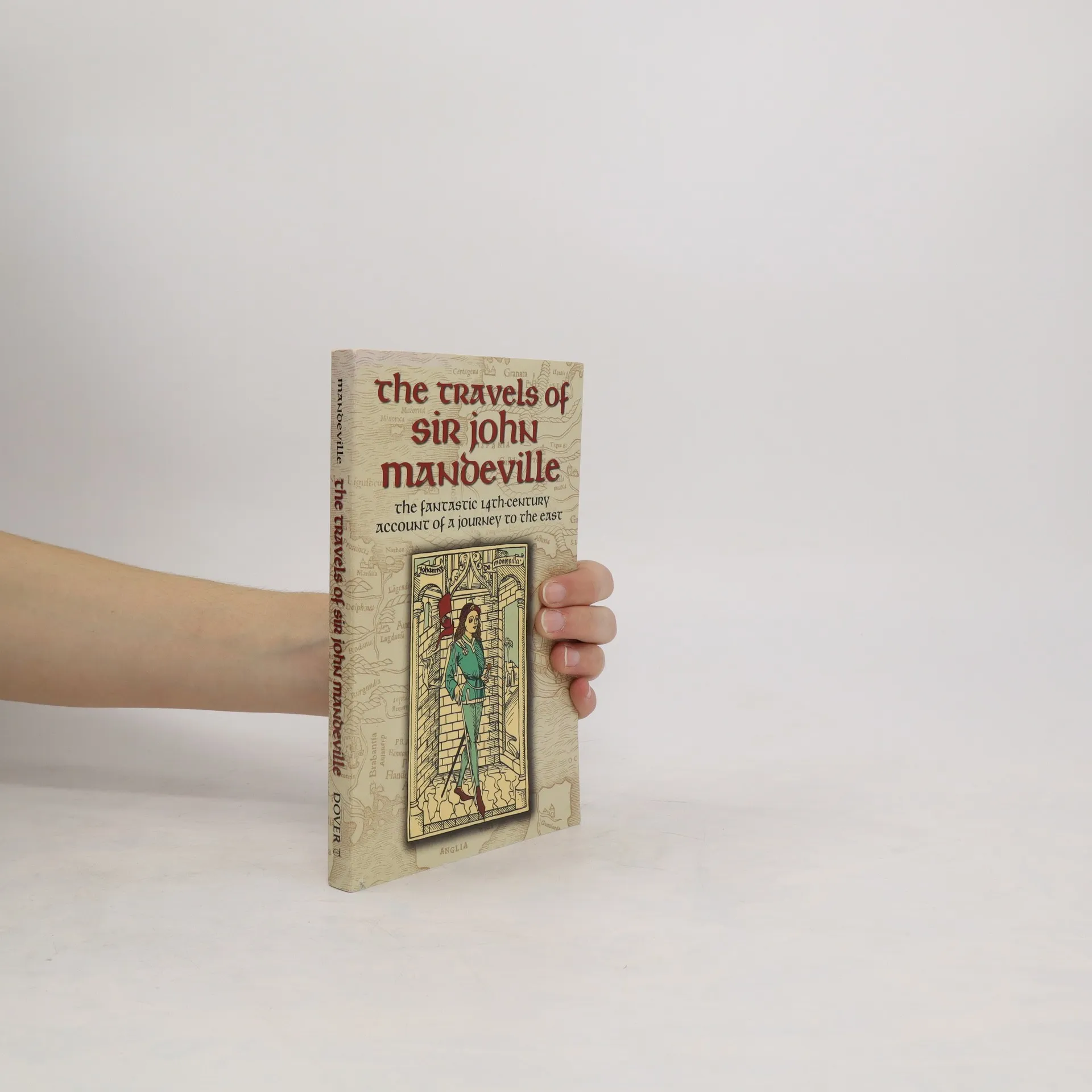
The Travels of Sir John Mandeville
- 209 pages
- 8 hours of reading
One of the most influential books of the medieval period, John Mandeville's fourteenth-century work was written, ostensibly, to encourage and instruct pilgrims traveling to the Holy Land. A thorough compendium of medieval lore, the travel book proved to be a great success throughout Europe. (Among his alleged readers were Leonardo da Vinci and Christopher Columbus.) The Travels professes to relate Mandeville's experiences in the Holy Land, Egypt, India, and China--where he served in the Great Khan's army--followed by his journey to "the lands beyond," countries populated by "dog-headed men, cannibals, Amazons, and pygmies." Five centuries after Mandeville recorded his observations in those distant lands, the volume's remarkably exacting accounts of events and geography were found to be probable fabrications. Nevertheless, the book's widespread popularity and influence make it essential to the study of medieval English literature. An engaging mix of fact and fantasy, enhanced with more than 100 rare woodcut illustrations, it has retained its place as one of the greatest and most entertaining works of early English vernacular prose.