Good & Evil
- 384 pages
- 14 hours of reading
The second instalment in the million-copy bestselling Nazi spy series for fans of Dan Brown, Steve Berry and Wilbur Smith




The second instalment in the million-copy bestselling Nazi spy series for fans of Dan Brown, Steve Berry and Wilbur Smith
Smita, Giulia, Sarah: three lives, three continents, three women with nothing in common, but nevertheless bound by a rare expression of courage . . . like three strands in a braid. Through the story of one woman's hair, three women's destinies are drawn together. India. Smita is an untouchable, married to a 'rat hunter', her job to clean with her bare hands the village latrines, just like her mother before her. Her dream is to see her daughter escape this same fate, and learn to read. When this hope is shattered, she decides to run away with the child, despite her husband's warnings, sacrificing what is most precious to her: her hair. Sicily. Giulia is a worker in her father's wig workshop, the last of its kind in Palermo. She classifies, washes, bleaches, and dyes the hair provided by the city's hairdressers. When her father is the victim of a serious accident, she quickly discovers the family company is bankrupt. Canada. Sarah is a reputed lawyer. As a twice-divorced mother of three children, she ploughs through cases at breakneck speed. Just as she is about to be promoted, she learns she has breast cancer. Her seemingly perfect existence begins to show its cracks . . . But this is only if one ignores the incredible lust for life that keeps her going. Laetitia Colombani's The Braid is the powerfully moving story of three women's courage in the face of adversity.
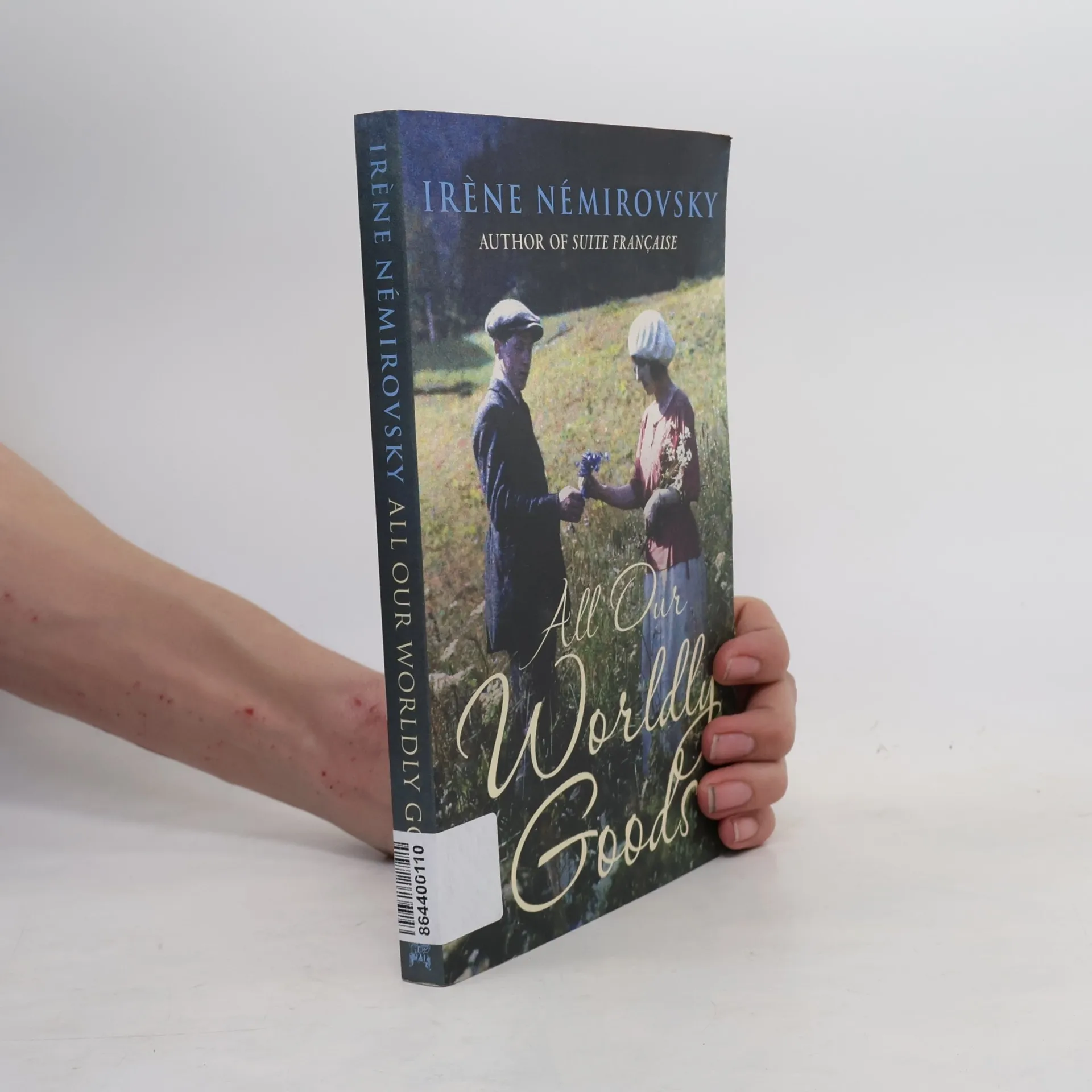
All Our Worldly Goods reads like a prequel to Suite Française , but is a perfect novel in its own right. In haunting ways, this compelling novel prefigures Suite Française and some of the themes of Némirovsky’s great unfinished sequence of novels. All Our Worldly Goods , though, is complete, and exquisitely so — a perfect novel in its own right. First published in France in 1947, after the author’s death, it is a gripping story of family life and star-crossed lovers, set in France between 1910 and 1940. Pierre and Agnes marry for love against the wishes of his parents and the family patriarch, the tyrannical industrialist Julien Hardelot, provoking a family feud which cascades down the generations. This is Balzac or The Forsyte Saga on a smaller, more intimate scale, the bourgeoisie observed close-up, with Némirovsky’s characteristically sly humour and clear-eyed compassion. Full of drama and heartbreak, and telling observations of the devastating effects of two wars on a small town and an industrial family, Némirovsky is at the height of her powers. Taut, evocative and beautifully paced, the novel points out with heartbreaking detail and clarity how close those two wars were, how history repeated itself, tragically and shockingly. The story opens in the Edwardian era, on a fashionable Normandy beach and ends with a changed world under Nazi occupation.
- J'ai vecu la vie de mon ami le chat-tigre. La jungle qui tue ne m'a pas eu, elle me fera grace parce que je l'aime d'un amour fervent, parce que je lui dois tout, parce qu'elle m'a appris a etre libre. La jungle est l'ennemi loyal et sur, qui frappe en face, qui prend a bras-le-corps. L'adversaire hideux et bete, qui torture et qui fuit, le plus redoutable ennemi dans la jungle c'est l'homme... -"