
Explore the latest books of this year!
Bookbot

Peter Kreeft

    March 16, 1937

    Peter Kreeft is a Catholic apologist and professor of philosophy whose extensive writings draw heavily from deep philosophical and religious traditions, particularly the thought of Thomas Aquinas, Socrates, G. K. Chesterton, and C. S. Lewis. His work delves into a wide array of subjects, from Socratic logic and the nature of evil to Heaven and angels. Kreeft is recognized for his engaging style that makes complex philosophical concepts accessible to a broad audience, earning him a reputation as one of the most significant contemporary Catholic thinkers in the United States.

    Peter Kreeft
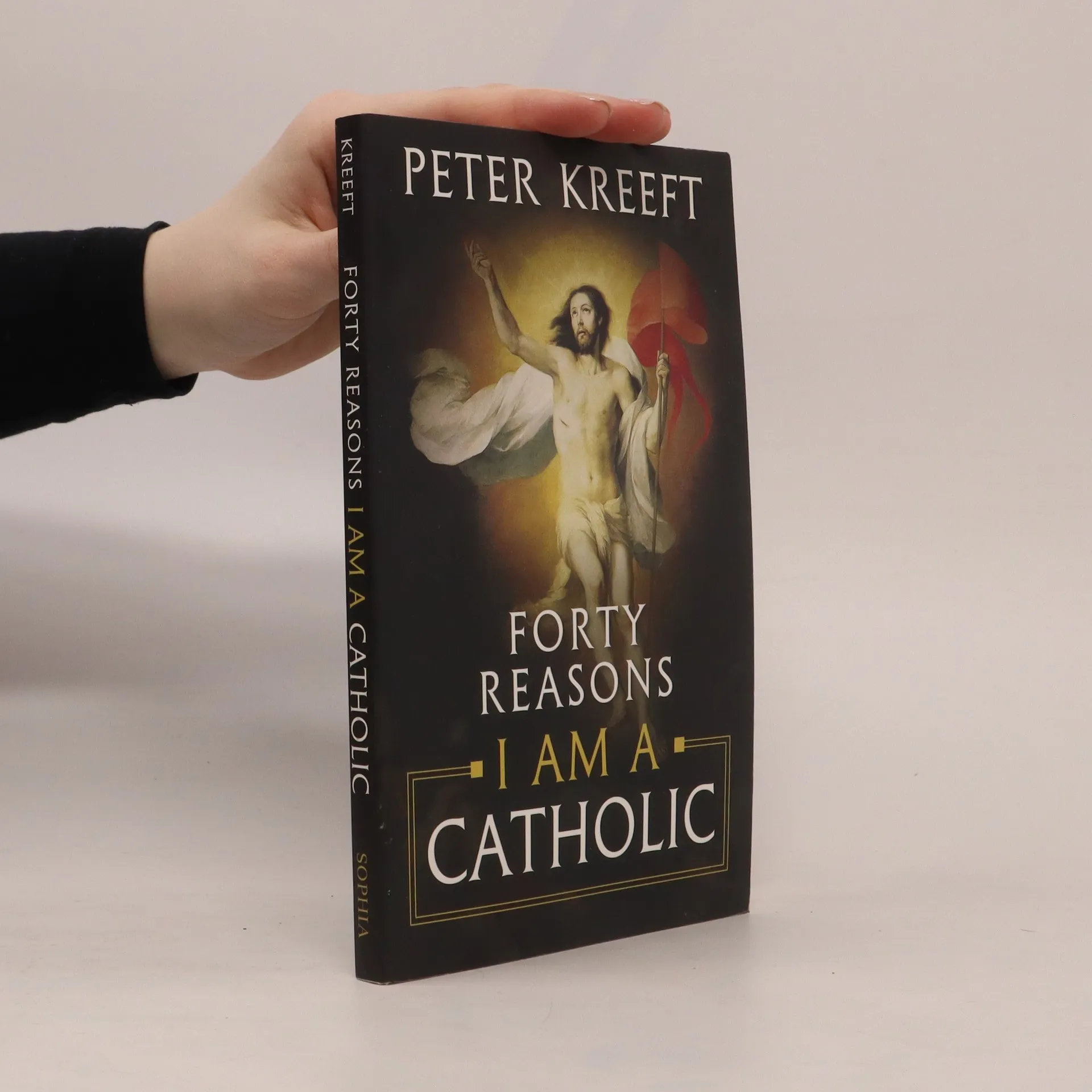
    Forty Reasons I Am A Catholic
    Wisdom from the Psalms
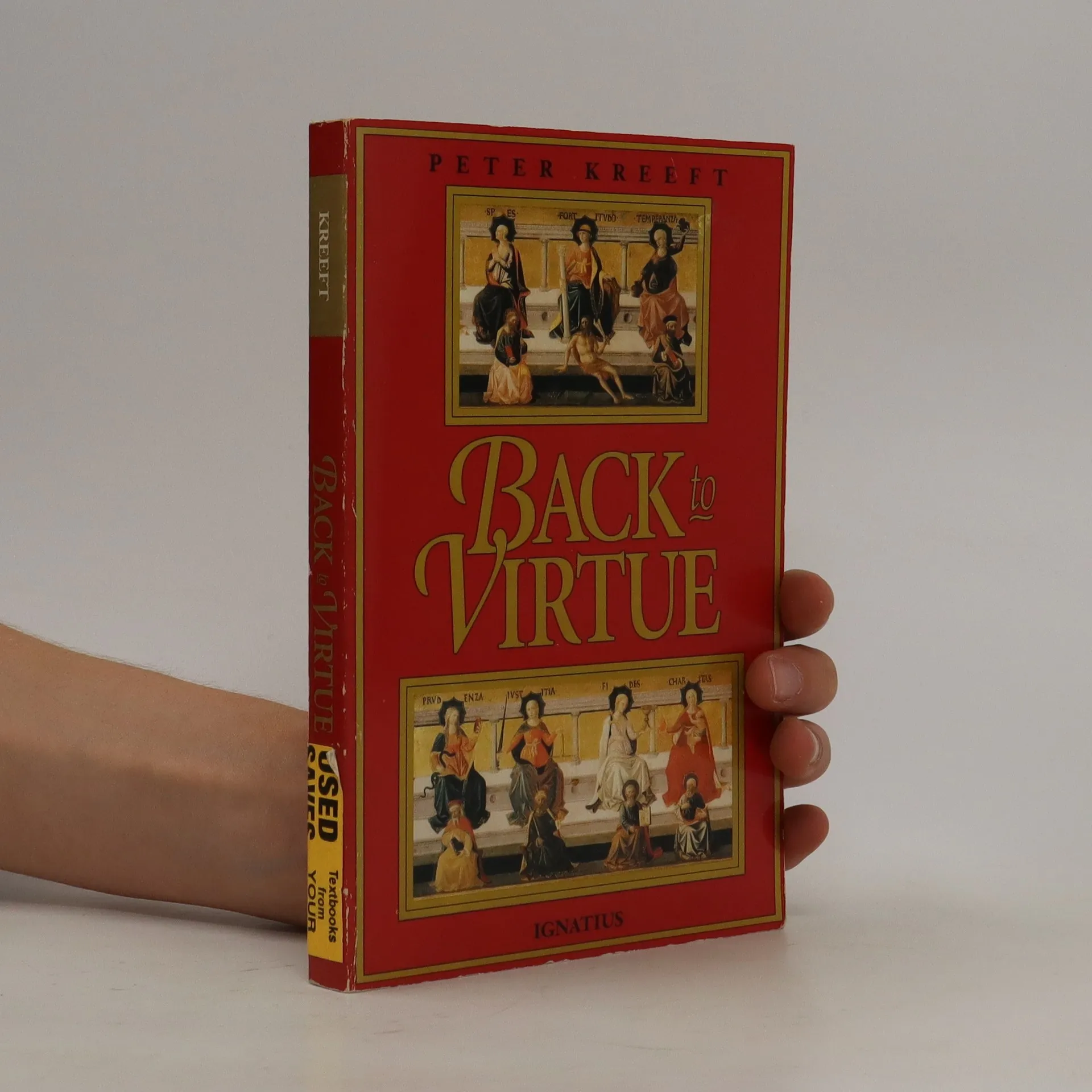
    Back to Virtue: Traditional Moral Wisdom For Modern Moral Confusion
    Handbook of Catholic apologetics
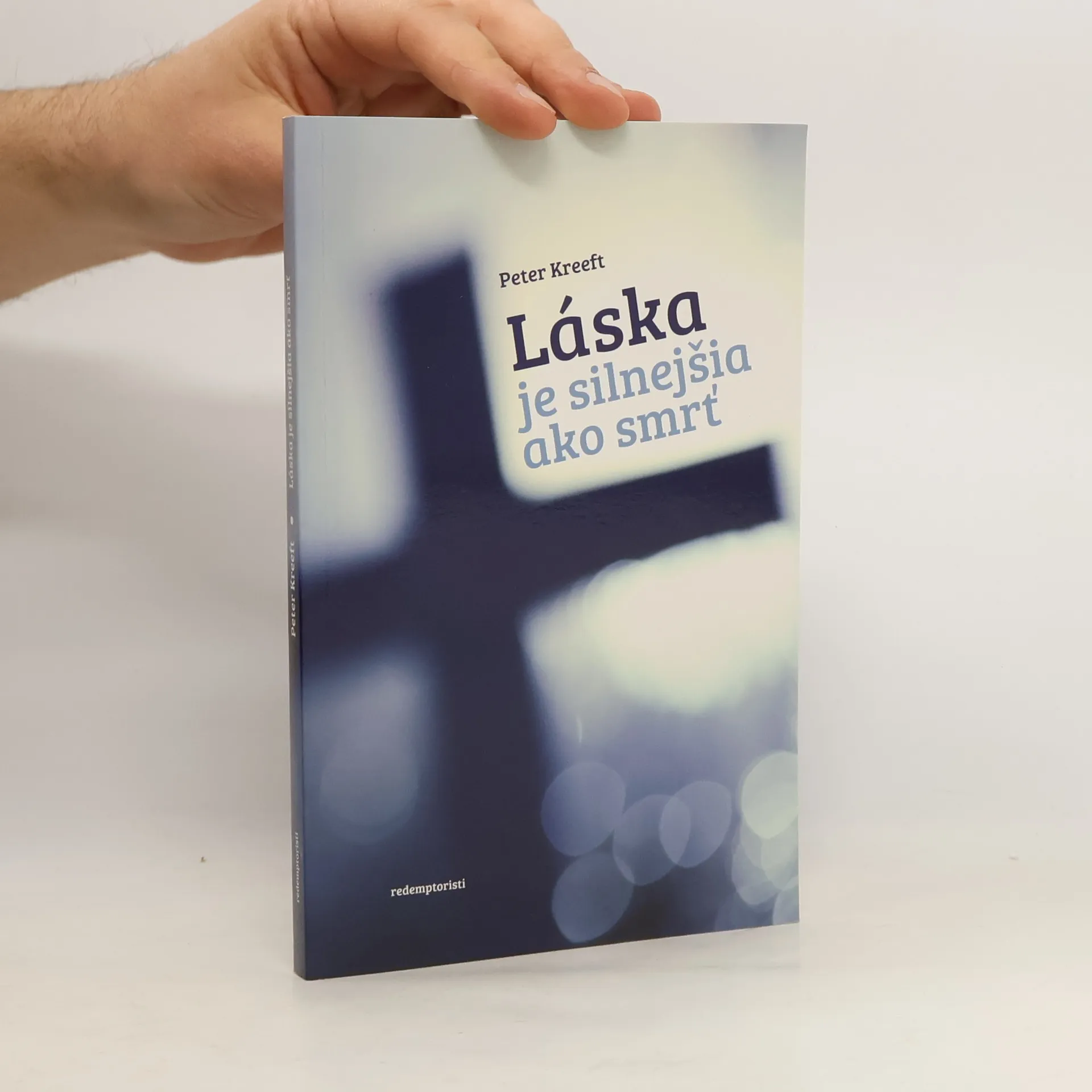
    Christianity for Modern Pagans
    Catholic Christianity: A Complete Catechism of Catholic Beliefs Based on the Catechism of the Catholic....
    • The book offers a comprehensive summary of Catholic beliefs, drawing from the recently authorized universal catechism. Peter Kreeft presents essential teachings in an accessible style, making complex doctrines understandable for ordinary readers. He emphasizes the integration of doctrine, morality, and worship, reflecting the insights of the Second Vatican Council and the Church's Tradition. This work serves as a thorough and popular guide to Catholic catechesis, designed to meet local needs while remaining faithful to the universal Catechism.

      Catholic Christianity: A Complete Catechism of Catholic Beliefs Based on the Catechism of the Catholic....
    • Peter Kreeft believes that Baise Pascal is the first post-medieval apologist. No writer in history, claims Kreeft, is a more effective Christian apologist and evangelist to today's uprooted, confused, secularized pagans (inside and outside the Church) than Pascal. He was a brilliant man--a great scientist who did major work in physics and mathematics, as well as an inventor--whom Kreeft thinks was three centuries ahead of his time. His apologetics found in his Pensees are ideal for the modern, sophisticated skeptic.

      Christianity for Modern Pagans
    • Handbook of Catholic apologetics

      • 493 pages
      • 18 hours of reading
      4.4(142)Add rating

      Unbelievers, doubters and skeptics continue to attack the truths of Christianity. Handbook of Catholic Apologetics is the only book that categorizes and summarizes all the major arguments in support of the main Christian beliefs. Also included is a Protestant-friendly treatment of Catholic- Protestant issues. The Catholic answers to Protestant questions show how Catholicism is the fullness of the Christian faith. Handbook of Catholic Apologetics is full of the wisdom and wit, clarity and insight of philosophers Peter Kreeft and Ronald Tacelli. This is an informative and valuable guidebook for anyone looking for answers to questions of faith and reason. Whether you are asking the questions yourself or want to respond to others who are, here is the resource you have been waiting for. Topics include: faith and reason, the existence of God, God's nature, creation and evolution, providence and free will, miracles, problem of evil, Bible's historical reliability, divinity of Chris, Christ's resurrection, life after death, salvation, the Eucharist, Catholic hierarchy and more.

      Handbook of Catholic apologetics
    • Kreeft issues a clear call to all Christians to get back to their active pursuit of real virtue in their daily lives. This in-depth analysis of the meaning of the virtues and their connection with the Beatitudes also summarizes a scriptural and theological wisdom on leading a holy life. Includes the accumulated wisdom of St. Paul, C.S. Lewis, and many others. --From publisher's description

      Back to Virtue: Traditional Moral Wisdom For Modern Moral Confusion
    • Wisdom from the Psalms

      • 243 pages
      • 9 hours of reading
      4.3(25)Add rating

      The Psalms are the most popular, most universally loved and used book in the Bible, which in turn is the most popular book in the world. They are hymns, songs, poems and prayers, both formal (liturgical and communal) and informal (spontaneous, personal, and individual); and this gives them many layers of meaning rather than one, unlike theologies and creeds.They Psalms are literally inexhaustible, so a new book of reflections on them is always welcome. Especially a book by the beloved, widely read, best-selling author and philosopher, Peter Kreeft.In this work Kreeft shares his personal explorations into the riches of the Psalms, his profound expeditions into this deep ocean of the divinely inspired spiritual water. He focuses on the dozen or so Psalms that are most people's favorites, including Kreeft.Kreeft says that the Pslams are powerful prayers, and a spiritual weapon that God himself has given us for our great task of spiritual warfare, which is human life on earth."What prayers did Jesus and his disciples pray? The Psalms! As all Jews have always done ever since they had them. The Psalms are God's answer to our plea, 'Teach us to pray.' Christ prayed them not only in synagogue but throughout His life, and at his death. He prayed Psalm 22, 'My God, my God, why hast Thou forsaken me?' even as He was dying on the Cross."- Peter Kreeft, from the Introduction

      Wisdom from the Psalms
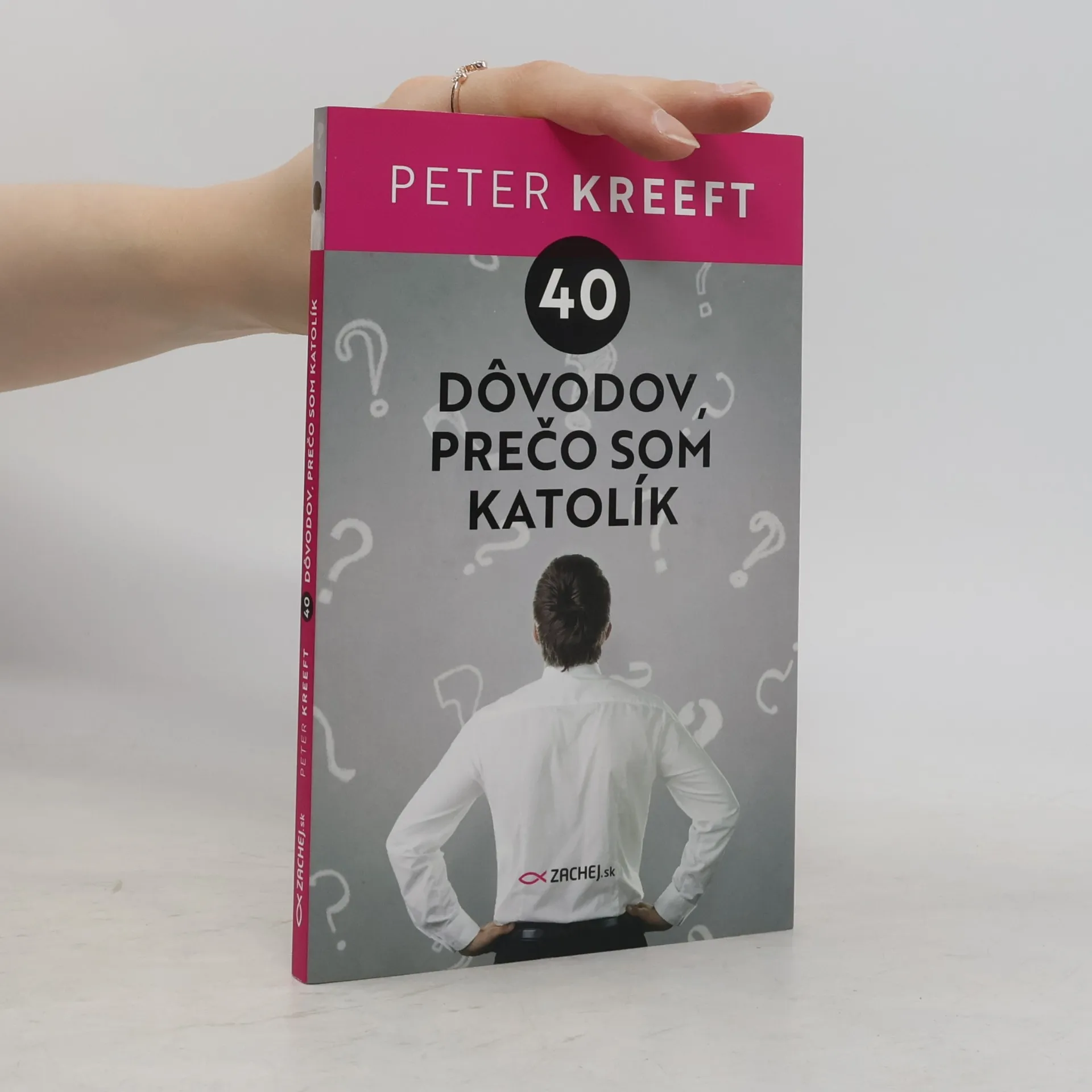
    • My title explains itself. But it's misleading. There are more than 40 reasons. In fact, there are at least ten to the 82nd power, which, I am told, is the number of atoms in the universe. And that's just in ordinary matter, which makes up only 4.9% of the universe, the rest being dark matter and dark energy. Each of my reasons is an independent point, so I have not organized this book by a succession of chapters or headings. After all, most readers only remember a few big ideas or separate points after reading a book. (I've never heard anyone say "Oh, that was a good continuous-process-of-logically-ordered-argumentation" but I've often heard people say, "Oh, that was a good point." Which takes me back to my main point: "Why are you a Catholic" is a good question. A good question deserves a good answer. Here are forty of mine.

      Forty Reasons I Am A Catholic
    • The Greatest Philosopher Who Ever Lived

      • 285 pages
      • 10 hours of reading
      4.2(49)Add rating

      ""So we must (1) restore love to our philosophy, and (2) restore philosophy (wisdom) to our love, not just to understand this book but also to understand wisdom (which cannot be understood without love) and to understand love (which cannot be understood without wisdom), and thus to understand ourselves.""--

      The Greatest Philosopher Who Ever Lived
    • Humorous, frank, and insightful, this book challenges the reader to step in and take hold of what is right and to cast away what is wrong. Topics covered included such varied subjects as private property, the individual, the Three Philosophies of Man, women, individualism, and more. A wonderful introduction to philosophy for the neophyte, and a joy for the experienced student of thought. "Imagine two of the most influential thinkers of all time, and two of the most diametrically opposed, thrust together in a no holds barred debate about some of the most important questions: Does man move the world or is he only a puppet of forces beyond his control? Is there a human nature or only market forces? Is Communism the liberator of mankind or a deadly scourge? In Peter Kreeft's Socrates Meets Marx, the father of philosophy cross examines the founder of communism using the Communist Manifesto, details from the life of Marx himself, and the witnesses of history as evidence to be considered for judgment. If only every edition of the Communist Manifesto would have been bound together with a copy of this book, the world would be a much saner place." - Christopher Kaczor, author of Proportionalism and the Natural Law Tradition

      Socrates Meets Marx - The Father of Philosophy Cross-examines the Founder of Communism
    • Philosophy 101 by Socrates

      • 100 pages
      • 4 hours of reading
      4.2(263)Add rating

      The popular author and Boston College philosophy professor, Kreeft, presents this introduction to philosophy to help beginners not only to understand philosophy but to fall in love with it. In his forty years of teaching philosophy, Kreeft says the most effective way to accomplish this purpose is to read Socrates. Philosophy means "the love of wisdom." Kreeft uses the dialogues of Socrates in this book to help the reader grow in that love of wisdom. He says that no master of the art of philosophizing has ever been more simple, clear, and accessible to beginners as Socrates. He focuses on Plato's dialogues, the Apology of Socrates, as a model partner for the reader to dialogue with. Kreeft calls it "the Magna Carta of philosophy," a timeless classic that is "a portable classroom."

      Philosophy 101 by Socrates
    • Peter Kreeft presents a series of brilliant essays about many of the problems that undermine our Western civilization, along with ways to address them. "These essays are not new proposals or solutions to today's problems," he says. "They are old. They have been tried, and have worked. They have made people happy and good. That is what makes them so radical and so unusual today." In his witty, readable style, Kreeft implores us to gather wisdom and preserve it, as the monks did in the Middle Ages. He offers relevant philosophical precepts, divided into various categories, that can be collected and remembered in order to guide us and future generations in the days ahead. Kreeft emphasizes that the most necessary thing to save our civilization is to have children. If we don't have children, our civilization will cease to exist. The "unmentionable elephant in the room", he tells us, is sex, properly understood. Religious liberty is being attacked in the name of "sexual liberty", in other words, abortion. Kreeft encourages us to fight back—with joy and confidence—with the one weapon that will win the children.

      How to Destroy Western Civilization and Other Ideas from the Cultural Abyss