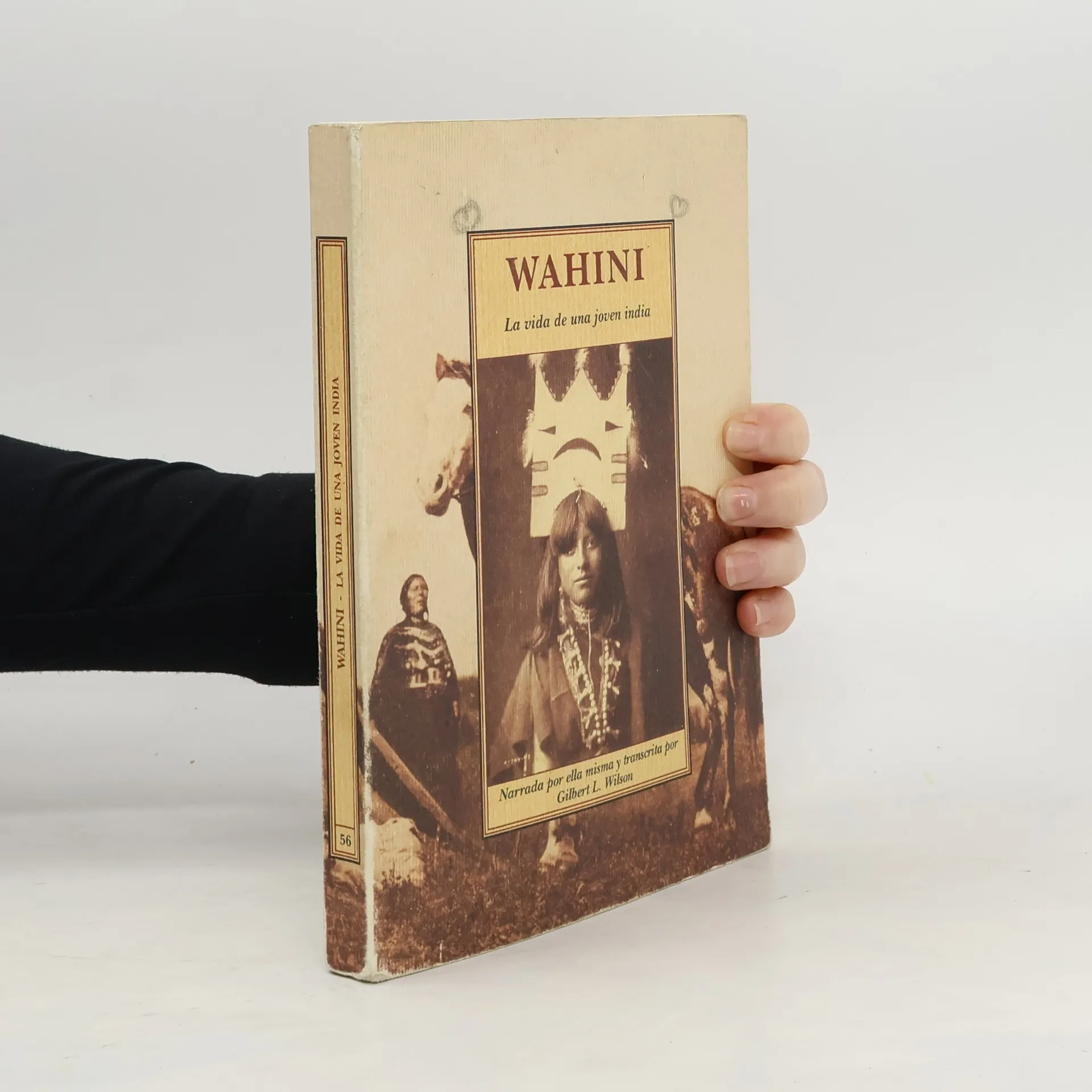
En 1906, Gilbert L. Wilson visitó por primera vez la Reserva India de Fort Berthold y comenzó a estudiar los restos de la tribu Hidatsa. Regresó en 1908, patrocinado por los Museos Americanos de Historia Natural, y durante cada verano de los siguientes diez años trabajó entre los Hidatsa, tomando notas de todo lo que veía. Una de sus principales informantes fue Waheenee-wea, o Mujer-Pájaro-Búfalo, quien le contó su historia de vida.
Gilbert Livingstone Wilson Books
Gilbert Wilson dedicated himself to the study and sympathetic portrayal of Native American life and folklore, particularly focusing on the Hidatsa people. His work often took the form of engaging children's stories, aiming to accurately depict Indian customs and ways of life. More than just an ethnographer, Wilson was adopted into the Hidatsa tribe, granting him a unique and intimate perspective on their culture. His scholarly contributions, built upon meticulous documentation and personal narratives, remain valuable for their detailed insights into traditional agricultural and cultural practices.