William Law was an English priest whose conscientious objection to taking an oath of allegiance to the first Hanoverian monarch cost him his position at Emmanuel College, Cambridge. This integrity, which placed him among the non-jurors, ultimately led him to private tutoring and extensive writing. His mystical and theological works, alongside his personal integrity, profoundly influenced the evangelical movement of his time and Enlightenment thinkers. Law's spiritual writings remain in print today.
In this classic work, William Law explores the nature of prayer and its transformative power over the human soul. Drawing on Christian theology and mystical traditions, Law argues that prayer is the key to unlocking the riches of eternity and escaping the trap of temporal existence. Part 1 of this book lays out Law's basic framework for understanding prayer and its relationship to the soul, setting the stage for a deeper exploration in subsequent volumes.
This book contains three letters written by William Law in defense of high church principles. The letters were addressed to Benjamin Hoadly, the bishop of Bangor, and were written between 1717 and 1719. The letters are an important theological work of the period and offer insight into the religious battles of the time.
This collection of essays by the 18th-century theologian William Law offers a refreshing perspective on Christianity in the Age of Enlightenment. The essays discuss topics such as the nature of God, the value of prayer, and the role of the church in society, and are sure to challenge readers to think more deeply about their faith.
A landmark work of Christian theology that explores the nature of God, the role of faith in everyday life, and the relationship between faith and reason. With a clear and accessible writing style, the author challenges readers to reconsider their assumptions about spirituality and to engage in deeper exploration of their faith. An essential read for anyone interested in religious philosophy.
A classic work of Christian spirituality, Law's treatise discusses practical methods for achieving a deeper relationship with God and living a virtuous life. Each chapter is a meditation on a different spiritual topic, and provides guidance on how to apply these ideas in daily life.
ABOUT THE AUTHOR:A Serious Call to a Devout and Holy Life (1728), together with its predecessor, A Practical Treatise Upon Christian Perfection (1726), deeply influenced the chief actors in the great Evangelical revival. John and Charles Wesley, George Whitefield, Henry Venn, Thomas Scott, and Thomas Adam all express their deep obligation to the author. The Serious Call also affected others deeply. Samuel Johnson, Gibbon, Lord Lyttelton and Bishop Home all spoke enthusiastically of its merits; and it is still the only work by which its author is popularly known. It has high merits of style, being lucid and pointed to a degree. In a tract entitled The Absolute Unlawfulness of Stage Entertainments (1726) Law was tempted by the corruptions of the stage of the period to use unreasonable language, and incurred some effective criticism from John Dennis in The Stage Defended.
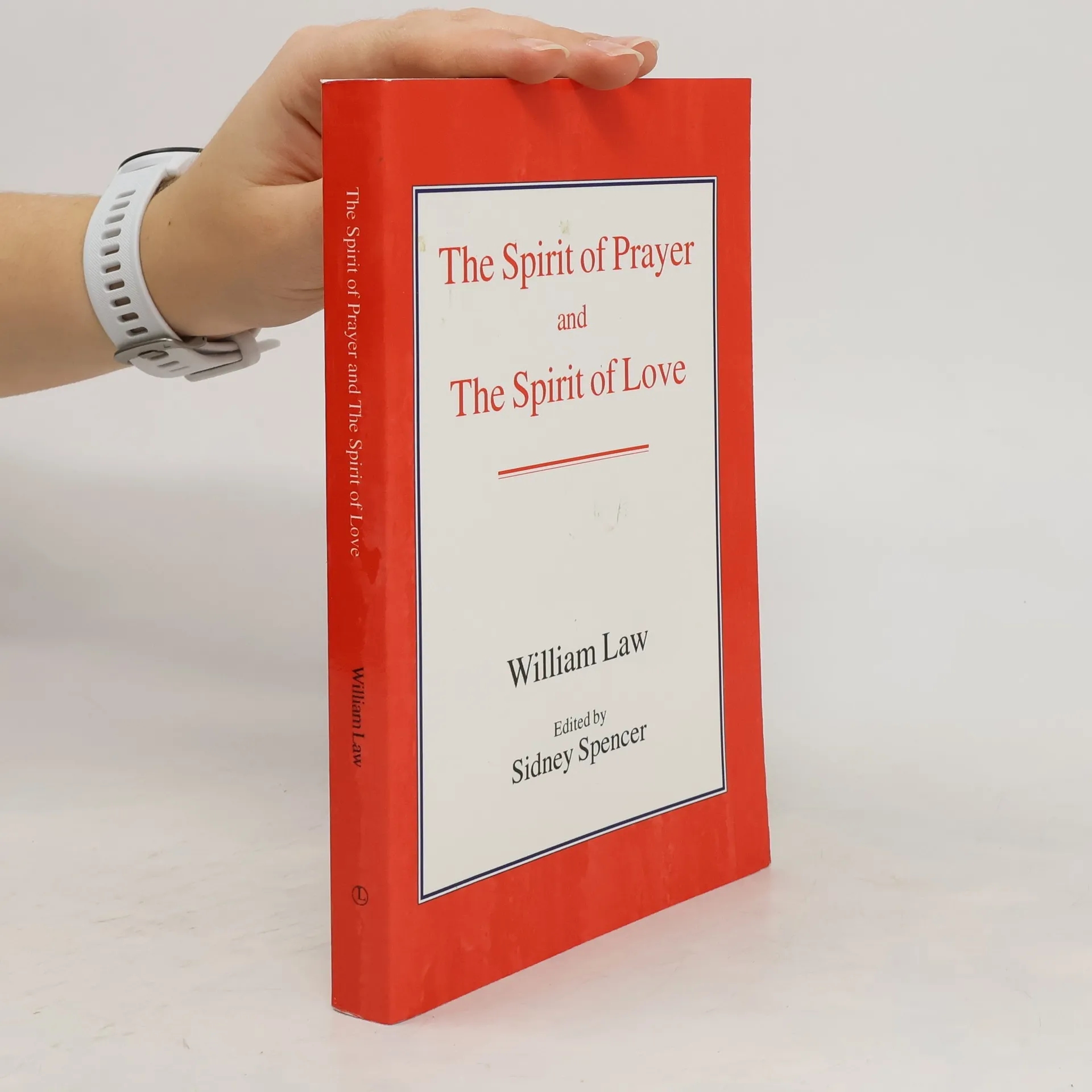
William Law is best remembered today for his Serious Call to a Devout and Holy Life. To those interested in his spirituality, however, other works have greater impact, in particular The Spirit of Prayer and The Spirit of Love, which are considered the finest and most appealing. In the years in which they were written, his vision had reached its fullest and most characteristic development, and his literary power was at its height. It is in these books that the profound influence of Jacob Boehme can be most clearly seen. His great synthesis of the mystical outpourings and orthodox Christian theology, provide an English spiritual classic. Law's understanding and interpretation of mysticism was more original than traditional, being dynamic and creative. He believed in the life of God working from within, and the flame of divine love being a link with and an understanding of God. He conceived that mysticism was a matter of life, that relied on willing rather than knowing, and that ultimately rested on trust in God. Despite holding no official position he was widely regarded in his own time and later as a spiritual guide, and his trilogy The Spirit of Prayer, The Spirit of Love and The Way to Divine Knowledge was the mature expression of his theology and religion.