The Islamic Art of Persia
- 421 pages
- 15 hours of reading
Reprint of classic on Islamic art and Persian culture. Includes illustrations.


Arthur John Arberry was a distinguished British orientalist and a prolific scholar of Arabic, Persian, and Islamic studies. His translation of the Qur'an into English, The Koran Interpreted, stands as one of the most prominent by a non-Muslim scholar, widely respected among academics. Arberry is also noted for introducing Rumi's works to the West through his selective translations and for rendering significant medieval Andalucian Arabic poetry into English. His interpretations of Muhammad Iqbal's writings are similarly distinguished.


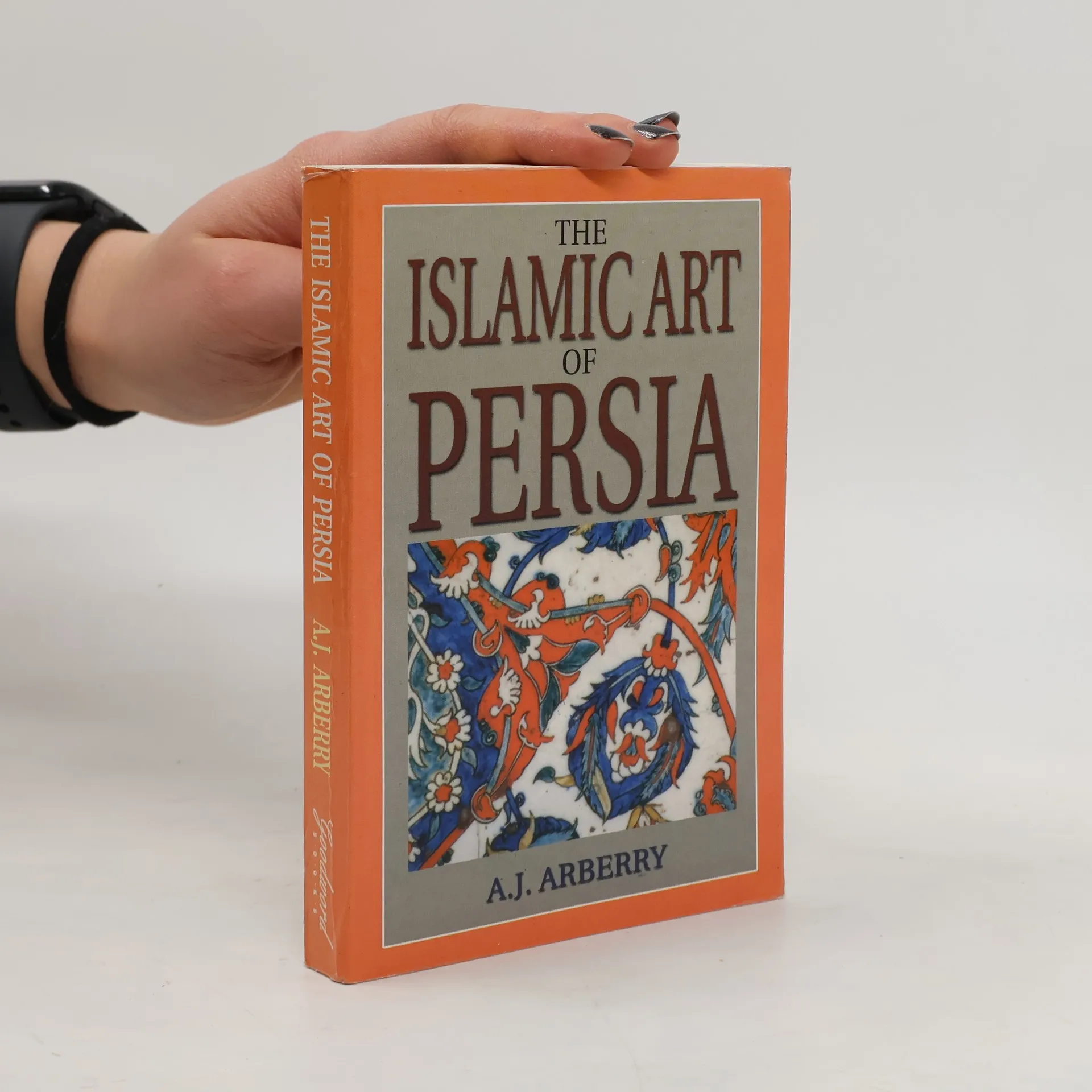
Reprint of classic on Islamic art and Persian culture. Includes illustrations.
A rich introduction to the work of Rumi by the foremost scholar on the great mystical poet, featuring leading literary translations of his verse by Coleman Barks, Robert Bly, Andrew Harvey, Kabir Helminski, Camille Helminski, Daniel Liebert, and Peter Lamborn Wilson. Rumi's poems are beloved for their touching perceptions of humanity and the Divine. To display the major themes of Rumi's work, each of the eighteen chapters in this anthology are arranged topically, such as "The Inner Work," "The Ego Animal," "Passion for God," "Praise," and "Purity," uncovering a deep and timeless understanding of Sufism and mysticism. Also included is a biography of Rumi by Andrew Harvey and an introductory essay by Kabir Helminski on the art of translating Rumi's work into English. "The Spiritual Surgeon" Can the water of a polluted stream Wash away the dirt? Can human knowledge sweep away The ignorance of the sensual self? How does a sword fashion its own hilt? Go, entrust your wound to a surgeon, For flies will gather around the wound Until it can’t be seen. These are your selfish thoughts And all you dream of owning. The wound is your own dark hole. Mathnawi I, 3221–3224 (translated by Kabir Helminski and Camille Helminski)
A collection of poetry by the thirteenth century Sufi saint cover topics ranging from emptiness and silence to elegance and majesty
Even in conversation Rumi expresses his spiritual insights in a style rich in allusion and figurative language, and often illustrated by skillful storytelling. His themes include God's beauty and beneficence as expressed through the good things of the earth; the continuum between form and substance; the here and the hereafter; the melting of individuality in the reality of God's oneness; and the centrality of love in the soul's development.
The Love Poems of Rumi is a beautiful and elegantly illustrated gift book of Rumis poems translated by Nader Khalili, geared for readers searching for inspirational themes and messages about love.
Rumi, who wrote and preached in Persia during the thirteenth century, is one of history’s most celebrated mystics. His vast body of poetry includes a lengthy epic of religious mysticism, the Mathnavi, and more than three thousand lyrics and odes. A. J. Arberry, who selected four hundred of the lyrics for translation, calls Rumi "one of the world's greatest poets. In profundity of thought, inventiveness of image, and triumphant mastery of language, he stands out as the supreme genius of Islamic mysticism." Arberry’s authoritative translation is one of the few done directly from the original Persian. A. J. Arberry (1905-69) was professor of Arabic at Cambridge University.
Originally published in 1965, this is an introductory book for university students of Arabic literature. Beginning with a substantial introduction on development, nature, forms and rhythms, the main body of the book is an anthology of Arabic poems in the original, from the sixth century onwards.
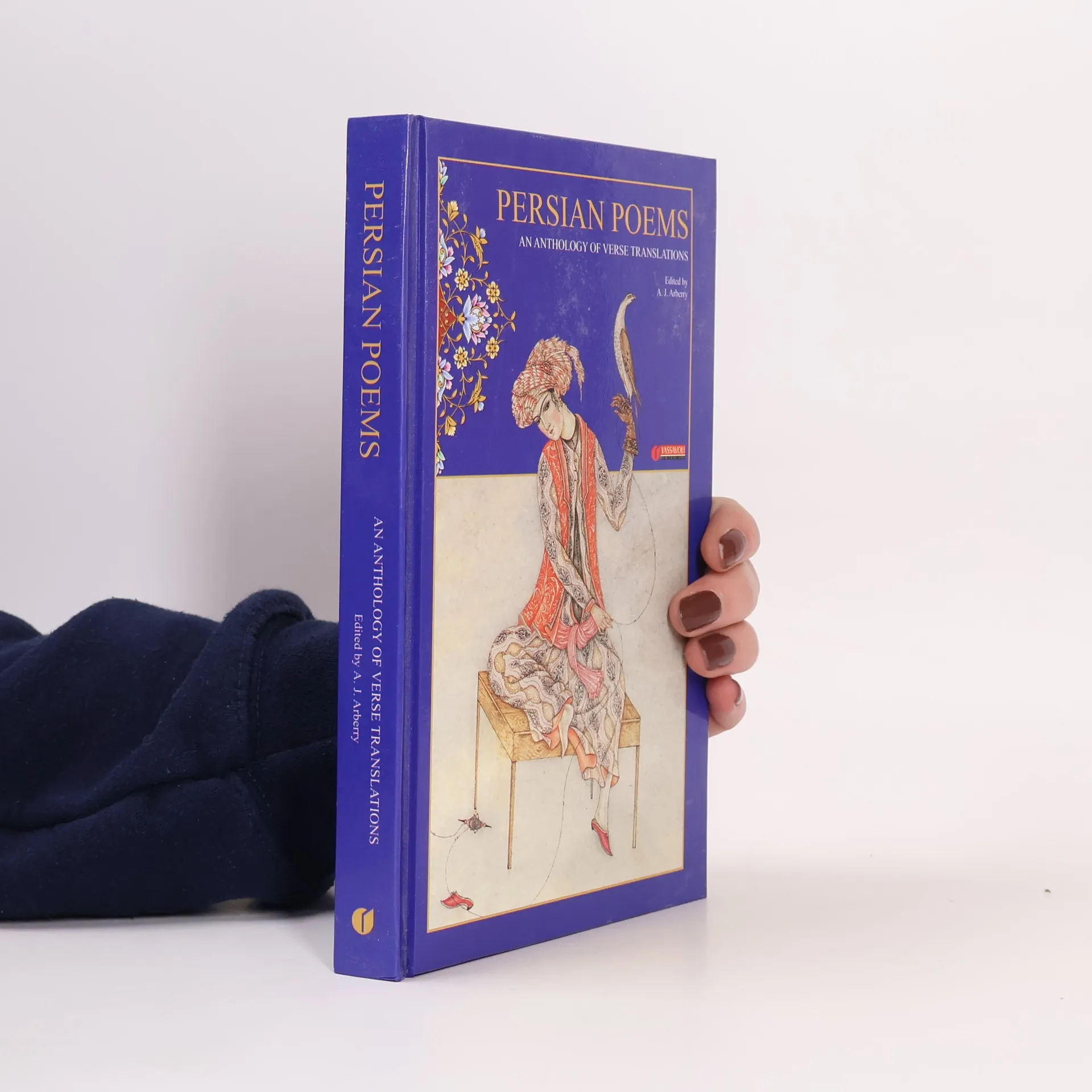
This book is an excellent introduction to classical Persian poetry for English-speaking readers. As stated in its preface, "This little book ... is a landmark in the interpretation of Persian literature, containing as it does the first English verse translation of a Persian poem." Many of these translations were completed in the late 19th century by noted scholars of both languages; for that reason alone, it is a valuable piece of history and a valuable memento of the sense of wonder and adventure with which Western scholars once approached the East. The poets featured here include Rumi, Sa'di, Hafez, Rudaki, Khosrow, Ferdowsi, Nizami, Shahriyar, and others. Also features Persian miniature illustrations.
The Masnavi of Jalal al-Din Rumi (1207-1273), a massive poem of some 25,000 rhyming couplets, by common consent ranks among the world's greatest masterpieces of religious literature. The material which makes up the Masnavi is divisible into two different categories: theoretical discussion of the principal themes of Sufi mystical life and doctrine, and stories of fables intended to illustrarte those themes as they arise. This selection of tales is the most accessible introduction to this giant epic for the non-perisan reader.
Combining two of Rumi's major works, Rumi: Poet and Mystic and Tales of Mystic Meaning, this is a spiritual anthology that will be treasured by all those who value the writings of the 13th century Sufi mystic. schovat popis