
Spiritual-Mindedness
- 291 pages
- 11 hours of reading
John Owen stands as a towering figure in English Puritan theology, recognized as not only the foremost theologian of the movement but also one of the greatest European Reformed thinkers of his era. Possessing arguably the most profound theological mind England has ever produced, Owen delved into intricate theological matters with exceptional clarity and depth. His rigorous analysis and profound insights continue to shape theological discourse and inspire readers.


Focusing on the foundations of healthy church membership, John Owen delves into timeless biblical principles that foster Christian fellowship. His examination highlights the importance of community and mutual support within the church, appealing to a broad range of denominations. Owen's insights aim to guide believers in cultivating a vibrant and spiritually enriching church environment.
The book explores the historical and ongoing challenges faced by God's Words, tracing attacks from biblical times, such as in Genesis with Satan's manipulation, to the Apostle Paul's warnings in the first century. It highlights the importance of preserving the integrity of scripture, referencing notable figures like John Owen who recognized and addressed these issues in the 1600s. The republishing aims to reaffirm the significance of maintaining the authenticity of divine teachings amidst persistent corruption.
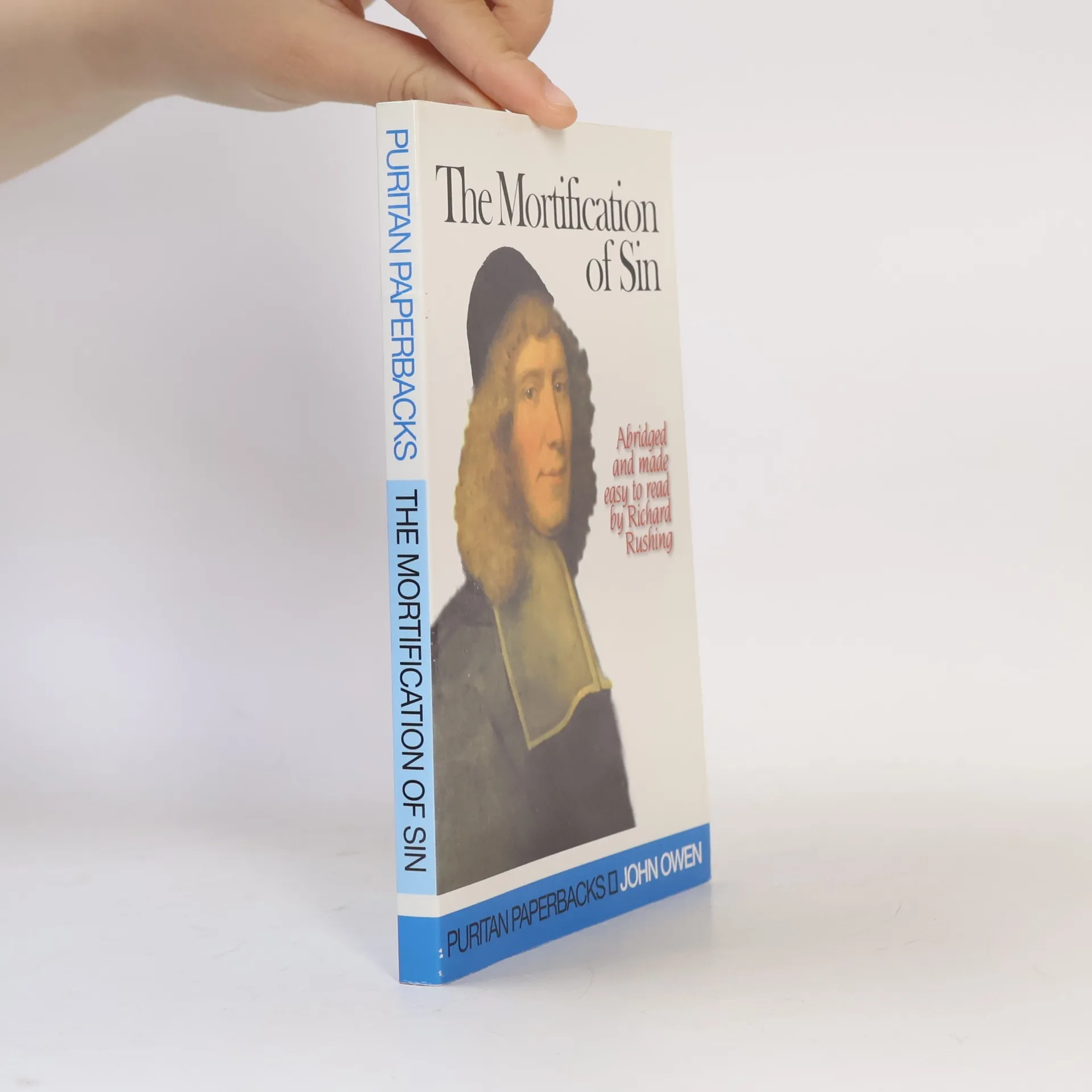
Focusing on spiritual growth and moral integrity, this volume presents four treatises by John Owen that delve into the themes of sin and grace. It explores the mortification of sin, the nature of temptation, the struggle with indwelling sin, and the transformative power of God's grace. Each treatise is carefully edited and formatted, making Owen's profound insights accessible for readers seeking to deepen their understanding of Christian theology and personal piety.
Delving into the opulent fashion of the eighteenth century, John Owen's work intricately details hairstyles, accessories, and trends of the era. It examines the cultural and societal influences shaping fashion, while exquisite illustrations enhance the text's vividness. Owen emphasizes fashion as a social marker and a means of personal expression, tracing its evolution from ornate court attire to more casual styles. The narrative also highlights the impact of influential figures and political shifts, showcasing fashion's role in both reflecting and shaping societal norms.
Volume 28 of the Complete Works of John Owen explores Owen's work on topics including the integrity of Scripture, identifying and responding to habitual sin, and the importance of devotion and worship.
John Owen presents one of the most rigorous defenses of the Reformed doctrine of justification ever written. This reprint of The Doctrine of Justification by Faith, taken from the nineteenth-century edition produced by the Presbyterian Board of Publications, will serve as a welcome improvement for many readers. Latin and Greek quotations have been moved to footnotes, and English translations are given for those large blocks of material that Owen left untranslated. It also contains a new introductory essay by Carl R. Trueman, which analyzes Owen's treatment of justification in light of the highly charged debates of his day. While Owen's work is technical and challenging, this edition is an effort to make his profound exposition more accessible.
Focusing on accessibility, this publication from Megali aims to enhance the reading experience for individuals with impaired vision by providing a large print reproduction of a historical work. The initiative highlights the importance of making literature more inclusive and available to a wider audience.
in large print
This book is a reproduction of a historical work, published by Megali, a company dedicated to creating large print editions for individuals with impaired vision. The focus on accessibility ensures that important texts remain available to a wider audience, emphasizing the value of preserving and sharing historical literature.
How democracies compete with autocracies to bias international order in their favor-and why democracies are losing