

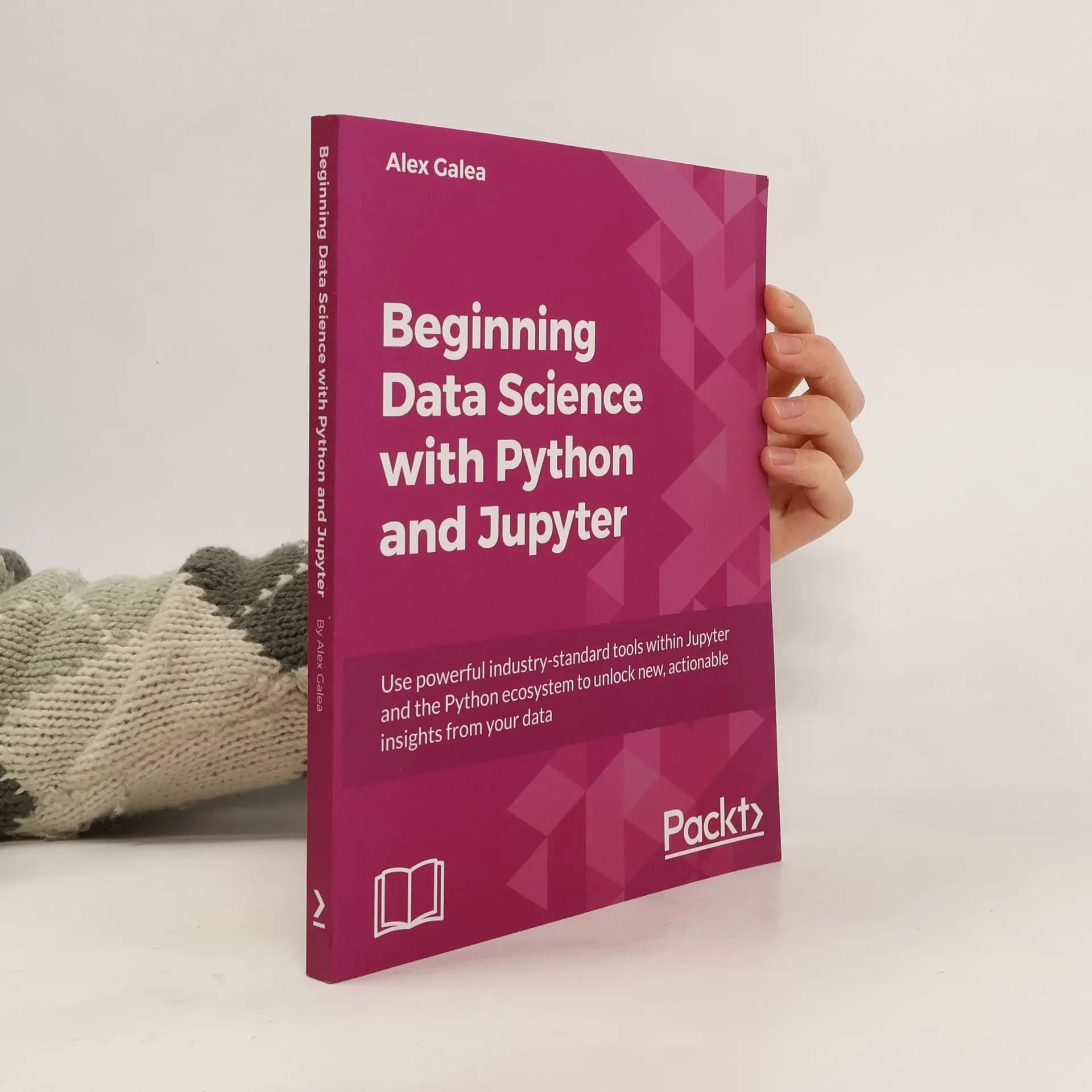
Beginning Data Analysis With Python and Jupyter
Use Powerful Industry-Standard Tools to Unlock New, Actionable Insight From Your Existing Data
- 194 pages
- 7 hours of reading
Getting started with data science can be straightforward. This guide is perfect for beginners familiar with Python, offering a quick, engaging introduction. You'll learn to navigate the Jupyter ecosystem and work with example datasets while exploring essential machine learning concepts like SVM, KNN classifiers, and Random Forests. The hands-on course equips you with the skills needed for entry-level data science, focusing on commonly used libraries in the Anaconda distribution. You will engage with real datasets, gaining practical experience essential for the industry. The course also covers web scraping techniques, enabling you to gather and parse your own datasets from the open web, allowing you to apply your skills in real-world scenarios. Key learning outcomes include setting up the Jupyter environment, understanding machine learning strategies, training classification models, and using validation curves and dimensionality reduction for model enhancement. You'll also learn to scrape tabular data from web pages, transforming it into Pandas DataFrames, and create interactive visualizations to effectively communicate your findings. This resource is tailored for professionals across various industries, reflecting the growing accessibility of data science. Some prior Python experience, especially with libraries like Pandas and Matplotlib, will be beneficial.