Explore the latest books of this year!
Bookbot

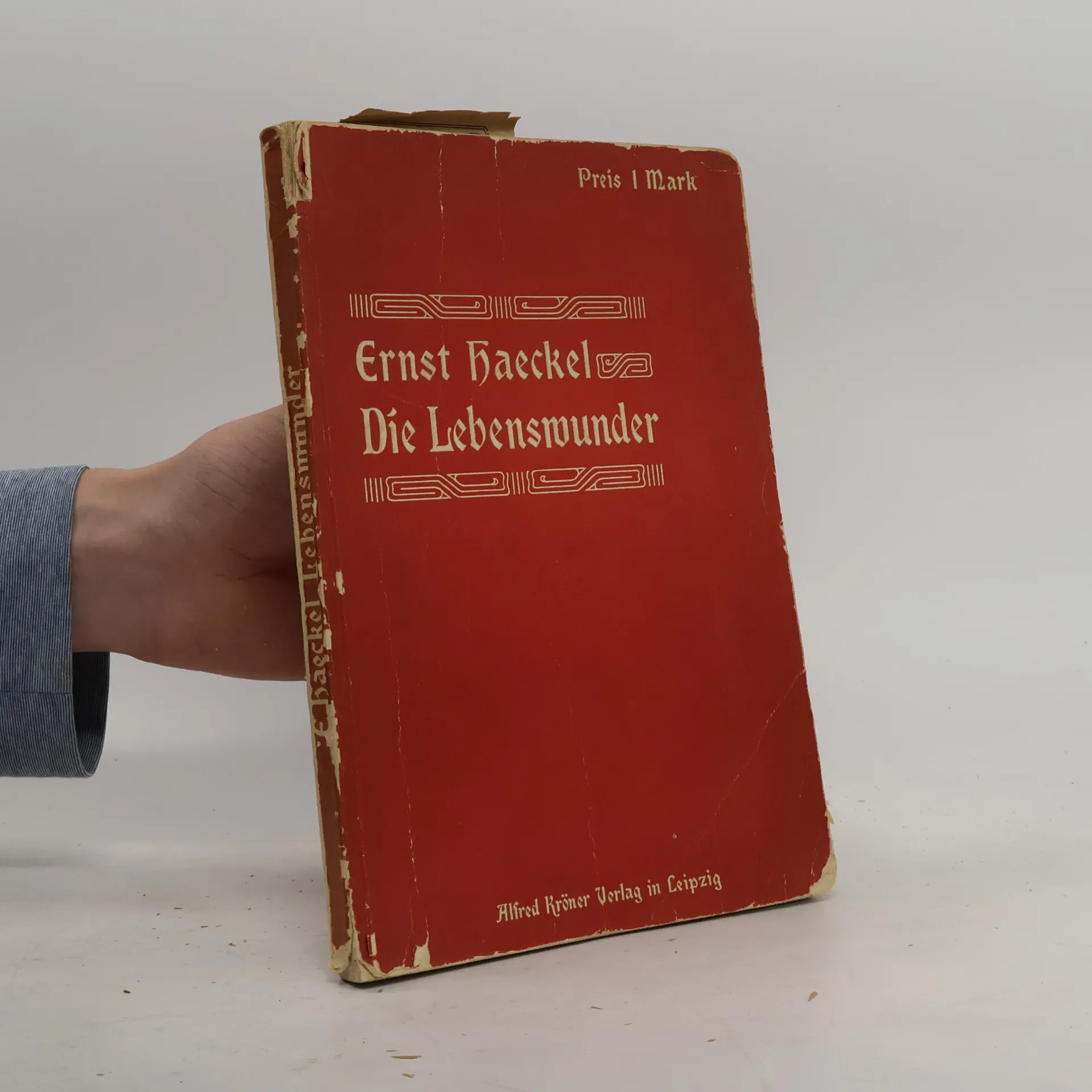
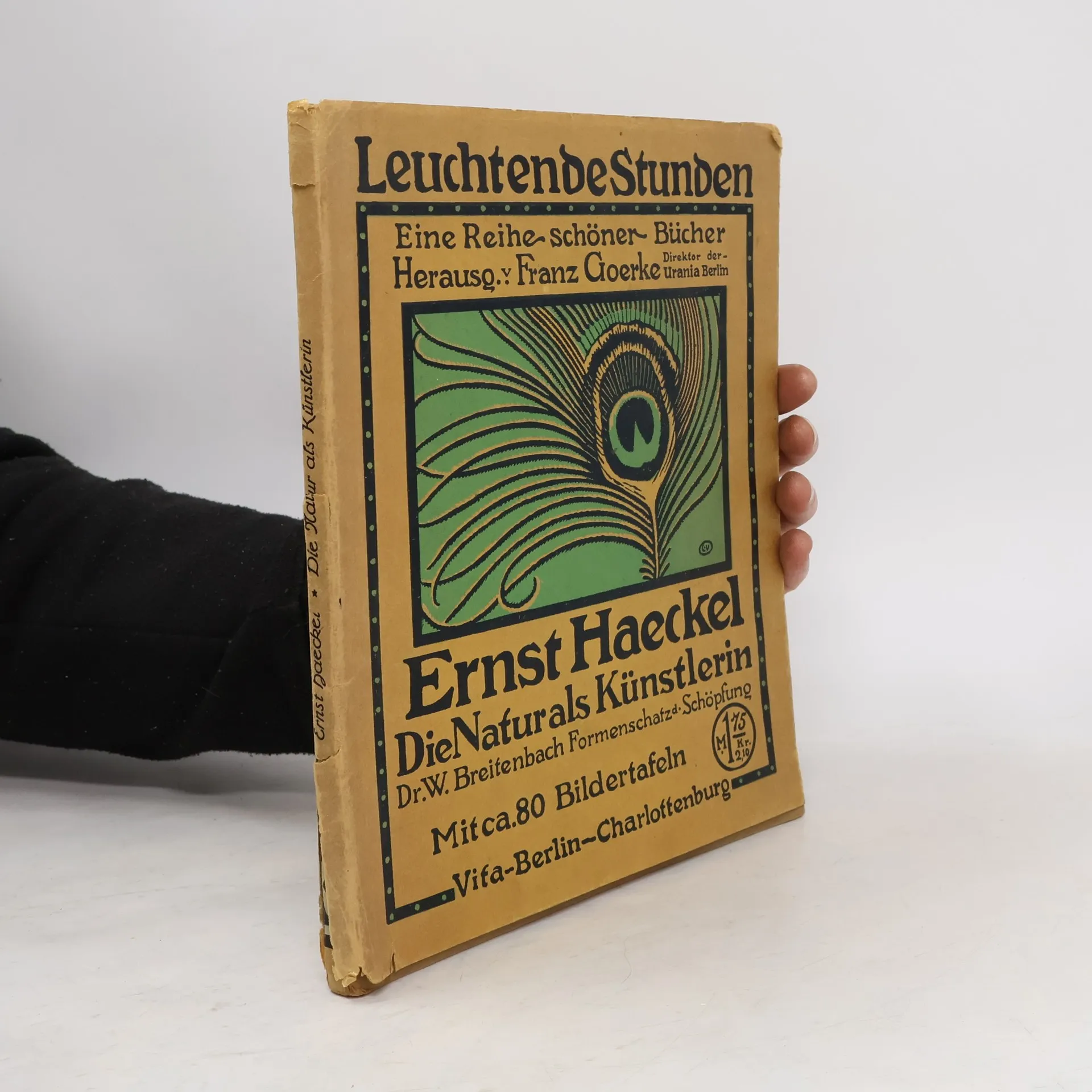
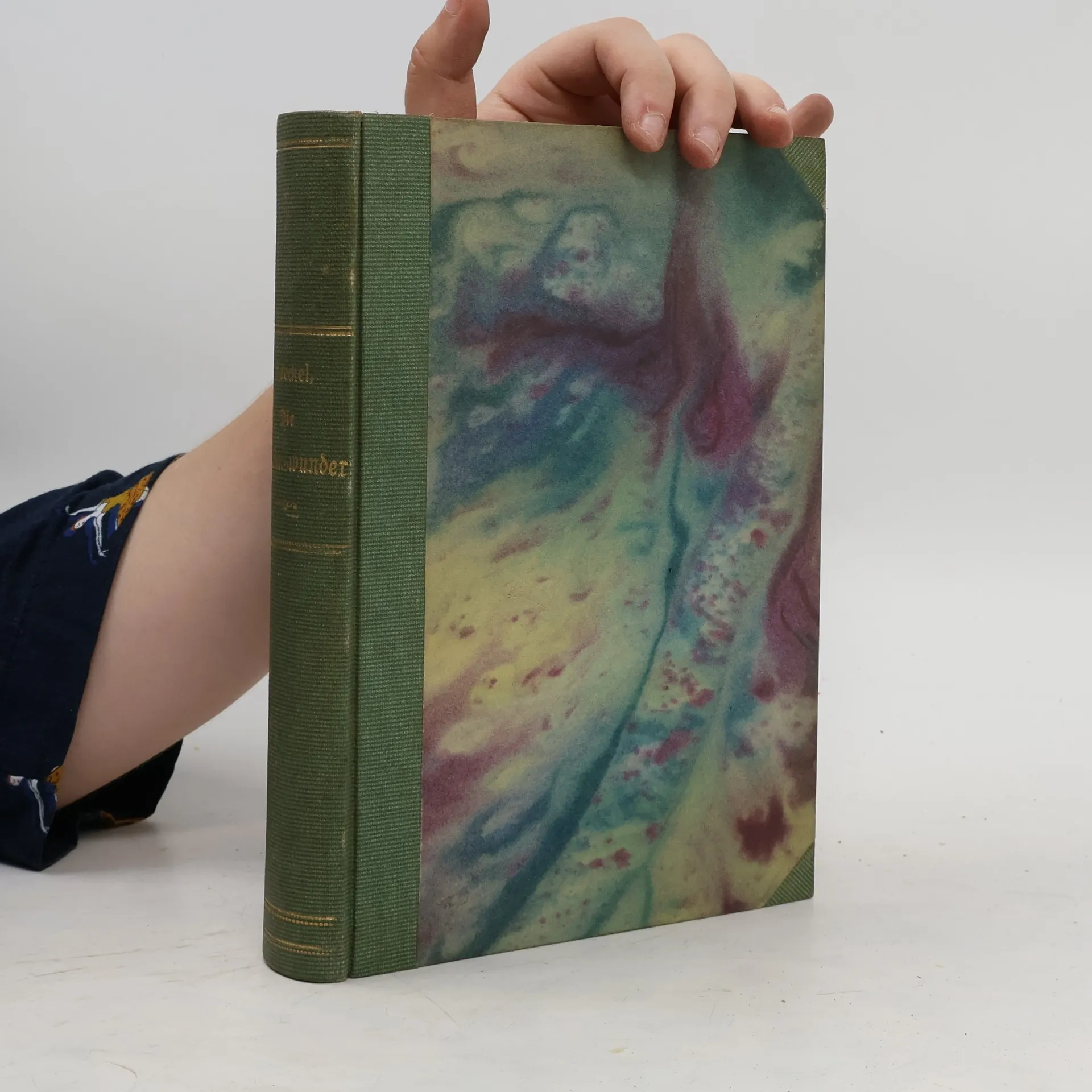
Ernst Haeckel

    February 16, 1834 – August 9, 1919

    Ernst Haeckel was an influential German naturalist and philosopher whose extensive work in biology shaped our understanding of life. He mapped the connections between all life forms through a genealogical tree and introduced key terms still used in biology today. His artistic creations, particularly detailed illustrations of animals and sea creatures, continue to captivate with their beauty and precision. Haeckel's philosophy and advocacy for Darwin's ideas left an indelible mark on both the field of biology and broader intellectual discourse.

    Ernst Haeckel
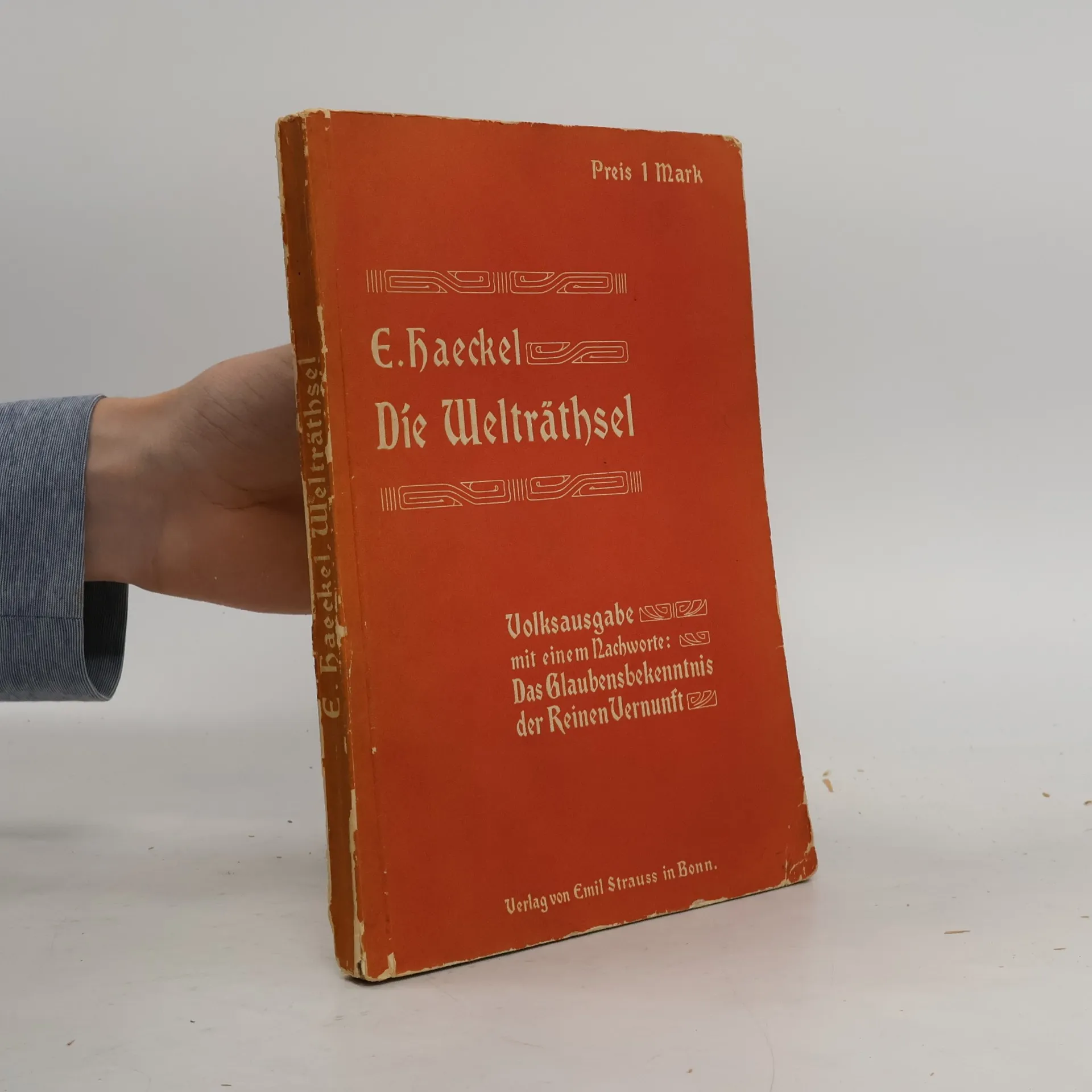
    The riddle of the universe at the close of the nineteenth century
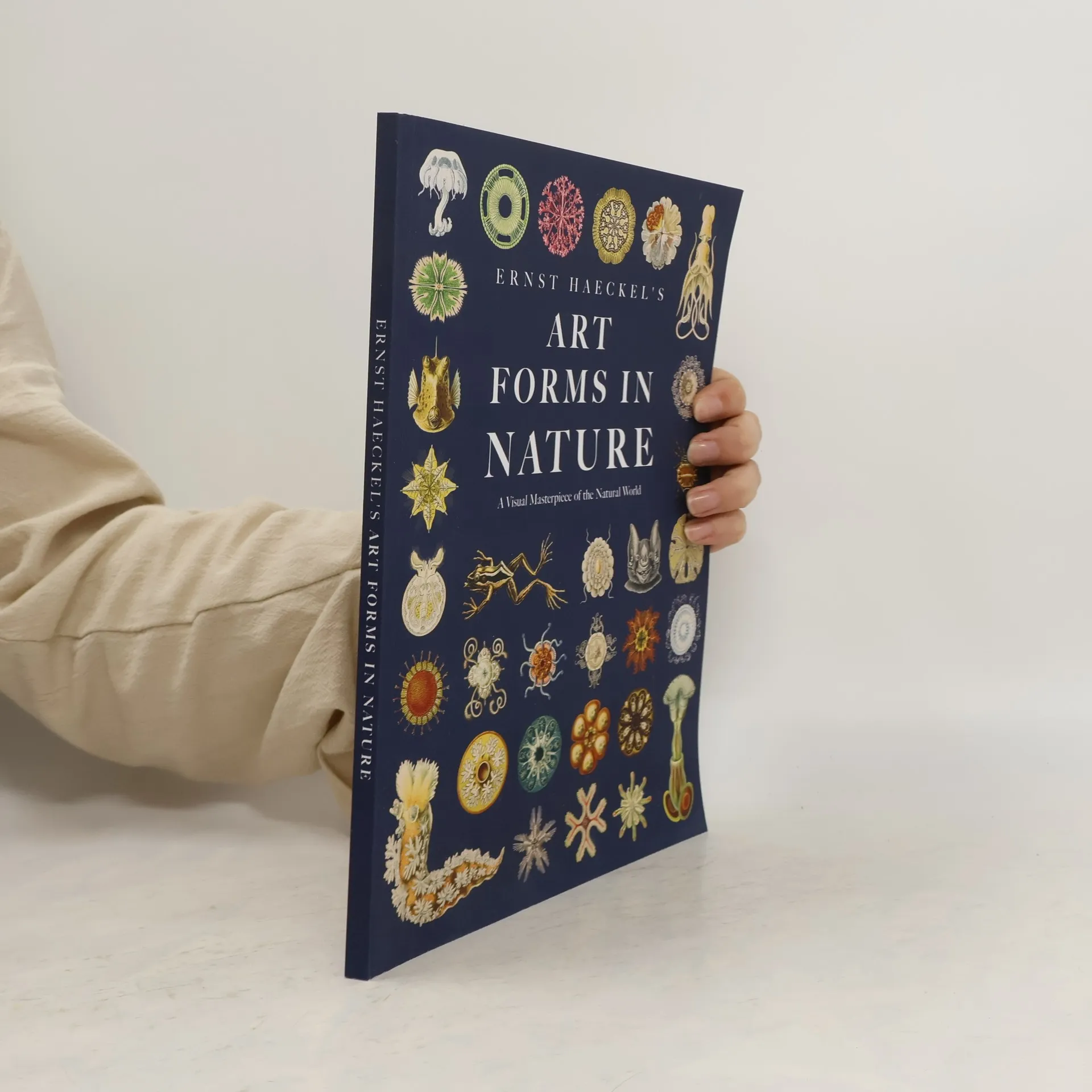
    Art Forms in Nature
    Ernst Haeckel's Art Forms in Nature
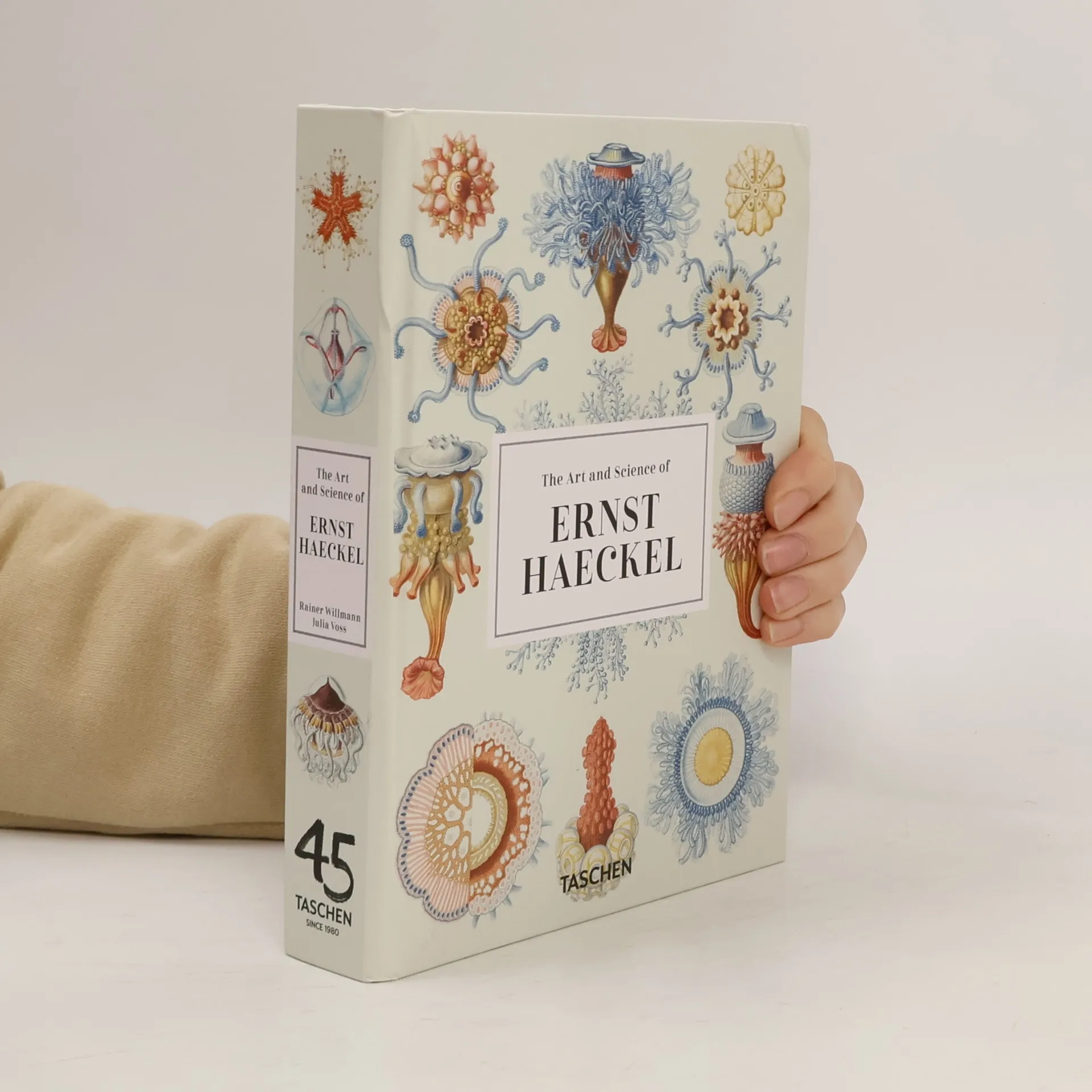
    The art and science of Ernst Haeckel
    Art forms from the abyss
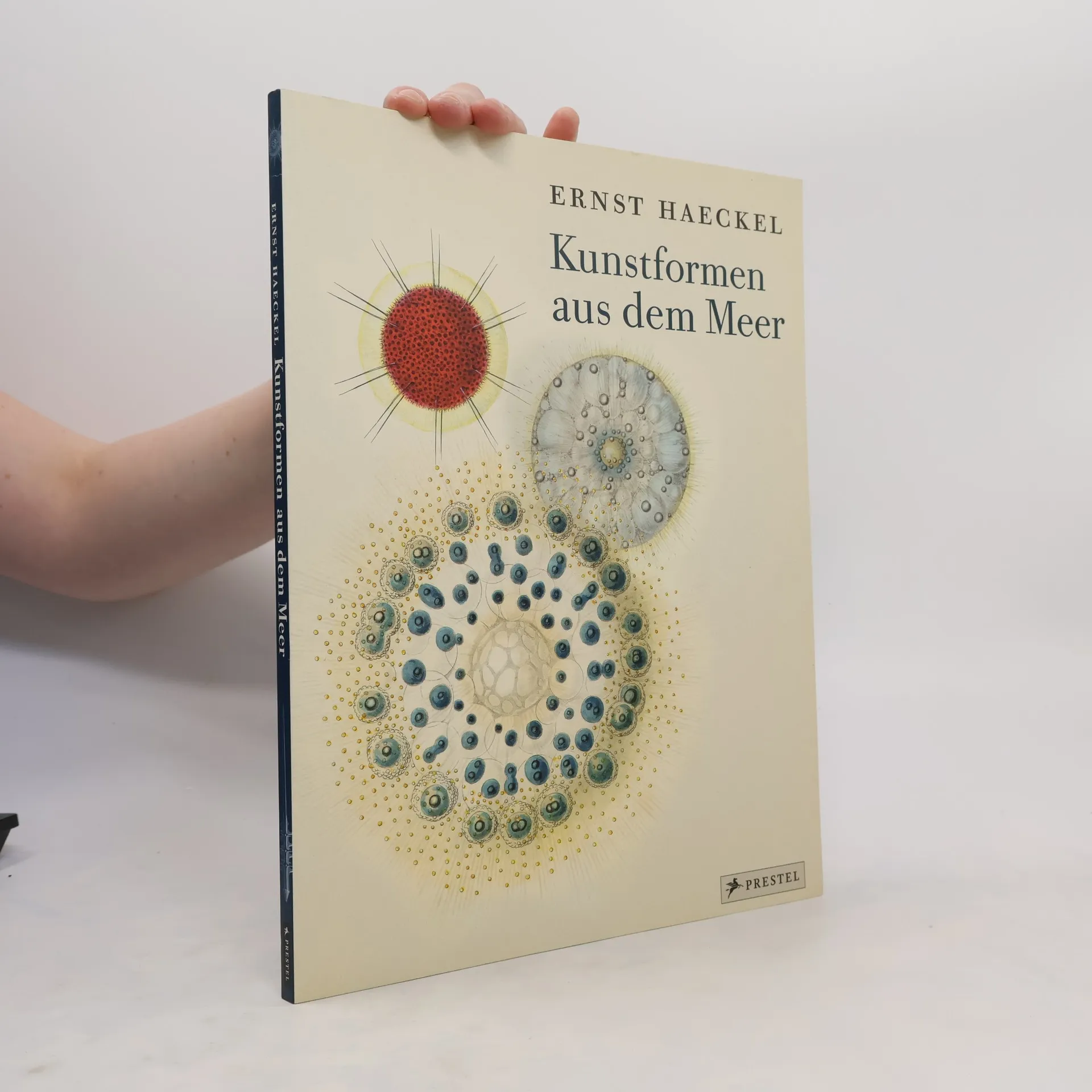
    Art forms from the ocean
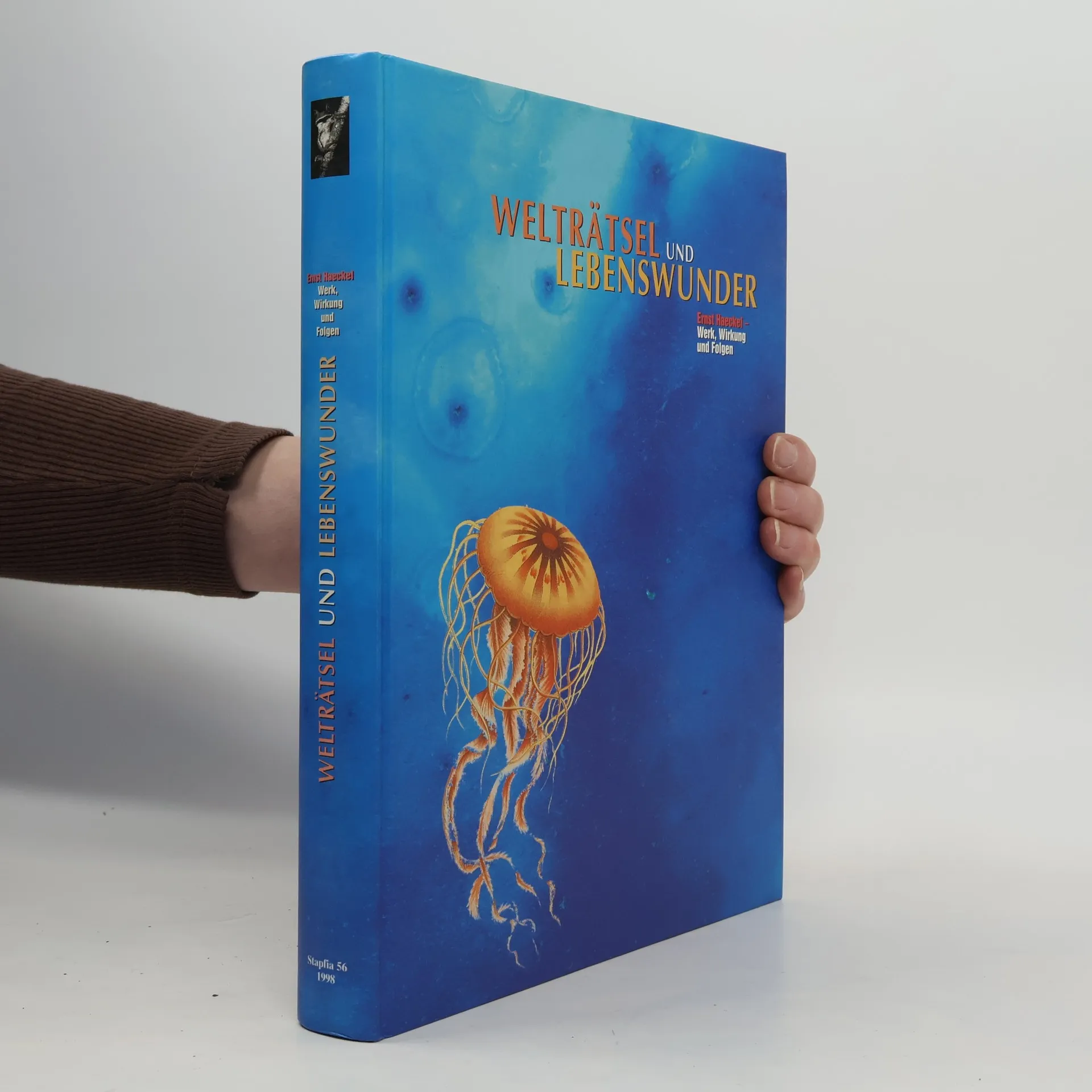
    • At the nexus of art and science, this dazzling new edition of Ernst Haeckel's first work reintroduces the genius of an enigmatic scientist and passionate observer of the natural world. Although original editions of this book are extremely rare, it is now available for the first time in a paperback edition, beautifully reproducing his drawings and watercolours. While the variety and detail of Haeckel's drawings display an impressive understanding of biological structure, the skill with which Haeckel drew these tiny, aquatic protozoa renders them genuine works of art. This volume features commentary and descriptions of each of the radiolarians from Haeckel's work.

      Art forms from the ocean
    • Kunst aus der Tiefe des Meeres Inspirationsquelle für Designer, Architekten und Grafikern: Dieser Band zeigt die faszinierenden Formen und Farben der Tiefseewelt auf 55 spektakulären Bildtafeln. Der Forscher, Zoologe, Philosoph und Künstler Ernst Haeckel beeinflusste mit seinen bahnbrechenden Studien zur Evolutionstheorie die Wissenschaftsgeschichte des 19. und 20. Jahrhunderts in entscheidender Weise. Von 1872–76 nahm er an der Expedition der HMS Challenger teil, auf der rund 5.000 neue Arten entdeckt und beschrieben wurden, wie Quallen, Plankton und Strahlentierchen. In der Folge veröffentlichte Haeckel drei Forschungsberichte mit detailreichen Bildtafeln, auf denen er die Vielfalt der Formen und Farben der Meeresorganismen dokumentierte. Noch heute werden diese für ihre hohe künstlerische Qualität geschätzt und dienen Designern, Architekten und Grafikern als unendliche Inspirationsquelle. Der vorliegende Band reproduziert 55 Tafeln in hochqualitativen Abbildungen. Kurze Bildunterschriften liefern Informationen zu den Organismen, der einführende Text erklärt die Hintergründe der Expedition und erläutert Haeckels Arbeiten im Kontext ihrer Zeit sowie ihre heutige Relevanz.

      Art forms from the abyss
    • Explore Ernst Haeckel, the 19th-century artist-biologist who found beauty in the most unlikely creatures. This collection features 300 prints from his most important publications, including the majestic Kunstformen der Natur and his catalogues of marine life. These exquisite images are a scientific, artistic and environmental masterwork.
      The art and science of Ernst Haeckel
    • Ernst Haeckel's Art Forms in Nature

      A Visual Masterpiece of the Natural World

      • 144 pages
      • 6 hours of reading

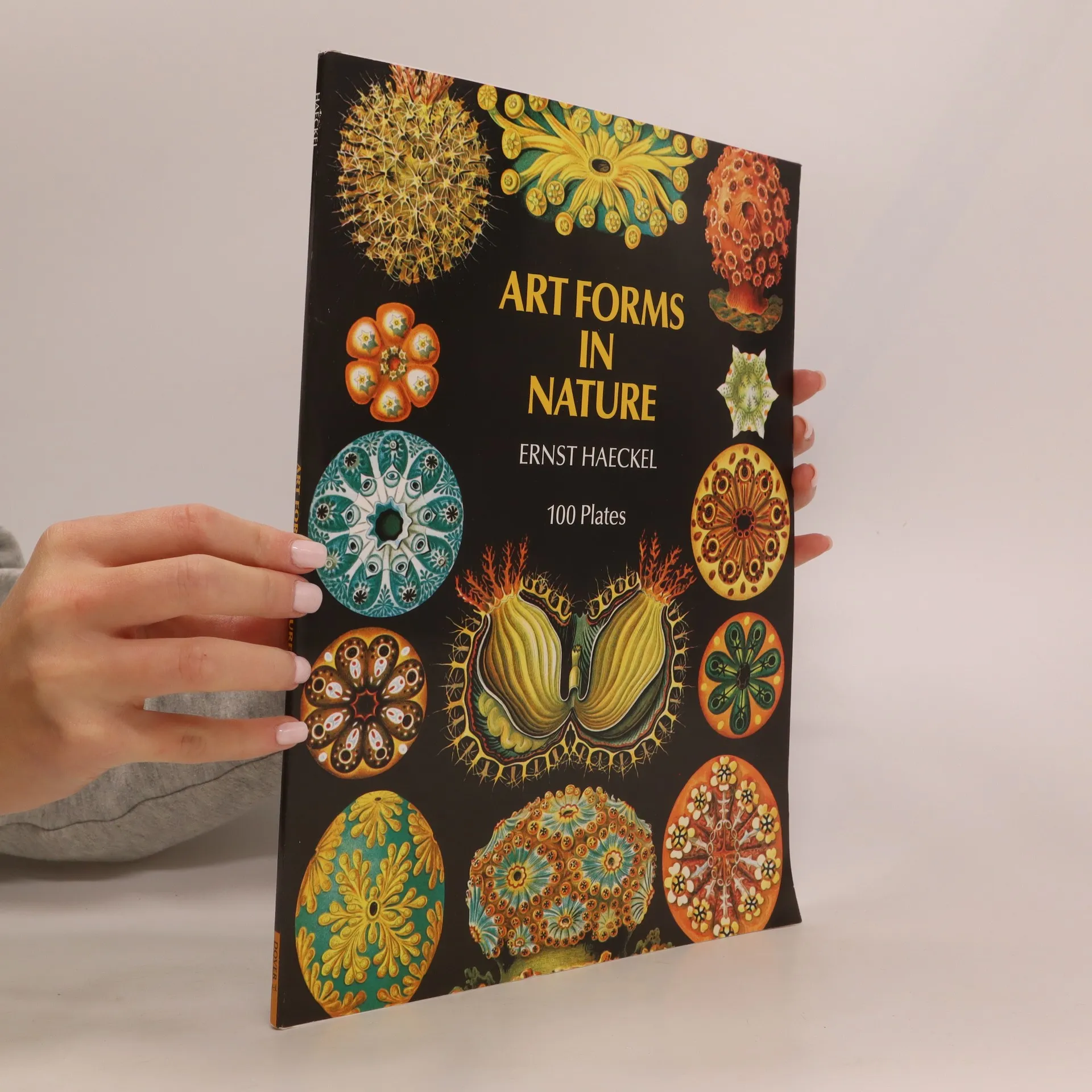
      The book features 100 illustrated plates that showcase a stunning collection of watercolour paintings and pencil sketches, highlighting the intricate beauty of the natural world. Ernst Haeckel skillfully merges science and art, creating a visual celebration that captures the essence of nature's forms.

      Ernst Haeckel's Art Forms in Nature
    • Multitude of strangely beautiful natural forms: Radiolaria, Foraminifera, Ciliata, diatoms, calcareous sponges, Siphonophora, star corals, starfishes, Protozoa, flagellates, brown seaweed, jellyfishes, sea-lilies, moss animals, sea-urchins, glass sponges, leptomedusae, horny corals, trunkfishes, true sea slugs, anthomedusae horseshoe crabs, sea-cucumbers, octopuses, bats, orchids, sea wasps, seahorse, a dragonfish, a frogfish, much more. All images black-and-white.

      Art Forms in Nature
    • Considered significant by scholars, this book holds great value in the literary canon and serves as a vital resource for future generations. It has been reproduced in its original print format, preserving its authenticity, including any marks or annotations from its first publication. This approach ensures that the book's true nature and historical context remain intact for readers and researchers alike.

      The riddle of the universe at the close of the nineteenth century
    • The History of Creation

      Or the Development of the Earth and its Inhabitants by the Action of Natural Causes, Volume 2

      • 590 pages
      • 21 hours of reading

      Focusing on the impact of Darwin's theories, this groundbreaking work from 1899 explores the principles of organic morphology through a comprehensive lens. It was the first to systematically apply a doctrine to the study of creation, significantly influencing biological sciences. The book delves into the evolutionary processes and the interconnectedness of life forms, marking a pivotal moment in the understanding of biology during the 19th century.

      The History of Creation
    • Exploring the intricate relationship between form and beauty, this book delves into the wonders of nature through stunning visuals and thoughtful commentary. It highlights the aesthetic qualities found in natural landscapes, flora, and fauna, emphasizing how these elements inspire creativity and appreciation for the environment. Readers are invited to reflect on the harmony and complexity of the natural world, encouraging a deeper connection with the beauty that surrounds us.

      Art Forms in Nature (Dover Pictorial Archive)
    • The History of Creation

      Or the Development of the Earth and its Inhabitants by the Action of Natural Causes, Volume 1

      • 458 pages
      • 17 hours of reading

      This groundbreaking work, first published in 1899, explores the application of evolutionary doctrine to the entire spectrum of organic morphology. It examines the profound impact of Darwin's theories on the biological sciences of the 19th century, offering insights into the development and diversity of life. The book stands as a significant contribution to the understanding of evolution and its implications for biology.

      The History of Creation
    • Freedom In Science And Teaching

      • 74 pages
      • 3 hours of reading

      Exploring the intersection of science and education, Ernst Haeckel delves into the importance of freedom in scientific inquiry and teaching within the modern state. He argues for the necessity of academic independence to foster genuine knowledge and progress, emphasizing the role of educators and researchers in society. Haeckel's work reflects his commitment to the advancement of science and its implications for education, advocating for a system that encourages exploration and critical thinking.

      Freedom In Science And Teaching