
Explore the latest books of this year!
Bookbot

Alex Callinicos

    July 24, 1950

    This author delves into political theory, offering profound insights into societal structures and philosophical underpinnings. Their work is characterized by sharp analytical rigor, dissecting complex ideas with clarity and depth. Through their writing, they provide a distinct perspective on challenging subjects, encouraging readers to critically engage with the world.

    International Socialism 70. Prisoner of the System?
    Duncan Hallas: Indomitable Revolutionary
    The New Age of Catastrophe
    Equality
    Imperialism and Global Political Economy
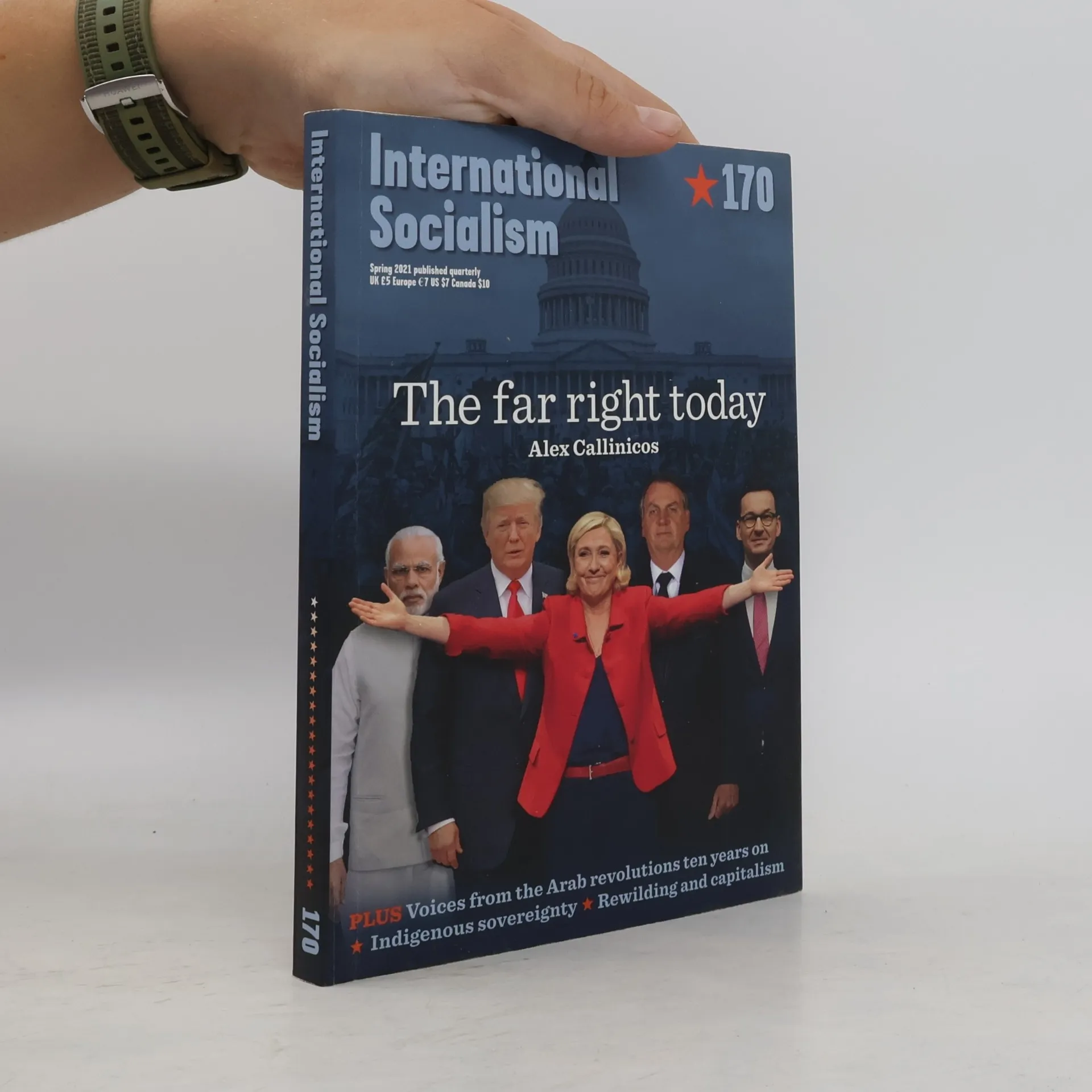
    Social theory. A historical introduction
    • Social theory. A historical introduction

      • 368 pages
      • 13 hours of reading
      4.4(17)Add rating

      The second edition of this remarkably lucid text offers a comprehensive historical introduction to social theory, enhancing its clarity, reliability, and scholarship. It covers a wide range of theorists, including Montesquieu, Adam Smith, Hegel, Marx, Tocqueville, and many others, examining how social theory emerged from the Enlightenment. During this period, Western societies shifted from relying on tradition to seeking scientific knowledge for validation. The text explores the connections between social theory, modern philosophy, political economy, and the influence of evolutionary biology on social thought. Carefully updated, the book engages with contemporary debates in social theory and concludes with a substantial new chapter assessing the significance of globalization. It addresses the resurgence of critiques of capitalism and imperialism, highlighting the work of theorists like Michael Hardt, Toni Negri, and Slavoj Zizek. This updated edition is essential reading for students of politics, sociology, and social and political thought, providing insights into the evolution and current discussions within social theory.
      Social theory. A historical introduction
    • In Imperialism and Global Political Economy Alex Callinicos intervenes in one of the main political and intellectual debates of the day. The global policies of the United States in the past decade have encouraged the widespread belief that we live in a new era of imperialism. But is this belief true, and what does 'imperialism' mean? Callinicos explores these questions in this wide-ranging book. In the first part, he critically assesses the classical theories of imperialism developed in the era of the First World War by Marxists such as Lenin, Luxemburg, and Bukharin and by the Liberal economist J.A. Hobson. He then outlines a theory of the relationship between capitalism as an economic system and the international state system, carving out a distinctive position compared to other contemporary theorists of empire and imperialism such as Antonio Negri, David Harvey, Giovanni Arrighi, and Ellen Wood. In the second half of Imperialism and Global Political Economy Callinicos traces the history of capitalist imperialism from the Dutch East India Company to the specific patterns of economic and geopolitical competition in the contemporary era of American decline and Chinese expansion. Imperialism, he concludes, is far from dead.

      Imperialism and Global Political Economy
    • Equality

      • 176 pages
      • 7 hours of reading

      a The class war is over. But the struggle for true equality has only just begun,a Tony Blair has declared. The world indeed enters the 21st century heaving with poverty and inequality. Just three super--rich men have a net worth equal to the income of the 36 poorest countries in the world.

      Equality
    • The narrative explores the emergence of a new era marked by unprecedented global crises, drawing parallels to the tumultuous period between 1914 and 1945, which included two world wars and the Great Depression. It highlights contemporary existential threats such as the COVID-19 pandemic, escalating climate change leading to severe weather events, and the looming risk of nuclear conflict following Russia's invasion of Ukraine. This urgent examination underscores the fragility of human existence in the face of these escalating challenges.

      The New Age of Catastrophe
    • Duncan Hallas (1925-2002) was one of the 33 founding members of the Socialist Review Group, the forerunner of the International Socialists and the Socialist Workers Party. A genuine working-class autodidact, his contribution to the international socialist tradition spanned the fields of theory, propaganda and action. For Duncan, Marxism was living, breathing revolutionary practice. His life was shaped by his experience as a young factory worker growing up in Manchester. Always the revolutionary fighter, he took part in an apprentices' strike in Manchester in 1941, an army mutiny in Egypt just after the Second World War and later became the driving force behind establishing rank and file teachers' organisation in the late 1960s. As part of the full-time leadership of the Socialist Workers Party for almost 25 years, Duncan maintained a stream of articles explaining everything from basic Marxist ideas to combating various forms of reformism and, above all, conveying the depth of the re

      Duncan Hallas: Indomitable Revolutionary
    • Der neoliberale Weg zur Marktgesellschaft führt nicht in die Zukunft, sondern zurück ins 19. Jahrhundert. Im „reifen Kapitalismus“ ist die Welt weder harmonischer, gerechter noch friedlicher geworden. Deshalb ist dies die richtige Zeit für eine erneute Lektüre seines wichtigsten Kritikers, Karl Marx. Dieser hat auf bisher unübertroffene Weise die Mechanismen der kapitalistischen Gesellschaft untersucht und erklärt. Seit den 1990er Jahren ist eine antikapitalistische Linke wiedererstarkt. In all ihren verschiedenen Widerstandsformen ist der ungeheure Drang nach Freiheit angelegt – nach echter Freiheit, nicht nach jener vom Kapitalismus angebotenen Falschmünze, mit der Freiheit gekauft und verkauft wird. Mehr als jeder andere stellte Marx den Mangel an realer Freiheit fest und erkannte die Kräfte, durch die wir uns befreien können. Marx war dabei immer Verfechter der Selbstbefreiung, kein Vertreter der Tyrannei. Auch für Einsteiger verständlich, zeugt Alex Callinicos' Einführung gleichzeitig von gebotener Tiefe und intellektueller Schärfe. Mit den angeführten Originalzitaten von Marx ist das Buch auch ein guter Wegweiser durch seine Schriften.

      Die revolutionären Ideen von Karl Marx